Key Takeaways
-
Sales teams waste 71% of time on manual data entry, and AI agents like Coffee remove this work through autonomous CRM enrichment.
-
ZoomInfo’s $80K–$150K pricing often exceeds budgets, while alternatives deliver 50–70% savings with similar or stronger automation.
-
Core evaluation criteria include 95%+ data accuracy, native Salesforce or HubSpot integration, agent-driven automation, and total cost of ownership.
-
Coffee delivers full agent automation, saves 8–12 hours per week per rep, and replaces multiple enrichment and meeting tools with one platform.
-
Teams ready to automate CRM workflows can explore Coffee’s agent-powered enrichment and turn their CRM into a sales-ready system of record.
How to Evaluate ZoomInfo Alternatives for CRM Data Enrichment
Four evaluation criteria determine whether a ZoomInfo alternative will actually improve productivity and ROI for your team. The table below outlines the 2026 benchmarks you should expect from any provider and explains why each criterion directly affects revenue performance.
|
Criteria |
2026 Benchmark |
Why It Matters |
|---|---|---|
|
Data Accuracy |
95%+ validity rate |
Poor data quality undermines forecasting and wastes sales time |
|
CRM Integration |
Native Salesforce/HubSpot sync |
Seamless workflows prevent adoption friction and data silos |
|
Automation Level |
Agent-driven vs manual |
AI agents reduce research time by 34% |
|
Total Cost |
50-70% savings vs ZoomInfo |
Budget efficiency enables investment in other growth initiatives |
The rise of AI agent automation creates a new standard for CRM data management. Eighty-seven percent of sales teams now use AI, and 54% deploy AI agents across the sales cycle, turning enrichment into a continuous, automated workflow instead of a manual chore. With these criteria in mind, you can now compare specific tools against the benchmarks that matter.

Top 10 ZoomInfo Alternatives for CRM Data Enrichment & Completion in 2026
1. Coffee – Agent-Powered CRM Automation
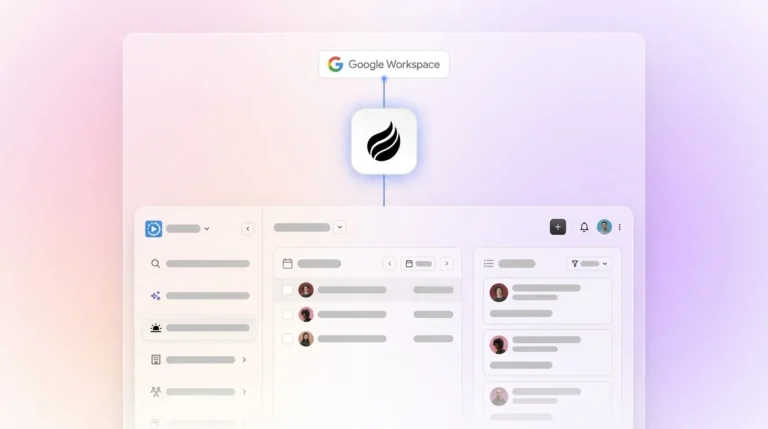
Coffee operates as a true agent-powered solution that removes manual data entry from your process. The AI agent automatically creates and enriches contacts, companies, and activities by scanning emails and calendars in Google Workspace and Microsoft 365.

Strengths: Coffee’s autonomous data capture from Google Workspace and Microsoft 365 flows into enrichment through licensed data partners, then writes directly back to Salesforce and HubSpot. This end-to-end automation saves each rep 8–12 hours per week and consolidates multiple point solutions, including enrichment tools and meeting recorders, into one workflow.

Limitations: Coffee still connects through Zapier for some tools, and deeper native integrations remain on the roadmap.
Ideal for: SMBs and mid-market teams that want complete automation and a leaner revenue stack.
2026 Pricing: Simple seat-based pricing that includes unlimited agent labor.
Implementation: One-week setup with automatic data sync to existing CRM systems.
Explore Coffee’s agent-powered automation to turn your CRM into an always-updated sales assistant instead of a data entry system.

2. Apollo.io – All-in-One Sales Platform
Apollo.io combines prospecting, enrichment, and outreach in a single platform with 275M+ contacts. The platform includes generous free tiers and relatively affordable paid plans for growing teams.
Strengths:
-
Comprehensive database with verified contact information
-
Native Salesforce and HubSpot integrations
-
Built-in email sequencing and dialer
-
Free plan available with 50 credits monthly
Limitations: Data accuracy can fluctuate and may lag behind premium providers for certain segments.
Ideal for: Budget-conscious teams that want an all-in-one prospecting and outreach solution.
2026 Pricing: Free package plus plans starting at $99/month per user.
3. Clearbit (Breeze Intelligence) – HubSpot Native Enrichment
Clearbit, now offered as Breeze Intelligence inside HubSpot, delivers comprehensive data across 200 million+ company and buyer profiles worldwide. HubSpot users can enrich records directly within their existing workflows.
Strengths:
-
Deep HubSpot integration with real-time enrichment
-
Rich technographic and firmographic data
-
Form enrichment that shortens lead capture forms
Limitations: Coverage centers on the HubSpot ecosystem, and API-based setups require technical skills.
Ideal for: HubSpot-centric organizations that want native enrichment without adding another standalone platform.
2026 Pricing: HubSpot plan plus add-on pricing starting around $45/month.
4. Cognism – GDPR-First Compliance and EMEA Coverage
Cognism focuses on compliant EU and UK data and offers a 98% accuracy rate for phone-verified mobile numbers through its Diamond Data feature.
Strengths:
-
GDPR-first data collection and processing
-
Human-verified mobile numbers
-
Strong EMEA coverage
-
Native CRM integrations
Limitations: North American coverage trails some competitors, and pricing often sits at the premium end of the market.
Ideal for: Companies that must meet strict GDPR requirements, especially across EMEA regions.
2026 Pricing: Custom quote-based pricing with annual commitments.
5. Lusha – LinkedIn-Driven Contact Capture
Lusha delivers ISO 27701 certification with GDPR and CCPA compliance and focuses on LinkedIn-based contact discovery.
Strengths:
-
Chrome extension for instant LinkedIn enrichment
-
Strong compliance standards
-
Credit-based pricing model
-
Free plan with 5 credits monthly
Limitations: Credit-based plans can feel restrictive as teams scale outreach volume.
Ideal for: Individual reps and small teams that rely heavily on LinkedIn prospecting.
2026 Pricing: Free version, then $29/month, $51/month, and custom plans.
6. Clay – Waterfall Enrichment Platform for RevOps
Clay helps operations teams design custom enrichment workflows by connecting 75+ data providers through waterfall enrichment. Teams can chain multiple sources to fill gaps.
Strengths:
-
Access to 100+ data sources
-
AI-powered research capabilities
-
Flexible workflow automation
-
Generous free tier
Limitations: Clay requires RevOps expertise, involves a complex setup, and credit usage can grow quickly with scale.
Ideal for: Technical teams that want to design highly customized enrichment workflows.
2026 Pricing: Free plan with 1,200 annual credits, Starter $134/month, Explorer $314/month.
7. UpLead – Real-Time Email Verification
UpLead focuses on email deliverability and offers 95%+ data accuracy with real-time email verification across more than 160 million B2B contacts.
Strengths:
-
Real-time email verification at export
-
Technology tracking capabilities
-
Intent data integration
Limitations: Automation features remain limited, and most workflows still rely on manual steps.
Ideal for: Teams that value email accuracy more than deep automation.
2026 Pricing: Free version, then $99/month and $199/month packages.
8. Seamless.AI – Real-Time Contact Discovery
Seamless.AI emphasizes data freshness and delivers real-time B2B search across 1.7B+ contacts using live web scanning.
Strengths:
-
Real-time data validation
-
Extensive contact database
-
Chrome extension for instant lookup
Limitations: Custom pricing can become expensive, and automation capabilities remain basic.
Ideal for: Teams that need the freshest possible contact data for outbound programs.
2026 Pricing: Free plan, Basic $147/month, custom Pro, and Enterprise.
9. HubSpot Native Enrichment Tools
HubSpot includes built-in enrichment features through its native data engine and partner integrations. Many teams rely on these capabilities before adding external tools.
Strengths:
-
No additional integration required
-
Included within existing HubSpot subscription costs
-
Consistent user experience inside the CRM
Limitations: Teams may still need third-party tools for non-HubSpot sources, and most enrichment remains manual or rule-based.
Ideal for: HubSpot users with light enrichment needs or strict budget constraints.
10. Salesforce Native Enrichment Tools
Salesforce provides native enrichment and data integrations through its own data services and AppExchange partners. Many enterprises start with these features before expanding their stack.
Strengths:
-
Included within the Salesforce ecosystem
-
No extra integration layer for core enrichment
-
Familiar interface for existing Salesforce users
Limitations: Coverage can feel basic without add-ons, and teams often supplement with external enrichment providers.
Ideal for: Salesforce-centric organizations that want baseline enrichment without adding another major vendor.
Side-by-Side Comparison Table and Key Tradeoffs
The following table compares four leading alternatives across accuracy, automation, CRM integration, and entry-level pricing. Use it to see the tradeoff between higher automation with agent-based tools and the additional manual effort that traditional platforms still require.
|
Tool |
Accuracy |
Automation |
CRM Integration |
Starting Price |
|---|---|---|---|---|
|
Coffee |
High |
Full Agent |
Native SF/HubSpot |
Seat-based |
|
Apollo.io |
65-80% |
Partial |
Native SF/HubSpot |
$99/month |
|
Clearbit |
High |
API-driven |
HubSpot Native |
$45+/month |
|
Cognism |
98% (mobile) |
Manual |
Native SF/HubSpot |
Custom |
Coffee leads in agent automation and stack consolidation, while also cutting costs compared to ZoomInfo. Traditional alternatives still depend on human effort for data entry and maintenance, which limits time savings and slows adoption.

Choosing the Right Alternative and Rolling It Out
Your ideal ZoomInfo alternative depends on team size, technical resources, and how much automation you want across the sales cycle.
Your team size shapes the right architecture. For SMBs (1-50 employees), Coffee Standalone delivers complete CRM automation without the complexity of traditional systems. As you grow into the mid-market (50-500 employees), Coffee Companion layers on top of existing Salesforce or HubSpot instances for deeper automation.
Budget and compliance requirements, then refine the shortlist. When budget is the main constraint, budget-conscious teams can look at Apollo.io for solid functionality and generous free tiers. When regulatory needs dominate, GDPR-focused organizations should prioritize Cognism for its EU data compliance.
Implementation timelines vary across tools. Coffee offers the fastest timeline, with a one-week setup and automatic data sync, while platforms like Clay often need 2–4 weeks because of workflow configuration. Teams should watch for pitfalls such as unpredictable credit-based pricing and tools that demand heavy technical setup before delivering value.
Start your Coffee trial for a direct path to automated CRM enrichment and completion with minimal rollout effort.
FAQ
What’s the best free ZoomInfo alternative for CRM enrichment?
Apollo.io offers one of the most comprehensive free tiers, with 50 monthly credits, database access, and basic CRM integrations. Free plans, however, usually include limits that make them difficult to scale for growing teams. Coffee’s agent-powered model delivers stronger long-term value by removing ongoing manual work rather than only lowering license costs.
How does Coffee compare to Apollo for HubSpot integration?
Apollo provides standard bi-directional sync with HubSpot and supports typical list-based workflows. Coffee’s agent monitors email and calendar activity, then automatically creates and enriches records without manual input. This approach removes the need to search, export, or import data and suits teams that want fully automated CRM hygiene.
What data accuracy can I expect from Coffee?
Coffee delivers data quality comparable to ZoomInfo for most use cases by combining real-time validation, licensed data partners, and continuous refresh cycles. The agent also captures ground-truth data from real interactions, such as emails and meetings, which keeps records accurate even as static databases decay.
How difficult is migrating from ZoomInfo to an alternative?
Migration complexity depends on the platform you choose. Coffee offers a smooth transition with a rapid setup process and automatic data population from existing email and calendar systems. Traditional tools often require exports, field mapping, and extensive user training, while Coffee’s agent handles most of the heavy lifting.
What 2026 AI trends are shaping CRM data enrichment?
AI agents now shape how modern CRMs operate, and most sales teams already deploy agents across their sales cycle as mentioned earlier. The shift from manual data entry to autonomous agents changes CRM from a static database into a living system that updates itself. Coffee leads this shift with an agent-powered approach that keeps records current without extra work from reps.
Does Coffee replace both Gong and ZoomInfo?
Coffee’s agent manages meeting recording, transcription, summarization, and automatic CRM updates, which covers much of Gong’s functionality. The same agent also enriches contacts and companies, replacing core ZoomInfo use cases. This consolidation reduces stack complexity while improving data quality and rep productivity.
How do compliance standards compare across alternatives?
Most modern alternatives maintain GDPR and CCPA compliance, and Cognism stands out for EU-specific requirements. Coffee is SOC 2 Type 2 and GDPR compliant and uses automated data handling to reduce risks that come from manual data entry and ad hoc exports.
Conclusion
CRM data enrichment has moved from manual tools to intelligent, agent-powered automation. Coffee stands out for teams that want to remove data entry while keeping accuracy and compliance high. Where other tools still depend on human input, Coffee’s agent keeps your CRM updated and turns it into a practical sales assistant.
Teams ready to modernize their CRM can see Coffee’s pricing and plans and join the growing group of sales organizations that have removed manual data entry from their workflow.