Key Takeaways for Modern ABM
- Account-based marketing (ABM) treats high-value accounts as markets of one and delivers hyper-personalized experiences that beat spray-and-pray tactics.
- ABM includes three approaches: Strategic (1:1) for elite accounts, ABM Lite (1:Few) for small clusters, and Programmatic (1:Many) for scaled outreach.
- ABM programs often achieve 21-50% higher ROI, 32-day shorter sales cycles, 33% larger deals, and stronger sales and marketing alignment.
- AI tools like Coffee automate visitor identification, data enrichment, and personalized outreach, removing 71% of reps’ manual data entry time.
- Teams ready to implement autonomous ABM can see Coffee’s pricing and features and move toward effortless execution and stronger pipeline results.
Account-Based Marketing Explained for B2B Teams
Account-based marketing is a strategic B2B approach that treats individual high-value accounts as markets of one. It aligns sales and marketing teams to deliver hyper-personalized experiences across the entire buyer journey. Traditional lead generation casts wide nets, while ABM focuses resources on specific named accounts with the highest revenue potential.
Core ABM components include rigorous account selection based on ideal customer profile fit and tailored content for each target account. Teams coordinate multi-channel engagement and maintain tight sales and marketing alignment throughout execution. This structure keeps attention on the accounts most likely to drive meaningful revenue.
The ABM market shows rapid growth, with the global account-based marketing market valued at $1.41 billion in 2024 and projected to reach $3.52 billion by 2032. This 17.9% annual growth rate reflects widespread adoption, as 67% of B2B organizations now implement some form of ABM strategy. Growth also reflects complex buying environments where buying groups typically involve multiple decision-makers.
Three Practical Types of Account-Based Marketing
Account-based marketing operates across three main approaches, each suited to different deal sizes and resource levels.
Strategic ABM (1:1) represents the most personalized approach. Teams target individual very high-value accounts with dedicated resources and custom content libraries. This approach treats each account as a market of one and relies on highly customized buyer experiences with close sales and marketing collaboration. Strategic ABM fits enterprise deals above $500K with complex buying processes and long sales cycles.
ABM Lite (1:Few) groups 5-20 similar accounts that share traits such as industry, size, or core business challenges. This approach balances personalization with efficiency through semi-customized content and tactics. It works well for mid-market opportunities where teams can reuse tailored assets across account clusters.
Programmatic ABM (1:Many) uses marketing automation and AI to reach hundreds or thousands of target accounts at once. This approach relies on automation, intent data, and analytics to deliver broadly relevant yet tailored messaging across large lists. Modern AI agents like Coffee help programmatic ABM reach strategic-level precision through automated visitor identification, enrichment, and personalized outreach generation.
Key ABM Benefits for 2026 Revenue Teams
Account-based marketing delivers clear gains across revenue performance and team efficiency.
- Superior ROI: Most ABM programs report 21-50% higher ROI than non-ABM approaches, and mature ABM programs often generate higher revenue than traditional tactics.
- Faster Sales Cycles: ABM compresses median sales cycles by 32 days compared to non-ABM baselines.
- Larger Deal Sizes: ABM-sourced deals close 33% larger on average.
- Stronger Team Alignment: 70% of experienced ABM practitioners report aligned sales and marketing teams.
AI-powered ABM magnifies these benefits through automation. Coffee’s autonomous agents eliminate the 71% of time reps spend on data entry, and many ABM teams now rely on automation to scale personalization across accounts.
Account-Based Marketing vs. Inbound Marketing Approaches
ABM and inbound marketing represent fundamentally different approaches to B2B revenue generation. Comparing them clarifies when ABM delivers the strongest results and when inbound plays a supporting role.
| Metric | ABM (Account-First) | Inbound (Lead-Gen) |
|---|---|---|
| Focus | High-value named accounts, outbound-heavy | Broad content attraction, volume-scalable |
| Deal Size | 11-50% larger deals | Smaller, variable quality |
| Sales Cycle | 32 days shorter on average | Longer, nurturing-heavy |
| Resource Allocation | Concentrated on fewer, high-value targets | Distributed across broad audience |
To capture the strengths of both approaches, teams need a bridge between inbound interest and account-first engagement. Coffee fills this gap by solving inbound marketing’s core challenge: identifying anonymous website visitors. Through pixel-based visitor identification, Coffee converts inbound traffic into named, qualified prospects ready for ABM-style outreach.
Real-World ABM Example Using Coffee
Consider a B2B software company that targets venture-backed startups with $10M or more in funding. The team uses Coffee’s List Builder to identify 200 companies that match its ideal customer profile. Coffee’s visitor identification pixel then captures anonymous website visitors from these accounts and enriches them with contact details, job titles, and LinkedIn profiles.

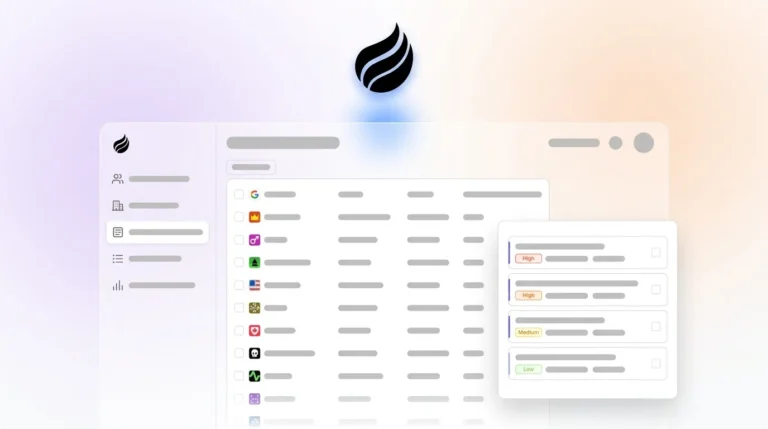
When a VP of Sales from a target company visits the pricing page, Coffee flags this visit as a high-intent signal and sends a Slack notification. Using the visitor identification capability described earlier, Coffee suggests specific contacts within that company who match the buyer persona and includes LinkedIn profiles for immediate outreach. Coffee’s AI agent then drafts personalized LinkedIn connection requests and follow-up email sequences based on the visitor’s page engagement and company context.

This structured workflow helped one tens-of-millions revenue company scale ABM efforts without manual CRM maintenance. The company turned anonymous traffic into qualified pipeline through automated visitor-to-lead conversion and consistent follow-up.
ABM Tools and the Shift to AI Automation
The ABM technology landscape has shifted from static platforms to intelligent automation systems. Traditional tools like Demandbase and Terminus provide account identification and advertising capabilities but still require heavy manual orchestration. Many ABM marketers now rely on automation to scale personalization, which increases demand for AI-powered solutions.
Coffee represents the next generation of ABM technology as the first autonomous CRM agent. Instead of acting as a passive database that only stores information, Coffee actively executes ABM workflows.
- Visitor Identification: Pixel-based tracking converts anonymous website traffic into named prospects with full contact enrichment.
- List Builder: Natural language commands generate targeted prospect lists based on ICP criteria.
- Automated Enrichment: Integration with email and calendar systems automatically populates CRM with accurate contact and company data.
- AI Orchestration: Agents draft personalized outreach, schedule follow-ups, and maintain engagement sequences.
This automation addresses the core ABM challenge by freeing teams from manual data work. Coffee’s autonomous execution enables teams to focus on strategic account engagement rather than administrative tasks.
How Coffee Powers End-to-End ABM in 2026
Coffee transforms ABM execution with autonomous agent technology that manages the entire data lifecycle. The platform tackles ABM’s biggest operational challenges: visitor identification, data enrichment, and personalized outreach orchestration.
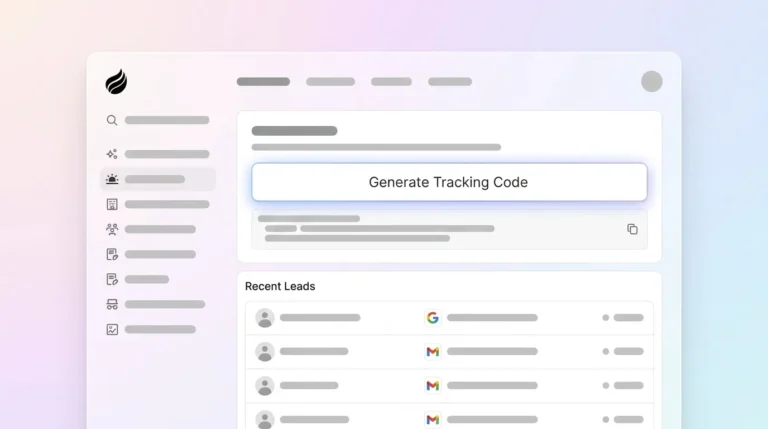
Visitor-to-Lead Conversion: Coffee’s tracking pixel identifies anonymous website visitors, enriches them with contact details, and suggests specific prospects within visiting companies who match your buyer persona. This process removes guesswork from ABM targeting and surfaces real-time intent signals.

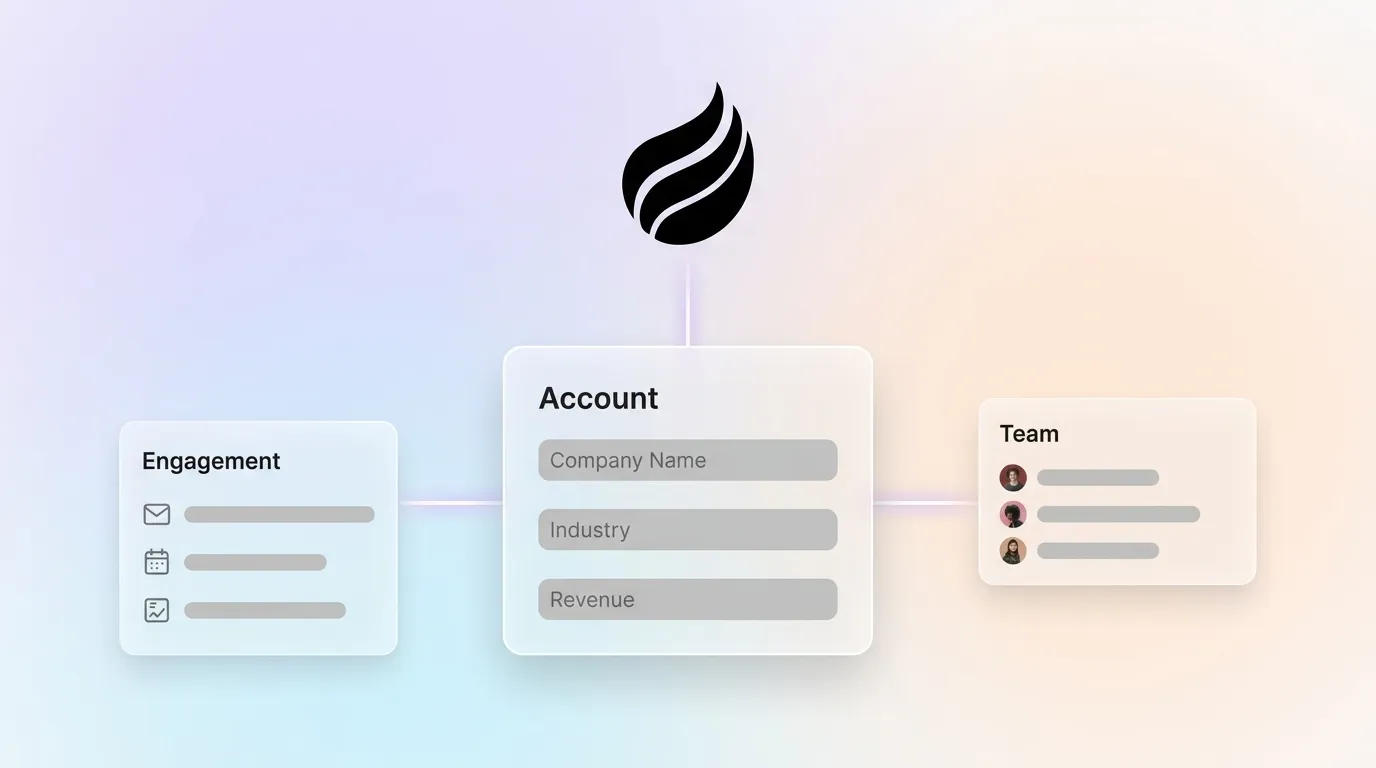
Automated Data Foundation: Once Coffee identifies these high-intent visitors, integration with Google Workspace or Microsoft 365 allows the agent to create contacts, companies, and activities automatically. The system enriches records with job titles, funding data, and LinkedIn profiles, which keeps data clean without manual entry.
AI-Powered Orchestration: Coffee’s agents generate meeting briefings, draft follow-up emails, and maintain engagement sequences based on account context and interaction history. Teams deliver personalized communication at scale across hundreds of target accounts.

Pipeline Intelligence: The Compare feature visualizes week-over-week pipeline changes and highlights progressed deals and stalled opportunities. Leaders shift pipeline reviews from interrogation sessions to focused strategic discussions.
Coffee supports both SMB and mid-market teams through two deployment options. Teams can use Coffee as a standalone CRM or as a companion app that enhances existing Salesforce or HubSpot instances. The platform maintains SOC 2 Type 2 compliance and connects to existing tech stacks through Zapier.
Explore Coffee’s autonomous ABM platform to experience execution that removes manual busywork while improving personalization and pipeline visibility.
Frequently Asked Questions About ABM and Coffee
What are the three main types of account-based marketing?
The three core ABM types are Strategic ABM (1:1), ABM Lite (1:Few), and Programmatic ABM (1:Many). Strategic ABM targets individual high-value accounts with dedicated resources. ABM Lite focuses on small clusters of 5-20 similar accounts. Programmatic ABM uses automation to reach hundreds or thousands of accounts. Each type balances personalization and scale based on resources and account value.
How does account-based marketing differ from inbound marketing?
ABM focuses on specific named accounts with outbound engagement, while inbound marketing attracts broad audiences through content. ABM usually generates larger deal sizes, shorter sales cycles, and higher ROI but requires more upfront investment. Inbound marketing offers broader reach and lower initial costs but often produces smaller, variable-quality opportunities.
What are the best account-based marketing tools for 2026?
Modern ABM requires AI-powered automation for visitor identification, data enrichment, and personalized outreach. Coffee leads this category as the first autonomous CRM agent and automates visitor-to-lead conversion, contact enrichment, and engagement orchestration. Traditional platforms like Demandbase and Terminus provide account identification but lack the autonomous execution capabilities needed for efficient ABM scaling.
Can Coffee support account-based marketing strategies?
Coffee is built for ABM execution through autonomous agent technology. The platform identifies anonymous website visitors, enriches them with contact details, and suggests persona-matched prospects within target accounts. It also automates personalized outreach sequences. Coffee’s List Builder enables natural language prospect identification, while the visitor identification pixel converts website traffic into qualified ABM targets.
Is Coffee secure for enterprise ABM programs?
Coffee maintains SOC 2 Type 2 compliance and GDPR adherence, which supports enterprise-grade security for sensitive account data. The platform integrates with CRM systems like Salesforce and HubSpot and provides autonomous data management that reduces manual handling and related security risks.
Conclusion: Moving to Autonomous ABM with Coffee
Account-based marketing has shifted from a niche tactic to a core B2B strategy, and AI automation now turns manual execution into autonomous intelligence. Coffee’s agent-powered platform represents this next stage of ABM by removing data entry busywork and delivering personalized engagement at scale. Try Coffee’s autonomous CRM agent to experience the next generation of ABM execution.