Written by: Doug Camplejohn, CEO & Co-Founder, Coffee
Reverse IP Enrichment: What B2B Teams Gain
- Reverse IP data enrichment turns anonymous website visitors into firmographic and contact-level CRM records without requiring form submissions.
- A lightweight tracking pixel captures IP addresses and maps them to company data via RIR, WHOIS, and reverse DNS lookups in real time.
- Returned data includes company name, industry, size, location, and, when available, named contacts with titles and LinkedIn profiles for immediate outreach.
- Accuracy is highest for enterprises with dedicated IP ranges, while shared ISP or cloud connections often resolve to infrastructure providers instead of the end company.
- Coffee unifies visitor identification, persona-based lead filtering, and automated CRM writes into a single workflow, so start your Coffee trial and see it live on your site.
How Reverse IP Data Enrichment Works on Your Site
The workflow starts with a lightweight JavaScript tracking pixel placed in the <head> tag of a website. When a visitor loads any page, the pixel captures the originating IP address and passes it to an enrichment engine. The engine queries databases of business IP ranges, sourced from Regional Internet Registry (RIR) records, WHOIS data, and reverse DNS lookups, and maps the IP to a registered organization. The matched firmographic record returns in real time and flows into downstream systems such as a CRM, a Slack channel, or an outbound campaign queue.
Coffee follows this same architecture with its pixel installation. After you drop the custom-generated script into the site’s <head> tag, Coffee verifies installation and begins identifying visitors immediately. The platform infers name, title, email, and LinkedIn profile alongside company-level attributes and behavioral signals such as pages visited and time on site.
Deploy Coffee’s tracking pixel in a few minutes and start capturing these signals in real time.
Firmographic and Network Data You Receive
Reverse IP lookup enrichment appends company names, industry classification, company size, headquarters location, and other firmographic details to anonymous website traffic, so sales teams can act on latent intent without waiting for a form fill. Enrichment engines also add network-level attributes that describe how the visitor connects. In a B2B sales context, the most useful categories are company name, industry vertical, employee count, headquarters location, and connection type, because connection type immediately distinguishes a genuine business visitor from an ISP or hosting provider.

For security and threat intelligence teams, enrichment can also include geolocation, ISP, ASN, and reverse-DNS hostname data to support attribution and investigation workflows. B2B revenue teams usually focus on the firmographic and connection details that feed lead qualification and routing.
Accuracy Constraints and Match-Rate Benchmarks
IP-to-company mapping is most accurate for large organizations that own their own IP ranges. The accuracy constraint introduced by connection type has measurable implications for match rates. Enterprises with dedicated IP blocks resolve cleanly, while SMBs routing traffic through shared ISPs or cloud providers such as AWS or Azure often resolve to the infrastructure provider instead of the end company.
IP Trust derives company data from public RIR records, WHOIS data, and reverse DNS lookups, with daily updates to reflect ownership changes and new allocations. Frequent updates reduce, but do not remove, the risk of stale mappings. Passive DNS-style collection relies on third-party databases and crawled logs from recursive resolvers. That data may be outdated or incomplete, which creates data-quality and governance risk if reverse IP enrichment runs at scale without validation.
For mid-market B2B teams, a practical benchmark is straightforward. Reverse IP identification reliably resolves enterprise and mid-market accounts and produces lower match rates for very small businesses or remote workers on residential connections.
Turning Anonymous Traffic into B2B Leads
Up to 98% of website visitors never fill out a form, so most inbound intent signals stay invisible to sales teams that rely only on forms. Reverse IP enrichment converts that invisible traffic into a structured lead pipeline through the following real-time workflow.
- A visitor lands on the site, the tracking pixel fires, and the IP address is captured.
- API-based real-time enrichment connects systems directly to data providers through application programming interfaces and appends data instantly as new visitor signals enter a database.
- A Slack alert surfaces the enriched company record, including pages visited and time on site, to the relevant sales rep within seconds.
- The enriched record is auto-created or updated in the CRM with deduplication logic applied.
- The prospect enters an outbound sequence or is queued for a LinkedIn connection request.
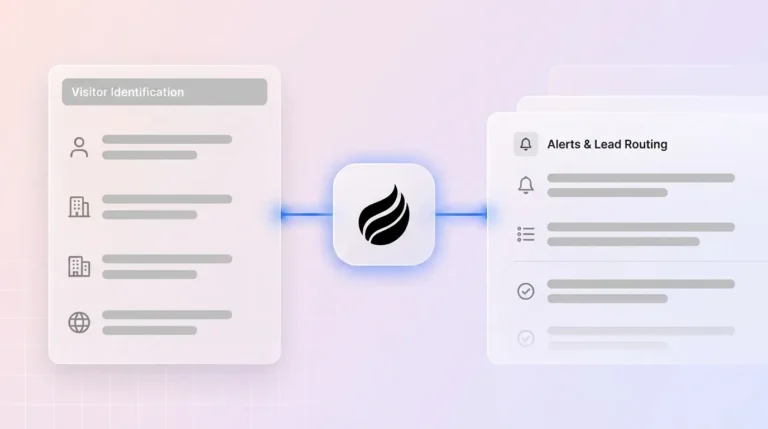
This five-step workflow represents the standard pattern for reverse IP lead generation. Coffee’s Visitor Identification feature executes this entire sequence natively. Where competitors such as RB2B and Warmly surface either company-only data or undifferentiated people lists, Coffee’s Suggested Leads capability uses the team’s defined buyer persona to recommend two or three specific individuals inside the visiting company to contact and surfaces their LinkedIn profiles for instant outbound without leaving the agent.

Reverse IP Enrichment Tools Compared for Revenue Teams (2026)
The table below compares leading reverse IP enrichment providers across dimensions that matter to B2B sales and RevOps teams. Numeric values are cited inline, and qualitative descriptors reflect publicly documented product capabilities.
| Provider | Primary Data Source | CRM-Native Actions | Buyer-Persona Filtering |
|---|---|---|---|
| IPinfo | RIR records, BGP routing data, proprietary crawls | API only, no native CRM write | None |
| WhoisXML API | Passive DNS logs, recursive resolver data, WHOIS records | API only, no native CRM write | None |
| DomainTools | WHOIS history, DNS passive data, domain registration records | SIEM and SOAR integrations, no sales CRM write | None |
| Leadfeeder | Daily-updated IP database with behavioral scoring | Native CRM sync, Slack and email alerts | Company-level only |
| Coffee | Licensed enrichment partners plus pixel behavioral data | Auto-create and update in Salesforce, HubSpot, or Standalone CRM, with one-click LinkedIn outreach | Suggested Leads, persona-matched individual contacts from visiting companies |
IPinfo and WhoisXML API function as infrastructure-grade APIs suited to developers building custom pipelines and require significant engineering effort to produce sales-ready CRM records. DomainTools focuses on cybersecurity workflows. Leadfeeder delivers company-level identification with CRM sync but does not filter to named buyer personas. Coffee is the only provider in this comparison that identifies named individuals, applies buyer-persona filtering via Suggested Leads, and writes enriched records directly into Salesforce, HubSpot, or its own CRM without additional tooling.
Step-by-Step Workflow to Connect Coffee with Your CRM
- Pixel Installation: Add Coffee’s custom-generated script to the
<head>tag of every page. Coffee verifies installation automatically. - API Authentication: Connect Coffee to Salesforce or HubSpot via OAuth 2.0. Salesforce’s Remote Process Invocation, Fire and Forget pattern enables the enrichment service to receive an immediate acknowledgment and continue without blocking the user journey, which keeps latency imperceptible.
- Field Mapping: Map enriched attributes such as company name, industry, employee count, contact title, and LinkedIn URL to the corresponding CRM fields for leads, contacts, and accounts.
- Deduplication Rules: Configure match logic on company domain and email address. Businesses should integrate data validation into pipelines by applying automated checks before routing to downstream CRM systems to prevent duplicate records from inflating pipeline counts.
- Measurement of Pipeline Influence: Tag every Coffee-sourced record with a lead source value. Track influenced pipeline by comparing deal velocity and close rates for Coffee-identified visitors against other lead sources using Coffee’s Pipeline Compare feature.
Ready to run this workflow today? Start your free trial and connect your CRM in under 15 minutes.
Privacy and Compliance Checklist for Reverse IP Enrichment
Because DNS-derived and reverse IP data can be partial, organizations should establish validation and review steps before pushing enriched results into CRM systems or downstream automation. Incomplete or misattributed data reduces lead quality and also creates compliance risk if personal data is processed without a valid lawful basis. Legal compliance for reverse IP enrichment requires attention to four areas.
- GDPR and CCPA Consent: Reverse IP enrichment at the company level generally does not constitute processing of personal data under GDPR when only firmographic attributes are captured. Individual-level identification, such as name and email, requires a lawful basis, and your privacy policy must disclose visitor identification practices.
- Data Retention: Define retention windows for enriched visitor records and purge records that do not convert to active pipeline within a defined period.
- SOC 2 Type 2: Coffee is SOC 2 Type 2 certified. Verify that any enrichment provider in your stack holds equivalent certification before granting CRM write access.
- CCPA Deletion Rights: Implement a process to honor deletion requests for California residents identified through visitor enrichment. Coffee does not use customer data to train public models.
Common Reverse IP Implementation Pitfalls
- Outdated IP Databases: Providers that update IP-to-company mappings infrequently produce stale records. Prioritize vendors with daily or continuous database refreshes.
- Missing Deduplication Logic: Without domain-based deduplication, each return visit from the same company creates a new lead record and corrupts pipeline metrics.
- Over-Reliance on Shared IPs: Traffic from cloud providers, co-working spaces, or residential ISPs resolves to the infrastructure operator, not the end company. Filter these connection types out of lead creation workflows.
- No ICP Filter: Routing every identified company into the CRM regardless of fit floods the queue with unqualified records. Coffee’s Suggested Leads feature applies buyer-persona criteria before surfacing contacts, so reps only see high-fit prospects.
Frequently Asked Questions
Does Coffee’s Visitor Identification integrate with Salesforce and HubSpot?
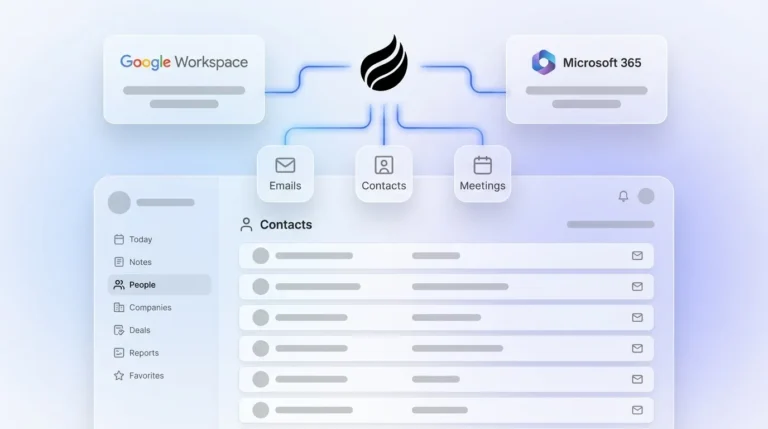
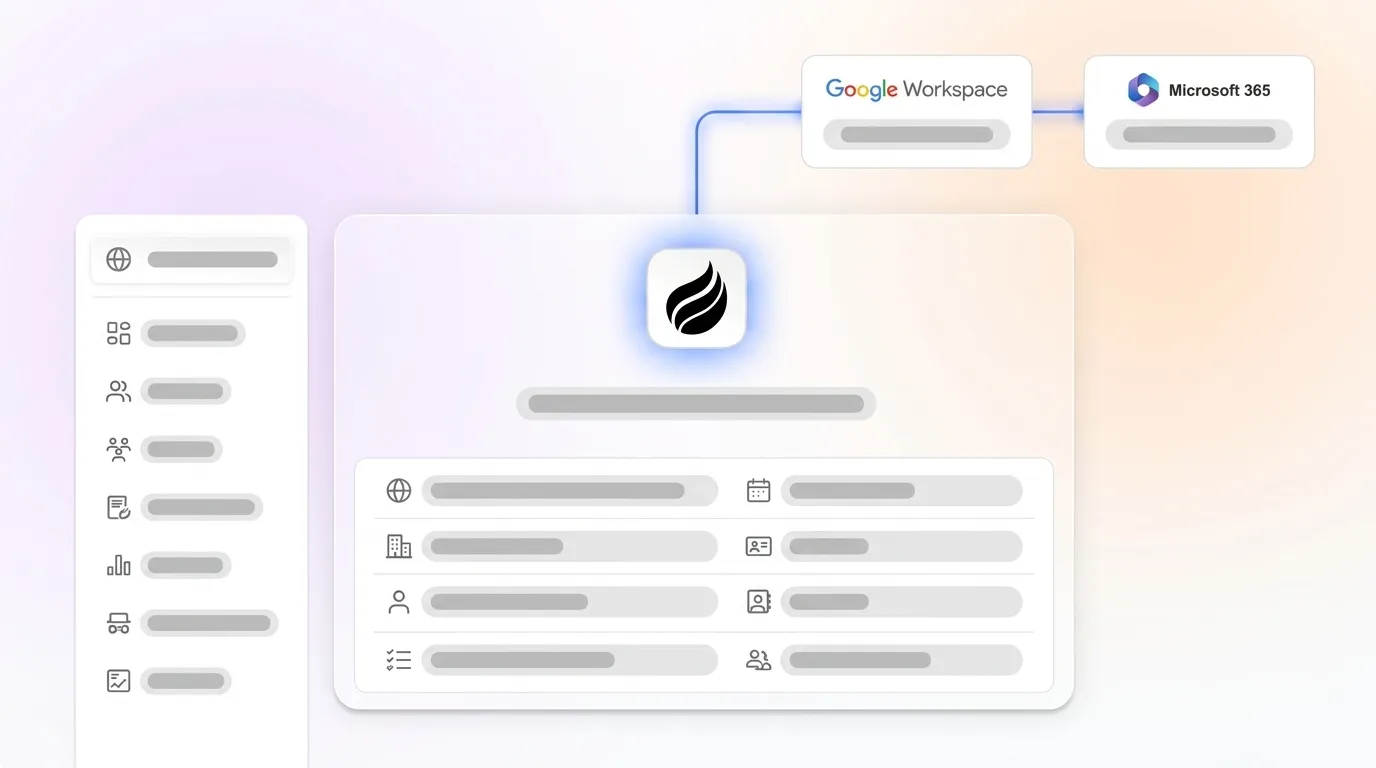
Coffee integrates directly with Salesforce and HubSpot. It operates as either a Standalone CRM or a Companion App layered on top of an existing Salesforce or HubSpot instance. A simple OAuth authentication allows the Coffee Agent to sync enriched visitor data, create or update records, and write insights back to the primary CRM without manual intervention. For teams using other tools, Coffee also supports connections via Zapier, with deeper native integrations on the product roadmap.
Where does Coffee source its enrichment data?
Coffee combines its own pixel-captured behavioral data with licensed enrichment partners to return firmographic attributes such as company name, industry, size, and location. It also returns individual-level attributes including name, title, email, and LinkedIn profile, along with engagement signals such as pages visited, time on site, and first versus returning visit. The underlying data quality is comparable to dedicated enrichment tools such as Apollo for most mid-market B2B use cases, and it is included in the Coffee subscription without a separate vendor contract.
Is Coffee’s Visitor Identification compliant with GDPR and CCPA?
Coffee is SOC 2 Type 2 certified and GDPR compliant, and customer data is not used to train public AI models. For GDPR purposes, company-level identification from IP data is generally treated as firmographic rather than personal data. Individual-level identification requires disclosure in your privacy policy and a documented lawful basis. Coffee’s compliance posture supports teams in meeting these obligations, and the platform provides data retention controls to facilitate CCPA deletion requests.
What is the total cost of ownership compared to assembling a point-solution stack?
A typical mid-market stack for visitor identification and CRM enrichment might include a standalone visitor ID tool, a separate enrichment provider such as ZoomInfo or Apollo, a recording and transcription tool, and manual CRM maintenance time estimated at 8–12 hours per rep per week. Coffee consolidates visitor identification, contact and company enrichment, meeting intelligence, and CRM automation into a single seat-based subscription. There are no separate meters for API calls, enrichment credits, or AI processing, because the agent’s labor is included in the seat price, which reduces both vendor complexity and total spend.
How does Coffee’s Suggested Leads feature differ from other visitor identification tools?
Most visitor identification tools return either the visiting company’s name or an unfiltered list of employees. Coffee’s Suggested Leads capability applies the team’s defined buyer persona, including role, seniority, and function, to the visiting company’s employee data and surfaces the two or three specific individuals most likely to be the right contact. Their LinkedIn profiles appear for immediate outreach, and with one click the prospect is added to Coffee with all enrichment pre-filled and ready for a connection request, outbound email, or drip campaign enrollment.
Conclusion: Connecting Reverse IP Enrichment to Revenue
Reverse IP data enrichment closes a structural gap in B2B sales by linking anonymous website traffic to the named, qualified prospects that belong in a CRM. The technology is mature, the compliance framework is manageable, and the workflow integration patterns are well established. Execution now depends on whether the enrichment layer connects identification, persona filtering, and CRM automation in a single agent or forces teams to stitch together multiple point solutions manually.
Coffee delivers this complete workflow in one product. The platform combines a tracking pixel that identifies named individuals, a Suggested Leads engine that filters for ICP fit, and an agent that writes enriched records directly into Salesforce, HubSpot, or Coffee’s own Standalone CRM without human data entry. Other providers typically handle one or two of these steps. Coffee handles all of them.
Explore Coffee pricing and turn your anonymous website traffic into a repeatable pipeline channel.