Written by: Doug Camplejohn, CEO & Co-Founder, Coffee
Key Takeaways for HubSpot Teams Comparing Pipedrive Alternatives
- HubSpot should remain the system of record. The right Pipedrive alternative adds a pipeline layer instead of replacing your CRM.
- Five evaluation criteria define a true HubSpot-compatible tool: bidirectional sync, zero manual entry, real-time visibility, controlled TCO, and scalability.
- Agent-driven tools like Coffee Companion avoid duplication by writing directly to existing HubSpot records instead of running a parallel database.
- Frontline usability improves when activity logging, enrichment, and pipeline intelligence run automatically instead of relying on manual rep updates.
- Teams ready to add visual pipeline intelligence and automated activity capture to HubSpot can get started with Coffee today.
HubSpot and Pipedrive Alternatives: Integration Comparison Table
The table below compares five options across integration method, data-entry automation, pipeline intelligence, and HubSpot data-duplication risk. Pricing models differ by feature bundles and seat structure, so this guide explains cost considerations in the sections that follow.
| Solution | Integration Method | Data-Entry Automation | Pipeline Intelligence on HubSpot Data | HubSpot Duplication Risk |
|---|---|---|---|---|
| Coffee Companion | Agent-driven native auth, reads and writes HubSpot records directly | Fully automated: contacts, activities, and enrichment written by agent from email, calendar, and call transcripts | Pipeline Compare (week-over-week deal changes), Suggested Leads, real-time activity logging on HubSpot records | Low, agent writes to existing records, no parallel database |
| Attio | Native HubSpot sync, operates as a separate CRM layer | Partial, UI-driven entry still required for most deal updates | Relationship graph and timeline views, limited deal-change tracking | Medium-High, maintains its own object model alongside HubSpot |
| Apollo.io | Bidirectional contact data, engagement history, and campaign results sync; keeps HubSpot as single source of truth | Moderate, automates prospecting and sequencing, deal-stage updates still manual | Sequence analytics and engagement signals, pipeline stage intelligence limited | Low-Medium, contact duplication risk without deduplication rules |
| Salesforce Sales Cloud | Full CRM replacement, HubSpot integration via middleware or native connector | Low without additional configuration, sales reps spend only 35% of their time actually selling across legacy CRM environments | Advanced forecasting and reporting, but cross-object reporting requires predefined report types and significant admin involvement | Very High, replacing HubSpot creates full data migration risk and eliminates unified lifecycle reporting |
| Zapier-mediated Pipedrive sync | Middleware webhook triggers, event-based, not real-time | None, Zapier moves data between fields but does not generate or enrich it | None native, Pipedrive pipeline views do not surface inside HubSpot | High, two active databases with asynchronous sync create persistent duplication and field-conflict risk |
Managing HubSpot and Pipedrive Together Without Data Duplication
A native, zero-duplication Pipedrive–HubSpot integration exists in 2026 via Cloop. The most common approach, connecting the two platforms through Zapier, creates two active databases that sync on event triggers instead of in real time. When a deal updates in Pipedrive, a Zap fires to update HubSpot, and field conflicts, sync delays, and mapping errors accumulate over time. Expanding a focused sales tool like Pipedrive often introduces hidden total cost of ownership through additional third-party tools, and the middleware layer itself becomes a governance liability.
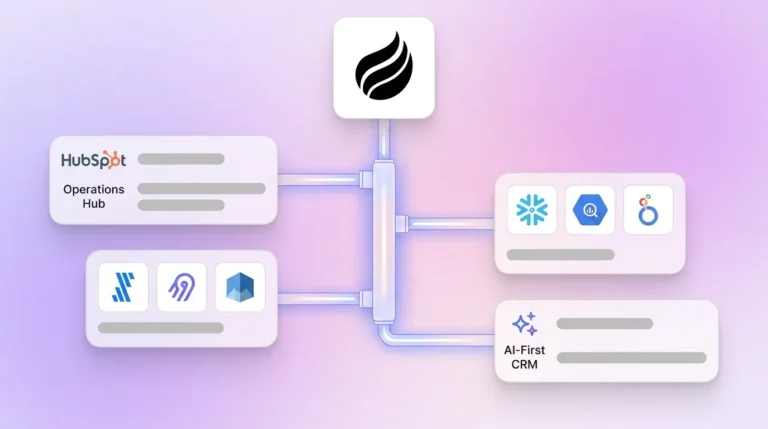
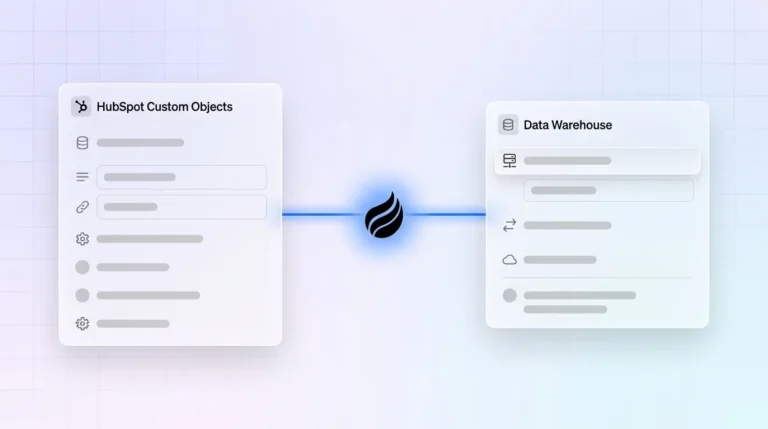
Agent-driven approaches remove this architecture entirely. An agent authenticates directly with HubSpot, reads existing records, and writes enriched data back to the same objects. This design avoids a parallel database, removes field-mapping maintenance, and eliminates sync delay. Agentic workflows automate CRM updates, account research, and next-action planning across active opportunities. These workflows respond to real-time cues instead of scheduled triggers.

Native integrations like Apollo’s sit between these extremes. Apollo’s native integration maintains HubSpot as the single source of truth, as noted in the comparison above, but deal-stage intelligence and pipeline visualization remain outside HubSpot’s interface.
Frontline Usability of HubSpot-Compatible Pipeline Tools
Frontline usability depends on three dimensions: rep experience, manager visibility, and administrative burden. These factors determine whether a tool becomes part of daily workflows or sits unused beside HubSpot.
For reps, the critical variable is whether the tool requires them to log activity or whether the tool logs it for them. Sales teams lose substantial time chasing data across disconnected systems, with a significant portion of the working week spent on coordination rather than progress. Any tool that requires reps to switch interfaces, copy data between systems, or manually update deal stages simply moves this coordination burden to a new location instead of eliminating it.

For managers, role-based dashboards are essential: SDRs need activity and sequence metrics, account executives need deal velocity and stage conversion data, and sales managers need team pipeline coverage. A pipeline layer that surfaces this inside HubSpot, without a separate login or export, reduces the inspection overhead that consumes weekly pipeline reviews.
For RevOps, administrative burden becomes the deciding factor once reps and managers adopt the tool. Automatic activity logging tied directly to deals and contacts minimizes manual data entry while preserving the CRM as the system of record. This requirement removes Zapier-mediated solutions and partial-automation tools from serious consideration.
Best-Fit Use Cases for Pipedrive and HubSpot Sync Alternatives
Coffee Companion fits mid-market teams with 20 to 500 employees that rely on HubSpot and need visual pipeline intelligence, automatic activity capture, and enrichment without adding headcount or replacing their CRM. RevOps leaders who own data quality and forecast accuracy are the primary buyers.
Apollo.io fits teams whose main gap is outbound prospecting and sequencing rather than pipeline visualization. It works well as a demand-generation layer when HubSpot pipeline management already functions adequately.
Attio fits smaller teams evaluating a CRM switch instead of a HubSpot add-on. Its object model competes with HubSpot rather than extending it, which makes it a poor fit for teams with significant HubSpot investment.
Zapier-mediated Pipedrive sync fits only teams with minimal HubSpot data, low deal volume, and tolerance for periodic sync errors. This pattern does not scale for mid-market RevOps.
Salesforce Sales Cloud fits large enterprises with dedicated IT teams and budgets for ongoing administration. Salesforce typically requires an implementation partner along with weeks or months of configuration before the system can be launched. That cost and timeline disqualify it for teams seeking a fast pipeline layer.
Operational and Long-Term Factors for HubSpot Pipeline Tools
Change management: 70% of companies fail to effectively integrate their sales plays into CRM and revenue technology tools, with only about 20% realizing full value from their investments. This failure usually comes from adoption resistance when tools demand new logins, new data entry habits, or unfamiliar interfaces.
Once a tool clears the adoption hurdle, data governance becomes the next operational concern. Data governance: Governance criteria for AI features in pipeline tools include assigning a named owner for each AI capability, defining acceptable use policies, conducting quarterly audits of AI recommendations against actual outcomes, and implementing data quality gates before AI models are applied.
After governance standards are in place, performance at scale determines whether the architecture will hold up. Performance at scale: Enterprise architectures in 2026 increasingly favor agents that coordinate across multiple applications through shared protocols rather than point-to-point integrations. Middleware-dependent solutions accumulate technical debt as pipeline complexity grows.
Cost structure then shapes long-term viability. Hidden costs: Expanding a focused sales tool like Pipedrive often introduces hidden total cost of ownership through additional third-party tools, creating a long-term scalability concern for layered point solutions. Zapier task limits, enrichment subscriptions, and per-seat add-ons compound quickly at mid-market scale.
Decision Framework Checklist for Scoring Pipedrive Alternatives
Use this checklist to score each candidate tool against the five criteria on a 0 to 2 scale (0 = not met, 1 = partially met, 2 = fully met). A qualifying solution should score 8 or higher out of 10.
- Bidirectional sync (0–2): Data should flow automatically in both directions without middleware or manual triggers.
- Zero manual entry (0–2): The tool should capture contacts, activities, and deal changes from email, calendar, and calls without rep input.
- Real-time visibility (0–2): Pipeline intelligence should appear inside HubSpot without exports, separate logins, or scheduled syncs.
- Total cost of ownership (0–2): Enrichment, recording, forecasting, and pipeline visualization should roll into one predictable seat-based cost.
- Scalability (0–2): The tool should support role-based dashboards, data governance controls, and growing deal volume without a platform migration.
Coffee Companion addresses all five criteria through its agent architecture. The agent automatically creates and enriches contacts from Google Workspace or Microsoft 365, logs every activity against the correct HubSpot record, and surfaces Pipeline Compare, a week-over-week deal change view, directly on HubSpot data without exports. Suggested Leads identifies which specific contacts at visiting companies match the buyer persona, closing the loop from pipeline gap to outbound action. Seat-based pricing with no per-feature metering keeps total cost of ownership predictable.

Run this checklist in a live Coffee demo against your current HubSpot setup.
Frequently Asked Questions
How long does implementation take for a bidirectional HubSpot pipeline tool?
Implementation timelines vary significantly by integration method. Agent-driven tools like Coffee Companion connect through a simple authentication to Google Workspace or Microsoft 365 and begin logging activity immediately. Most teams become operational within a single business day. Native integrations like Apollo’s require field mapping and deduplication rule configuration, which typically takes two to five days for a mid-market team.
Middleware solutions like Zapier-mediated Pipedrive sync require Zap construction, field mapping, error monitoring setup, and ongoing maintenance. Initial configuration can take one to two weeks, followed by recurring admin time. Full CRM replacements like Salesforce require implementation partners and weeks or months of configuration before launch.
What is the migration effort when adding a Pipedrive-style layer to HubSpot?
Adding a pipeline layer to HubSpot, instead of replacing it, removes the migration risk associated with CRM switches. HubSpot remains the system of record, so no contact, company, deal, or activity data needs to move. The effort stays limited to authenticating the new tool, configuring any role-based views or pipeline stage mappings, and communicating the workflow change to reps.
For Coffee Companion specifically, the agent begins enriching and logging against existing HubSpot records immediately after authentication, with no data import required. Teams that consider a full switch from Pipedrive to HubSpot face a more significant migration, including deal history, custom fields, and activity logs, which typically requires a structured data export and import process with deduplication review.
Which options meet SOC 2 and GDPR requirements for sales data?
Coffee is SOC 2 Type 2 certified and GDPR compliant. Data processed by the Coffee Agent is not used to train public models, and all enrichment data comes from licensed data partners. Apollo.io claims SOC 2 certification (vendor-attested, unverified) and publishes GDPR compliance documentation including a DPA. Salesforce Sales Cloud holds ISO 27001 certification with extensive enterprise security controls.
Attio publishes ISO 27001 compliance but does not list SOC 2 Type 2 on its security page. Zapier-mediated integrations introduce a third-party data processor into the chain, so compliance depends on Zapier’s certifications and the data-handling terms of each connected app, which requires independent review for regulated use cases. Teams in industries with strict data residency requirements should confirm regional data storage options with each vendor before selection.
How can teams evaluate pipeline visibility directly on existing HubSpot data without exports?
The most direct evaluation method connects a pipeline intelligence tool to a live HubSpot sandbox or a limited production subset. Teams can then check whether deal changes, activity logs, and stage movements appear in the tool’s interface without any manual export step. Coffee Companion’s Pipeline Compare feature visualizes week-over-week changes, including progressed deals, stalled opportunities, and new additions, directly from HubSpot data captured by the agent. This setup makes it possible to run a pipeline review inside the tool on day one.
For tools that require exports or scheduled syncs, the evaluation should include a latency test. Update a deal stage in HubSpot and measure how long it takes for the change to appear in the pipeline view. Any lag greater than a few minutes indicates a middleware dependency that will compound at scale.
Conclusion: Selecting the Right Pipeline Layer for Your HubSpot Instance
Mid-market sales teams and RevOps leaders committed to HubSpot do not need a new CRM. They need a pipeline layer that meets all five criteria: bidirectional sync, zero manual entry, real-time visibility, controlled total cost of ownership, and scalability without platform migration. Zapier-mediated Pipedrive sync fails on duplication risk and real-time visibility. Attio competes with HubSpot instead of extending it. Apollo.io addresses prospecting but not pipeline intelligence. Salesforce replaces HubSpot entirely, which introduces migration cost and reporting complexity.
Coffee Companion is the only agent-driven solution in this comparison that writes enriched data back to existing HubSpot records automatically, surfaces Pipeline Compare on live deal data, and consolidates enrichment, activity logging, and pipeline intelligence into a single seat-based cost. The agent handles the data entry so HubSpot stays accurate. Accurate HubSpot data then produces the forecasts and pipeline reviews that RevOps leaders actually need.
Deploy Coffee’s AI agent on your existing HubSpot instance today.