Written by: Doug Camplejohn, CEO & Co-Founder, Coffee | Last updated: September 12, 2026
Key Takeaways For Using MEDDIC In Real Deals
- MEDDIC is a six-letter B2B qualification framework (Metrics, Economic Buyer, Decision Criteria, Decision Process, Identify Pain, Champion) that separates real opportunities from wishful ones.
- Each letter must be proven with verifiable, buyer-supplied evidence rather than seller assumptions or hypotheses.
- Common failure modes include single-threaded access to the Economic Buyer, missing Decision Process steps and dates, and champions who will not spend political capital.
- MEDDIC fits complex, multi-stakeholder enterprise deals, while simpler frameworks like BANT work well for small, fast-cycle transactions.
- Coffee automatically captures and maintains MEDDIC data from emails, calendars, and transcripts so sales teams can qualify deals on evidence instead of memory. See how Coffee keeps MEDDIC fields current.
What Does MEDDIC Stand For?
Each letter represents a control point that must be alive with verifiable evidence for a deal to count as qualified.
- Metrics: The quantified business outcome the buyer expects.
- Economic Buyer: The person with discretionary budget authority.
- Decision Criteria: The formal evaluation requirements.
- Decision Process: The sequence of steps, approvers, and dates to signature.
- Identify Pain: The specific problem and its cost.
- Champion: The internal advocate who sells for you when you are not in the room.
These six elements work together to define who matters in the deal, what outcome they care about, and how the decision will move to signature. For a deeper breakdown of each component and how they interact across deal stages, see the Full MEDDIC Definition Guide and the MEDDIC Complete Framework Guide 2026. Knowing the definitions is only the first step; the real work is proving each letter with evidence.
What Each Letter Actually Requires You To Prove
Metrics
Metrics means the quantified business outcome the buyer expects, a number they would defend in front of their CFO. A defensible Metrics answer has a baseline, a target, and a source expressed in the buyer’s own units. If a manufacturing operations lead says “we lose roughly $400K per quarter in unplanned downtime,” that is a Metric. If the rep calculated the number in a value model the buyer has never seen, it is a hypothesis.
Sample Discovery Question: “What measurable business outcome does this project need to hit, and how will you report it internally?”
Red Flag: The prospect cannot name a number or a baseline. A metric the seller supplied is a hypothesis; a metric the buyer supplied is a commitment.
Economic Buyer
The Economic Buyer is the single person who can approve the spend and release the budget. Users, influencers, and procurement contacts cannot. Single-threaded economic-buyer access is one of the most common MEDDIC failure modes: the champion “represents” the economic buyer for months, and the deal detonates the day that buyer hears the price for the first time.
Sample Discovery Question: “Who signs, and have they told you personally what they need to see?”
Red Flag: Your champion says “I’ll sell it internally.” A deal without documented contact with the Economic Buyer historically closes 50% less often. This gap becomes even more costly when the Champion is weak.
Decision Criteria
Decision Criteria are the explicit, written requirements a buyer will use to choose a vendor, including technical, commercial, and political factors in priority order. The best evidence is written and comes from the buyer, such as an evaluation grid, a scoring sheet, or a procurement requirements list. Reps who get their product’s strengths into the criteria rubric early in the cycle win 2–3× the rate of reps who learn the criteria after the RFP lands.
Sample Discovery Question: “What does the written shortlist say a vendor must do to be considered?”
Red Flag: Criteria listed only in the order that flatters your product. A criteria list where the rep wins every line has not been discovered. It has been imagined.
Decision Process
Decision Process is the actual sequence of steps, approvers, and dates between today and a signed contract. A real process has named gates, named owners, and named dates. The second most common MEDDIC miss is Decision Process, because reps accept “a few weeks” as a timeline. A single quarter written in the close date field is a wish, not a process.
Sample Discovery Question: “Can you walk me through the exact steps and dates from today to a signed agreement?”
Red Flag: A single quarter written in the close date field with no named steps or owners.
Identify Pain
Identify Pain requires naming the specific problem driving the purchase and what it costs the business if nothing changes. Pain must be quantified in the buyer’s own language. Seller product vocabulary does not count. “They want to be more efficient” is not pain. “They’re losing $1.4M a year in churn driven by onboarding delays” is pain.
Sample Discovery Question: “What is this problem costing you per quarter today?”
Red Flag: Pain described in your product vocabulary rather than the buyer’s. If the rep can only articulate the pain by naming their own category, the buyer has not felt it yet.
Champion
A Champion is an internal advocate with influence, motivation, and the willingness to spend political capital on your behalf. The test, popularized by Jack Napoli, is the “risky favor.” This person will introduce you to the economic buyer on short notice, forward an internal document, or push back on procurement. Evidence is behavioral, such as an introduction made, a document shared, or a budget defended. Friendly contacts who have not done advocacy work are coaches at best and contacts at worst.
Sample Discovery Question: “What has this person done that cost them political capital on our behalf?”
Red Flag: They are enthusiastic but have never gone out on a limb. A deal with a real Champion closes at 70–80%, compared to 15–25% for a “supportive contact” who will not fight for the budget. This gap compounds when access to the Economic Buyer is also weak.
See Coffee Keep Every MEDDIC Field Updated so an AI agent maintains these six fields automatically.

MEDDIC Vs. BANT: When Each Framework Fits
The choice between MEDDIC and BANT comes down to deal complexity. BANT (Budget, Authority, Need, Timeline) was created by IBM in the 1960s for a simpler era. Buying cycles were shorter and committees were smaller. BANT qualifies a transaction by asking four questions: Is there budget? Is there authority? Is there need? Is there a timeline?
For transactional or inbound SMB deals where one buyer controls the decision and the cycle runs under 30 days, BANT provides sufficient depth. MEDDIC qualifies a complex, multi-stakeholder deal. Forrester’s State of Business Buying 2024 found that B2B purchases involve an average of 13 decision-makers, with 89% spanning two or more departments. BANT’s single “Authority” question collapses that reality into one person who rarely exists in enterprise deals.
MEDDIC maps the full committee, tests the Champion, documents the Decision Process, and quantifies Pain, the dimensions BANT never captures. Many teams run a hybrid. SDRs screen with BANT, and AEs qualify with MEDDIC once a deal clears a deal-size or stakeholder threshold.
MEDDIC Vs. MEDDICC Vs. MEDDPICC
Beyond BANT, there are also variants of MEDDIC itself. MEDDICC adds a second C for Competition, requiring the rep to name the incumbent, the alternative vendor, and the “do nothing” option. It earns its keep in crowded categories where a strong technical fit still loses to a cheaper or safer choice. MEDDPICC inserts P for Paper Process, the legal, security, and procurement steps that stall deals after a verbal yes. Andy Whyte codified this variant in his 2020 book, and it has become dominant in enterprise SaaS because deals increasingly die in procurement rather than in the evaluation.
A practical selection rule: companies selling deals above $100K ACV usually run MEDDPICC; mid-market companies often run MEDDICC; SMB deals usually run the original MEDDIC or a simpler framework. For a full comparison, see the MEDDPICC guide.
Why MEDDIC Fails In Practice
Regardless of which variant you choose, the framework only works if the data behind it is accurate and current. The framework is only as good as the data captured and acted on. A frustrated enterprise sales rep, writing in a Reddit r/sales thread, described the failure mode directly: “Reps fill out fields to make managers happy. Managers check boxes to survive pipeline reviews. Nobody actually uses it to decide the state of a deal.”
The failure is operational, not conceptual. MEDDIC qualification data lives in emails, call transcripts, and calendar invites. B2B data degrades by 25–30% per year, meaning a scorecard filled out three months ago is likely outdated on at least two criteria. If a human has to manually transcribe qualification evidence into the CRM, it either never gets entered or goes stale within a week. The root cause is treating MEDDIC as a process to impose on reps, rather than a workflow to install in the tool they already use. The box-ticking criticism that surfaces in practitioner forums is real, and it reflects a systems problem.
How To Run A MEDDIC Deal Review
A MEDDIC deal review goes letter by letter and asks for evidence, not status. The manager’s job is to inspect gaps, not completeness. A practical 10-minute agenda per deal keeps the conversation focused.
- Minutes 0–2 — Metrics And Economic Buyer: Can the rep quote the buyer’s number back verbatim? Has the rep spoken directly with the Economic Buyer, or is the champion still gatekeeping?
- Minutes 2–7 — Champion And Decision Process: What has the Champion done that cost them political capital? Walk through every named step and date to signature. If any step is missing an owner or a date, mark it red.
- Minutes 7–10 — Identify Pain And Next Steps: Is the pain quantified in the buyer’s language? What is the one action this week that moves the weakest letter up by two points?
As you work through the agenda, mark each deal green, yellow, or red per dimension. This scoring turns the review into a repeatable diagnostic. For any deal above average contract value, MEDDIC letters should be re-scored weekly inside the AE–manager one-on-one, because a champion can be reorganized or a metric can stop mattering in weeks, not quarters.
Is MEDDIC Certification Worth It?
Certification through MEDDIC Academy or Force Management’s Command Series can standardize language across a distributed team and give new hires a shared definition of what a Champion or a Decision Criterion actually is. Certification does not change what a rep says in the fourteenth minute of a live discovery call, and it does not fix the underlying problem that qualification data is not captured and kept current. Certification is a knowledge foundation; execution is a systems problem. The gap between knowing MEDDIC and running it consistently is where most teams fail, and that gap is where tooling can help.
How Coffee Makes MEDDIC Work Without The Manual Data Entry
Coffee is an AI CRM Agent that automatically captures qualification data and other CRM information from emails, calendars, and call transcripts. It can be configured to match sales frameworks such as MEDDIC, SPICED, or BANT. As a result, Metrics, Economic Buyer, Decision Criteria, Decision Process, Identify Pain, and Champion stay current without a rep typing a single field.

Coffee’s agent structures its meeting notes according to MEDDIC (as well as BANT and SPICED), so consistent qualification data enters the system after every call. The Pipeline Compare feature shows week-over-week changes across every deal. Managers can run reviews on evidence rather than interrogation, and they avoid spreadsheet exports.
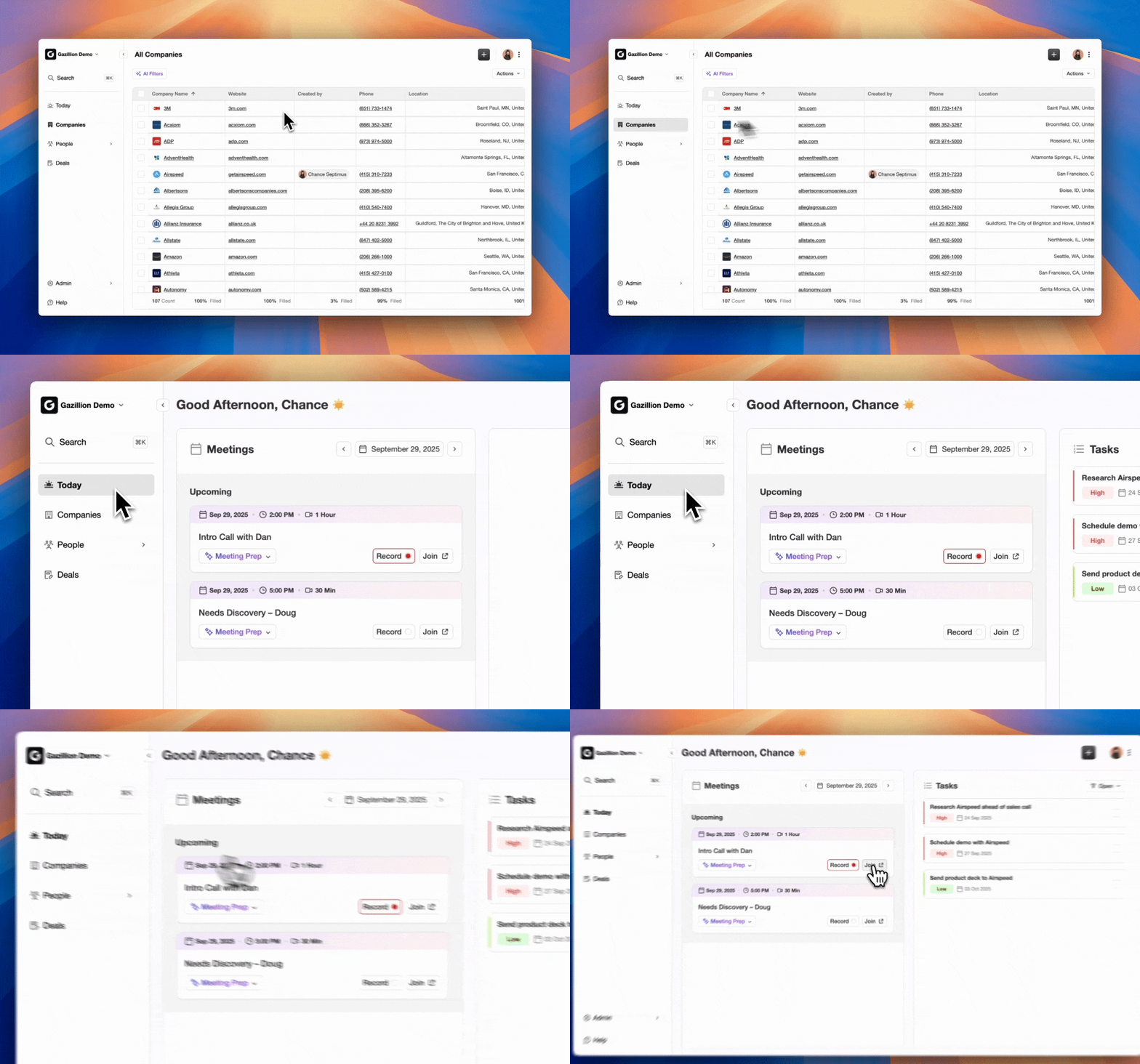
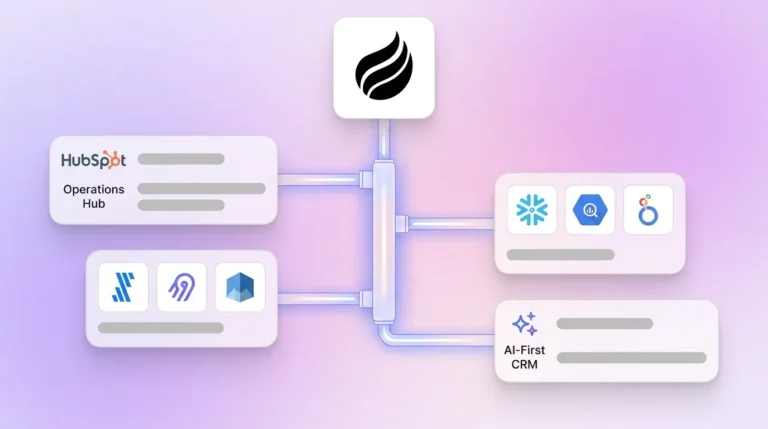
Coffee works two ways. It operates as a standalone AI-first CRM for small teams that have outgrown spreadsheets. It also runs as a Companion App on top of Salesforce or HubSpot for mid-market teams that want to keep their system of record while eliminating manual data entry. Market data shared by Coffee indicates that 71% of sales reps say they spend too much time on data entry, and Coffee’s agent saves reps 8–12 hours per week by handling that work automatically. Coffee is SOC 2 Type 2 and GDPR compliant, and data is never used to train public models.

Start your free Coffee trial and run MEDDIC on evidence, not memory.
Frequently Asked Questions
Is MEDDIC Still Relevant In 2026?
MEDDIC remains the dominant qualification framework in enterprise B2B SaaS. Buying committees have grown larger, procurement and legal reviews have become more rigorous, and boards punish forecast misses more severely than they did a decade ago. These conditions match the problems the framework was designed to address. The core six letters have not changed since 1996 because the underlying qualification problem has not changed.
What’s The Difference Between MEDDIC And MEDDPICC?
MEDDIC has six elements. MEDDICC adds a seventh, Competition, requiring the rep to name every alternative the buyer is evaluating, including doing nothing. MEDDPICC adds an eighth, Paper Process, covering the legal, security, and procurement steps that occur after a verbal yes and before a signed contract. MEDDPICC is now the standard for enterprise deals where procurement complexity is high.
Does MEDDIC Work For SMB Deals?
For deals under roughly $25K ACV with a single decision-maker and a cycle under 30 days, full six-element MEDDIC adds overhead that exceeds the deal margin. Most practitioners recommend a lighter variant that focuses on Economic Buyer and Decision Process at minimum, or pairing BANT with a champion check for mid-market deals. Reserve the full framework for deals where the qualification work is trivial relative to the deal value.
How Do You Keep MEDDIC Data Current?
MEDDIC data decays because qualification signals live in call transcripts, email threads, and meeting notes, but get filtered through manual entry. Reps backfill CRM fields from memory hours or days after the conversation, which introduces timing gaps and bias. As discussed earlier, manual entry causes data to go stale quickly. The most reliable fix is a system that captures qualification evidence automatically from every customer interaction.
Coffee’s AI CRM Agent does exactly that. It reads emails, calendars, and call transcripts and keeps every MEDDIC field current without requiring a rep to type a single update.