Written by: Doug Camplejohn, CEO & Co-Founder, Coffee
Key Takeaways
- A sales engagement platform runs outreach and sequences, while the CRM stores prospect and deal history as the system of record.
- Effective prospecting follows a seven-stage workflow with clear ownership across strategy, data sources, enrichment, and engagement layers.
- Teams see stronger pipeline when they buy in this order: Data Source → Enrichment → Engagement → CRM.
- Modern platforms should support frameworks like the 2-2-2 rule, the 5 P’s of prospecting, and the 30-day rule through automation and smart timing.
- Teams that want one agent-led system can use Coffee to handle data, enrichment, and execution in a single platform.
How Prospecting Works With A Sales Engagement Platform
Effective prospecting runs through a seven-stage workflow, and each stage has a clear owner. When ownership is not explicit, pipeline problems follow. A sales engagement platform is the system of action, where reps execute outreach, log activities, and track what works, while the CRM is the system of record beneath it.
- ICP And Buyer-Persona Definition (Owned By: Strategy/RevOps). Define the ideal customer profile by company size, industry, geography, and buyer role. Every downstream stage depends on a precise definition.
- List Building (Owned By: Data Source). Source a raw list of companies and contacts that match the ICP. A dedicated prospecting database handles this work instead of the sales engagement platform.
- Enrichment And Qualification (Owned By: Enrichment Layer). Add accurate job titles, verified emails, and firmographic data to raw records. Outreach only works when the underlying data is clean, and platforms with built-in verification, bounce detection, and enrichment reduce wasted sends and protect domain reputation.
- Multi-Channel Sequencing (Owned By: Engagement/Execution Layer). Build and launch automated sequences across email, phone, and social. Cadence automation coordinates outreach across channels in a structured rhythm, such as an email on day one, a LinkedIn connection on day three, and a call on day seven, with each step triggered automatically.
- Personalization (Owned By: Engagement/Execution Layer). Tailor messages at scale using dynamic variables and AI-generated copy. Outreach anchored to specific signals such as hiring changes or funding rounds achieves 3.2x higher reply rates than template-based campaigns.
- Automated Follow-Up (Owned By: Engagement/Execution Layer). Execute timed, reply-aware follow-ups so persistence does not depend on memory. Eighty percent of sales require five or more touches, yet 44% of sellers stop after one, which makes persistence the single largest separator between top and bottom reps.
- Measurement (Owned By: CRM And Engagement Layer). Track reply rates, meetings booked, and opportunities created, then sync all activity back to the CRM automatically.
Explore Coffee’s Agent-Led Workflow to run all seven stages in one place.

Where Data And Enrichment Shape Sales Engagement Results
The seven-stage workflow only works when the stack is assembled in the right order: Data Source → Enrichment → Engagement → CRM. Many teams start with the engagement layer and treat data as a later fix, which produces high activity volume and weak pipeline.
A sales engagement platform performs at the level of the contact data that feeds it, because automation scales whatever targeting you give it. A sequence sent to a list with 25% invalid emails does more than underperform. Bad data causes a chain reaction. Bounces drag down sender reputation, which pushes even correct emails into spam and drops reply rates. Reps respond by sending more volume, so a data problem is routinely misdiagnosed as a rep performance problem.
Different tools cover different parts of this data and enrichment picture.
- Enterprise Execution Platforms. Outreach serves roughly 390,000 weekly active users across more than 6,000 organizations and offers deep Salesforce integration, forecasting, and AI sequence writing, but it relies on external contact data. Salesloft focuses on engagement and revenue orchestration and also depends on outside data sources for contacts.
- Data-Plus-Outreach Platforms. Apollo bundles a 275M+ contact database with sequencing and a dialer, which suits outbound teams that want data and sequences in one tool.
- Dedicated Contact Data Providers. ZoomInfo operates a large B2B data platform with 500M+ contacts and up to 95% accuracy on first-party data.
- Enrichment And Workflow Tools. Clay enriches data and automates workflows by pulling from more than 75 data sources to support waterfall enrichment.
- CRM-Native Sequences. HubSpot Sales Hub keeps engagement close to the HubSpot CRM with sequences, calling, and pipeline management in one system.
- Salesforce-Native Teams. Salesforce’s Agentforce Sales writes activity data directly into Salesforce and removes the need for a separate integration layer.
Choosing Between Salesforce Sales Engagement And Outreach
Teams comparing these two options usually decide based on how central Salesforce is to their stack. A Salesforce-native sales engagement tool writes activity data directly into Salesforce without a separate integration layer, which removes sync delays and reduces admin work. Outreach operates as a best-of-breed platform with deeper sequencing logic, large-scale A/B testing, and advanced deal management, but it requires a maintained integration and a longer onboarding period. Outreach onboarding typically takes four to six weeks before reps are fully productive, and customers often need eight to ten active sequences per rep with 400+ prospects enrolled monthly to justify the platform’s cost. Teams that cannot sustain that volume usually benefit more from a lighter-weight or all-in-one alternative.
Prospecting Fundamentals A Sales Engagement Platform Should Support
Common “People Also Ask” prospecting questions point to frameworks that platforms rarely explain clearly. Each framework below connects directly to what a sales engagement platform can enforce and where human judgment still matters.
What Is The 2-2-2 Rule In Sales? The 2-2-2 rule is a follow-up framework: follow up two days after an initial meeting, two weeks after that if there has been no response, and two months after that if the prospect still has not re-engaged. A sales engagement platform enforces this through automated sequences with timed steps, so reps do not juggle dates manually. Each touchpoint should add value, such as a relevant case study or new insight, instead of a generic check-in.
What Are The 5 P’s Of Prospecting? One version of the 5 P’s of prospecting is Purpose, Preparation, Personalization, Persistence, and Practice, though the framework varies by trainer. A sales engagement platform directly supports Personalization through dynamic variables and AI-generated copy, and it supports Persistence through automated multi-step sequences with stop-on-reply logic. Purpose, Preparation, and Practice stay with the rep and leadership team.
What Is The 30-Day Rule In Prospecting? Jeb Blount’s 30-Day Rule states that prospecting work done today determines the opportunities available 30 days later, the deals closed 60–90 days later, and the commission earned 90–120 days later. Automation inside the platform keeps this work consistent. Sequences continue to run while reps sit in meetings, so the pipeline does not go dark.
What Is The Golden Rule Of Prospecting? The number one reason for failure in sales is an empty pipeline, and the root cause of an empty pipeline is the failure to consistently prospect. A platform supports this discipline as a tool. Automating a broken prospecting process simply makes that broken process move faster.
How Much Time Should A Salesperson Spend Prospecting? Jeb Blount recommends a minimum of two hours of dedicated, distraction-free prospecting time daily, ideally at the start of the day, and notes that even one skipped day creates a pipeline gap that appears 30–90 days later. A platform reduces manual data entry and research during that window, which frees reps to spend more of it on actual outreach. Among B2B field sales professionals surveyed by SPOTIO, 65% spend five or more hours per week on manual CRM data entry.
Multi-Channel Sequences And AI Prospecting Agents In Practice
A modern sales engagement platform coordinates more than timed emails. Several core mechanics separate high-performing programs from average ones.
- Stop-On-Reply Behavior. The moment a prospect responds, their sequence pauses automatically so no one receives an automated email after a real conversation starts.
- Send Throttling. Daily send limits per inbox protect sender reputation. Capping campaign sends at 30 emails per single inbox per day avoids concentrating reputation risk on one account and reduces the probability of ISP filtering.
- Personalization Variables With Fallbacks. Dynamic fields such as first name, company, and title, combined with automatic fallbacks, keep every email readable and human even when some fields are missing.
- Signal-Triggered Sequencing. Signal-led timing based on recent funding, leadership changes, public job postings, or technology adoption produces roughly twice the reply rate of generic cold campaigns against the same accounts.
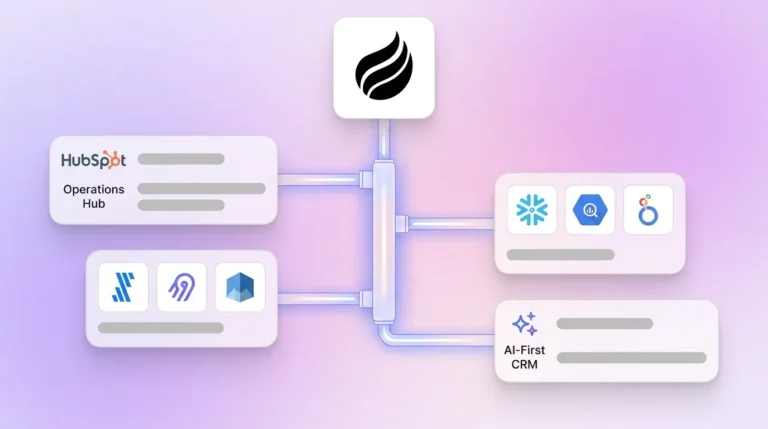
Coffee applies these mechanics inside an agent-led system. Coffee works with both structured and unstructured data and runs on a data warehouse foundation. It consolidates the data, enrichment, and execution layers into a single agent-led platform, which aligns with the stack order described above. The Coffee Agent handles data entry and enrichment automatically, builds targeted prospect lists through its natural-language Lead Finder search, and runs AI-generated campaigns from the rep’s own connected mailbox so outreach comes from a human address instead of a bulk-sending domain. Because campaigns run from a real mailbox, the agent can also identify anonymous website visitors as named leads matched to the buyer persona and surface the two or three people inside a visiting company who are worth contacting. That same data powers the Compare feature, which delivers week-over-week pipeline intelligence without manual CSV exports. Coffee can function as an AI-first CRM for small teams or as a companion app on top of Salesforce and HubSpot, and its seat-based pricing includes the agent’s unlimited labor.

See How Coffee Collapses The Stack for your team.
Measuring Prospecting In A Sales Engagement Platform
Activity metrics such as emails sent and calls logged appear first on most dashboards, yet they reveal little about pipeline health. More reliable sales engagement metrics include bounce rate, positive reply rate, call connect rate, meetings booked and held, sequence completion rate, and opportunities and pipeline created, while open rate has become unreliable due to Apple Mail Privacy Protection.
The outcomes that matter most are reply rate, meetings held, and opportunities created. No-shows quietly destroy 20–40% of “booked” meeting numbers. That is why held meetings and meeting-to-opportunity conversion, rather than booked meetings alone, reveal whether sequencing produces pipeline or only activity.
Measurement quality depends on data quality. Accurate inputs create accurate reporting. Coffee’s automatic activity logging and pipeline tracking replace manual CSV exports and extra reporting tools, so the numbers leadership reviews match what actually happens in the pipeline.
Replace Manual Reporting With Coffee to get automatic pipeline intelligence.
Frequently Asked Questions
What Does A Sales Engagement Platform Do Vs. A CRM?
A CRM acts as the system of record. It stores contact information, account histories, deal stages, and pipeline status, and it answers retrospective questions about what happened and where a deal stands. A sales engagement platform acts as the system of action. It executes outreach, automates follow-up sequences, logs activities, and surfaces which messages and cadences convert. Most teams connect the two, with the engagement platform feeding activity data back to the CRM through a bidirectional sync. The CRM captures what happened, and the engagement platform drives what happens next.
Does A Sales Engagement Platform Include Prospect Data?
Most platforms focus on execution and rely on external data. Outreach and Salesloft require a separate data source such as ZoomInfo, Apollo, or Clay to populate the contacts that sequences target. Apollo is the most notable exception, as noted above, bundling that same large contact database with its sequencing capability. Coffee includes data and enrichment natively through its Lead Finder and automatic enrichment features, which removes the need for a separate data subscription for many teams.
How Do AI Prospecting Agents Work?
AI prospecting agents autonomously research accounts, identify ICP matches from a database or enrichment layer, and draft personalized outreach for rep review before sending. The strongest implementations rely on signal-triggered targeting, such as funding events, leadership changes, and technology installs, instead of static list-based sending, and this approach consistently produces higher reply rates. Coffee’s Agent handles this process end to end. It scans emails and calendars to auto-create contacts, enriches records with job titles and LinkedIn profiles, builds prospect lists from natural-language commands, generates multi-step campaign copy, and identifies anonymous website visitors as named leads matched to the buyer persona.

Is My Data Secure With Coffee?
Coffee is SOC 2 Type 2 and GDPR compliant. Data is not used to train public models. For teams in regulated industries or those with strict data governance requirements, Coffee’s security posture covers the core compliance requirements that procurement teams evaluate.
How Does Coffee’s Seat-Based Pricing Work?
Coffee uses straightforward seat-based pricing. Teams pay for human seats, and the agent’s unlimited labor is included. There is no complex metering on LLM usage, enrichment credits, or AI actions. This model keeps total cost of ownership predictable and avoids the per-credit surprises that appear with data providers and enterprise engagement platforms that bill separately for enrichment, dialer minutes, and AI features.
Conclusion: Turning Activity Into Pipeline
A sales engagement platform serves as the execution layer of prospecting, automating sequences, enforcing follow-up cadences, and tracking engagement across channels. The seven-stage prospecting workflow shows that data and enrichment must be in place before the execution layer can convert activity into pipeline.
Teams evaluating platforms get better results when they focus on how each option handles the data problem and connects data, enrichment, and execution. Verified lists, warmed sending infrastructure, and a tightly connected system across these layers produce consistent meetings and opportunities.
Coffee brings the data-in layer and the execution layer into one agent-led platform so prospecting work turns into pipeline more reliably. Get Started With Coffee Today to see that consolidated approach in action.