Key Takeaways
- LinkedIn delivers 15–25% reply rates for targeted outreach, far above email’s typical 1–9% median.
- Email wins on volume with thousands of daily sends, while LinkedIn Core plans limit users to 50 InMails per month.
- Coordinated LinkedIn and email sequences increase meeting booking rates and purchase conversions compared with single-channel outreach.
- Manual data entry across disconnected tools reduces CRM ROI, while AI-driven unification removes this workload.
- Power your hybrid prospecting with Coffee’s AI agent that auto-captures and enriches leads from LinkedIn and email.
How This Guide Compares LinkedIn and Email Prospecting
This analysis compares LinkedIn prospecting, including Sales Navigator, InMails, and connection requests, with cold email sequences for B2B outbound meetings. The comparison focuses on response rates, volume capacity, cost per lead, deliverability, personalization depth, automation capabilities, and meeting conversion rates. Data quality sits underneath every metric because fragmented data reduces CRM adoption and skews performance reporting. 71% of sales reps say they spend too much time on data entry, which creates “garbage in, garbage out” outcomes. Coffee’s AI agent addresses this problem with automated List Builder queries such as “Find VPs using Salesforce” and Visitor ID technology that converts anonymous website traffic into named LinkedIn and email prospects.

2026 Evaluation Criteria for LinkedIn and Email
Performance metrics show clear gaps between LinkedIn and email. Targeted outreach to well-matched ICP prospects with personalized LinkedIn messages can achieve 15–25% or higher reply rates, while B2B cold email reply rates range from 1–9% (median 4%) across 74 verified country markets. This response advantage comes with a tradeoff in volume. Email supports thousands of daily sends, while LinkedIn Sales Navigator Core provides 50 InMail messages per month.
Cost structures also differ. Email infrastructure costs vary by sending volume and tooling, while LinkedIn Sales Navigator Core costs US$119.99 per month and Advanced costs US$159.99 per month (USD). Deliverability, personalization depth, automation capabilities, and meeting conversion rates round out the evaluation framework and help teams decide when to prioritize each channel.
LinkedIn vs Email Prospecting: 2026 Comparison Table
The table below summarizes how LinkedIn and email compare across core performance metrics so you can see strengths and tradeoffs side by side.
| Metric | ||
|---|---|---|
| Response Rate | 15–25% or higher for targeted outreach | 1–9% (median 4%) |
| Monthly Volume | 50 InMail credits on Core plan | Thousands daily |
| Cost per Lead | $60 to $350 (ads) | Varies |
| Meeting Conversion | Often higher than email for engaged prospects | 1–2% |
Hybrid strategies combine LinkedIn’s higher response rates with email’s scale, which helps teams increase total meetings while controlling cost per lead. See how Coffee’s agent auto-captures leads from both channels into your CRM.
Deep-Dive Analysis: Strengths and Limits of Each Channel
LinkedIn Prospecting Pros and Cons in 2026
LinkedIn excels at trust-building because every message arrives inside a professional context. Personalized LinkedIn messages can achieve strong reply rates, and InMail open rates can reach 85%. Profiles, endorsements, and mutual connections act as built-in credibility signals that warm up outreach. These strengths make LinkedIn ideal for high-value accounts and relationship-led sales cycles.
Volume limits create the main drawback. Many new LinkedIn accounts stayed within 50–100 weekly invites without triggering warnings, based on aggregated PhantomBuster customer data from 2024. These limits force careful prioritization and restrict heavy automation, which caps total outreach volume.
Email Prospecting Pros and Cons in 2026
Email dominates on volume and automation. Teams can send thousands of emails daily with the right infrastructure, which supports rapid market testing and broad reach. Advanced A/B testing and complex automation sequences help refine messaging and timing at scale. This makes email a strong channel for systematic experimentation and follow-up.
Deliverability offsets some of that scale advantage. One in six legitimate marketing emails fails to reach the inbox because of spam filters and reputation issues. Many practitioners on Reddit describe a “LinkedIn for nurture, email for volume” approach that reflects this reality. Coffee addresses the shared challenge of fragmented data by unifying both channels. Visitor ID converts anonymous traffic into named LinkedIn and email prospects, and List Builder automates targeted prospecting across platforms while keeping records synchronized.

Hybrid LinkedIn + Email Playbook: Book 2x More Meetings
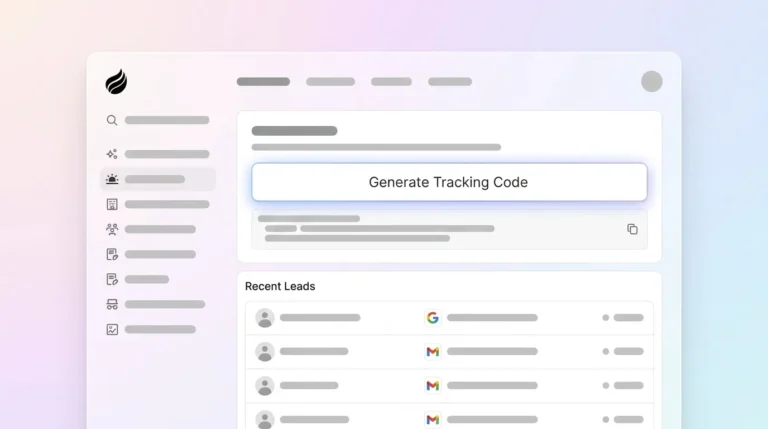
A coordinated hybrid sequence uses each channel where it performs best. Step 1 starts with Coffee’s Visitor ID pixel to identify anonymous website visitors and attach complete LinkedIn profiles and email addresses. This step creates a warm prospect pool from people already familiar with your brand.
Step 2 expands that pool with Coffee’s List Builder, which lets you run natural language queries such as “Find CTOs at funded SaaS companies using AWS.” These results add net-new prospects that resemble your warm visitors. Step 3 moves to LinkedIn, where you send connection requests with personalized notes that reference each company’s likely challenges and establish an initial relationship.
Step 4 follows accepted connections with contextual emails that mention the LinkedIn interaction and reinforce your message across channels. Step 5 runs in the background as Coffee’s agent logs every interaction, enriches contact data, and tracks engagement across LinkedIn and email so reps avoid manual updates.

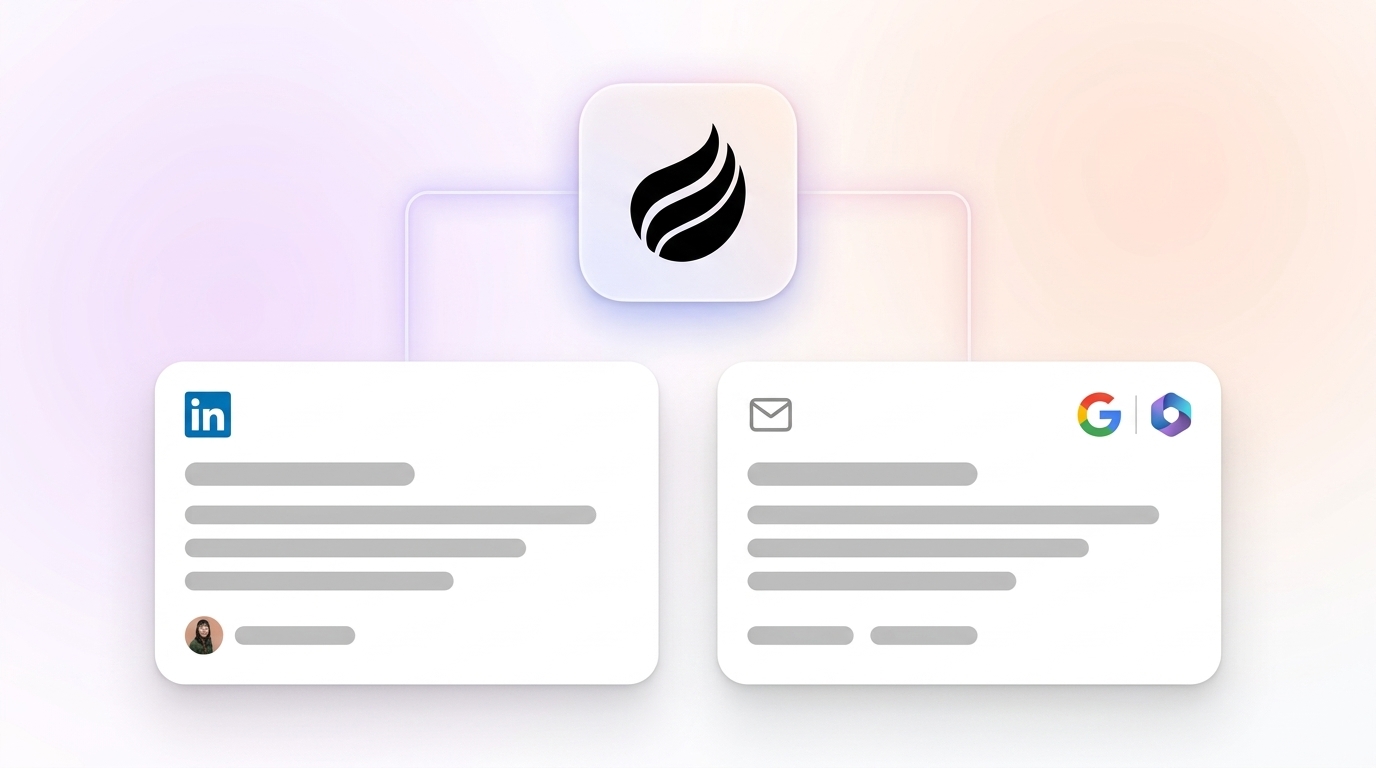
This coordinated approach produces measurable gains. Multi-channel sequences often achieve higher meeting booking rates, and omnichannel campaigns can generate higher purchase rates than single-channel efforts. Unified data management keeps messaging consistent for prospects and removes repetitive data entry for sales teams.
Unified Prospecting Stack: Tools That Support LinkedIn and Email
Many teams still rely on a fragmented stack that includes Sales Navigator for LinkedIn research, Lemlist or Instantly for email sequences, ZoomInfo for data enrichment, and manual CRM updates. This setup creates data silos, duplicate records, and workflow friction for reps. Coffee replaces this patchwork with a single AI agent that enriches prospects, logs interactions, and maintains data quality across channels.
Users save 8–12 hours weekly on data entry while gaining Visitor ID capabilities that competitors such as RB2B and Warmly do not provide. Coffee’s List Builder also removes the need for separate prospecting tools by supporting natural language queries that span both LinkedIn and email databases.
Pitfalls and When to Use LinkedIn, Email, or Both
Common pitfalls appear when teams push each channel beyond its strengths. LinkedIn fatigue arises when reps over-automate without real personalization, which reduces response rates and harms brand perception. Email faces growing deliverability challenges as spam filters tighten and sending practices lag behind new standards.
Team maturity shapes the right mix. Early-stage companies often gain more from LinkedIn’s relationship-building focus, while established teams rely on email’s volume capacity to cover larger markets. Underneath these choices, data fragmentation remains the core operational problem. 71% of sales reps say they spend too much time on data entry, which leads to poor CRM adoption and “shadow CRMs” in spreadsheets.
Coffee’s agent removes this friction by automatically capturing, enriching, and organizing prospect data from both channels so teams can choose the right mix without worrying about manual updates. See how Coffee’s agent maintains clean prospecting data for every outreach sequence.
FAQ
What do Reddit discussions say about LinkedIn vs email prospecting in 2026?
Reddit users generally favor hybrid approaches and report that LinkedIn often delivers higher response rates than email. The most upvoted advice frames this as “LinkedIn for relationship building, email for scale.” Many sales professionals recommend starting with LinkedIn connections, then following up via email for prospects who engage. Coordinated sequences across both platforms consistently generate more meetings than either channel alone.
Which channel books more meetings in 2026?
Hybrid strategies usually book the most meetings overall. LinkedIn often converts prospects to meetings at higher rates than email’s 1–2%, but email’s scale produces more total touches. Companies that run unified LinkedIn and email campaigns report higher meeting booking rates, and many achieve meaningfully better conversion than email-only programs.
Cold email vs LinkedIn: which should I prioritize?
Your priority depends on goals, audience size, and resources. LinkedIn favors quality over quantity with higher response rates, stronger trust-building, and better meeting conversion for targeted accounts. Email favors volume and automation, which supports broad market testing and rapid scaling. Most successful B2B teams combine both, using LinkedIn for high-value prospects that need relationship development and email for wider coverage and structured follow-up.
How does Coffee improve LinkedIn and email prospecting?
Coffee’s AI agent addresses data fragmentation between LinkedIn and email. The Visitor ID feature converts anonymous website traffic into named prospects with LinkedIn profiles and email addresses. List Builder supports natural language prospecting queries across both platforms so reps can build targeted lists quickly. The agent then logs all interactions, enriches contact data, and maintains CRM hygiene, which removes manual data entry and prevents “garbage in, garbage out” performance data.
What are realistic 2026 benchmarks for hybrid prospecting?
Teams can expect strong response rates for personalized LinkedIn outreach and B2B cold email reply rates in the 1–9% range, with a 4% median for targeted campaigns. Well-coordinated hybrid approaches often achieve higher meeting booking rates than either channel alone. Volume benchmarks include 50–100 weekly LinkedIn invites for many new accounts without triggering warnings, based on PhantomBuster’s 2024 data, plus thousands of emails per month.
Cost per qualified lead typically ranges from $60 to $350 for LinkedIn Ads, with lower average costs for email. Hybrid strategies improve ROI by combining better targeting with higher conversion rates. Ready to roll out a hybrid LinkedIn and email playbook powered by Coffee’s AI agent?