Key Takeaways
- Lightweight CRM tracking scripts use minimal JavaScript in your site’s head tag to capture visitor data and send it to CRMs or Google Sheets. They rely on IP lookups and simple events, and they help you work around many ad blockers and cookie limits.
- DIY scripts support basic event tracking with localStorage and webhooks but often lose data because of browser restrictions and do not include AI enrichment.
- Google Apps Script gives you free server-side integration with Sheets for automated lead logging, which reduces client-side vulnerabilities and manual data entry.
- Coffee’s AI pixel adds server-side persistence, individual visitor identification, persona scoring, and one-click CRM syncs with tools like HubSpot and Salesforce.
- Teams can move beyond DIY limitations by using Coffee’s production-ready solution. Start your free trial with Coffee today for reliable, GDPR-compliant tracking.
How Lightweight CRM Tracking Scripts Work
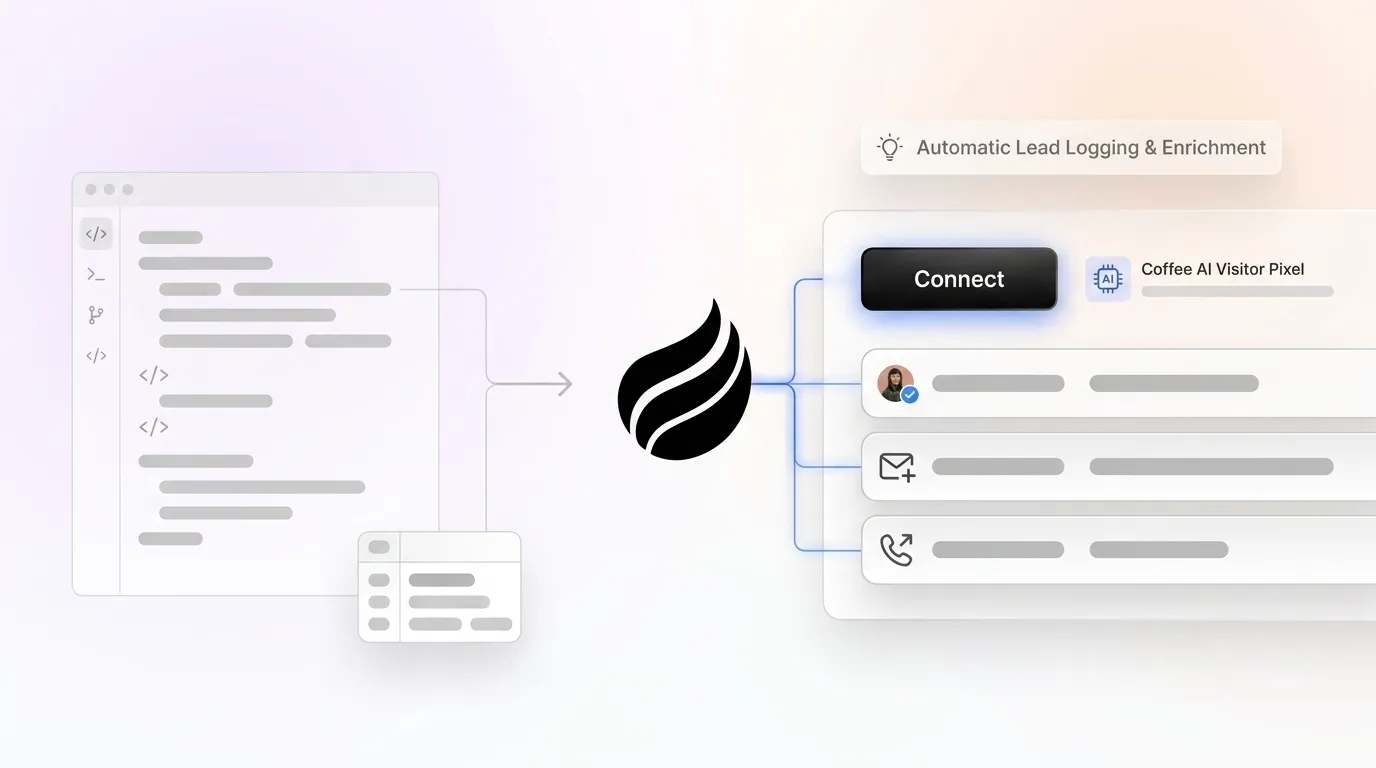
A lightweight CRM tracking script is a small JavaScript snippet in your website’s head tag that tracks visitor behavior and sends it to your CRM or spreadsheet. It uses IP reverse lookup and simple events to capture names, emails, companies, and page interactions, then pushes this data to your chosen destination. The script focuses on essential event tracking, UTM parameter capture, localStorage persistence, and POST endpoint connections instead of heavy analytics features.
Key components include:
- Event tracking for form submissions and page views
- UTM parameter and referrer capture
- localStorage persistence for return visits
- Webhook POST endpoints for data transmission
DIY solutions often lose data on browser refresh, so webhooks help preserve events across sessions. GDPR compliance requires consent management via CMP before any tracking begins. With these fundamentals in place, you can explore free implementation options that show how the core tracking pieces fit together.
Free Lightweight CRM Tracking Script Examples
Basic JavaScript with localStorage for Visitor Tracking
This first example gives you a simple browser-based script that tracks visitors and sends data to a webhook endpoint. Follow these 5 steps to implement basic visitor tracking so you end up with a working script that records visitor IDs, page paths, and referrer data, then posts it to your backend.
- Add this script to your website’s head tag.
- Replace “YOUR_WEBHOOK_URL” with your endpoint.
- Test in incognito mode to verify data capture.
- Monitor console logs for debugging.
- Validate that your webhook receives visitor data.
<script> (function() { const visitor = { id: localStorage.getItem('visitor_id') || Date.now(), page: window.location.pathname, referrer: document.referrer, timestamp: new Date().toISOString() }; localStorage.setItem('visitor_id', visitor.id); fetch('YOUR_WEBHOOK_URL', { method: 'POST', headers: { 'Content-Type': 'application/json' }, body: JSON.stringify(visitor) }).catch(console.error); })(); </script>Google Apps Script Sheets Integration for Lead Logging
This second example moves processing to the server so you can log leads directly into Google Sheets with fewer client-side issues. Create automated lead logging to Google Sheets by following these steps.
- Create a new Google Sheet for lead tracking.
- Open Apps Script and paste this doPost handler.
- Deploy the script as a web app with execute permissions.
- Copy the webhook URL for your JavaScript.
- Test with sample POST data.
function doPost(e) { const sheet = SpreadsheetApp.getActiveSheet(); const data = JSON.parse(e.postData.contents); sheet.appendRow([data.id, data.page, data.referrer, data.timestamp]); return ContentService.createTextOutput('Success'); }Set proper CORS headers in your Apps Script deployment to avoid browser errors. Server-side processing in this setup reduces data loss from ad blockers that target client-side scripts and helps address the refresh issues mentioned earlier.
The Best Lightweight CRM Tracking Script: Coffee’s AI Visitor Pixel
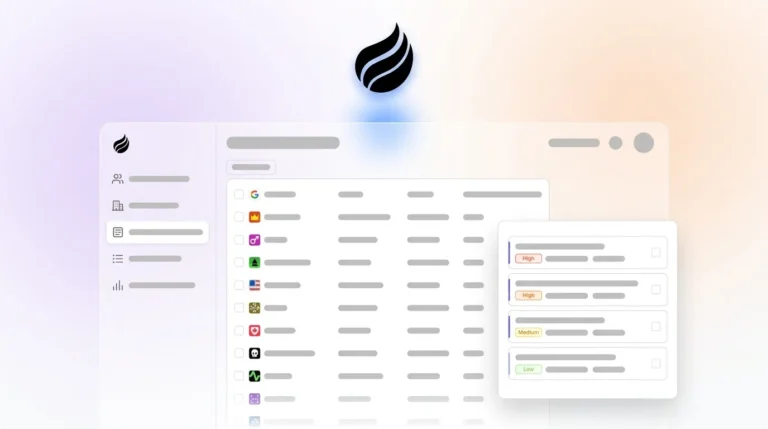
Coffee’s AI-powered visitor identification pixel turns anonymous website traffic into enriched CRM leads with intelligent visitor scoring and automatic data enrichment. Competing tools often identify only the visiting company, while Coffee identifies specific individuals with LinkedIn profiles, job titles, and persona-based lead scores.
Use this 5-step installation process to start tracking with Coffee’s pixel.
- Sign up for a free trial at Coffee.ai.
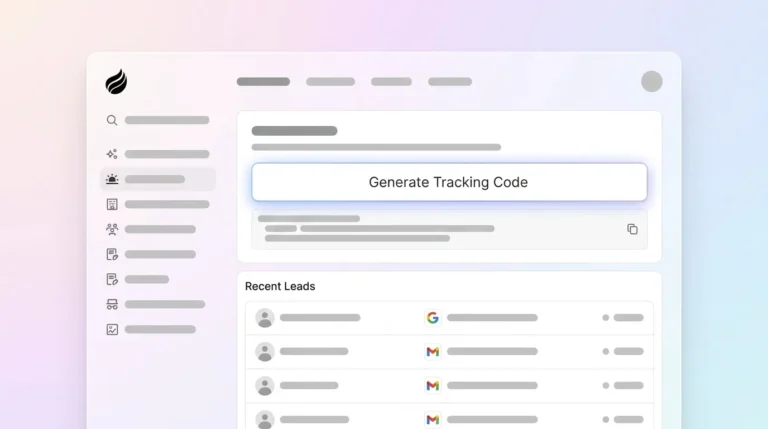
- Copy your custom pixel code into your website’s head tag.
- Verify installation through the Coffee dashboard.
- Configure Slack or email alerts for high-fit visitors.
- Connect CRM sync for HubSpot or Salesforce integration.
<script> (function(c,o,f,f2,e){ c[e] = c[e] || function() { (c[e].q = c[e].q || []).push(arguments); }; c[e].l = 1 * new Date(); var a = o.createElement(f); a.async = 1; a.src = '//pixel.coffee.ai/YOUR_PIXEL_ID.js'; var s = o.getElementsByTagName(f)[0]; s.parentNode.insertBefore(a, s); })(window, document, 'script', 'script', 'coffee'); </script>Key differentiators include individual visitor identification with persona scoring, automatic LinkedIn profile enrichment, and AI-powered lead recommendations. Coffee’s February 2026 Intelligence layer adds deep business context so the AI can suggest next steps and highlight high-intent visitors.
The table below shows how Coffee’s server-side architecture and AI enrichment address the core limitations of DIY tracking scripts.
| Feature | DIY Scripts | Coffee AI Pixel |
|---|---|---|
| Visitor Persistence | Browser-dependent | Server-side tracking |
| Data Enrichment | Basic IP lookup | AI persona scoring |
| CRM Integration | Manual setup | One-click sync |
| Lead Scoring | None | AI-powered recommendations |
For small teams ready to move beyond spreadsheets and manual logging, explore Coffee’s plans on Coffee’s pricing page and pick the setup that fits your pipeline.
Scaling Lightweight CRM Tracking from DIY to Production
Scaling from DIY scripts to a production-ready setup means solving for data persistence, enrichment quality, and integration complexity. Coffee’s companion app connects directly to existing HubSpot or Salesforce instances and imports enriched visitor data without forcing you to change current workflows.
Success metrics include more logged leads, better pipeline accuracy, and less manual data entry time for your team. Achieving these results at scale requires an architecture that balances privacy compliance with tracking reliability, and hybrid client-server architectures deliver that balance by processing sensitive data server-side while keeping event capture lightweight in the browser.
GitHub-based free solutions lack AI enrichment and often need constant maintenance to keep up with browser changes and privacy updates. Privacy-compliant implementations need centralized consent management and server-side data processing so you can respect user choices while still collecting reliable data.
Teams that outgrow DIY scripts can review plans and features for Coffee’s AI pixel on Coffee’s pricing page to see how persistent, maintenance-free visitor identification fits into their stack.
FAQ
Is Coffee’s lightweight CRM tracking script free to start?
Yes. Coffee offers a free trial that lets you test visitor tracking, lead scoring, and data quality before you commit to a paid plan.
How do DIY scripts compare to Coffee’s AI pixel for reliability?
DIY scripts run into browser limitations, ad blocker interference, and cookie restrictions that cause frequent data loss. Coffee’s server-side architecture avoids these issues and delivers persistent visitor tracking with AI-powered enrichment, so data quality stays high even when visitors use strict privacy tools.
What is the typical setup time for lightweight CRM tracking scripts?
Basic DIY JavaScript implementations require webhook configuration and thorough testing. Google Apps Script integrations add setup and debugging time for the web app and permissions. Coffee’s AI pixel installs quickly with a short snippet and guided verification in the dashboard.
How accurate is Coffee’s visitor identification compared to manual tracking?
Coffee’s AI-powered visitor identification delivers high-accuracy lead matching through persona scoring and LinkedIn profile enrichment. The system identifies specific individuals instead of only companies, and it provides job titles, contact information, and behavioral insights that manual tracking rarely captures consistently.
Is Coffee’s tracking solution GDPR compliant?
Yes. Coffee’s visitor identification pixel respects user privacy preferences and GDPR requirements. The system includes built-in data processing controls that support compliance while still maintaining effective tracking for legitimate business purposes.
Conclusion
Lightweight CRM tracking scripts help teams move from manual lead tracking to a more structured pipeline without jumping straight into complex enterprise tools. You can start with free DIY scripts to learn how visitors behave on your site, then move to Coffee’s AI pixel when you need persistent, enriched lead identification that turns anonymous traffic into qualified prospects.
To see “good data in, good data out” in practice, start a free trial of Coffee’s production-ready visitor identification on Coffee’s pricing page.