Key Takeaways
- Lead Forensics’ IP-only tracking misses most B2B journeys, while modern platforms deliver named leads and persona matching for clear visibility.
- Coffee ranks #1 among top 10 alternatives with agent-powered automation, native Salesforce and HubSpot integration, and pixel-to-CRM enrichment.
- The intent data market grows from $3.79B in 2026 to $17.95B by 2035, driven by AI features and ROI-focused tools like Coffee instead of heavy enterprise suites.
- Coffee removes manual data entry and generates 2-3 qualified leads per visitor company through persona scoring and real-time notifications.
- Switch to Coffee for automated visitor identification that reliably boosts pipeline, and review Coffee’s pricing and plans to see how it fits your team.
Intent Data in 2026: What It Is and How to Judge Platforms
Intent data platforms fall into two categories: visitor identification tools that name website visitors and companies, and buyer intent platforms that track behavioral signals like content consumption and search surges. 70% of the B2B buying journey happens anonymously before prospects contact sales, so these tools surface activity you cannot see in your CRM.
Key evaluation criteria include data accuracy (IP-based vs named identification), signal depth, native CRM integrations with Salesforce and HubSpot, automation capabilities, AI-powered features, and measurable ROI. These criteria matter because platforms that excel across them, especially in signal depth and automation, enable organizations to achieve higher conversion rates through signal-qualified leads instead of basic lead scoring.
Top 10 Lead Forensics Alternatives in 2026
We evaluated platforms across these criteria to find alternatives that balance accurate identification, strong integrations, and real automation. The ranking below highlights tools that reduce manual work while maintaining high data quality, with Coffee leading on native CRM connectivity and agent-powered workflows.
| Rank | Platform | Annual Pricing | Integration Score | Key Differentiator |
|---|---|---|---|---|
| 1 | Coffee | $588/year (Pro plan) | Native SF/HubSpot (10/10) | Agent pixel-to-CRM automation |
| 2 | Leadfeeder | Starting at €99/month | GA/HubSpot native (8/10) | Easy visitor identification |
| 3 | RB2B | Free with paid plans | Zapier integration (7/10) | Person-level identification |
| 4 | 6sense | $35,000-$150,000/year | Salesforce native (9/10) | Predictive ABM intelligence |
| 5 | Bombora | Bombora’s annual pricing is $25,000–$80,000/year for small to mid-market companies (50–500 employees) with standard integrations or mid-market deployments tracking 100–200 topics. | API integration (7/10) | Topic surge signals |
| 6 | Warmly | Warmly pricing is $15,000-$30,000/year | Zapier integration (7/10) | Real-time visitor alerts |
| 7 | Visitor Queue | Visitor Queue’s annual pricing starts at $211 USD for 100 leads, with higher tiers up to $1,728 USD for 1,000 leads (20% off monthly rates). | HubSpot native (8/10) | Real-time notifications |
| 8 | Demandbase | $40,000-$120,000/year | Salesforce native (9/10) | Full ABM platform |
| 9 | ZoomInfo | Custom add-on pricing | SF/HubSpot native (8/10) | Contact enrichment depth |
| 10 | Clearbit | $10,000+/year | Zapier integration (6/10) | Basic enrichment |
Coffee leads on automation and CRM integration, reducing tool sprawl while delivering roughly twice as many qualified leads through its agent-powered approach. See Coffee’s pricing and automation features to compare it with your current stack.

Why Coffee Outperforms Lead Forensics
Coffee: Agent-Powered Pixel-to-Pipeline Automation
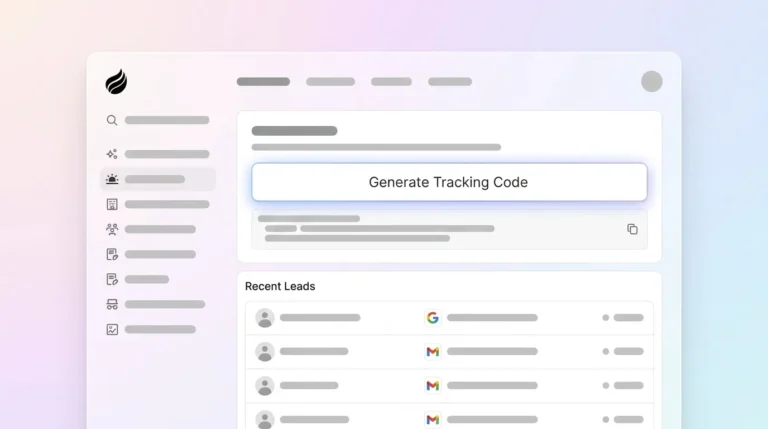
Coffee’s agent turns website visitor identification from a manual lookup tool into an automated lead generation engine. After you install a single tracking pixel, Coffee identifies named visitors with job titles, email addresses, and LinkedIn profiles, then enriches records and syncs them to Salesforce or HubSpot with persona-fit scoring.
The Coffee agent suggests 2-3 specific individuals within visiting companies who match your buyer persona, which removes the guesswork that IP-only tools create. Real-time Slack notifications surface high-intent visitors, and one-click LinkedIn outreach plus automated email sequences complete the path from anonymous traffic to qualified pipeline.

Leadfeeder: Solid but Manual
Leadfeeder handles basic website visitor identification with clean Google Analytics integration and pricing that starts at €99/month. It still lacks the agent-driven automation that Coffee provides, so teams must qualify leads and enter CRM data by hand.
6sense vs Lead Forensics: Enterprise ABM Power
6sense delivers advanced predictive analytics and account-based marketing orchestration, with customers reporting 80% or more pipeline increases from intent-targeted campaigns. Its $35,000-$150,000 annual pricing focuses on enterprise teams rather than SMB and mid-market buyers searching for Lead Forensics replacements.
Bombora: Topic Signals with Integration Gaps
Bombora offers high-quality topic surge data across over 5,000 websites in its co-op network. Customers report pipeline increases and faster 2-3 month ROI timelines, yet Bombora still needs extra tools for visitor identification and CRM enrichment, which creates the tool sprawl that Coffee removes.
Coffee’s “Good Data In, Good Data Out” philosophy addresses the core flaw of legacy systems that depend on manual human data entry. Explore Coffee’s automated data quality approach instead of extending manual entry workflows.
Visitor ID vs ABM Intent Platforms
The platforms above fall into two main categories based on their primary function. Visitor identification platforms like Coffee, RB2B, and Leadfeeder focus on naming anonymous website visitors and converting them into actionable leads. ABM intent platforms like 6sense, Demandbase, and Bombora track broader behavioral signals across many touchpoints to identify accounts that show buying intent.
For Salesforce and HubSpot users, Coffee Companion adds deep visitor identification to existing ABM or CRM setups. It offers seamless authentication and bi-directional sync, automatically creating enriched contact and company records without disrupting current workflows. The agent manages pixel installation verification, data mapping, and ongoing enrichment maintenance.
Best-Fit Use Cases and ROI by Team Size
Team size shapes platform fit because workflow complexity and existing infrastructure change as companies grow. SMB teams (1-20 employees) benefit most from Coffee Standalone because they need immediate lead generation without complex integrations, and the platform generates 2-3 qualified leads per visiting company through automated persona matching.

Mid-market teams (20-500 employees) usually run Salesforce or HubSpot, so Coffee Companion strengthens these existing instances instead of replacing them. Enterprise teams (500+ employees) often require complex ABM orchestration that platforms like 6sense or Demandbase provide.
Organizations using layered intent signals achieve better conversion rates, but only when the data reaches their CRM without manual work. Coffee’s agent removes the manual data entry that consumes 71% of sales reps’ time, leaving only 35% for selling, and ensures that intent signals flow directly into actionable pipeline.
Pricing Tiers and Free Alternatives
This pricing breakdown shows how costs scale across team sizes and feature sets, and it highlights Coffee’s accessible entry point compared with enterprise-only platforms like Bombora.
| Platform | Starter Tier | Mid-Market | Enterprise |
|---|---|---|---|
| Coffee | Trial available | Coffee’s Pro plan annual pricing is $49 per month ($588 per year) for 1-25 active users | Custom |
| RB2B | Free | Paid plans | Custom |
| Leadfeeder | Free (limited) | Starting at €99/month | Custom |
| Bombora | N/A | Bombora’s annual pricing is $25,000–$80,000/year for small to mid-market companies (50–500 employees) with standard integrations or mid-market deployments tracking 100–200 topics. | $80,000+/year |
Lead Forensics’ API limits and complex implementation often require weeks of setup time. Coffee’s agent installs in minutes with automatic CRM authentication and data sync verification, so teams see value faster.
Switching from Lead Forensics: Migration Checklist
Migration from Lead Forensics involves replacing the tracking pixel, mapping existing contact data, and configuring CRM integrations. Coffee’s agent handles pixel verification, duplicate detection, and historical data import automatically, which reduces risk and effort for your team.
Teams frustrated with IP-only identification should prioritize platforms that provide named visitor data and automated CRM enrichment. Coffee addresses both needs through persona-fit scoring that delivers named contacts and suggested leads that remove the manual qualification work that makes Lead Forensics inefficient for modern sales teams.
FAQ
How does Coffee compare to RB2B for visitor identification?
Both Coffee and RB2B provide person-level website visitor identification, but Coffee adds AI-powered persona matching and suggested leads functionality. While RB2B shows everyone who visits your site, Coffee’s agent analyzes your ideal customer profile and recommends the 2-3 most relevant contacts within each visiting company. Coffee also includes native Salesforce and HubSpot integration with automated enrichment, while RB2B relies on Zapier connections that require manual setup and maintenance.
What 2026 privacy changes affect intent data platforms?
The shift toward on-device AI and edge intelligence enables privacy-compliant visitor identification by processing data locally rather than transmitting personally identifiable information to remote servers. Coffee’s agent architecture supports these privacy-first approaches while maintaining identification accuracy through behavioral analysis and first-party data enrichment.
Are there effective free intent data tools?
RB2B offers a free tier for basic visitor identification, and Leadfeeder provides limited free access to 7 days of data. These free tiers still lack the automated enrichment, CRM integration, and persona matching that drive real pipeline results. Coffee offers trial access so teams can experience the full agent workflow before committing.
How long does Lead Forensics integration typically take?
Lead Forensics implementations require time for pixel deployment, CRM mapping, and user training because of its complex interface and manual data export processes. Coffee’s agent manages installation verification and CRM sync in minutes, and automated data enrichment begins immediately after pixel deployment.
Which platform works best with HubSpot?
Coffee Companion provides deep HubSpot integration through native authentication and bi-directional sync. The agent automatically creates and enriches contact and company records, logs visitor activities, and updates deal stages based on website engagement. This approach removes the manual data entry and Zapier workarounds that most visitor identification tools still require.
Conclusion
Lead Forensics’ IP-only approach hides too many qualified prospects in today’s complex B2B buying journey. Coffee’s agent turns website visitor identification from a manual lookup tool into an automated pipeline generation engine, delivering named leads with persona-fit scoring and seamless CRM integration.
Stop settling for company names when you could have qualified contacts ready for outreach. Start identifying qualified contacts with Coffee today.