Key Takeaways for SMB Intent Data Buyers
- 6sense’s $50k+ annual costs and 3 to 6 month implementations make it a poor fit for SMB teams that need faster impact.
- Strong alternatives include Demandbase for enterprise ABM, ZoomInfo for enrichment, Bombora for cooperative intent, and Apollo for outbound-heavy SMBs.
- Coffee stands out for pixel-based visitor identification that turns anonymous visitors into named prospects supported by AI agent automation.
- Coffee helps reps create more pipeline per person, saves 8 to 12 hours each week on manual work, and connects cleanly with Salesforce and HubSpot.
- Start with Coffee’s SMB-friendly pricing to automate intent data workflows and increase pipeline efficiency without adding headcount.
Intent Data Basics and Reasons to Move Beyond 6sense
Intent data tracks buying signals from website visits, content consumption, and search behavior. Accounts that show a surge in relevant activity are more likely to enter active evaluation. This intelligence helps sales teams prioritize outreach and time their follow-ups more effectively.
6sense’s enterprise architecture creates barriers for SMBs. Teams face $50k+ annual minimums, complex setup that requires dedicated RevOps resources, and fragmented data that demands manual stitching. While B2B pipeline forecasting accuracy has improved in recent years, these gains mainly appear for teams with the budget and staff to implement complex systems correctly.
Modern alternatives respond to these gaps. They focus on accuracy, seat-based pricing under $100 per month, sub-week implementation, native CRM sync, and automation that removes manual work. Organizations using signal-qualified leads report higher conversion rates compared to traditional lead scoring because reps spend more time on accounts that are actually in market.
With these criteria in mind, the following tools represent practical 6sense alternatives for different team sizes and go-to-market motions.
Top 9 6sense Alternatives by Primary Use Case in 2026
1. Enterprise ABM: Demandbase
Demandbase fits large organizations that need account-level orchestration across channels. Pricing starts around $60k+ annually and includes deep AI buying-stage prediction with multi-channel campaign automation. Implementation is complex but delivers strong value for mature enterprise teams.
2. Data Enrichment: ZoomInfo
ZoomInfo combines a database of 300M+ contacts with bundled intent signals. ZoomInfo’s GTM Workspace uses AI agents to surface in-market accounts and draft personalized outreach. It works especially well for teams already invested in ZoomInfo’s contact and company data.
3. Cooperative Intent: Bombora
Bombora operates as a pure-play intent provider. Its Company Surge® product aggregates content consumption from 5,000+ B2B publisher sites across 12,000+ topics. Teams can plug this data into existing tools, and Bombora’s 86% exclusive dataset gives broader coverage than many competitors.
4. SMB Outbound: Apollo
Apollo.io offers a free tier with 10,000 credits monthly and paid plans starting at $49 per month. It combines 230M+ verified contacts with intent scoring and automated sequence triggers. This mix supports outbound-heavy SMB teams that want prospecting, sequencing, and basic intent signals in one place.
5. Compliance-Focused: Cognism
Cognism focuses on GDPR-native architecture for European markets. Its Chrome extension enriches profiles with contact data while enforcing strong compliance controls. This approach suits teams that prioritize regulatory coverage as much as reach.
6. Visitor Tracking: Leadfeeder (Dealfront)
Leadfeeder, now part of Dealfront, offers website visitor identification starting at €99 per month with GDPR-native compliance. It provides simple CRM integrations that help teams convert previously unknown visitors into actionable company-level leads.
7. ABM Orchestration: Terminus
Terminus focuses on account-based advertising with intent-triggered campaign automation. It works well for coordinated multi-channel ABM programs that involve marketing and sales. Teams should expect a meaningful setup effort before campaigns reach full effectiveness.
8. Video and Engagement: Influ2
Influ2 delivers person-based advertising with detailed video engagement tracking. It serves teams that prioritize video content and LinkedIn advertising. This niche focus helps marketers reach specific stakeholders with tailored creative.
9. Agent-Powered SMB Winner: Coffee
Coffee’s pixel-based visitor identification converts previously unknown website visitors into named prospects. The platform layers in AI-suggested leads and automatic CRM enrichment so reps receive ready-to-work contacts. Organizations report more closed deals after adopting Coffee’s agent automation. Coffee is SOC2 compliant, integrates with Zapier, and outperforms RB2B and Warmly for typical SMB workflows.

Side-by-Side Cost and ROI Comparison
The following table highlights how pricing, implementation effort, and conversion impact differ across leading tools. Pay attention to how enterprise platforms cluster at high annual costs with longer timelines, while Coffee and similar tools deliver faster time to value for smaller teams.
| Tool | Pricing (2026) | ROI/Conversion Impact | Implementation |
|---|---|---|---|
| 6sense | $50k+ annually | Improved forecasting accuracy | 3 to 6 months, complex |
| Demandbase | $60k+ annually | Higher evaluation likelihood | Enterprise-focused |
| ZoomInfo | Bundled pricing | Better conversion rates | Deep CRM integration |
| Coffee | Seat-based, $49+ per month | More deals and SQLs | Under 1 week, Zapier/SF/HubSpot |
The table shows Coffee’s pricing advantage, but the real ROI story appears in day-to-day efficiency. Coffee helps each rep work more qualified opportunities at a fraction of enterprise costs. The agent manages pixel tracking, visitor identification, persona matching, and CRM sync automatically, which removes 8 to 12 hours of manual data entry and research for a typical sales rep each week.

Best-Fit Use Cases and Coffee Deep Dive
Coffee fits SMB founders who need standalone visitor identification with automatic lead suggestions. These teams often lack RevOps support and want a tool that starts producing named contacts within days. Mid-market teams use Coffee as a companion agent that enriches existing Salesforce or HubSpot instances without disrupting established workflows.

Coffee’s visitor identification relies on a lightweight tracking pixel that captures visitors and resolves them to named individuals. The platform surfaces name, title, email, and LinkedIn profile for identified contacts. After that, the AI agent recommends two or three specific people within each visiting company who match your buyer persona, and it provides LinkedIn profiles for immediate outbound outreach.

Unified intent data and visitor-level insights help B2B SaaS programs shorten sales cycles. Reps can prioritize visitors who show strong buying signals instead of cold accounts. This focus leads to more relevant conversations and fewer wasted touches.
Coffee also closes a key gap that many competitors leave open. Some tools only show company-level visits, while others provide raw contact lists without context. Coffee’s suggested leads feature connects the dots from visitor activity to specific people who are likely decision-makers. Real-time Slack notifications surface high-fit visitors, and reps can add them as prospects with one click using pre-filled enrichment data.
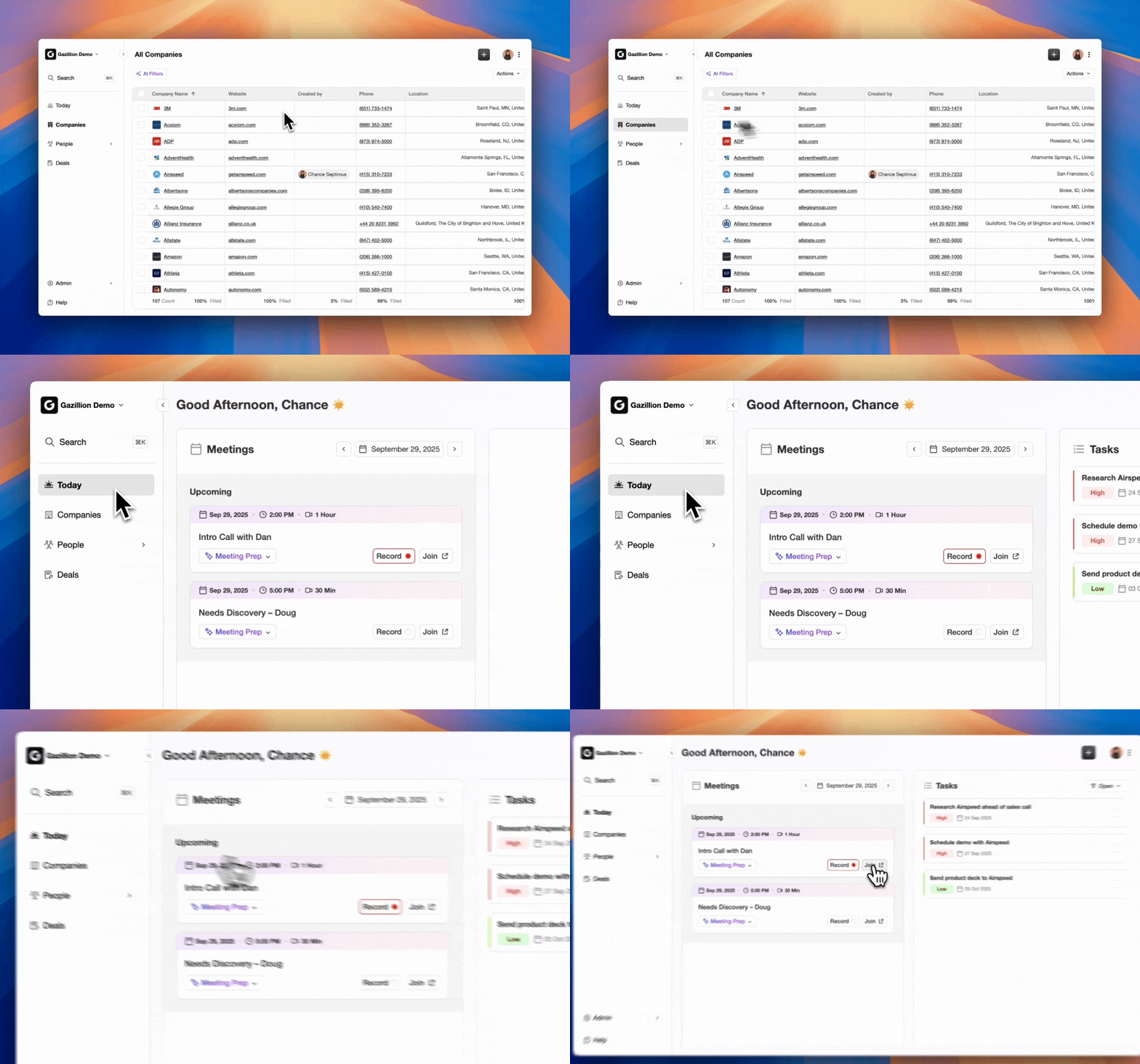
Start identifying your anonymous visitors to turn your website traffic into a qualified pipeline with minimal manual effort.
2026 AI Shifts, Compliance Risks, and User Pains
AI-powered intent platforms now rely on agent-based automation instead of traditional manual scoring. Coffee’s agent approach removes much of the complexity that makes 6sense difficult for SMBs to adopt. At the same time, California and Texas expanded data broker definitions in 2026, which increased compliance risks for many intent providers.
Coffee addresses these concerns with SOC2 Type 2 certification and GDPR compliance. The platform does not require custom training data or complex model management from customers. This design reduces regulatory exposure while still delivering accurate visitor identification and lead suggestions.
Many users complain that 6sense brings high acquisition costs, long implementation timelines, and weak SMB support. Coffee tackles these pain points with transparent seat-based pricing, instant pixel verification, and a product roadmap centered on smaller teams. This combination helps SMBs see value quickly without hiring additional operations staff.
Decision Framework and Quick Picker
Teams should choose an intent platform based on size, complexity, and primary go-to-market motion. SMBs with fewer than 50 reps and ongoing CRM frustration should evaluate Coffee first because it simplifies lead capture and routing. Enterprise organizations that need complex ABM orchestration across channels may still require Demandbase despite its higher costs.
Quick decision criteria follow a simple order. Start with your primary need: visitor identification points toward Coffee, while pure intent data licensing suggests Bombora. If your team requires full enterprise ABM orchestration, Demandbase becomes the leading option. Budget constraints under $15k annually narrow realistic choices to Coffee or Apollo regardless of other preferences.
Coffee works best for teams that want automated lead generation without extra manual overhead. The agent manages visitor identification, persona matching, and CRM enrichment from a single workflow. This approach makes Coffee a strong fit for resource-constrained SMBs that still want modern intent capabilities.
Conclusion: A Practical 6sense Alternative for SMBs
6sense’s enterprise-heavy design slows down SMB pipeline creation and stretches budgets. Modern alternatives like Coffee deliver stronger ROI for smaller teams by combining agent-powered automation, pixel-based visitor identification, and reliable CRM integrations at a fraction of enterprise pricing.
Try Coffee’s free trial and turn previously anonymous visitors into qualified prospects with far less manual work.
FAQ
What is the pricing difference between 6sense and Coffee?
6sense typically requires $50k+ annual minimums with complex enterprise contracts. Coffee uses transparent seat-based pricing that starts around $49 per month. The stronger ROI for SMBs comes from automated visitor identification and lead enrichment that replace manual research and data entry.
What is the best free intent data alternative to 6sense?
Apollo offers a free tier with 10,000 monthly credits for basic intent signals and contact data. Coffee provides free trial access to its full visitor identification and AI agent features, which helps teams test visitor-level intent before committing to a paid plan.
How accurate is Coffee’s visitor identification?
Coffee identifies named individuals with job titles, emails, and LinkedIn profiles instead of only showing company-level visits. The AI agent then suggests specific personas that match your buyer profile. This context helps Coffee outperform tools like RB2B that only provide raw visitor data without clear next steps.
Does Coffee integrate with HubSpot and Salesforce?
Yes. Coffee works as both a lightweight CRM and a companion agent for existing Salesforce or HubSpot instances. The agent syncs visitor data, enriches contacts, and logs activities automatically so reps do not need to maintain records by hand.
Why does 6sense often fail SMB teams?
6sense’s enterprise architecture demands dedicated RevOps resources, long implementation timelines, and high annual minimums. These requirements rarely deliver enough incremental pipeline for smaller teams. The complexity also creates adoption barriers, which reduces actual usage and limits pipeline impact.