Key Takeaways for ABM Teams Using Intent Data
-
Intent data reveals active buyer signals so ABM teams can prioritize high-fit accounts and shorten sales cycles by up to 35%.
-
First-party intent data from website visits and emails delivers higher accuracy and stronger privacy compliance than third-party sources.
-
Use this 5-step workflow for pipeline growth: collect with pixels, score with AI, prioritize spikes, personalize outreach, and measure ROI.
-
Coffee stands out with AI-powered visitor identification, CRM enrichment, and automation that outperform tools like 6sense and Demandbase.
-
Implement Coffee’s AI agent today to save 8–12 hours weekly and boost ABM results: Start your free trial.
How Intent Data Supercharges ABM Results in 2026
Intent data transforms account-based marketing by shortening sales cycles and delivering 35% pipeline lift from intent-aligned ABM campaigns. Modern AI platforms analyze thousands of data points per account, including technographic signals, content consumption patterns, and organizational changes. These insights help teams generate tailored messaging for every stakeholder in the buying committee.
RevOps teams, sales leaders, and marketing managers gain prioritized outreach that focuses on accounts showing active buying signals instead of cold prospecting. The risk of wasted outreach drops because teams target accounts demonstrating genuine research behavior. Coffee’s philosophy centers on AI agents that auto-capture first-party signals from website visits and email interactions, which keeps data quality high for accurate insights and forecasts.
Types of Intent Data That Matter Most for ABM
To build an effective intent-driven ABM strategy, teams need a clear view of which intent data types deliver the most reliable signals. First-party intent data takes priority in post-cookie compliance environments. Organizations must understand the distinction between owned behavioral signals and external research indicators to build effective ABM strategies. The table below breaks down the three types of intent data by their sources and ABM use cases, showing why first-party signals deliver the highest accuracy for targeting.
|
Type |
Description |
Sources |
ABM Use Case/Coffee Example |
|---|---|---|---|
|
First-party |
Owned behavioral signals from direct interactions |
Website visits, downloads, emails, product usage |
Prioritize hot accounts, as the Coffee pixel identifies named visitors and suggests persona-fit leads automatically |
|
Third-party |
External research spikes across publisher networks |
Bombora, 6sense, review sites |
Supplemental layer, and combining with first-party data can improve accuracy |
|
Second-party |
Partner-shared engagement data |
Integration partners, event co-hosts |
Expand account coverage, as Coffee integrates partner signals into unified scoring |
First-party data delivers higher accuracy and compliance advantages compared to third-party alternatives. First-party intent data offers cleaner signal profiles and higher accuracy because marketers control data quality directly. Third-party signals provide broader market coverage but require careful filtering to reduce noise, especially for broad topics like digital transformation.
5-Step ABM Intent Data Workflow With Coffee
This 5-step workflow turns raw intent signals into qualified pipeline opportunities that sales teams can act on quickly.
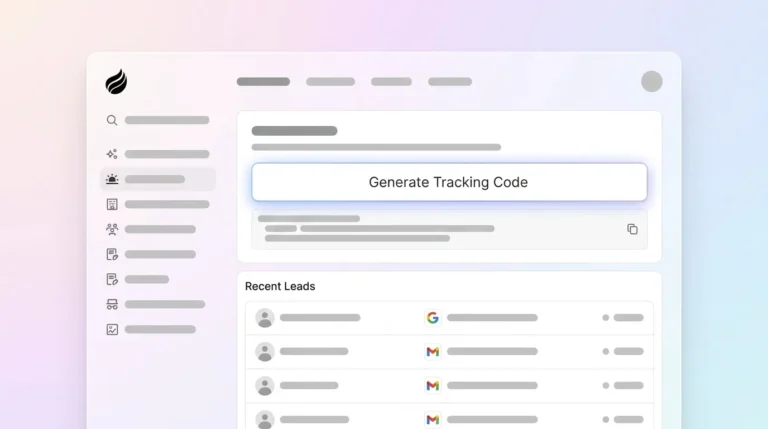
1. Collect: Install Coffee’s tracking pixel for real-time visitor identification and automatic CRM enrichment. The pixel captures named visitors, suggests persona-fit leads, and logs behavioral data without manual intervention. RevOps teams own the technical implementation, while sales and marketing benefit from enriched account profiles that stay current.
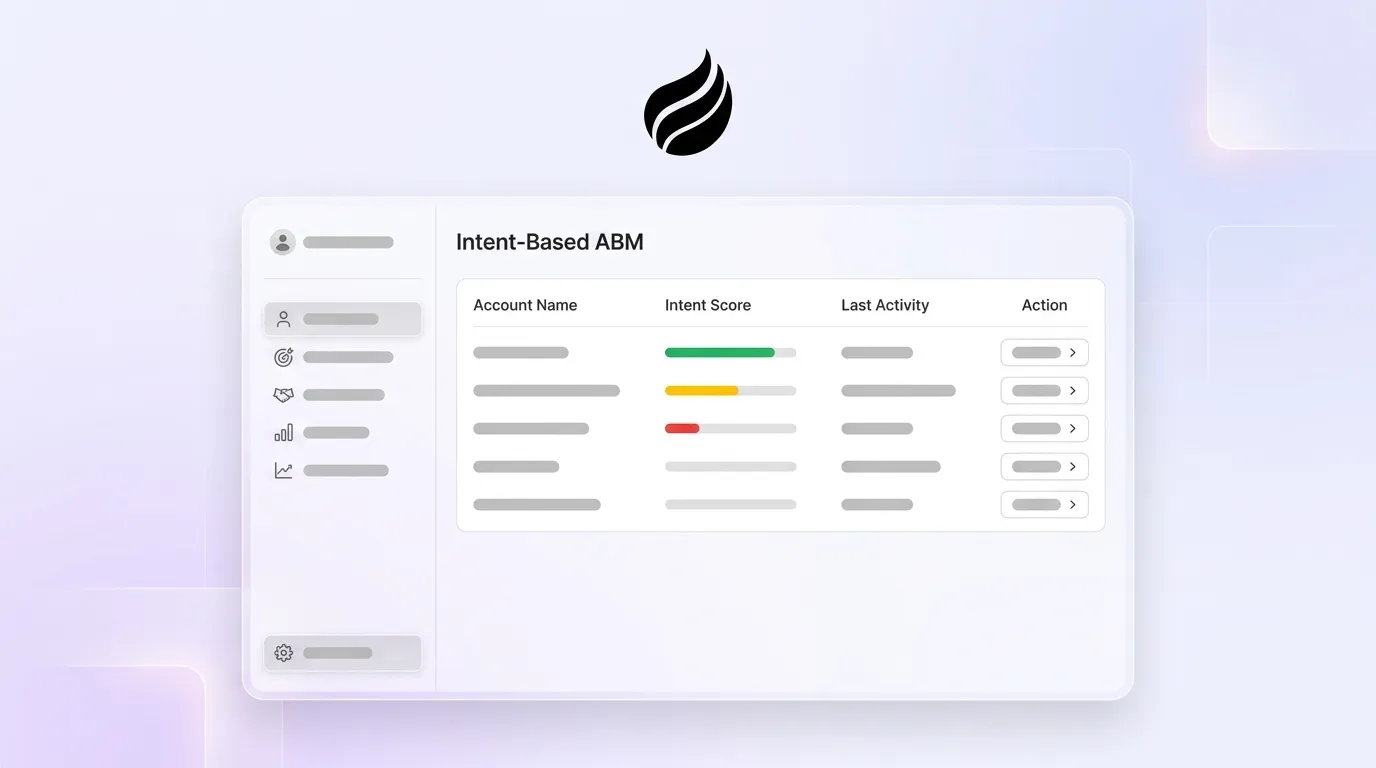
2. Score: Coffee’s AI agent ranks accounts by combining intent signals with ICP criteria and funding status. Using the multi-dimensional analysis described earlier, the system generates predictive scores that highlight accounts moving toward purchase decisions. Accounts showing surge intent across several signals are more likely to enter active evaluation and move into pipeline.
3. Prioritize: Coffee’s Pipeline Compare feature visualizes week-over-week intent spikes and account progression. The system highlights accounts with multiple stakeholders researching, repeat visits to pricing pages, and competitor comparison activity. Teams then focus outreach on accounts demonstrating sustained engagement above historical baselines, which increases conversion efficiency.
4. Personalize: Coffee’s agent drafts contextual emails based on specific page visits and content consumption patterns, matching messaging to each account’s demonstrated interests. For accounts researching data enrichment, the system suggests relevant case studies and ROI calculators that speak to that use case. For security-focused visitors who spend time on compliance pages, it emphasizes certifications and integration safeguards. Automate your outreach with Coffee’s AI agent to scale personalization across all accounts.

5. Handoff and Measure: Coffee automatically logs all interactions in Salesforce or HubSpot while tracking ROI metrics. The platform measures engagement-to-opportunity conversion rates, sales cycle acceleration, and deal size improvements. Closed-loop reporting connects intent-driven activities to pipeline outcomes so leaders can refine campaigns with confidence.
Teams often over-rely on third-party data alone, which creates noisy signals and compliance risks. Coffee’s first-party focus removes these issues and delivers more accurate account intelligence.
Comparing Top ABM Intent Data Tools to Coffee
Executing the 5-step workflow requires a platform that supports every stage, from data collection through scoring, prioritization, and ROI measurement. Evaluate intent data platforms based on visitor identification capabilities, AI automation, and CRM integration depth. The comparison below shows that many tools offer partial automation or limited first-party capture, while Coffee combines named visitor identification with AI-driven lead suggestions.
|
Tool |
Visitor ID |
AI Agent |
CRM Integration/ROI Edge |
|---|---|---|---|
|
Coffee |
Yes (named visitors + suggested leads) |
Yes (auto-capture and unify) |
Native Salesforce/HubSpot, with opportunity increases for growing revenue firms |
|
Demandbase |
Partial account-level |
Partial automation |
Basic integration, and it lacks agent-driven workflows |
|
6sense |
Yes |
Predictive modeling |
Strong accuracy in conversion prediction but no first-party pixel capture |
|
Bombora |
No |
No |
Supplemental third-party data, where noisy signals require filtering |
Coffee positions as the #1 choice for teams that need automated first-party intent capture with AI-powered visitor identification. Unlike competitors that focus mainly on third-party signals, Coffee’s pixel-based approach delivers named prospects with suggested lead recommendations. This approach closes the gap between anonymous traffic and qualified opportunities.
Measuring ABM Intent Data ROI and Avoiding Pitfalls
Teams should track clear performance benchmarks to validate intent data investments and refine ABM programs over time. The metrics below show typical improvements from intent-driven ABM and illustrate how Coffee’s first-party approach amplifies each benchmark through automation.
|
Metric |
Benchmark |
Coffee Impact |
|---|---|---|
|
Engagement Rate |
Improved engagement through AI agent automation |
|
|
Sales Cycle |
Time savings that free teams to work more opportunities |
|
|
Conversion Rate |
Greater accuracy from first-party data capture |
Common myths suggest that third-party data alone provides enough accuracy. Over-relying on third-party intent data leads to inaccurate predictive scoring because of noisy signals. As noted earlier, first-party data’s accuracy advantage stems from direct quality control, which also supports compliance. Organizations that implement hybrid intent strategies achieve higher conversion rates and lower cost per acquisition.
2026 ABM Trends: AI Agents Like Coffee Take the Lead
AI agents now create automated loops from visitor identification through lead qualification, which reshapes how ABM teams operate. Coffee enables natural language list building with commands such as “Find VPs at $10M+ funded companies using Salesforce.” AI-powered ABM can increase account engagement through predictive precision that guides every touchpoint. Organizations that deploy AI-integrated RevOps workflows can achieve significant cost savings by automating responses to intent signals. The shift from passive databases to active agents represents a fundamental transformation in how teams capture and act on buying signals. Deploy Coffee’s AI agent to use 2026’s most advanced automation for ABM.

FAQ
What is first-party intent data for ABM?
First-party intent data consists of behavioral signals from your owned digital properties, including website visits, content downloads, email engagement, and product usage. This data is most reliable because you control collection methods and data quality directly. Coffee’s tracking pixel captures these signals automatically, identifying named visitors and suggesting persona-fit leads without manual data entry. First-party data provides higher accuracy than third-party alternatives while supporting compliance with privacy regulations.
How does Coffee capture ABM intent data?
Coffee uses a tracking pixel installed in your website’s head tag to identify anonymous visitors and convert them into named prospects. The AI agent automatically enriches contact and company records in your CRM, logs behavioral data, and suggests which specific individuals within visiting companies match your buyer persona. Coffee integrates with Google Workspace and Microsoft 365 to capture email and calendar interactions, creating a unified view of account engagement across all touchpoints.

What are typical intent data ROI benchmarks for ABM?
Successful intent data implementations deliver lifts in target account engagement, faster sales cycles, and higher MQL-to-SQL conversion rates. Organizations using hybrid first-party and third-party approaches achieve higher conversion rates and lower cost per acquisition. Coffee customers report increases in pipeline opportunities while saving 8–12 hours per week on manual data entry and enrichment tasks.
Which intent data tools work best for ABM?
Coffee ranks as the top choice for teams that need automated first-party intent capture with AI-powered visitor identification. Unlike Demandbase’s partial automation or Bombora’s third-party-only approach, Coffee provides named visitor identification with suggested lead recommendations. 6sense offers strong predictive capabilities but lacks first-party pixel capture. Coffee’s native Salesforce and HubSpot integrations support seamless workflow automation without complex setup requirements.
What are the key ABM intent data trends for 2026?
AI agents represent the major transformation, shifting from passive data storage to active automation. These agents create loops from visitor identification to lead qualification, handle natural language list building, and automate responses to buying signals. AI-powered ABM can increase engagement, while organizations gain cost savings through automated workflows. First-party data becomes increasingly critical as privacy regulations tighten and third-party cookies disappear.
Intent data turns account-based marketing from manual prospecting into automated intelligence that scales with your team. The 5-step workflow of collect, score, prioritize, personalize, and measure provides a proven framework for implementation. Coffee’s AI agent stands as the #1 solution for first-party intent capture, delivering improved accuracy and pipeline growth. See pricing and start your trial to automate your ABM intent data strategy.