Written by: Doug Camplejohn, CEO & Co-Founder, Coffee | Last updated: September 12, 2026
Key Takeaways For A Successful MEDDIC Rollout
- MEDDIC is a six-pillar B2B qualification framework that works when treated as an evidence-based coaching discipline rather than a CRM checklist.
- Effective rollouts define customer-validated evidence standards for each pillar, configure CRM fields as stage-gate exit criteria, and pilot with coachable reps before scaling.
- Evidence quality should be scored on a four-point scale from rep assumptions to written confirmation, with managers assigning scores to maintain accuracy.
- Weekly pipeline reviews should shift from status updates to evidence inspection using scripted questions that surface unknowns and next actions.
- Manual data entry hurts adoption. Coffee automates MEDDIC evidence capture from calls and emails so qualification data stays current without rep overhead. Explore Coffee’s Pricing.
Seven Practical Steps To Roll Out MEDDIC
Most methodology rollouts collapse because leadership treats a kickoff event as the whole change program. The seven steps below prevent that outcome. Each step ties to a concrete artifact your team can build or enforce before moving on.
- Define what customer-validated evidence looks like for each of the six pillars.
- Configure MEDDIC CRM fields as stage-gate exit criteria rather than optional notes.
- Build a discovery question bank with one or two questions per pillar.
- Pilot with five to ten coachable reps under a single manager before company-wide launch.
- Certify managers first, then run weekly evidence-based deal reviews.
- Shift pipeline reviews from status updates to evidence inspection using a fixed question script.
- Refine the MEDDIC scorecard based on what is actually captured and which pillars predict wins.
Common Mistake: Gating every field on day one. Start with two or three non-negotiable fields tied to your biggest deal-killing gap, then add more once reps see that the system supports them instead of adding busywork.
See How Coffee Automates MEDDIC Evidence so your rollout survives past month two.
The 30/60/90-Day MEDDIC Implementation Calendar
Days 1–30: Build The MEDDIC Foundation
Start by defining what customer-validated evidence looks like for each of the six pillars. This standard then shapes how you configure the CRM. Fields become stage-gate exit criteria rather than free-text notes, so a deal cannot advance past discovery without a named Economic Buyer and a quantified pain statement. With the standard and fields in place, draft the MEDDIC scorecard template and the discovery question bank. Pilot with five to ten coachable reps and one manager so you can refine the approach before involving the entire team.
Days 31–60: Drive Adoption Through Coaching
Use this phase to turn MEDDIC from a form into a coaching rhythm. Run role-played deal reviews on live opportunities so reps practice using the pillars in real conversations. Coach reps on evidence quality instead of simple field completion. Managers ask for the quote behind each pillar, requesting a direct buyer quote for every entry. Publish a completion leaderboard to keep attention high after the initial launch energy fades.
Days 61–90: Inspect And Refine Your MEDDIC System
Use the third month to tighten inspection and tune the framework. Shift pipeline reviews from status updates to evidence inspection. Refine the scorecard based on what reps actually capture in the CRM. Audit which pillars correlate with closed-won deals in your own data and weight them accordingly. Loss reason picklists should mirror qualification letters such as “No Economic Buyer,” “No Compelling Event,” and “Paper Process Stalled,” so post-mortem analysis turns into clear coaching priorities.
Now that the calendar is set, the next step is defining what counts as acceptable evidence for each pillar.
Common Mistake: Running deal reviews as status updates. “How’s the deal going?” produces a narrative. “Who confirmed the decision criteria, and when?” produces evidence.
Evidence Standards And MEDDIC CRM Entry Examples
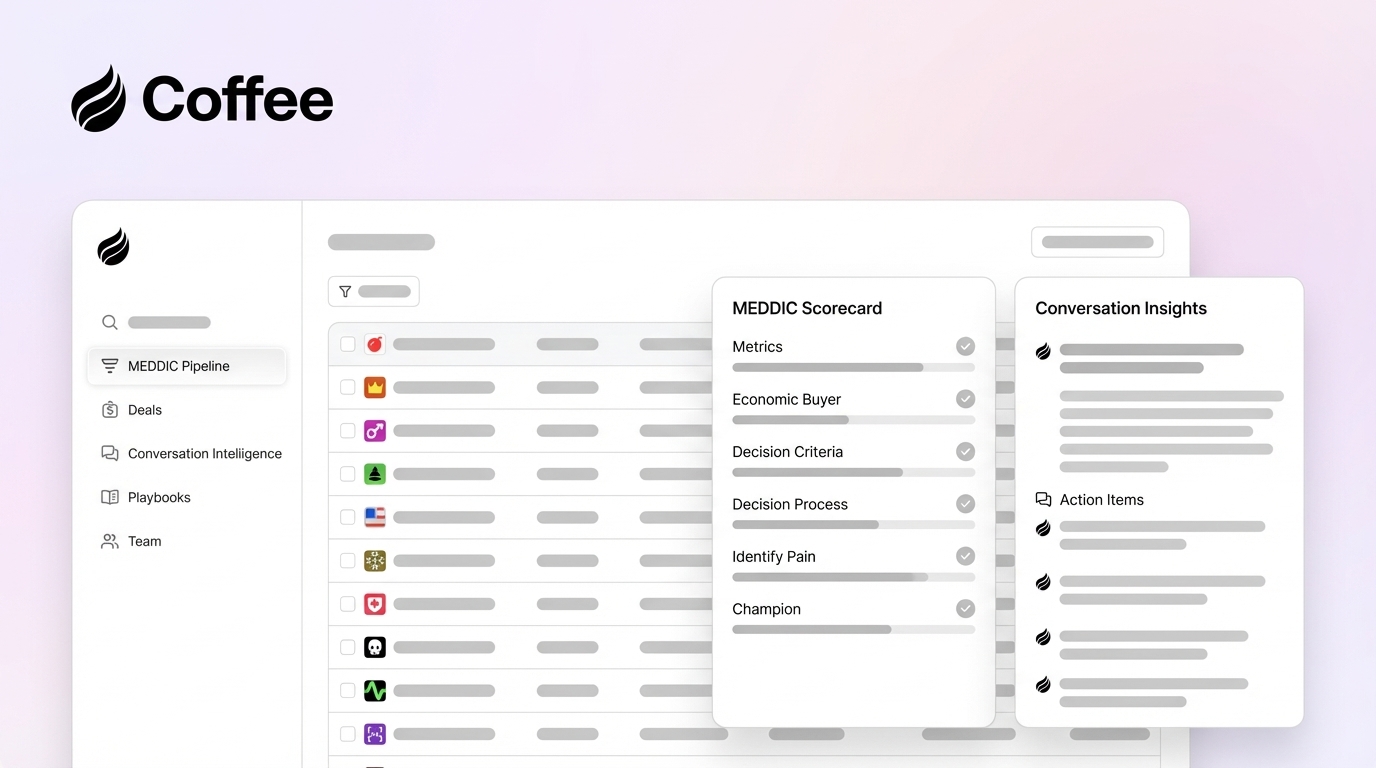
Score MEDDIC evidence on a four-point scale: 0 = no information, 1 = rep assumption, 2 = stated by a named buyer who can be quoted, 3 = confirmed in writing and acted on in the deal plan. The manager assigns the score because self-scoring under forecast pressure inflates numbers. The table below shows how the same pillar can appear as a vague assumption or as buyer-validated evidence, which is the difference between a forecast liability and a qualified deal.
| Pillar | Bad Entry | Good Entry |
|---|---|---|
| Metrics | “They want to save time.” | “VP of Sales stated they need to cut 8 hours/week of rep admin time to hit Q4 pipeline targets, confirmed on 9/12 call.” |
| Economic Buyer | “VP-level buyer.” | “Jane Smith, CFO, confirmed budget authority on 9/5 call. Next step: executive briefing scheduled 9/19.” |
| Decision Criteria | “They care about integration and ease of use.” | “Procurement shared a five-point written evaluation grid on 9/10. We rank third on integration depth; rep has a demo scheduled to close that gap.” |
| Decision Process | “Goes through legal.” | “Project team evaluates (weeks 1–3), security review (weeks 4–6), CFO sign-off (week 7), procurement (weeks 8–9). Security questionnaire owner confirmed on 9/8.” |
| Identify Pain | “They have data quality issues.” | “COO stated: ‘We onboarded 40 engineers last quarter and provisioning averaged 11 days each — that’s a $200K productivity drag.’ Confirmed on 9/3 call.” |
| Champion | “Champion: Yes.” | “Head of RevOps forwarded our deck to the CFO on Tuesday. Her performance review is tied to the pipeline accuracy metric this fix moves.” |
Pro Tip: If no evidence exists, the field stays empty. An empty field is honest data; a guessed field becomes a forecast liability.
MEDDIC Deal Review Questions For Managers
Use a consistent inspection script so deal reviews feel predictable and fair. The goal is coaching, not compliance theater. The questions below surface unknowns and next actions in a weekly pipeline review without turning the meeting into an interrogation.
- What exact metric did the economic buyer commit to, and when did they say it?
- Who confirmed the decision criteria, and when?
- Walk me through the remaining steps to signature.
- What did your champion do this week to earn the title?
- Have you spoken directly with the economic buyer in the last two weeks?
- What is the next action that will uncover the biggest unknown?
- What does the competition look like, and where do we rank on their criteria grid?
- Is there a procurement or legal step we have not mapped yet?
Common Mistake: Letting reps self-score. Self-scoring under forecast pressure produces optimistic scores. The manager scores, and movement between reviews matters more than the total.
Choosing Between MEDDIC, MEDDPICC, And BANT
MEDDPICC extends MEDDIC with two additional elements, Paper Process and Competition, bringing the total to eight criteria. Paper Process covers the legal, procurement, and security review steps required to get a contract signed. Competition covers every alternative the buyer considers, including the status quo of doing nothing, which requires zero budget, zero change management, and zero risk from the buyer’s perspective. Add those two elements when deals routinely involve legal, procurement, or security review. They also help when competitive displacement affects forecast outcomes. These situations typically involve complex enterprise deals above $50K with cycles over 60 days.
Use a simple test when choosing between MEDDIC and MEDDPICC. If your last ten slipped deals slipped because the decision had not been made, you face a Decision Process problem and MEDDIC is enough. If they slipped after a verbal yes while paperwork moved between security, legal, and procurement, you need Paper Process and therefore MEDDPICC. For a deeper look at applying MEDDPICC in enterprise contexts, see Coffee’s guide on how to apply MEDDIC in enterprise sales.
BANT (Budget, Authority, Need, Timeline) is a lighter qualification framework suited to simpler or transactional sales, roughly sub-$25K ACV with one or two decision-makers and cycles under 30 days. MEDDIC is designed for complex B2B deals where multiple stakeholders, formal decision processes, and competitive evaluation matter. BANT tells you whether a deal is worth working. MEDDIC tells you what is missing and what to do next. Many mature teams run a hybrid: BANT at the SDR layer for fast triage, MEDDIC at the AE layer for deal management. This two-gate model is the operating pattern across most $50K+ ACV B2B SaaS revenue organizations in 2026.
Common Mistake: Adding MEDDPICC elements before the core six are consistently captured. Switching frameworks resets adoption to zero.
MEDDIC Cost And Certification Options
MEDDIC is a framework, so there is no inherent cost to adopting it. Costs come from optional training providers, consultants, or certification programs. MEDDICC offers a self-paced MEDDPICC Masterclass at $499, which includes 12 months of access, 8+ hours of content, and an industry-recognized certification. Individual membership is available at $899 per year and adds AI-driven deal coaching and pipeline tools. MEDDIC Academy offers a full MEDDPICC course at $297, an advanced course at $597, a manager tier at $1,173, and a trainer tier at $3,970. Certification is optional. Many organizations self-implement using internal RevOps or enablement leads.
Why MEDDIC Rollouts Die After Month Two
Most MEDDIC programs fail because reps will not maintain six fields by hand when they already spend too much time on data entry. Gartner’s 2026 CRM implementation research found adoption failure present in 71% of failed implementations, and in adoption failure scenarios, CRM activity data stops reflecting actual sales activity within 90 days of go-live. MEDDIC fields are often the first casualty because they demand detailed, buyer-validated evidence updated continuously across a multi-month deal cycle.
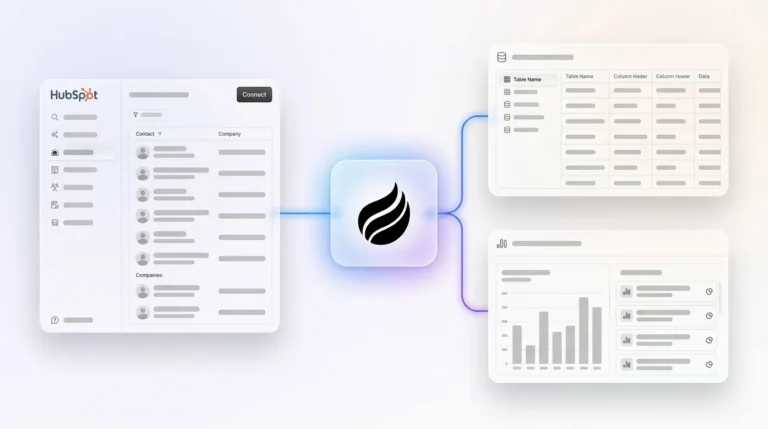
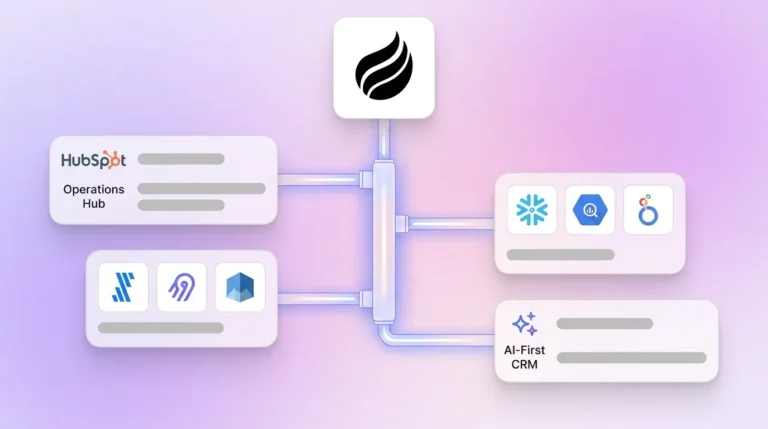
CRM automation removes the biggest adoption blocker, manual data entry, because AI summaries, activity sync, and write-back can capture methodology data from calls and emails as the work happens. These tools fill qualification fields rather than just logging that a meeting occurred. That is exactly what the Coffee Agent does. Coffee automatically captures and enriches contacts, companies, and activities from email, calendar, and call transcripts, and structures its notes according to MEDDIC, BANT, or SPICED. Coffee works as a standalone AI-first CRM for small teams or as a companion app on top of Salesforce or HubSpot for mid-market teams. The agent handles data entry, meeting summaries, and pipeline intelligence so qualification data stays current without manual effort.
Pro Tip: Agent-led data capture creates the conditions for MEDDIC to work at scale. When the evidence burden falls on reps, the framework eventually stalls.
Let Coffee Keep Your MEDDIC Fields Current so managers can coach from real evidence.
What “Done Right” Looks Like After 90 Days
A successful MEDDIC rollout at the 90-day mark has a clear profile. Every active opportunity carries customer-validated evidence in all six MEDDIC fields, captured as buyer quotes instead of rep assumptions. Stage-gate exit criteria are enforced in the CRM so deals cannot advance on optimism alone. Weekly pipeline reviews surface unknowns and next actions rather than status summaries. Reps spend less time on manual CRM entry and more time in front of buyers. Managers can quote a buyer on each pillar without opening the record. The signal a MEDDIC rollout has taken hold appears when reps reference framework elements unprompted in deal reviews.
Frequently Asked Questions About MEDDIC
What Is The MEDDIC Sales Checklist?
The MEDDIC checklist is a six-item evidence standard applied to every active opportunity. Metrics must be quantified in the buyer’s own words as a specific number tied to a specific outcome. Economic Buyer must be named with confirmed budget authority. Decision Criteria must be documented as the buyer’s stated evaluation standards. Decision Process must be mapped step by step from the current stage to a signed contract, including every approval layer. Identify Pain must be stated in the buyer’s own words, with the cost of inaction made explicit. Champion must be a named individual with a logged action taken on your behalf, such as forwarding a deck, sponsoring a meeting, or advocating internally in a conversation you were not in. If any field contains a rep assumption rather than buyer-validated evidence, the deal remains active but not fully qualified.
Is There A Free Certification For MEDDPICC?
MEDDIC is a framework, so free resources exist, including blog posts, books, and platform-bundled training such as UiPath Academy’s MEDDPICC Playbook course. Formal certification with a verifiable credential typically comes from training providers such as MEDDICC, whose Masterclass is $499 and includes a LinkedIn-verifiable certification, or MEDDIC Academy, whose full MEDDPICC course is $297 with certification included. Many organizations still achieve strong adoption without a formal credential program.
Why Is MEDDIC Better Than BANT For Complex B2B Deals?
BANT is a fast filter designed for transactional sales and tells you whether a deal deserves a first meeting. MEDDIC is a diagnostic designed for complex B2B deals and shows you what is missing and what to do next. BANT’s single Authority criterion assumes one decision-maker, but the average enterprise buying group now involves six to ten stakeholders. BANT has no Champion dimension, no Decision Criteria field, and no Decision Process map. A deal can pass all four BANT checks and still collapse because no internal advocate is selling on your behalf or because procurement adds a 45-day security review nobody anticipated. MEDDIC captures the information BANT does not track. For deals above roughly $50K with multiple stakeholders and formal evaluation processes, MEDDIC is the more appropriate tool.
How Much Does MEDDIC Training Typically Cost?
The framework itself is free, and there is no license fee to adopt MEDDIC. Costs come from optional training or consulting. MEDDIC Academy’s full MEDDPICC course is $297 with certification included, and the advanced course is $597. MEDDICC’s self-paced MEDDPICC Masterclass is $499 with a LinkedIn-verifiable certification and 12 months of access, and individual membership is $899 per year with AI deal coaching tools. In-person workshops from MEDDIC Academy have run at $995 to $1,147 per participant. Enterprise and group engagements from either provider require a direct quote.
Conclusion: Make MEDDIC Stick Past Month Two
MEDDIC usually fails because manual data entry erodes the evidence discipline, not because the framework is flawed. As noted earlier, CRM activity data often stops reflecting actual sales activity within 90 days of go-live in adoption failure scenarios, and MEDDIC fields, which are the most evidence-intensive fields in any qualification system, are the first to go stale. The 30/60/90-day calendar, evidence standards, and manager inspection script in this guide address the operational failure modes. The enabling condition that makes all of it sustainable is removing the manual data-entry tax from reps.
Coffee’s agent captures and structures qualification data automatically from email, calendar, and call transcripts so MEDDIC stays current without adding admin to reps who are already stretched. Whether your team runs Coffee as a standalone CRM or as a companion layer on Salesforce or HubSpot, the agent handles the work that usually kills MEDDIC rollouts by month two.
Ready to keep your MEDDIC rollout healthy past month two? Get Started With Coffee Today.