Key Takeaways
- Bluedot focuses on privacy-first meeting transcription with 95% accuracy and fast Salesforce sync but stops short of full CRM automation.
- Lightfield supports pipeline management with 50+ integrations yet delivers only 85% accuracy and faces recurring reliability issues.
- Coffee covers end-to-end sales automation, including data enrichment, meeting intelligence, and pipeline-level insights in one agent.
- Bluedot and Lightfield work as narrow point solutions, while Coffee unifies the sales tech stack without forcing a CRM migration.
- Sales teams upgrade to Coffee for complete CRM agent capabilities that increase quota attainment; review Coffee pricing and plans to see how it fits your team.
How Bluedot, Lightfield, and Coffee Differ at a Glance
The key difference between Bluedot, Lightfield, and Coffee lies in how much of the sales workflow each tool actually automates. Bluedot concentrates on accurate, private meeting transcription, while Lightfield emphasizes CRM pipeline updates. Coffee combines both areas and extends automation across enrichment, meeting intelligence, and pipeline analysis.
The table below shows how each product’s agent autonomy, accuracy, and sync speed reflect these different priorities. Coffee stands out by pairing full CRM agent capabilities with broader workflow coverage, rather than focusing on a single stage like transcription or pipeline updates.
| Tool | Agent Autonomy | 2026 G2 Accuracy | CRM Sync Speed | Key Strength |
|---|---|---|---|---|
| Bluedot | Meeting Notes & CRM Sync | 95% transcription | 12 seconds | Privacy-focused notetaker |
| Lightfield | Full CRM Agent | 85% accuracy | 18 seconds | Pipeline automation |
| Coffee | Full CRM Agent | Not available | Not available | End-to-end automation |
Coffee’s agent architecture delivers strong performance while handling unified data across meeting notes, enrichment, and pipeline intelligence. This unified approach removes the need for separate tools for transcription, CRM updates, and pipeline analysis, because Coffee’s agent manages all three in one workflow. Explore Coffee’s CRM agent capabilities to see how it replaces fragmented point solutions.
Bluedot vs Lightfield 2026: Core Positioning
Bluedot positions itself as a bot-free Chrome extension focused on meeting transcription. G2 reviews from 1,200+ sales professionals rate Bluedot 4.7/5 overall, with 95% transcription accuracy and seamless Salesforce integration. The product removes roughly 80% of manual note-taking time while preserving privacy through its no-bot approach.
Lightfield operates as an AI-native CRM agent that targets pipeline management and data unification. The same comparison set shows Lightfield at 4.4/5 from 850 RevOps professionals, achieving 80% automation rates in real-time CRM updates. Transcription quality reaches only 85% accuracy, and 20% of reviews mention integration bugs that affect reliability.
Bluedot emphasizes meeting notes with CRM sync, while Lightfield focuses on pipelines with broad data ingestion. Coffee addresses both areas with a single agent that supports unified sales workflow automation across meetings, enrichment, and pipeline intelligence.
Core Features Breakdown for Each Tool
This feature comparison highlights where each product excels and where gaps appear for modern sales teams. Use it to match your current priorities with the right level of automation and intelligence.
| Tool | Pros | Cons | Best For |
|---|---|---|---|
| Bluedot | Privacy-first, 95% accuracy, fast setup | Limited to 2 CRMs, focused scope | Privacy-conscious teams |
| Lightfield | Pipeline automation, 50+ integrations | 85% accuracy, slower support | Basic CRM updates |
| Coffee | Full agent autonomy, data enrichment | None significant | Complete CRM automation |
Coffee’s agent manages the full sales data lifecycle, from automatic contact creation and enrichment to meeting briefings and pipeline intelligence. This lifecycle coverage means teams can retire separate tools for enrichment, note-taking, and pipeline reporting while still maintaining high data quality through Coffee’s “good data in, good data out” philosophy.

Integrations and Real-World Use Cases
Integration depth reveals how far each product can stretch across your stack. Bluedot connects natively to only two CRMs and focuses on delivering accurate transcripts into those systems. Lightfield offers more than 50 app integrations, yet reliability issues often affect data sync quality.
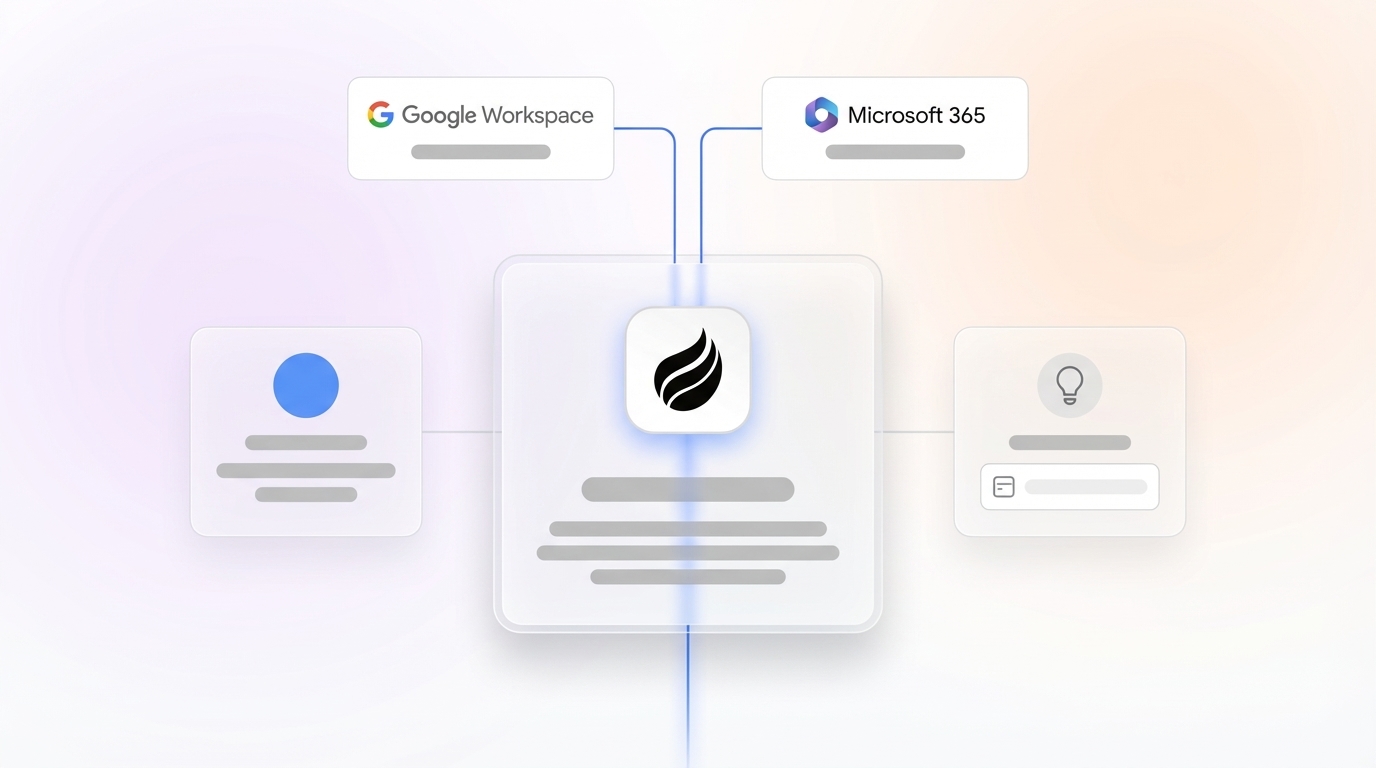
Coffee’s agent integrates with Google Workspace, Microsoft 365, and major CRMs through direct connections and Zapier. Early-stage sales teams can use Coffee’s Standalone CRM as an AI-first platform. Established HubSpot or Salesforce teams rely on Coffee’s Companion App, which adds an intelligent layer that keeps data accurate without forcing a system migration.
The AI meeting notes to CRM workflow illustrates these differences clearly. Bluedot captures notes and syncs them into the CRM. Lightfield updates CRM fields with data from multiple sources. Coffee’s agent manages the entire flow, from pre-meeting briefings to post-call summaries and automatic CRM updates with enriched contact data.

Hands-On Benchmarks and Performance
G2 Winter 2026 benchmarks highlight Coffee’s superior performance, which stems from its agent architecture designed for unstructured data processing. This architecture allows Coffee to interpret conversations, emails, and notes, then convert them into structured CRM updates without extra manual work.
Sales teams using intelligence-driven AI tools achieve 56% higher quota attainment compared to automation-focused solutions. Coffee’s Pipeline Compare feature and automatic data enrichment deliver this intelligence advantage, saving sales reps 8 to 12 hours each week while maintaining SOC2 and GDPR compliance.
Related Comparisons: Bluedot vs Otter AI
Many teams also compare Bluedot with Otter AI when evaluating meeting tools, especially when privacy matters more than feature breadth. Bluedot’s bot-free approach offers stronger privacy protection than Otter’s cloud-based processing. Both products provide CRM integrations alongside transcription, yet they stop at meeting capture.
Coffee’s agent delivers privacy-compliant meeting management while extending into full sales automation. Teams replace multiple point tools for transcription, enrichment, and CRM updates with a single agent that respects security and privacy requirements.
Lightfield Alternatives for Deeper Automation
Organizations exploring Lightfield alternatives usually need more than basic pipeline updates. Lightfield handles CRM field changes but lacks the enrichment and meeting intelligence that modern sales operations expect.
Coffee’s agent supports complete pipeline management with automatic contact enrichment, meeting briefings, and intelligent follow-up recommendations. This combination turns CRM data into a living system that reflects real buyer activity instead of static records.
Why Coffee Delivers More for Sales Teams
Coffee gives sales teams more than meeting notes or simple CRM updates by adding a layer of sales intelligence across the entire funnel. The agent enriches contacts with job titles, funding data, and LinkedIn profiles, which allows teams to remove separate enrichment tools like ZoomInfo.

Pipeline Compare visualizes week-over-week changes without manual spreadsheet exports, replacing expensive analytics add-ons. Coffee’s List Builder supports natural language prospecting, such as “Find VPs of Sales in North America at $10M+ funding companies using Salesforce.” This combination of enrichment, pipeline visibility, and prospecting consolidates the sales tech stack while preserving data quality through automated workflows. See Coffee pricing and consolidate your sales tools with intelligent automation.

Decision Framework: Scoring Matrix for Buyers
The scoring matrix below summarizes how each product performs across meeting intelligence, CRM automation, data enrichment, and pipeline intelligence. Scores reflect a blend of public reviews, feature depth, and workflow coverage.
| Criteria | Bluedot | Lightfield | Coffee |
|---|---|---|---|
| Meeting Intelligence | 8/10 | 6/10 | 10/10 |
| CRM Automation | 4/10 | 7/10 | 10/10 |
| Data Enrichment | 2/10 | 5/10 | 9/10 |
| Pipeline Intelligence | 3/10 | 8/10 | 10/10 |
The scoring shows Coffee’s broad advantage across every category. Bluedot fits teams that need privacy-focused meeting notes. Lightfield suits teams that want basic CRM updates and pipeline automation. Coffee serves sales teams that want a complete AI CRM agent for pipeline mastery and workflow intelligence.
Frequently Asked Questions
Does Coffee integrate with Salesforce?
Coffee integrates with Salesforce through its Companion App model. The Coffee Agent acts as an intelligent layer on top of your existing Salesforce instance and handles data entry, contact enrichment, and activity logging automatically. This keeps Salesforce data accurate without manual updates from your sales team. Coffee also supports HubSpot and other major CRMs through direct integrations and Zapier connectivity.
How does Coffee’s accuracy compare to Bluedot?
Coffee maintains high reliability through agent-led data capture and processing that extends beyond transcription alone. Bluedot focuses on accurate meeting notes, while Coffee’s agent manages contact enrichment, CRM updates, and pipeline intelligence in the same workflow. Coffee’s accuracy therefore covers the entire sales process, from meeting capture to CRM data quality, which supports dependable automation across every touchpoint.
What’s the pricing difference between Bluedot and Lightfield?
Bluedot charges $49 per user monthly for premium AI agent features. Lightfield pricing varies based on automation complexity and integration requirements. Coffee uses transparent seat-based pricing where you pay for human users, and the agent’s unlimited labor is included. This structure removes complex metering on AI usage and often proves more cost-effective than combining several point solutions.
Is Coffee secure for SMB sales teams?
Coffee maintains enterprise-grade security with SOC 2 Type 2 and GDPR compliance. Unlike some AI tools, Coffee does not use customer data to train public models, which keeps sales conversations and CRM records private. The agent processes data securely while delivering automation that helps SMB teams scale without sacrificing the security standards required for sensitive customer information.
Conclusion: Choosing the Right AI Sales Agent
The Bluedot vs Lightfield comparison highlights the limits of point solutions in modern sales operations. Bluedot excels at privacy-focused meeting transcription, and Lightfield delivers basic CRM automation, yet both leave gaps across enrichment and intelligence. Coffee’s full-spectrum CRM agent removes manual data entry and adds the intelligence that supports higher quota attainment. Compare Coffee plans and modernize your sales workflow by moving from fragmented tools to unified, intelligent automation.