Written by: Doug Camplejohn, CEO & Co-Founder, Coffee | Last updated: June 19, 2026
Why Prospecting Stacks Break in 2026
- Fragmented prospecting stacks create data silos, manual handoffs, and hidden costs that drain RevOps resources.
- Winning tools in 2026 deliver fresh data, deep CRM integration, manageable total cost of ownership, automation, compliance, and real consolidation.
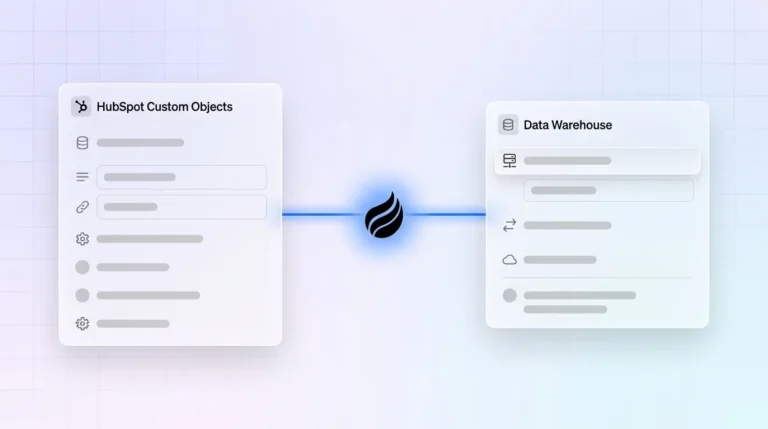
- Most enrichment tools still rely on manual data entry or complex setups. Coffee writes enriched data directly back to Salesforce or HubSpot records automatically.
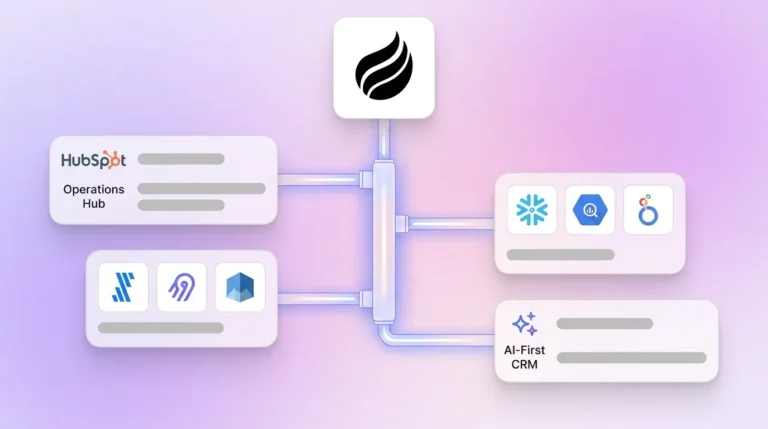
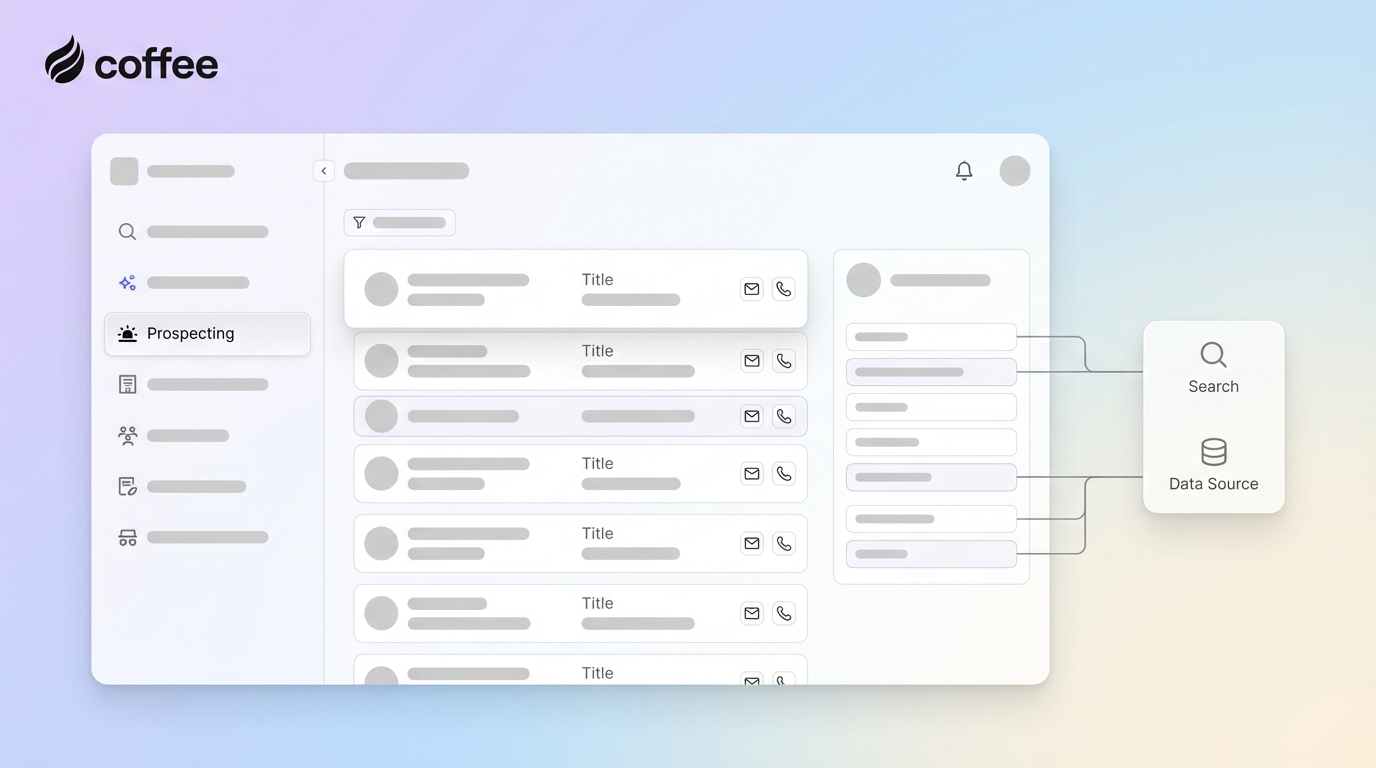
- Coffee combines enrichment, meeting intelligence, visitor identification, and pipeline forecasting in a single agent layer, which reduces tool count and integration risk.
- Teams ready to consolidate their stack can explore Coffee’s pricing and consolidation savings today.
How To Evaluate Prospecting and Enrichment Tools in 2026
Six criteria determine whether a prospecting or enrichment tool earns its place in a mid-market stack.
1. Data freshness and accuracy. B2B contact data decays at 22.5% annually on average, roughly 2.1% per month, with rates reaching 30–40% (or higher) in tech and other high-turnover sectors. B2B work email addresses decay at roughly 22.5–30% per year on average, varying by seniority and sector. A tool that refreshes records quarterly already lags behind reality.
2. CRM integration depth. Approximately half of HubSpot integrations used by mid-market teams silently break, fall out of sync, or stop scaling within the first year. Native connectors often introduce sync delays and can hit rate limits at higher volumes.
3. Total cost of ownership. The true cost of ownership of a contact data stack is usually 3–5× the subscription price when you include implementation, data quality management, operational overhead, and wasted capacity. Hidden fees such as overages, add-ons, and auto-renewals can inflate bills by 30–50% beyond sticker price.
4. Automation of manual entry. Seventy-one percent of sales reps report spending too much time on data entry, which leaves only 35% of their time for selling. Because manual copy-paste workflows keep this problem in place instead of fixing it, any tool that requires reps to transfer enriched data into CRM fields by hand fails this criterion.
5. Compliance. SOC 2 Type 2 and GDPR compliance now count as table stakes. Tools without documented suppression logic for EU contacts create downstream legal exposure.
6. Ability to reduce tool count. Every additional point solution adds an integration surface that can break. Teams should aim for fewer tools with deeper coverage, not more tools that add only marginal incremental data.
Side-by-Side Comparison of Leading Tools
Estimated annual TCO figures for 10 reps include license fees plus documented hidden costs. All per-contact cost figures come from published pricing and usage analyses.
| Tool | Data Freshness / Accuracy | CRM Integration Depth | Est. Annual TCO (10 reps) |
|---|---|---|---|
| Apollo.io | Multi-source data, with accuracy and costs that vary by tier and volume | Native Salesforce/HubSpot sync, with possible configuration for custom objects | License plus integration overhead, with true TCO often 3–5× sticker price |
| ZoomInfo | Accuracy varies by tier, and per-contact costs and renewal terms vary | Deep integration that usually requires dedicated RevOps configuration and setup time | ZoomInfo Advanced tier base pricing starts at approximately $25K per year (3 seats), with typical total annual cost reaching $30K–$40K after adding intent data, extra seats, and credits for many mid-market buyers. |
| Clay | Multi-provider waterfall, with freshness dependent on underlying sources | Technical setup required for CRM push, with time spent per list | Variable, with technical setup and maintenance adding substantial hidden labor cost |
| Cognism | Phone data subject to decay, while verified data can help maintain quality | Native Salesforce/HubSpot integration, with GDPR-compliant suppression built in | Mid-market contracts typically $15,000–$30,000 per year, with add-ons increasing TCO |
| Lusha | Credit-based model, with accuracy that varies by geography | Chrome extension plus CRM push, where interval-based syncs can introduce delays at volume | Lusha entry-level paid plans start at approximately $29–$50 per user per month (or lower with annual billing), plus a free tier. Credit overages and premium features can inflate total cost. |
| Clearbit / Breeze | Clearbit (now Breeze Intelligence) is a B2B data-enrichment platform and does not report email deliverability rates. | HubSpot-only, so Salesforce teams cannot use Breeze for enrichment | Bundled with HubSpot tiers, with no standalone pricing and coverage limited to existing records |
| LinkedIn Sales Navigator | Real-time profile data, without direct email or phone export | CRM sync available, while custom objects may require additional configuration | Annual cost varies by seats and plan, and teams still need a separate enrichment tool for contact data |
| Coffee | Continuous enrichment via licensed data partners, with automatic updates on job-change signals | Deep native Salesforce and HubSpot Companion App that writes enriched data back automatically | Seat-based pricing with agent labor included, replacing enrichment, recording, and forecasting tools |
The table above gives a high-level snapshot across tools. The real differences appear when you look at each evaluation criterion in detail.
How Each Tool Performs on Key Criteria
Setup effort. Apollo and ZoomInfo require dedicated RevOps configuration. CRM sync configuration, field mapping, duplicate management, and training can consume substantial RevOps time and soft costs per implementation. Clay compounds this effort, because its workflow automation requires time per list and technical setup to connect multiple data providers to Salesforce or HubSpot. Coffee’s Companion App authenticates through a single OAuth connection and starts writing enriched data back to existing CRM records immediately.
Data capture. Every standalone enrichment tool captures structured fields such as title, email, and phone, but none ingest unstructured data from call transcripts or email threads. This gap leaves the richest context about a prospect’s pain points, objections, and buying signals locked in meeting notes and email replies, where the CRM cannot use it. Coffee’s agent processes both structured and unstructured data, structures meeting notes against BANT, MEDDIC, or SPICED frameworks, and logs them directly to the CRM record without rep intervention.

Usability. Sales reps lose an estimated 500 hours annually validating and correcting contact information, which represents $30,000 per rep in lost productivity at an average AE salary of $120,000. Tools that surface data in a sidebar but require manual copy-paste into CRM fields keep this cost in place. Coffee’s agent writes directly to the record, so reps stay focused on selling.
Reporting. ZoomInfo and Apollo provide prospecting analytics but not pipeline intelligence. Gong provides call intelligence but not enrichment. Coffee’s Pipeline Compare feature visualizes week-over-week deal changes automatically and replaces manual CSV exports and standalone forecasting add-ons.
Long-term scalability. Workflow rules and data models change over time, so a setup that worked at launch can break when lifecycle stages or routing logic evolve. Most mid-market SaaS teams hit this issue 9–12 months in. An agent layer that adapts to CRM schema changes remains more durable than a fixed point integration.
See how Coffee consolidates enrichment, recording, and forecasting into one agent layer.
Which Tools Fit Your ICP
| Criterion | SMB (1–20 reps) | Mid-Market (20–100 reps) |
|---|---|---|
| Data freshness priority | Good-enough accuracy, with low volume that tolerates some decay | High-turnover sectors require continuous re-enrichment to counter accelerated decay |
| CRM integration depth | Standalone CRM or light HubSpot, with simple field mapping | Deep Salesforce/HubSpot with custom objects, forecasting, and required fields |
| TCO sensitivity | Sticker price dominates the decision, and hidden fees are deal-breakers | TCO multipliers make RevOps overhead a major hidden cost |
| Automation of manual entry | Founders often run their own outreach, so any automation helps | Seventy-one percent of reps already feel over-burdened, so full automation of data entry becomes a hard requirement |
| Compliance | SOC 2 preferred, with GDPR relevant when selling into the EU | SOC 2 Type 2 and GDPR mandatory, with procurement review required |
| Tool consolidation | Preference for all-in-one tools to avoid managing many vendors | Active push to reduce tool count, since integration maintenance is a known cost center |
Once you know which segment you fit, you can quantify the financial impact of consolidation.
How Coffee Replaces Existing Tools
| Function Currently Handled By | Coffee Replaces | Estimated Annual Savings (10 reps) |
|---|---|---|
| ZoomInfo / Apollo (enrichment) | Coffee’s built-in data enrichment via licensed partners | $11,880–$40,000 depending on ZoomInfo add-ons |
| Gong / Fathom (meeting intelligence) | Coffee’s AI Meeting Bot, summaries, and follow-up drafts | $7,000–$15,000 per year for standalone recording tools |
| RB2B / Warmly (visitor identification) | Coffee’s Visitor ID with Suggested Leads persona-matching | $6,000–$12,000 per year for standalone visitor ID tools |
| Clari / manual CSV (forecasting) | Coffee’s Pipeline Compare and automated pipeline tracking | $10,000–$20,000 per year for standalone forecasting add-ons |
The comparison tables above provide a snapshot view. Selecting the right tool still requires testing it against your own data.
2026 Data-Freshness Test Methodology
Before signing any contract or renewal, run this five-step freshness audit against your live CRM.
Step 1 — Segment by last-modified date. In a typical CRM audit, a substantial portion of records have not been updated in recent months, with many unchanged for a year or longer. Pull these cohorts from your CRM.
Step 2 — Run email engagement by cohort. Email open and reply rates usually decrease as contacts age. Map your actual engagement rates to industry benchmarks to quantify the impact of decay.
Step 3 — Calculate pipeline value at risk. A company with 50,000 contacts at 22% annual decay loses approximately 11,000 valid contacts per year, which equals $550,000 in potential pipeline value at an average $50 lead value. Apply your own average lead value to size the problem.
Step 4 — Test vendor re-enrichment against the stale cohort. Submit the 35% of records not updated in over a year to any vendor under evaluation. Measure match rate, field-level accuracy, and time to sync back to CRM. Require 90-day re-verification SLAs in any contract.
Step 5 — Benchmark conversion impact. Companies using accurate B2B contact data can experience a 45% increase in conversion rates. Higher-accuracy data providers should support improved conversion rates compared to lower-accuracy alternatives. Use these benchmarks as pass or fail thresholds when you evaluate vendor accuracy claims.
When You Should Skip Enrichment Tools
Adding an enrichment layer becomes counterproductive in three scenarios. First, if your CRM contains fewer than 500 active contacts and your team has fewer than three reps, the overhead of configuring and maintaining an enrichment integration exceeds the value of the data returned. A spreadsheet with manual LinkedIn research works faster and costs less at this stage.
Second, if your sales motion is entirely inbound and your pipeline already sits over capacity, enrichment tools add contacts your team cannot work. Buying more data before improving conversion on existing pipeline wastes budget.
Third, if your CRM data model is heavily customized with non-standard objects and your RevOps team lacks capacity, mid-market companies with high sync volumes may need robust integration approaches to handle real-time needs and complex field transformations. Adding another enrichment tool before resolving that architecture compounds the problem.
Best-Fit Scenarios by Stage and Stack
Early-stage teams (1–10 reps, no CRM yet). Apollo or Lusha for prospecting, combined with Coffee’s Standalone CRM, removes the need for a separate enrichment tool, recording tool, and CRM. The Coffee Agent auto-creates contacts from Google Workspace or Microsoft 365, enriches them via licensed data partners, and logs all activity. This approach removes the manual entry burden from day one.
Growing sales orgs (10–50 reps, HubSpot or Salesforce in place). This segment faces the highest risk of tool sprawl. Teams typically run Apollo or ZoomInfo for enrichment, Gong or Fathom for recording, and a separate forecasting tool, each with its own integration that can silently break. The real challenge after launch is connecting tools to CRM, attribution systems, and reporting so lead stages and campaign results stay aligned. Most mid-market SaaS teams discover this is harder than expected six months after launch. Coffee’s Companion App deploys as an agent layer on top of the existing CRM and handles enrichment, meeting intelligence, and pipeline tracking without replacing the system of record.

Teams locked into Salesforce or HubSpot. Clearbit/Breeze is HubSpot-only and cannot be used by Salesforce teams. ZoomInfo’s deep Salesforce integration usually requires dedicated admin configuration. Coffee’s Companion App supports both CRMs natively, writes enriched data back to existing records, and avoids any migration.
Deploy the Coffee Companion App on your existing CRM in under a day.
Risks of Running a Fragmented Stack
Duplicate data work. When enrichment tools, CRM, and sequencing platforms each maintain their own contact records, reps manually reconcile conflicts. Unmaintained Salesforce instances often see integrations lose sync within six months, which produces duplicate records and reports that do not match what sales teams report manually.
Compliance gaps. Each tool in a fragmented stack has its own data processing agreement, suppression logic, and opt-out mechanism. ZoomInfo describes compliance as an ongoing process rather than a one-time checkbox. Teams that run three or four enrichment sources simultaneously cannot guarantee consistent GDPR suppression across all of them without a unifying agent layer.
Overbuying. Hidden costs around data overages and premium feature gating represent the most common source of budget surprises when purchasing sales intelligence platforms. Typical total annual cost for ZoomInfo can reach $30K–$40K or more once intent data, advanced analytics, and additional seats are added. ZoomInfo contracts typically include 10–20% automatic price increases at renewal, which can turn a $25,000 per year contract into $30,000 by year three.
Decision Framework for Your Next Purchase
Use this constraint-to-solution mapping before purchasing any prospecting or enrichment tool.
If your CRM data is stale but your integration is stable → Add a continuous enrichment layer such as Cognism or Coffee with a 90-day re-verification SLA to replace your current batch-refresh tool. Do not stack a second enrichment tool on top of an existing one, because that creates duplicate data sources and compounds integration risk instead of fixing staleness.
If your reps spend more than 2 hours per week on manual data entry → The core issue is not data quality. The issue is the absence of an agent that handles data capture. Enrichment tools do not solve manual entry, while an autonomous agent does.
If your integration between enrichment tool and CRM has broken in the past 12 months → Given the 50% integration failure rate noted earlier, replacing a broken integration with the same architecture will produce the same result. Evaluate an agent layer that writes natively to the CRM.
If your tool count exceeds four (CRM + enrichment + recording + sequencing + forecasting) → Calculate true TCO across all five tools, and remember the 3–5× multiplier documented earlier. Consolidation to an agent layer that covers enrichment, recording, and forecasting reduces both cost and integration risk.
If you are evaluating a new CRM or enrichment tool and your team is under 50 reps → Prioritize tools that do not require custom API development to sync at your current volume. Require a live demo of the CRM write-back, not just the data discovery interface.
Frequently Asked Questions
How long does it take to implement Coffee on an existing Salesforce or HubSpot instance?
Coffee’s Companion App connects through a single OAuth authentication to your existing Salesforce or HubSpot instance. You avoid data migration, field remapping projects, and dedicated RevOps sprints. The agent begins scanning emails and calendars to auto-create and enrich contacts immediately after authentication. Most teams become operational within a single business day.

Does Coffee replace Salesforce or HubSpot, or does it work alongside them?
Coffee operates in two modes. As a Companion App, it acts as an autonomous agent layer on top of your existing Salesforce or HubSpot instance and handles data entry, enrichment, meeting intelligence, and pipeline reporting without replacing the system of record. For teams without an existing CRM, Coffee also offers a Standalone AI-first CRM where the agent powers the entire platform. Teams committed to Salesforce or HubSpot do not need to migrate anything.
Is Coffee compliant with GDPR and SOC 2 requirements?
Yes. Coffee is SOC 2 Type 2 and GDPR compliant. Data ingested by the Coffee Agent is not used to train public models. For mid-market teams subject to procurement security reviews, Coffee’s compliance documentation is available on request. This level of compliance is a hard requirement for any enrichment or CRM tool that handles EU contact data, and Coffee meets it without extra configuration from the customer.
What happens to data accuracy if a contact changes jobs?
Given the 22.5% annual decay rate noted earlier, which runs higher in fast-moving sectors, many professionals change jobs each year. Coffee’s agent monitors signals from connected email and calendar activity to detect job-change indicators and flags stale records for re-enrichment via licensed data partners. This continuous verification model outperforms quarterly batch refresh approaches used by most standalone enrichment tools, which leave records stale for up to 90 days between update cycles.
Can Coffee replace multiple tools in our current stack?
Coffee is built to consolidate the functions of enrichment tools such as Apollo and ZoomInfo, meeting intelligence tools such as Gong and Fathom, website visitor identification tools such as RB2B and Warmly, and pipeline forecasting add-ons such as Clari into a single agent. The agent handles all four functions natively and writes outputs back to your CRM automatically. Teams that consolidate onto Coffee typically eliminate three to four separate vendor contracts, which reduces direct spend and the RevOps overhead required to maintain multiple integrations.
Conclusion: Moving From Tools to an Agent Layer
Fragmented prospecting stacks rarely fail because the individual tools are weak. They fail because each tool creates a new integration surface, a new manual handoff, and a new hidden cost that compounds over time. With contact data decaying at the rates documented above and TCO multipliers running well beyond sticker price, plus integration failure rates that approach half of all HubSpot connections, adding another point solution usually makes the environment more fragile.
Coffee’s autonomous CRM Agent addresses the root cause, which is the absence of a system that puts good data in automatically so that good data comes out reliably. By deploying as a Companion App on top of existing Salesforce or HubSpot instances, Coffee removes manual data entry, closes continuous enrichment gaps, unifies meeting intelligence, and centralizes pipeline reporting without requiring a migration or a rip-and-replace.