Key Takeaways
- Premium databases like ZoomInfo and Apollo provide large contact catalogs but rely on manual workflows and often start around $15,000 per year.
- Free tools such as Crunchbase and LinkedIn deliver reliable firmographics and intent signals, which suit small teams that prospect manually.
- Intent and AI platforms like 6sense and Clay add predictive scoring and enrichment, with typical contracts starting near $50,000 annually.
- Coffee stands out as an AI agent that enriches data from emails, calendars, and visitors while reclaiming significant weekly selling time.
- Sales teams can adopt Coffee’s automated prospecting stack today by starting a Coffee plan that matches their quota goals.
How to Choose Prospecting Tools Using Clear Benchmarks
Effective sales prospecting tools meet specific performance benchmarks that protect your sender reputation and your team’s time. The table below shows the minimum thresholds that separate useful platforms from those that drain budget and energy. Use these criteria as a filter while you review the nine tools in the next section.
| Criteria | Benchmark | Why It Matters | Top Performers |
|---|---|---|---|
| Email Accuracy | 95%+ | Reduces bounces and protects sender reputation | Coffee, ZoomInfo, Cognism |
| Phone Connect Rate | 20%+ | Higher connect rates create more live conversations and pipeline | Cognism Diamond Data, Coffee |
| US/EMEA Coverage | Complete regional data | Ensures coverage across your actual target markets | ZoomInfo (US), Cognism (EMEA) |
| CRM Integration | Native Salesforce/HubSpot | Removes repetitive manual data entry | Coffee, Apollo, ZoomInfo |
| Time Savings | Meaningful weekly hours reclaimed | Gives reps more time for live selling activities | Coffee AI Agent |
Independent testing shows phone accuracy ranges from 63% to 91%, even when vendors advertise 85% to 95%. Email accuracy also shifts significantly between providers. Teams get the best results when they run small pilots and measure real performance instead of trusting marketing claims.
Teams that want these benchmarks handled automatically can trial Coffee and compare its AI-driven enrichment against their current stack inside real workflows.
Top 9 Sales Prospecting Tools for 2026 by Category
The nine tools below map directly to the benchmarks you just reviewed. Each category highlights a different approach to prospecting, from traditional databases to AI agents that unify workflows. Use the categories to align tools with your budget, data needs, and preferred level of automation.
Premium Databases for Broad Coverage
1. ZoomInfo – Market leader with 321 million professional contacts and 104 million company profiles. The platform offers deep firmographics, technographics, and intent data. Pricing typically starts around $15,000 per year for the Professional tier, with full enterprise packages reaching $50,000 or more. Salesforce integration is strong, although the high cost often keeps smaller teams from adopting it.
2. Apollo.io – SMB-friendly platform with a living database of more than 230 million contacts across Basic ($49 per user per month on annual billing), Professional ($79 per user per month on annual billing), and Organization tiers. Unlike pure databases, Apollo bundles outreach tools into the same interface, so built-in sequences and a dialer let reps act on data without switching platforms.
3. Cognism – EMEA-focused provider with custom pricing and a median of $35,500 per year. Diamond Data delivers a 22% call connect rate compared with 14% from many competitors. Cognism maintains GDPR compliance for European markets, which makes it attractive for teams that sell heavily into the EU and UK.
Free and Public Sources for Budget-Conscious Teams
4. Crunchbase – Offers some of the cleanest free funding-round data for outbound timing signals along with basic company profiles and recent news. Small teams that prospect manually can use Crunchbase to build focused lists and often identify 50 to 100 target companies each month through consistent research.
5. LinkedIn Sales Navigator – Provides extensive profile browsing within rate limits and 50 InMail credits during the free Premium trial. Engagement data supplies strong intent signals, although the platform does not allow exports or direct API access. Many teams pair Sales Navigator with separate enrichment tools for contact details.
Intent and AI Platforms for Predictive Targeting
6. 6sense – Pricing typically ranges from $50,000 to more than $300,000 annually for third-party intent data combined with predictive scoring. The platform blends Bombora, G2, and TrustRadius data with AI models that classify accounts into buying stages. Revenue teams use these scores to prioritize outreach toward accounts that show strong purchase signals.
7. Clay – AI-powered enrichment platform that now supports waterfall data sourcing after recent updates. Clay combines multiple providers in a single workflow, which often yields higher accuracy than relying on a single database. Teams use it to orchestrate enrichment, scoring, and routing logic across many sources.
AI Agents and Workflow Unifiers for End-to-End Automation
8. Seamless.ai – Real-time AI prospecting from more than 1.8 billion verified business emails and 414 million phone numbers with custom pricing set through sales consultations. The platform focuses on live search and enrichment while reps build lists.
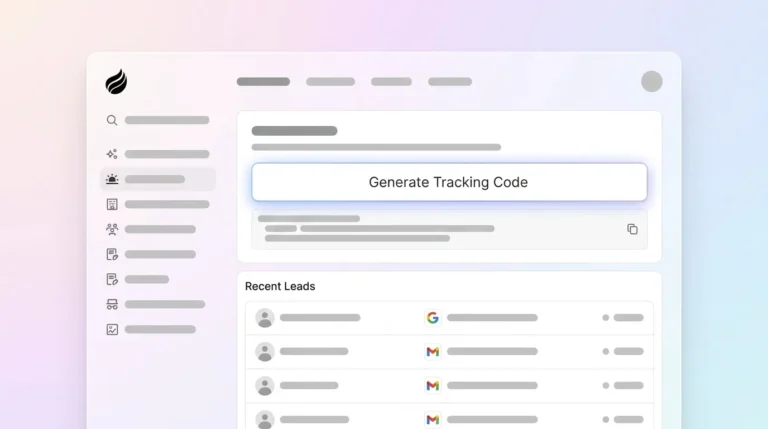
9. Coffee (Top Pick) – AI agent that auto-enriches contacts and companies from Google Workspace and visitor pixels without manual entry. Suggested Leads outperform tools like RB2B and Warmly by recommending specific personas inside visiting companies instead of only listing company names. List Builder supports natural language queries such as “VPs Sales $10M+ funding,” which speeds up list creation for non-technical users. Automated contact creation and Pipeline Compare reduce repetitive admin work and reclaim meaningful weekly hours. Seat-based pricing avoids the large, inflexible contracts associated with traditional enterprise databases.

Why Coffee Leads for Automated Prospecting Workflows
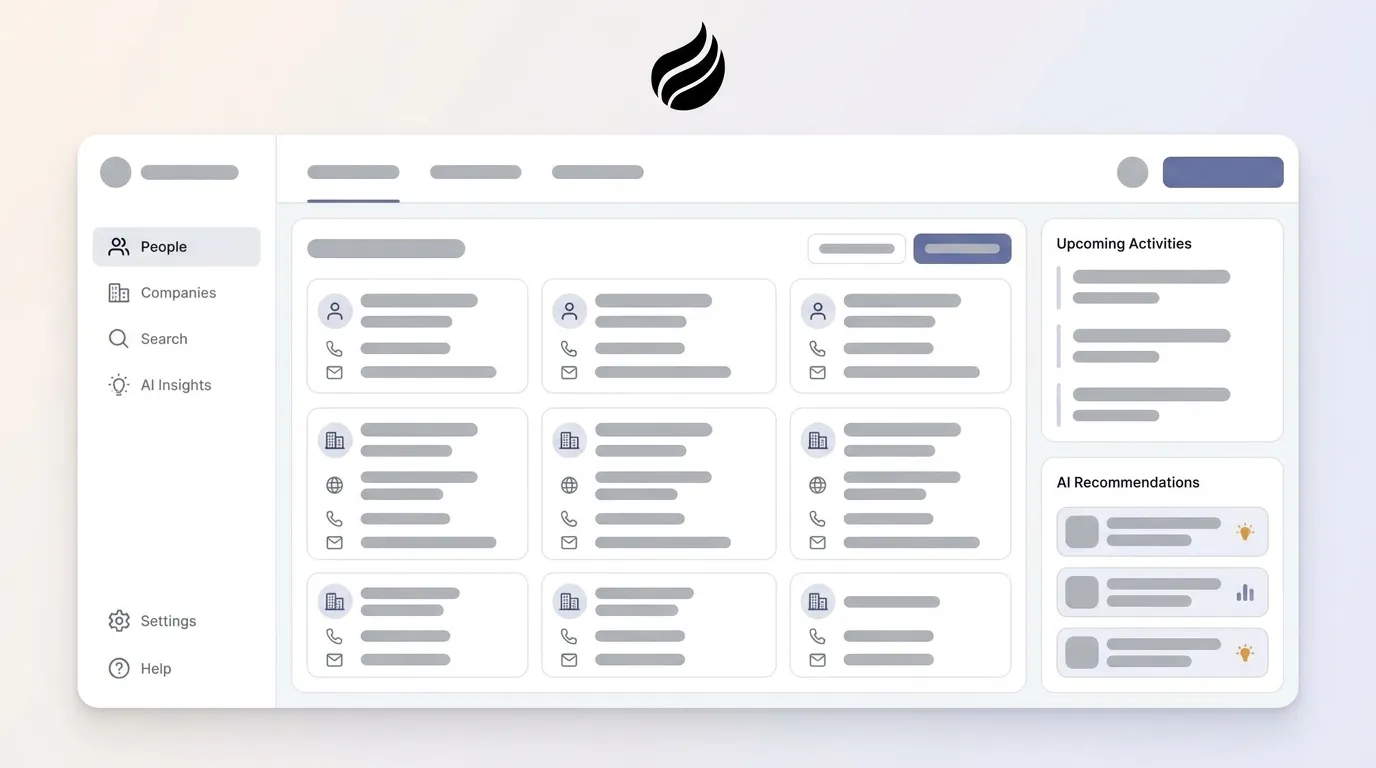
Coffee operates as an active AI agent instead of a static database, which changes how teams handle prospecting. The agent creates contacts and companies directly from emails and calendars, so reps no longer copy details into the CRM by hand. Visitor ID with Suggested Leads surfaces specific personas at visiting accounts, while competitors like RB2B and Warmly usually stop at the company level.

Coffee’s List Builder accepts natural language prompts such as “Find VPs of Sales in North America at companies with $10M+ funding using Salesforce.” Pipeline Compare then shows week-over-week changes without any spreadsheet exports. The agent can function as a standalone CRM for small teams or as a Companion App that feeds Salesforce and HubSpot with enriched records.

Compared with ZoomInfo’s enterprise contracts and manual workflows, Coffee automates the full path from prospecting to CRM. One AI-focused firm replaced spreadsheet-based tracking after rolling out Coffee’s automated data workflows, which simplified reporting and reduced manual updates.
Teams that want to see how Coffee consolidates multiple tools into a single AI agent can start a trial and compare the experience with their current stack.
Best Options for Small Businesses and Free Alternatives
Coffee Standalone supports teams of one to twenty reps with simple setup and predictable seat pricing. Smaller organizations that prefer free options can pair Crunchbase and LinkedIn with backup tools such as UpLead, which advertises a 95% accuracy guarantee at $99 per month. Many traditional databases still struggle to cover very small businesses that lack LinkedIn pages or public funding announcements, so combining sources often works best.

2026 Prospecting Trends and Practical Best Practices
AI agents are reducing tool sprawl by roughly half in 2026 as teams consolidate enrichment, routing, and reporting into fewer platforms. A high-performing workflow usually follows a clear sequence: visitor pixel, identification, enrichment, then outreach. Independent accuracy tests continue to reveal gaps between vendor promises and real-world performance. Teams that anchor decisions on ground-truth data from integrated sources, rather than isolated databases, see more consistent results.
Revenue leaders who want this type of unified workflow can evaluate Coffee as a single platform that implements the full 2026 prospecting stack.
Frequently Asked Questions
How does Coffee compare to ZoomInfo?
Coffee unifies data and enrichment with an AI agent at a fraction of typical enterprise database costs. ZoomInfo often requires manual data entry and separate tools for visitor identification, while Coffee’s agent handles email parsing, visitor recognition, and lead creation automatically. Both platforms deliver strong data quality, but Coffee removes many of the manual workflow bottlenecks that slow down smaller teams.
What CRM integrations does Coffee support?
Coffee connects natively with Salesforce and HubSpot and also supports Zapier for additional integrations. The Companion App sends enriched data directly into existing CRM instances, while the Standalone CRM acts as the full system of record. All connections maintain bidirectional data flow, so teams avoid manual imports and exports.
What is Coffee’s pricing model?
Coffee uses transparent seat-based pricing where companies pay for human users and receive the AI agent’s work without extra metering. The platform does not charge by LLM usage, credits, or individual processes. This structure contrasts with ZoomInfo’s credit-based system and the enterprise-level annual contracts mentioned earlier.
Which free sources provide the best data quality?
Crunchbase delivers strong funding and company data at no cost, which helps with timing and firmographic research. LinkedIn offers high-quality intent signals through engagement tracking across posts and profiles. For contact details, Apollo’s free tier includes monthly credits with competitive accuracy. Government registries such as Companies House in the UK and INSEE SIRENE in France supply certified firmographic records that complement these tools.
What accuracy benchmarks should I expect?
Teams should aim for at least 95% email accuracy and phone connect rates above 20% from premium providers. Coffee reaches these benchmarks by grounding enrichment in Google Workspace data instead of relying only on third-party databases. Free tools usually deliver lower accuracy, so teams often add verification steps before launching large campaigns.
Conclusion: Choosing a Prospecting Stack That Prioritizes Automation
The strongest sales prospecting data sources for 2026 emphasize automation and integrated workflows rather than manual processes. Coffee leads this shift as an AI agent that enriches data from emails, calendars, and website visitors while reducing tool sprawl. Traditional databases such as ZoomInfo still offer broad coverage, yet they often depend on heavier manual management.
For SMBs and mid-market teams, Coffee’s automated approach returns the time savings discussed earlier and lets reps focus on live selling instead of data entry. The platform points toward a future where AI agents work continuously in the background, while humans concentrate on conversations and strategy.
Teams ready to modernize their prospecting stack can adopt Coffee’s AI-driven workflow and bring these benefits into their daily sales operations.