Written by: Doug Camplejohn, CEO & Co-Founder, Coffee
Key Takeaways for Salesforce-First Teams
- Salesforce-dependent teams face costly sync failures and dual-entry burdens when they pair Pipedrive with Salesforce through third-party connectors.
- Native two-way sync, required-field fidelity, and forecasting integrity are the decisive factors when you evaluate any Pipedrive alternative.
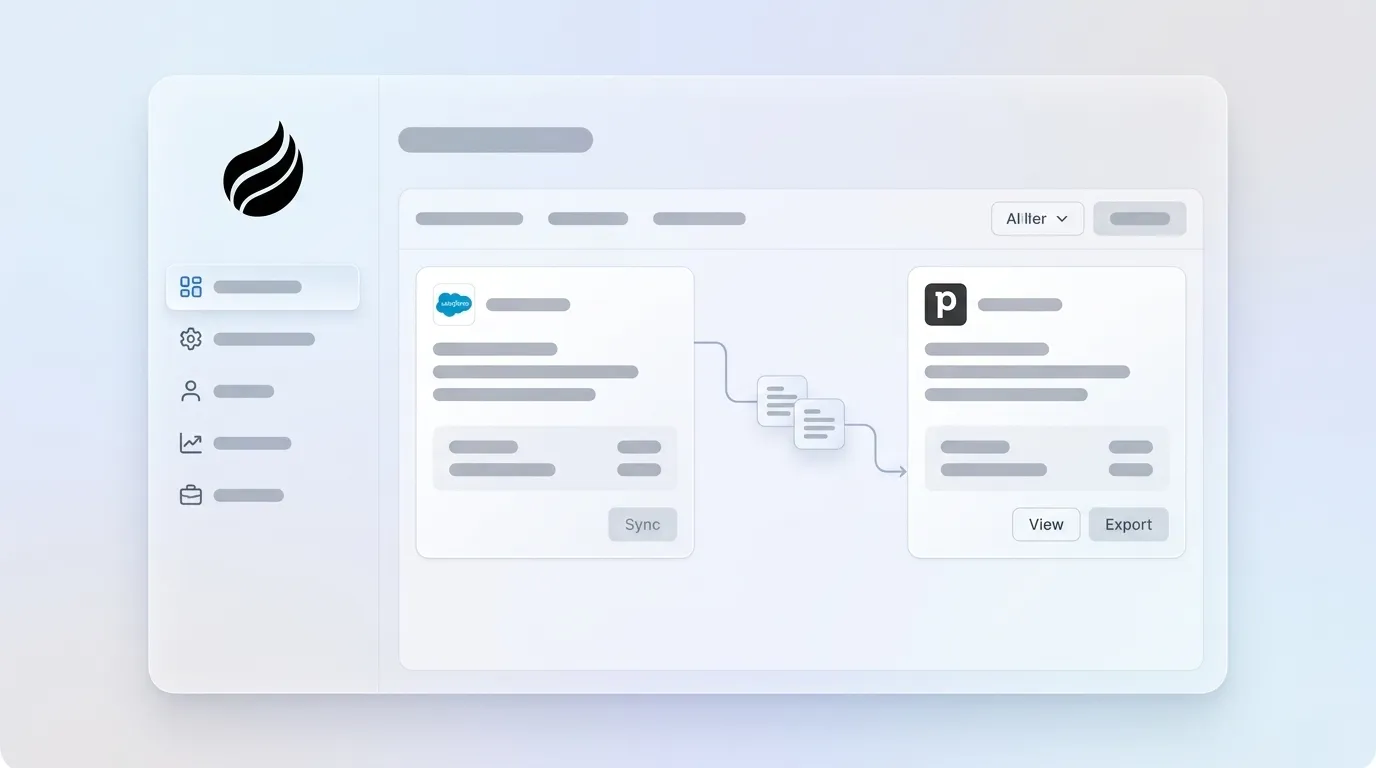
- Coffee’s Companion App removes manual data entry by autonomously capturing emails, calls, and meetings and writing directly to Salesforce.
- Zero-migration deployment and SOC 2 Type 2/GDPR compliance make Coffee a low-risk path for teams that cannot abandon Salesforce.
- Eliminate dual-entry without touching your Salesforce configuration by connecting Coffee to your existing Salesforce instance.
Six Criteria That Matter for Salesforce-Dependent Teams
Six criteria determine fitness for teams where Salesforce is non-negotiable. These criteria separate tools that preserve Salesforce as the system of record from those that create parallel databases and manual reconciliation work.
Salesforce sync quality. Native two-way sync must write to Salesforce in real time using Salesforce APIs, not scheduled batch jobs. A shallow or connector-based integration may log activity but still leave outcome, notes, follow-up tasks, or AI summaries missing from the Salesforce activity record. Required-field fidelity and forecasting integrity depend on whether the integration respects Salesforce’s validation rules, not just its object schema.
Data-entry automation depth. Sales reps spend approximately 30% of their time on actual selling activities according to Salesforce State of Sales research. Any alternative that still relies on human data entry to keep Salesforce current recreates the original problem.
Pipeline visualization and intelligence. Teams reach for Pipedrive because of its visual, drag-and-drop pipeline. A viable alternative must match that experience and surface week-over-week deal movement without manual CSV exports.
Implementation effort and migration risk. Enterprise-scale data migration when changing a CRM typically takes between 3 to 6 months, including data cleansing, field mapping, and integrity testing. Any option that demands a full migration introduces that same risk profile.
Total cost of ownership. Licensing represents only one line item. Hidden costs include Zapier middleware, enrichment tools, and the administrator hours required to maintain sync logic.
Long-term scalability. The solution must accommodate quota structures, forecasting hierarchies, and role-based access as the team grows, without forcing a re-implementation.
Salesforce Sync Quality Comparison Across Vendors
Of the six criteria above, sync quality has the greatest impact on Salesforce reliability. If data does not flow accurately between systems, the rest of the stack cannot support forecasting or reporting. The table below rates each vendor on three dimensions that determine whether Salesforce remains a reliable system of record.
| Vendor | Native Two-Way Sync | Required-Field & Forecasting Fidelity | Common Failure Modes |
|---|---|---|---|
| Pipedrive | No native sync, requires third-party connector or Zapier | Low, under Pipedrive’s old plans, custom fields were capped at 30 on Essential and 500 on Power, which constrains Salesforce field mapping | Without defined integration architecture, manual transfer causes CRM to diverge from reality, and deals created via automations or API are placed in a waitlist when limits are reached, which silently breaks pipeline data |
| HubSpot | Partial, native connector exists but sync is one-directional for many object types | Medium, standard objects sync reliably, while custom objects and forecasting categories require additional configuration | Records duplicate and fields overwrite each other when error handling is absent, and HubSpot’s CRM was bolted onto a marketing platform, which creates structural field-mapping gaps |
| Monday Sales CRM | No native Salesforce sync, middleware required | Low, the board-based data model does not map cleanly to Salesforce opportunity stages or forecasting categories | Sync latency and field-type mismatches between Monday’s board columns and Salesforce picklist fields, so forecasting data must be manually reconciled |
| Coffee Companion App | Yes, the agent writes directly to Salesforce records via Salesforce APIs with two-way sync | High, the agent respects required fields, validation rules, and forecasting hierarchies, and signal-augmented CRM data can generate more sales-qualified leads than base contact data alone | No migration required, because the agent layer does not alter Salesforce schema, which removes the class of errors introduced by connector-based approaches |
Eliminate dual-entry without touching your Salesforce configuration by connecting Coffee to your Salesforce instance.
Setup, Onboarding, and Migration Risk for Each Option
Pipedrive, HubSpot, and Monday Sales CRM each require some degree of parallel operation during onboarding. During this period, data lives in two places and sync errors compound. Salesforce enterprise deployments are rarely completed in less than 6 to 9 months and often last over a year for global rollouts, and a full migration away from Salesforce inherits that same complexity in reverse.
Implementation complexity, integration challenges with legacy systems, and talent shortages in certified Salesforce expertise are identified as major operational constraints that raise the cost and risk of any full CRM replacement.
Coffee’s Companion App follows a zero-migration path. Authentication connects the Coffee agent to the existing Salesforce instance. The agent begins reading emails and calendar events, creating and enriching records, and writing activity data back to Salesforce immediately.

There is no data cleansing phase, no field-mapping project, and no change-management program required to retire a legacy system. Deloitte’s 2026 Tech Trends report frames agents as extending the useful life of legacy systems while organizations modernize selectively, which is the model Coffee’s Companion App puts into practice.
Automated Data Capture and Pipeline Intelligence in Practice
Pipedrive offers email sync and some activity logging, but data entry for deal fields, contact enrichment, and meeting notes remains a human task. HubSpot’s sequences and workflows automate outreach but do not autonomously populate Salesforce records from unstructured sources like call transcripts. Monday Sales CRM provides workflow automation within its own environment, and Salesforce writeback is not automated.
Coffee’s agent handles the full capture loop. After you connect Google Workspace or Microsoft 365, the agent auto-creates contacts and companies, logs last and next activity, joins calls via Zoom, Teams, or Meet to record and transcribe, and generates post-call summaries structured to BANT, MEDDIC, or SPICED, all written back to Salesforce without rep involvement.

AI now handles portions of initial outreach in many teams, and Coffee aligns with that direction. Coffee’s Pipeline Compare feature visualizes week-over-week deal movement, including progressed, stalled, and newly added opportunities, which replaces manual pipeline review spreadsheets. Visitor identification converts anonymous website traffic into named prospects with enriched profiles, routed directly into Salesforce or outbound sequences.

Best-Fit Use Cases for 5–25 Rep Salesforce Teams
Teams in this size range typically have Salesforce configured with quota structures, forecasting categories, and role hierarchies that took months to build. Replacing Salesforce just to gain Pipedrive’s visual pipeline creates a disproportionate trade.
Coffee’s Companion App fits cleanly for teams where reps resist CRM entry and forecast data is consistently stale. It also fits RevOps leaders who need pipeline visibility without buying a separate forecasting tool. Sales managers who want meeting intelligence and deal-change alerts without adding another point solution to the stack see similar benefits.
Pipedrive remains a reasonable standalone CRM for teams with no Salesforce dependency. HubSpot works well when the team already uses HubSpot Marketing Hub and Salesforce is not the system of record. Monday Sales CRM suits project-oriented teams where pipeline stages map to project milestones rather than opportunity stages.
Operational Risks, Compliance, and Cost Structure
Employee resistance to manual data entry remains one of the biggest challenges for enterprise CRM adoption, and any solution that reintroduces manual entry, even in a new UI, recreates that resistance. Connector-based Pipedrive–Salesforce syncs introduce hidden Zapier costs that scale with task volume and are difficult to forecast.
Without defined integration architecture, the CRM gradually diverges from reality so that decisions based on CRM data become unreliable, which creates a direct forecasting risk.
Coffee is SOC 2 Type 2 and GDPR compliant, and data is not used to train public models. An enterprise CRM environment must provide advanced security mechanisms such as Role-Based Access Control and built-in compliance with GDPR, and Coffee’s agent operates within those boundaries.
Pricing is seat-based, and the agent’s labor is unlimited and unmetered. This structure removes the per-task cost unpredictability of Zapier-based sync architectures.
Decision Framework and Checklist for Your Team
Use the following checklist to match your constraints to the right option.
If migration is not permitted: Eliminate any option that requires a new system of record. Coffee’s Companion App and a native HubSpot connector remain as candidates, and Coffee wins on automation depth and required-field fidelity.
If forecast accuracy is a board-level requirement: Remove connector-based syncs with known field-gap failure modes. Coffee’s agent writes directly to Salesforce opportunity records and preserves forecasting category integrity.
If rep adoption is the primary risk: SDRs spend 20–40% of their time on manual data research and bad data. Any solution that still requires reps to log activity manually will face the same adoption wall. Coffee removes the entry requirement entirely.
If budget is constrained: Calculate the all-in cost of Pipedrive licenses plus Zapier tasks plus enrichment tools versus Coffee’s seat-based pricing with enrichment and automation included.
If compliance posture matters: Confirm SOC 2 Type 2 and GDPR status before you shortlist vendors. Coffee meets both.
See how the Companion App maps to your Salesforce configuration with a Coffee trial.
Frequently Asked Questions
Does Pipedrive integrate with Salesforce?
Pipedrive does not offer a native, built-in two-way Salesforce integration. Connecting the two systems requires a third-party middleware tool such as Zapier or a dedicated connector. These approaches introduce sync latency, field-mapping gaps, and error-handling risks.
Under Pipedrive’s old plans, custom fields were capped at 30 on Essential and 500 on Power, which limited how completely Salesforce’s required fields could be replicated. When API or automation limits are reached, new deals are placed in a waitlist rather than synced immediately, which creates silent data gaps in Salesforce forecasting.
Which CRM is best for sales teams already on Salesforce?
For teams committed to Salesforce as the system of record, the strongest option is not a replacement CRM but an agent layer that writes high-quality data into Salesforce automatically. Full CRM migrations away from Salesforce typically take 3 to 6 months for data migration alone and introduce compliance and forecasting risks that outweigh the UX benefits of a new interface.
Coffee’s Companion App deploys as an agent on top of Salesforce. It handles contact creation, activity logging, meeting intelligence, and pipeline visualization without altering the Salesforce schema or requiring a migration project.
How do I keep Salesforce as the system of record while gaining pipeline automation?
You can keep Salesforce as the system of record by using an agent-powered companion tool that authenticates to Salesforce and writes data back in real time using Salesforce APIs while respecting required fields, validation rules, and forecasting hierarchies.
Coffee’s Companion App connects through a simple authentication to Google Workspace or Microsoft 365, then begins capturing emails, calendar events, and call transcripts autonomously. It creates and enriches records, logs activity, generates meeting summaries structured to your sales methodology, and surfaces week-over-week pipeline changes, all inside Salesforce, with no parallel system and no dual entry. The agent handles the data-in process so Salesforce produces accurate data out.
Conclusion: Choosing the Right Path Forward for Salesforce Teams
Evidence across sync quality, implementation risk, automation depth, and compliance posture points to a consistent conclusion. For Salesforce-dependent sales teams, the core problem is not the CRM interface, it is the absence of an agent that keeps the system of record accurate without human effort.
Pipedrive, HubSpot, and Monday Sales CRM each require some form of manual entry or fragile middleware to maintain Salesforce fidelity. Deloitte’s 2026 Tech Trends report confirms that agents work best in specific, well-defined domains and that a hybrid approach, where agents extend the useful life of legacy systems, is the likely enterprise future.
Coffee’s Companion App is that agent for Salesforce environments where forecasting accuracy, compliance posture, and rep adoption cannot be compromised.
Deploy the agent your Salesforce instance has been missing by starting a Coffee trial today.