Written by: Doug Camplejohn, CEO & Co-Founder, Coffee | Last updated: August 20, 2026
Key Takeaways for Sales Leaders
- Legacy CRMs force reps to spend 5.5 hours per week on manual data entry, leaving only 28–34% of their time for actual selling.
- Five automation types (email and calendar sync, contact creation, call transcription, pipeline intelligence, and visitor identification) remove nearly all manual logging when used together.
- Coffee saves 8–12 hours per rep per week by delivering all five automation types in a single seat-based subscription, outperforming Copper, Pipedrive, monday CRM, and HubSpot.
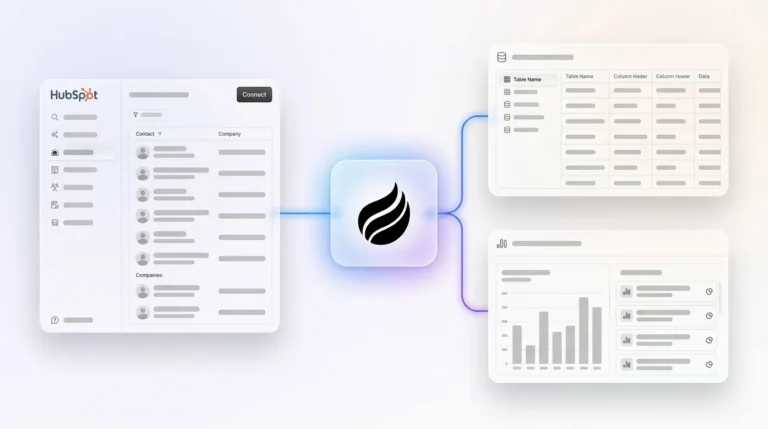
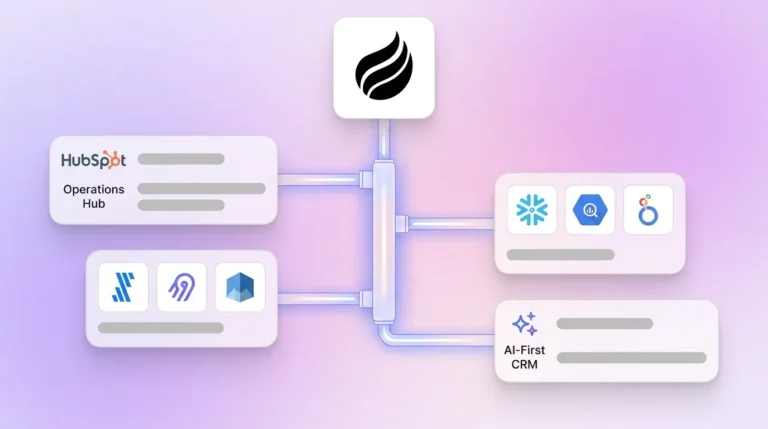
- Teams can deploy Coffee as a Standalone CRM for early-stage growth or as a Companion App that writes structured data back to existing Salesforce or HubSpot instances without migration.
- Eliminate manual data entry and reclaim selling time, and see Coffee’s pricing and deployment options.
Five Automation Types That Remove Manual CRM Logging
These five automation types cover the full stack of manual logging that agent-powered CRMs can remove. Tools that deliver all five create the largest time savings and the most reliable pipeline data.
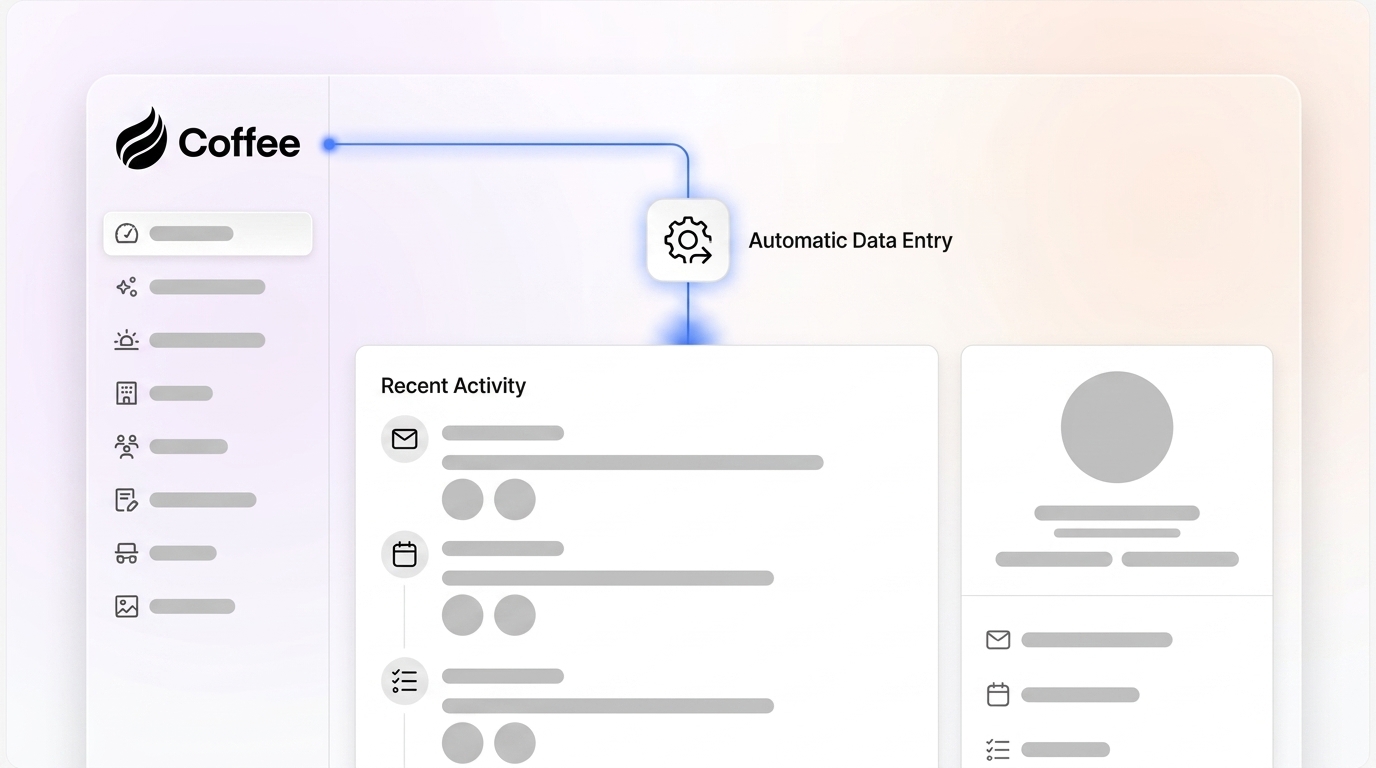
- Email and calendar sync. Two-way live sync automatically logs every sent and received email and every calendar event to the correct contact and deal record in real time, with no BCC workarounds or rep action required.
- Contact and activity creation. The CRM scans emails, calendar invites, and call participants to auto-create contact and company records, enrich them with firmographic data, and log last and next activity without manual input.
- Call transcription and follow-up drafting. An AI bot joins calls on Zoom, Teams, or Meet, transcribes the conversation, extracts structured qualification fields (MEDDIC, BANT, SPICED), writes them to CRM picklists and dropdowns, and drafts a follow-up email for rep review.
- Pipeline intelligence output. Continuous capture of ground-truth activity data allows the agent to surface pipeline intelligence, including week-over-week changes, stalled deals, and forecast-ready reports, without manual CSV exports.
- Visitor identification and lead enrichment. A tracking pixel converts anonymous website traffic into named prospects with job title, email, LinkedIn profile, and company data, then routes high-fit visitors into outbound sequences automatically.
These five automation types form the evaluation framework for the comparison that follows. Tools that deliver all five remove the most manual work, while tools that cover only one or two leave a significant logging burden on reps.
Side-by-Side Comparison of Top CRM Automation Tools
The table below highlights a clear gap in the market. All five tools support basic email sync, yet only Coffee delivers all five automation types in one subscription, which translates to 8–12 hours saved per rep per week, roughly double the documented savings of competing tools. Every figure is cited inline. Qualitative distinctions that cannot share a common unit appear in the category sections that follow.
| Tool | Estimated Hours Saved / Rep / Week | Automation Depth | Deployment Model |
|---|---|---|---|
| Coffee | 8–12 hours | All five automation types, agent writes structured fields not free-text notes, built-in data warehouse for pipeline compare | Standalone CRM or Companion App on Salesforce / HubSpot |
| Copper | Vendor does not publish a per-rep figure, Avoma reports saving 4+ hours per rep per week on note-taking and CRM updates combined | Native Gmail sync, contact auto-creation from email, no built-in call transcription or visitor ID | Standalone CRM only, Google Workspace–exclusive |
| Pipedrive | Vendor does not publish a per-rep figure, Smart Contact Data auto-fills public fields on contact creation | Email sync with Gmail and Outlook, Smart Contact Data enrichment, no native call transcription or visitor ID | Standalone CRM only |
| monday CRM | Email and calendar automation can reduce manual data entry | Two-way email sync, AI field extraction from documents, contact enrichment, no native call transcription bot or visitor ID | Standalone CRM only |
| HubSpot | HubSpot Breeze AI Smart Deal Progression suggests updates but requires explicit rep approval before writing to any record | BCC and forwarding email logging by default, Einstein-equivalent requires Sales Hub Pro+, no built-in visitor ID or call bot at base tiers | Standalone CRM, no companion-layer option for other CRMs |
As the table shows, Coffee’s 8–12 hour time savings come from combining all five automation types with structured write-back and a built-in data warehouse, rather than relying on add-ons or manual exports.
Email and Calendar Sync Across CRMs
CRMs typically offer three sync directions: one-way log via BCC, one-way inbound sync, and two-way live sync. Coffee implements two-way live sync because completeness matters more than noise when an AI agent handles filtering. The system connects to Google Workspace or Microsoft 365 via OAuth and immediately associates every email and calendar event with the correct contact and deal record without rep action. This automatic capture removes the rep discipline problem that causes incomplete logging in BCC-based systems, although Harvard Business Review articles on sales forecasting do not link consistent CRM activity logging to a specific percentage improvement in forecast accuracy.
Copper’s sync is Gmail-native and strong within Google Workspace but does not support Microsoft 365. Pipedrive connects Gmail and Outlook but defaults to one-way logging. Native Salesforce Outlook and Gmail integrations support only manual one-click email logging by default, and automatic capture requires pairing them with Einstein Activity Capture or a third-party tool. HubSpot’s BCC-based logging depends on rep behavior. Coffee’s Companion App removes that dependency by writing directly to Salesforce or HubSpot records after a simple authentication, with no BCC setup required.
Contact and Activity Creation Capabilities
AI CRM data entry automation uses machine learning, NLP, and data-enrichment APIs to capture activity from email, calendar, dialer, and meeting tools, extract entities, enrich records, and sync clean records into Salesforce or HubSpot without duplicates. Coffee’s agent scans emails and calendars to auto-create contacts and companies, enriches them with job titles, funding data, and LinkedIn profiles via licensed data partners, and logs last and next activity autonomously.

Pipedrive’s Smart Contact Data fills in public information such as job title, company name, and location when a new contact is added with a work email, but enrichment triggers only at creation and does not refresh over time. monday CRM automatically populates job title, seniority, direct phone, LinkedIn URL, company size, industry, and headquarters location. HubSpot enriches contacts on Pro and above tiers. CRM records lose accuracy at an average rate of 30% per year, so continuous agent-driven enrichment remains more durable than point-in-time enrichment at contact creation.
Call Transcription and Follow-Up Drafting
AI call-capture assistants record or ingest sales calls and write structured data, including deal stage, next steps, qualification fields, stakeholders, pain points, and competitor mentions, directly into Salesforce or HubSpot dropdowns and picklists within minutes of a call ending. Coffee’s AI Meeting Bot joins Zoom, Teams, and Meet calls, transcribes the conversation, then generates summaries, identifies next steps, and drafts follow-up emails in Gmail or Outlook for rep review. Summaries follow BANT, MEDDIC, or SPICED frameworks and write back to Coffee, HubSpot, or Salesforce fields rather than free-text notes.

Avoma, a compatible add-on for Copper, HubSpot, Pipedrive, and Salesforce, reports saving 4+ hours per rep per week on note-taking and CRM updates combined, but it requires a separate subscription. Pipedrive and monday CRM have no native call transcription bot and rely on third-party integrations. HubSpot’s Breeze AI Smart Deal Progression analyzes meeting transcripts to suggest updates to deal stage and next steps, yet every suggestion requires explicit rep approval before writing to the record. Coffee writes structured field values directly, and the rep reviews a completed draft instead of approving each individual field change.
Pipeline Intelligence Output and Forecast Quality
Only 45% of sales leaders and sellers have high confidence in their organization’s forecasting accuracy, according to a 2020 Gartner survey, and Gong research found only 24% of sales leaders confident in their team’s revenue forecast. Both figures trace back to the same root cause. When reps manually log activity, they skip low-priority updates and backfill data days or weeks late, which produces records that are incomplete and stale. Forecasts built on that data inherit the same gaps and lag, so pipeline reports become distorted before a forecast is even generated.
Coffee’s Pipeline Compare feature, introduced in the automation framework above, visualizes those week-over-week changes directly from its built-in data warehouse. The view highlights progressed deals, stalled opportunities, and new additions without manual CSV exports or spreadsheet assembly. AI-powered CRM data capture improves data completeness and supports more reliable forecasts. HubSpot and Salesforce offer pipeline dashboards, but their accuracy depends on rep-entered data. monday CRM’s AI Timeline Summary creates overviews of communication events, yet pipeline change tracking still requires manual configuration. Pipedrive and Copper provide pipeline views without automated change detection or a built-in data warehouse for historical comparison.
Visitor Identification and Suggested Leads
Coffee’s visitor identification feature converts anonymous website traffic into named prospects using a single tracking pixel placed in the site’s <head> tag. The agent infers name, title, email, LinkedIn profile, company, pages visited, time on site, and whether the visit was a first or return. Real-time Slack notifications surface high-fit visitors, and one click adds the prospect to Coffee with all enrichment pre-filled, ready for LinkedIn outreach or auto-enrollment into Campaigns.

The differentiating capability is Suggested Leads. Standalone visitor identification tools usually surface either the visiting company or an undifferentiated list of employees. Coffee uses the team’s buyer persona to recommend two or three specific individuals inside that visiting company to contact, with LinkedIn profiles surfaced for immediate outreach. Pipedrive, Copper, monday CRM, and HubSpot’s base tiers do not include native visitor identification. HubSpot’s Prospecting tool at higher tiers provides some intent data but does not match anonymous visitors to named individuals with persona-filtered recommendations in the same workflow.
Add visitor identification to your stack and explore Coffee’s pricing.
With all five automation types evaluated across tools, the remaining decision depends on team size, existing stack commitments, and whether you need a standalone system or a companion layer. The guidance below maps those variables to the right deployment model.
Choosing Coffee by Team Size and Existing Stack
Early-stage teams (1–20 employees). Teams that have outgrown spreadsheets but find HubSpot or Pipedrive to be expensive administration burdens fit naturally with Coffee’s Standalone CRM. The agent handles contact creation, activity logging, meeting transcription, and pipeline tracking from day one. Setup requires only a Google Workspace or Microsoft 365 authentication. For modern CRMs with built-in AI capabilities, email and calendar integration often takes one to two weeks and meeting intelligence features take an additional two to four weeks. Coffee’s seat-based pricing includes unlimited agent labor with no separate metering for LLM usage or automated processes.
Growing teams already committed to Salesforce or HubSpot. Coffee’s Companion App deploys the agent as an intelligent layer on top of an existing Salesforce or HubSpot instance. A simple authentication allows the agent to sync data, enrich it, and write insights back to the primary CRM, including custom fields, MEDDIC qualification data, and pipeline change signals, without replacing the system of record. This model addresses low CRM adoption and poor data quality without requiring migration. Coffee is SOC 2 Type 2 and GDPR compliant, and data is not used to train public models. Third-party integrations beyond Google Workspace and Microsoft 365 are currently available via Zapier, with deeper roadmap integrations in development.
Risks and Limitations of Automation-Heavy CRMs
Automating capture without deduplication rules multiplies duplicate records because each surface creates records independently, so dedupe rules using unique email fields and weekly merge reviews must ship with any capture automation. Coffee applies deduplication logic automatically, but teams migrating from legacy systems with existing duplicate records should audit and clean those records before or during onboarding.
Syncing emails and calendars without exclusion rules risks pulling in confidential, personal medical, or legally privileged content, which creates compliance liability under FTC data minimization guidance. Coffee’s SOC 2 Type 2 certification and configurable sync scope address this risk, but administrators should define exclusion rules during setup.
Software alone does not fix data quality. A practical AI CRM data entry workflow captures the source input, identifies the contact or company, extracts field values, normalizes formats, checks for duplicates or conflicts, writes safe fields to the CRM, and flags uncertain fields for human review. Teams that treat automation as a replacement for process design rather than an accelerant of good process will encounter the same data quality problems at higher speed. Coffee’s agent handles the mechanical labor, while the team still defines the sales methodology, qualification criteria, and pipeline stages that give the agent’s output meaning.
Coffee is not designed for large enterprises with complex custom workflows, heavily regulated industries requiring multi-year security reviews, or buyers seeking a static feature-checklist database rather than an autonomous agent.
Decision Framework Checklist for Coffee
Use the following criteria to match your team to the right deployment model.
- Team size 1–20, no existing CRM commitment. Choose Coffee Standalone CRM. The agent manages the system of record from day one with no migration required.
- Team size 20–100, committed to Salesforce or HubSpot. Choose Coffee Companion App. The agent writes enriched, structured data back to the existing system of record without replacing it.
- Stack is Gmail or Google Workspace. All five tools support Gmail. Coffee, Copper, Pipedrive, monday CRM, and HubSpot all connect natively.
- Stack is Microsoft 365 or Outlook. Coffee, Pipedrive, monday CRM, and HubSpot support Outlook. Copper is Google Workspace–exclusive.
- Need call transcription and structured field write-back without a separate subscription. Coffee is the only tool in this comparison that includes a native AI Meeting Bot with structured field write-back to MEDDIC, BANT, or SPICED at no additional per-seat cost.
- Need visitor identification with persona-matched lead recommendations. Coffee’s Suggested Leads feature is not replicated by Copper, Pipedrive, monday CRM, or HubSpot at comparable tiers.
- Compliance requirements (SOC 2 Type 2, GDPR). Coffee is certified for both. Verify current certification status for other tools directly with their vendors.
- Budget model preference. Coffee uses seat-based pricing with unlimited agent labor included. Competing tools vary, and HubSpot’s outcome-based Breeze AI pricing charges per resolved conversation or qualified lead.
Frequently Asked Questions About Coffee
How long does it take to implement Coffee and see time savings?
For the Standalone CRM, setup requires authenticating a Google Workspace or Microsoft 365 account. The agent begins creating contacts, logging activity, and enriching records immediately after authentication. Most teams see measurable reductions in manual logging within the first week. For the Companion App on Salesforce or HubSpot, a simple authentication connects the agent to the existing system of record. The agent then begins writing enriched data back to that CRM without requiring field mapping by an administrator for standard objects. Teams with heavily customized Salesforce or HubSpot instances should expect a short configuration period to align the agent’s write-back targets with custom fields and required picklist values.
Does Coffee require a dedicated RevOps or technical resource to maintain?
Coffee’s agent is designed to operate without ongoing technical administration. Contact creation, enrichment, activity logging, meeting transcription, and pipeline tracking run autonomously once the initial authentication is complete. The agent’s Intelligence layer allows sales leaders to define business model context, ICP criteria, and competitor information in plain language, which the agent uses to tailor its suggestions and summaries. This configuration happens through a standard interface, not code. Teams that want to connect Coffee to additional tools beyond Google Workspace and Microsoft 365 can use Zapier for those integrations without engineering involvement.
Is Coffee’s data secure, and how does it handle sensitive email content?
Coffee is SOC 2 Type 2 and GDPR compliant. Data ingested by the agent is not used to train public AI models. Email and calendar sync can be scoped with exclusion rules to prevent confidential, personal, or legally privileged content from entering the CRM. Administrators should configure these exclusions during onboarding. Coffee’s compliance posture suits small-to-mid US companies in standard commercial industries, while teams in heavily regulated sectors such as healthcare or finance with multi-year security review requirements should confirm whether Coffee’s current certification scope meets their specific obligations.
How does Coffee handle teams that already have data in Salesforce or HubSpot?
The Companion App model is designed for this scenario. Coffee does not replace Salesforce or HubSpot as the system of record. Instead, the agent authenticates with the existing CRM and begins writing enriched, structured data, including contact records, activity logs, call transcription outputs, MEDDIC or BANT qualification fields, and pipeline change signals, directly into that CRM’s objects. Historical data already in Salesforce or HubSpot remains intact. The agent enriches and updates records going forward. Teams with significant duplicate records in their existing CRM should perform a deduplication audit before or during the Companion App onboarding to ensure the agent’s write-back targets clean records.
Can Coffee replace tools like ZoomInfo, Gong, and Salesloft?
For most small-to-mid teams, Coffee can replace several point solutions. Coffee’s Lead Finder provides prospecting database functionality via natural language search, which replaces standalone tools like ZoomInfo or Apollo for list building. The AI Meeting Bot with structured field write-back covers the core use case of call intelligence tools like Gong, with the added capability of writing to structured CRM fields rather than pasting free-text summaries into notes. Coffee’s Campaigns feature runs multi-step AI-generated email sequences natively from the rep’s own connected mailbox, which replaces dedicated sales engagement tools like Outreach or Salesloft for most outbound workflows. Large enterprises with deeply customized Gong scorecards, complex Salesloft cadence logic, or ZoomInfo integrations across multiple systems may find that Coffee covers the majority but not all edge cases of those specialized tools.
Conclusion: Choosing Coffee to Close the Time-Waste Gap
Legacy CRMs remain passive databases in 2026, and reps still lose most of their week to administrative work instead of selling. The tools reviewed in this guide narrow that time-waste gap to different degrees, yet only Coffee’s dual deployment model, Standalone CRM for early-stage teams and Companion App for teams committed to Salesforce or HubSpot, guarantees good data in and accurate pipeline intelligence out across both scenarios. The agent handles email and calendar sync, contact and activity creation, call transcription and structured field write-back, pipeline change detection, and visitor identification with persona-matched lead recommendations in a single seat-based subscription with no separate metering for agent labor.
Choose your deployment model and reclaim 8–12 hours per rep per week, then review Coffee’s pricing.