Key Takeaways
- The BANT framework (Budget, Authority, Need, Timeline) gives B2B SaaS teams a clear structure for lead qualification and helps lift MQL-to-SQL conversion rates beyond the 13% industry average.
- SaaS-specific questions and simple 1-5 scoring matrices help teams spot sales-ready prospects quickly, using thresholds like 3+ for Budget and 4+ for Need.
- AI agents like Coffee capture BANT data from calls and emails automatically, remove most manual data entry work, and keep pipeline data accurate.
- BANT works especially well for fast SMB deals under $50K, while hybrid models with MEDDIC support complex enterprise sales.
- Download the free BANT Google Sheet template and automate your qualification with Coffee to start using structured BANT today.
Executive Overview: How BANT Powers 2026 Revenue Operations
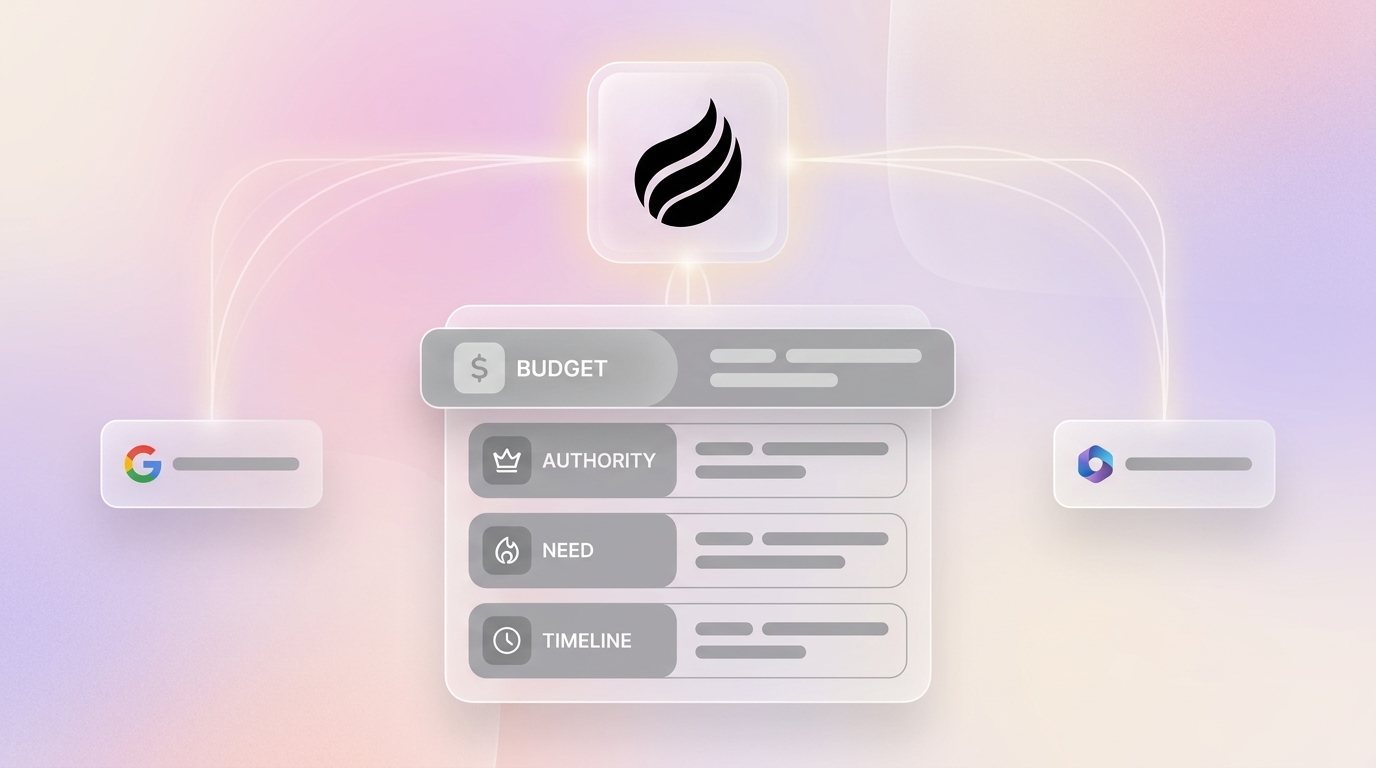
BANT qualification cuts through unstructured lead data that keeps many sales reps stuck in manual entry instead of selling. B2B SaaS companies that use structured qualification frameworks often see higher MQL-to-SQL conversion rates and outperform the 13% industry average. The framework works by evaluating four specific dimensions: Budget readiness, Authority mapping, Need validation, and Timeline confirmation.
Modern BANT programs pair these classic dimensions with AI automation. Coffee’s autonomous agent captures BANT data from every sales interaction, structures notes automatically, and syncs qualified leads to CRM systems without human effort. This focus on reliable inputs and reliable outputs keeps pipeline data accurate and lets reps spend more time on conversations that move deals forward.
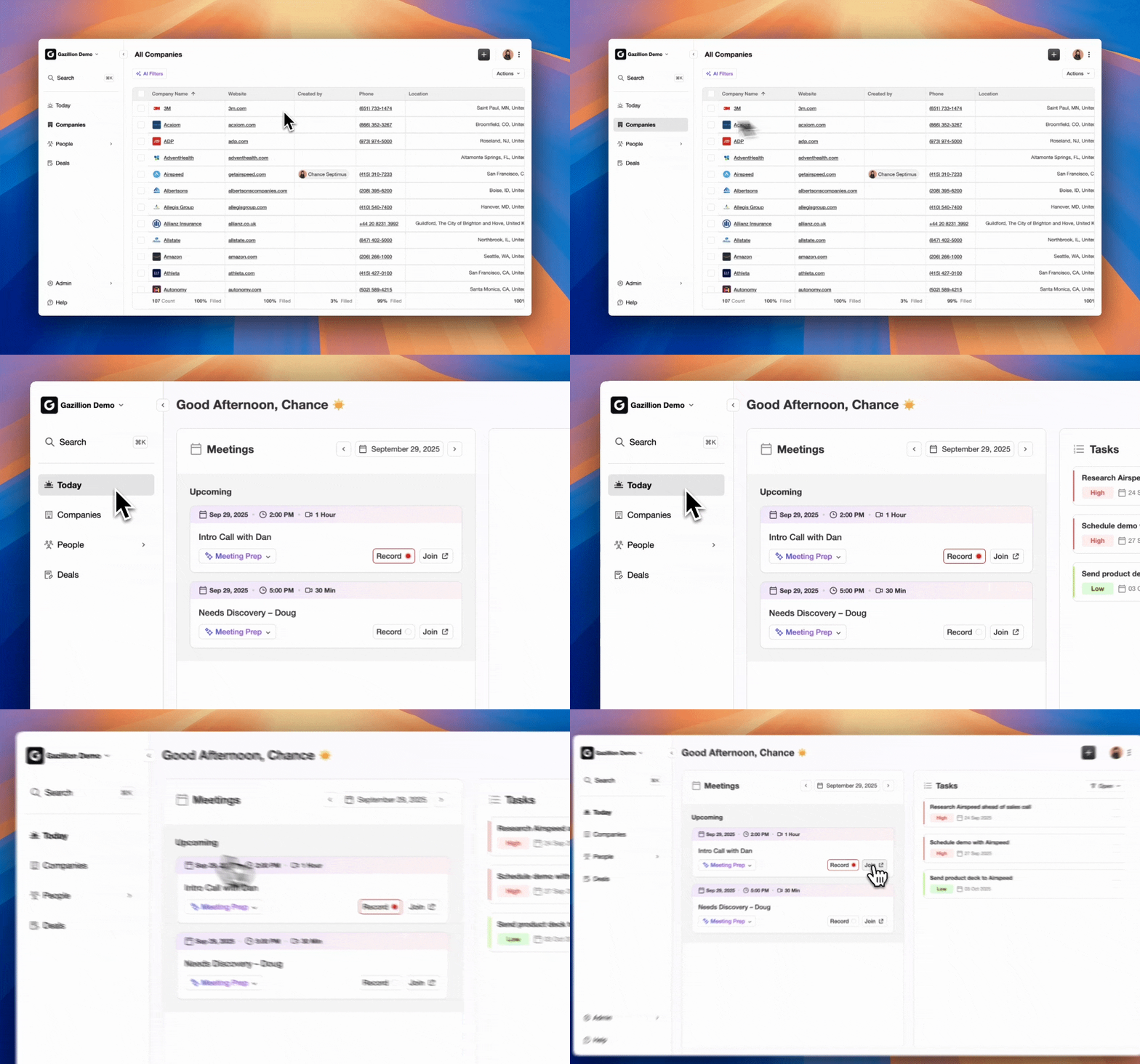
See how Coffee captures BANT data automatically and raise your MQL-to-SQL conversion rates.
Market Context: From Manual BANT to AI-Driven Qualification
Legacy CRM systems like Salesforce and HubSpot struggle with unstructured qualification data from calls and emails. These passive databases depend on constant manual updates, which creates a productivity drain where reps spend more time on data entry than on selling. The 2026 shift toward autonomous agents fixes this problem by using intelligent systems that capture, structure, and analyze qualification data automatically.
Coffee sits at the center of this shift as both a standalone CRM and a companion app for existing systems. Coffee’s February 2026 Intelligence layer enables storage of deep context including ICP, and separate February 2026 releases added custom meeting summaries that let the agent structure BANT qualifications from every prospect interaction. This agent-led approach turns qualification from a manual checklist into an automated intelligence system.
This transformation succeeds because of a simple principle: strong inputs create reliable outputs. Traditional tools rely on fallible human entry, while Coffee’s agent ingests ground-truth data from emails, calendars, and call transcripts. The result is pipeline visibility and forecasts that align closely with real deal progress.
How BANT Works for B2B SaaS: Template and Examples
BANT Checklist and Thresholds for SaaS Leads
Use this checklist and scoring framework to decide which leads meet your minimum bar for sales engagement. Each BANT category uses a 1-5 scale, and the threshold column shows the minimum score to treat a lead as sales qualified.
| BANT Category | Key Qualification Questions | Qualification Threshold (1-5 Scale) |
|---|---|---|
| Budget | What’s your current annual spend on similar tools? | 3+ (Has allocated or estimated budget) |
| Authority | Who else needs to approve this purchase decision? | 4+ (Direct access to economic buyer) |
| Need | What happens if this problem is not solved in 6 months? | 4+ (Quantifiable business impact) |
| Timeline | Are there specific deadlines driving your timeline? | 3+ (Active buying timeline within 90 days) |
SaaS-Specific BANT Questions
Use these ten questions to cover BANT thoroughly during B2B SaaS qualification calls.
- Budget: “How does your organization typically fund new technology investments in this area?”
- Budget: “What are you currently spending on tools, headcount, and processes to solve this problem?”
- Authority: “Walk me through how decisions like this typically get made at your company.”
- Authority: “Beyond yourself, who else would need to weigh in before moving forward?”
- Need: “What triggered your interest in solving this problem right now?”
- Need: “How is this challenge affecting your ability to hit your revenue targets?”
- Timeline: “Are there any business events or deadlines driving your timing?”
- Timeline: “What would need to happen internally to move forward this quarter?”
- Integration: “How would this integrate with your current tech stack?”
- Success Metrics: “What would success look like six months after implementation?”
BANT Scoring Table for SaaS Leads
Use this scoring table to decide whether to disqualify, nurture, or pass a lead to sales based on BANT strength.
| BANT Pillar | 1-2 Points (Disqualify) | 3-4 Points (Nurture) | 5 Points (Sales Ready) |
|---|---|---|---|
| Budget | No budget discussion | Estimated budget range | Approved budget allocated |
| Authority | No decision influence | Influences decision | Economic buyer or direct access |
| Need | Vague interest | Clear pain point | Quantified business impact |
| Timeline | No urgency | General timeline (6+ months) | Active timeline (0-90 days) |
High total scores usually qualify for SQL status, mid-range scores fit nurturing programs, and low scores call for disqualification or long-term nurture tracks.
BANT Example Script for SaaS Calls
Opening: “I’d like to understand your current situation better to see if we’re a good fit. Walk me through what triggered your interest in solving this problem right now.”
Need Discovery: “What happens to your team if this challenge remains unsolved for the next twelve months? How is this affecting your ability to hit your revenue targets?”
Authority Mapping: “Walk me through how decisions like this typically get made at your company. Beyond yourself, who else would need to weigh in before moving forward?”
Budget Exploration: “How does your organization typically fund new technology investments? What are you currently spending on tools and processes to address this problem?”
Timeline Confirmation: “Are there any business events or deadlines driving your timing? What would need to happen internally to move forward this quarter?”
Coffee’s agent captures these qualification details from calls, structures them by BANT criteria, and logs complete summaries to your CRM without manual note-taking.

Strategic Considerations: Choosing BANT, MEDDIC, or CHAMP
BANT vs MEDDIC and CHAMP in SaaS Sales
Use this comparison to match each framework to your deal size and sales motion.
| Framework | Best For | SaaS Fit |
|---|---|---|
| BANT | Fast SMB deals under $50K, 30-90 day cycles | High – Simple qualification, quick decisions |
| MEDDIC | Complex enterprise deals over $100K, 6+ month cycles | Medium – Requires deep stakeholder mapping |
| CHAMP | Consultative mid-market sales, flexible budgets | High – Prioritizes challenges over budget |
Top-performing sales teams use a hybrid model, with BANT for initial filtering and MEDDIC for deep analysis in complex deals. BANT shines in product-led growth motions where prospects already use freemium models and only need quick checks on authority and timeline.
BANT can support faster MQL-to-SQL progression than MEDDIC’s longer discovery cycles. Coffee’s agent structures notes according to BANT, MEDDIC, or SPICED methodologies and adjusts to deal complexity automatically.
Coffee: AI Agent for Hands-Free BANT Qualification
Coffee delivers automated BANT execution as an autonomous agent that joins calls, extracts qualification data, and structures summaries without human work. Coffee’s January and February 2026 updates introduced custom meeting briefings and expanded call recording integrations with Fathom, which enables full BANT capture across all prospect interactions.
The agent runs on three core capabilities: automatic data entry and enrichment from Google Workspace, AI-powered meeting management with BANT-structured summaries, and pipeline intelligence through built-in data warehousing. Unlike passive CRM systems that depend on manual entry, Coffee actively captures ground-truth data from emails, calendars, and transcripts.
Key features include meeting briefings with prospect context, automated post-call summaries structured by BANT criteria, and Pipeline Compare views that show week-over-week changes without spreadsheets. Coffee can connect to existing CRM systems as a companion app or operate as a standalone CRM for teams that want a modern alternative.
One company generating tens of millions in revenue selected Coffee after rejecting Salesforce and HubSpot because those tools required too much manual work. Coffee’s automated contact creation from Google Workspace, Pipeline Compare feature for weekly reviews, and API access for custom briefings created an automated workforce without complex setup.
Coffee maintains SOC 2 Type 2 and GDPR compliance, which protects qualification data with enterprise-grade security. The agent’s unlimited labor comes in simple seat-based pricing without complex metering on AI usage.
Eliminate manual lead scoring with Coffee and keep qualification consistent across every deal.
Implementation Guidance and Pro Tips
Begin by downloading the free BANT template Google Sheet and tailoring questions to your specific SaaS product. Connect Coffee to your Google Workspace account and enable BANT structure in meeting summaries. The agent then starts capturing qualification data from every prospect interaction.
Roll out a phased pilot to keep adoption smooth. First, define scoring thresholds for SQL qualification. Next, train the team on open-ended BANT questions. Finally, review conversion rates weekly and adjust thresholds based on real results.
Use three practical habits to improve outcomes. Start by focusing on Need and Timeline as primary qualifiers in subscription-based sales, because these signals reveal buying intent more reliably than early budget talk. Once you have a clear need, use Coffee’s AI prompts to keep qualification structure consistent across the team. This consistency helps you avoid the common pitfall of qualifying budget too early before you have shown enough value.
Track a small set of metrics to measure impact. Watch MQL-to-SQL acceptance rates with a target above 60 percent. Monitor SQL-to-opportunity conversion rates with a target above 30 percent. Aim for an average time from MQL to first sales contact under four hours. Coffee’s pipeline intelligence surfaces these metrics automatically without manual reporting.
Grab the template and connect Coffee to your workflow to launch automated BANT qualification.
Frequently Asked Questions
What’s included in the free BANT template download?
The Google Sheet template includes SaaS-specific BANT questions by category, a scoring matrix with 1-5 point scales, and qualification thresholds for MQL and SQL. It also provides example scripts for discovery calls and integration guidance for Coffee’s automated BANT capture. You can customize the template for different SaaS verticals and deal sizes.
How does Coffee automate BANT qualification?
Coffee’s autonomous agent joins sales calls, transcribes conversations, and extracts BANT information using AI analysis. The agent structures meeting notes by Budget, Authority, Need, and Timeline, assigns qualification scores based on predefined thresholds, and syncs complete summaries to your CRM without manual data entry. This creates consistent qualification data across every prospect interaction.

When should I use BANT versus MEDDIC or CHAMP frameworks?
BANT works best for transactional B2B SaaS sales under $50K with simple decision processes and 30-90 day cycles. MEDDIC fits complex enterprise deals over $100K that involve multiple stakeholders and sales cycles longer than six months. CHAMP suits consultative mid-market scenarios where challenges drive urgency more than budget constraints. Many teams start with BANT for initial qualification and layer MEDDIC for complex opportunities that move deeper into the pipeline.
What integrations and security features does Coffee provide?
Coffee integrates with Google Workspace for automatic data capture and connects to call recording tools like Fathom through Zapier. The platform maintains SOC 2 Type 2 and GDPR compliance with enterprise-grade security controls. Coffee does not use your data to train public AI models, which protects the privacy of your qualification information.
What are realistic conversion benchmarks for BANT-qualified SaaS leads?
BANT-qualified opportunities usually close at higher rates than non-qualified leads. B2B SaaS companies often see stronger MQL-to-SQL conversion when they apply consistent qualification compared to the broader industry average. Leads that score high on BANT criteria convert to SQL at healthy rates, while lower-scoring leads need nurturing before direct sales engagement. Coffee’s automated qualification helps maintain these benchmarks at scale without extra manual effort.
Conclusion
The strongest BANT template for qualifying B2B SaaS leads blends a proven framework with modern AI automation. Manual qualification drains sales time and creates pipeline inaccuracy, while Coffee’s autonomous agent captures structured BANT data from every prospect interaction automatically.
Implement automated BANT qualification today with our comprehensive BANT template and Coffee’s AI agent.