Written by: Doug Camplejohn, CEO & Co-Founder, Coffee
Key Takeaways
- Most sales reps lose over 5 hours each week to manual CRM data entry, which leaves little time for selling. AI-first CRMs automate this work and return those hours to revenue-generating activities.
- Coffee leads the AI-first CRM category with full agent automation for data capture, meeting summaries, and pipeline intelligence, giving reps back 8–12 hours each week.
- Compared with Attio, HubSpot Breeze, or Pipedrive, Coffee delivers true autonomous agents that work in either standalone or companion mode for teams of 1–100.
- AI-first platforms reach about 95% data accuracy, while manual entry sits closer to 70–80%. This improvement cuts roughly 15% revenue loss from errors and supports reliable forecasting.
- Fast-growing sales teams scale efficiently with Coffee’s simple seat-based pricing and seamless integrations, so you can see Coffee’s pricing and start a trial that scales with your team.
Why Fast-Growing Sales Teams Need AI-First CRM Capabilities
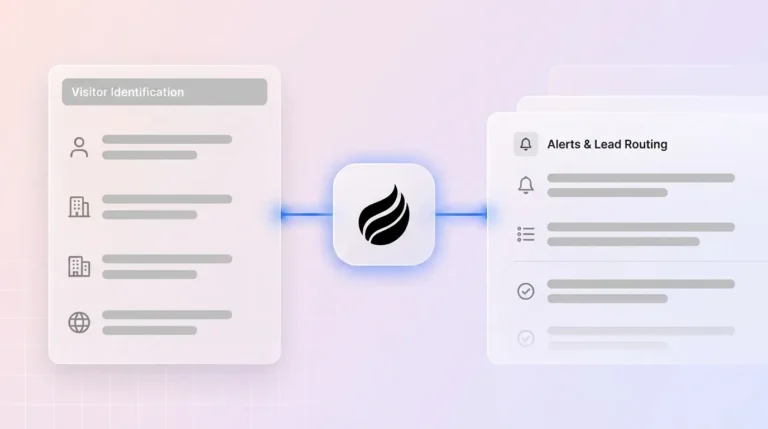
Fast-growing sales teams struggle when headcount and admin work grow at the same pace. AI-first CRMs break this pattern by automating the six activities that usually consume the most rep time. Agentic Data In/Out automatically captures interactions from email and calendar systems, enriches contact records with external data sources, and logs activities without manual input.
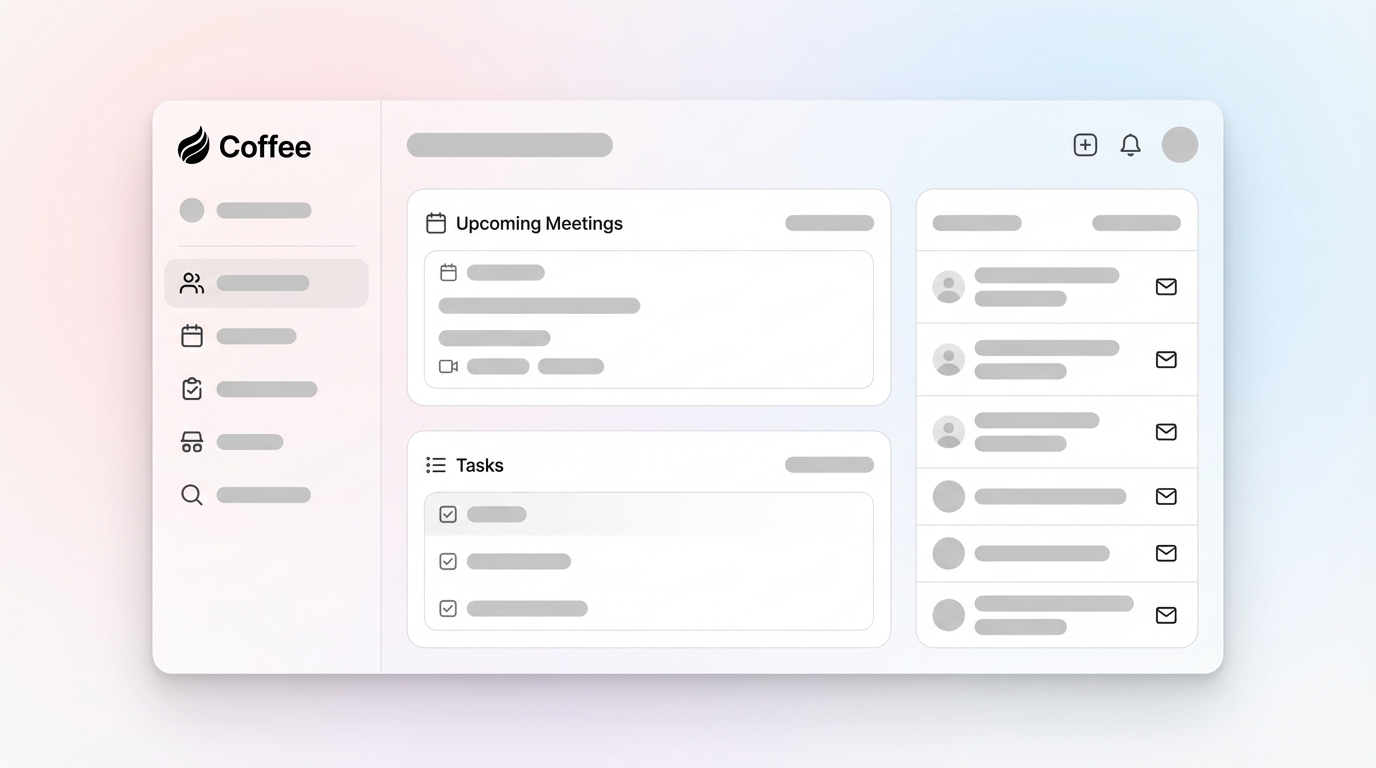
Meeting Automation builds on this foundation by providing pre-call briefings, joining video conferences as an AI participant, and generating summaries with action items immediately after calls end.

Pipeline Intelligence uses a historical data warehouse to track deal progression, compare week-over-week changes, and surface insights that manual reporting rarely uncovers. Because this data flows through a single agent instead of disconnected tools, Stack Consolidation becomes possible and removes the need for separate enrichment, recording, and forecasting platforms. This unified architecture unlocks real Scalability, so one platform can support SMB standalone deployments and mid-market companion integrations with existing Salesforce or HubSpot instances.
The ROI from this automation is significant. Coffee’s agent saves reps 8–12 hours per week by automating data entry and meeting workflows. As earlier stats on accuracy and revenue loss show, replacing manual entry with automated systems also improves data quality and protects revenue.
Top 7 AI-First CRMs for Fast-Growing Sales Teams in 2026
1. Coffee: Agent-Led CRM Built for Scale
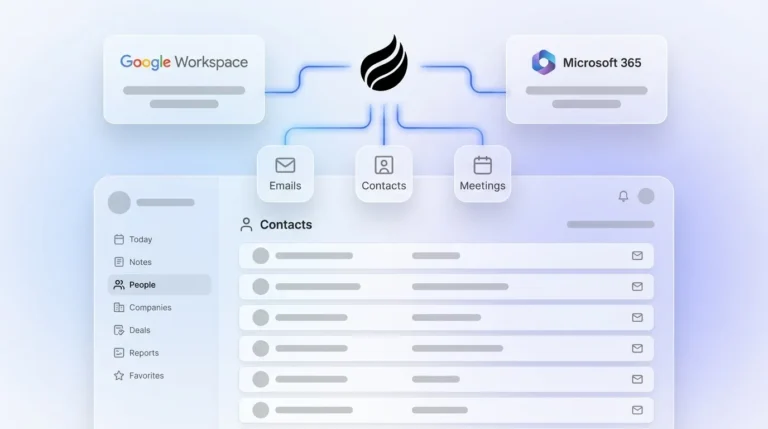
Coffee operates as a CRM agent built for fast-growing sales teams that refuse to spend hours on admin work. The platform automatically creates contacts and companies from Google Workspace or Microsoft 365 connections, enriches records with job titles and funding data, and logs every interaction without human intervention.
Coffee’s meeting bot joins Zoom, Teams, and Google Meet calls to record and transcribe conversations, then generates structured summaries using sales methodologies like BANT, MEDDIC, or SPICED. The Pipeline Compare feature visualizes week-over-week deal changes, so leaders can quickly spot progressed opportunities and stalled prospects without exporting spreadsheets.

The platform supports two deployment models. Teams can use Coffee as a Standalone CRM when they want a complete system, or as a Companion App that enhances existing Salesforce and HubSpot installations. Coffee’s List Builder accepts natural language prospecting commands such as “Find VPs of Sales in North America at $10M+ funding companies using Salesforce,” which speeds up targeted outreach.

Coffee solves the core problem of legacy CRMs by ensuring good data enters the system automatically, which allows accurate forecasts and insights to emerge. This is possible because the agent handles structured and unstructured data inside a built-in data warehouse that preserves historical context and gives a complete view of every account. Pricing follows a simple seat-based model without complex metering on AI usage, so teams can scale automation without surprise bills.
2. Attio: Flexible Database CRM for Custom Workflows
Attio offers a flexible database approach for startups that want to design custom CRM workflows. The platform includes AI enrichment features and an “Ask Attio” natural language interface for querying customer data. Attio shines at no-code workflow automation and visual pipeline customization. It still relies on users to trigger many actions, so it does not reach the same level of autonomous, agent-led automation as Coffee.
3. HubSpot AI (Breeze): AI Layer on a Marketing-Led Platform
HubSpot’s Breeze agents mark the company’s move into agentic AI, with content generation and basic automation across marketing, sales, and service hubs. The all-in-one platform benefits from tight alignment between marketing campaigns and sales activities. Breeze sits on top of HubSpot’s existing architecture instead of replacing it with an agent-first design, so many workflows still depend on manual processes and configuration.
4. Clarify: Modern Interface with Conversation Intelligence
Clarify launched as a post-ChatGPT CRM that focuses on a modern interface and unstructured data processing. The platform emphasizes note-taking automation and conversation intelligence for calls and meetings. Clarify improves on older systems architecturally, yet it lacks the deep integration and workflow coverage that established sales teams with complex tool stacks often require.
5. Day.ai: Meeting Notes and Task Automation
Day.ai focuses on productivity gains from unstructured data automation, especially meeting notes and follow-up task generation. The platform works well for teams that mainly want to automate documentation workflows. Its narrow scope limits Day.ai as a full CRM for growing sales organizations that need comprehensive pipeline management and forecasting.
6. Apollo-Integrated CRMs: Prospecting Power Without Full Autonomy
Apollo’s prospecting database connects with many CRM platforms to deliver AI-powered lead generation and buying signals. The strength of this approach lies in extensive contact data and intent monitoring. Apollo still functions primarily as a prospecting tool rather than a complete agent-led CRM, so teams must rely on separate systems for deal management and forecasting.
7. Pipedrive AI: Visual Pipelines with Light Automation
Pipedrive’s AI assistant supports visual pipeline management with basic automation features for SMB sales teams. The platform offers deal insights and activity recommendations in an intuitive interface. Its AI features focus on suggestions and simple scoring instead of the autonomous task execution that defines true agent-led systems.
Side-by-Side CRM Comparison and Tradeoffs
The table below highlights differences in automation depth, data handling, scalability, and integrations across the seven CRMs. These factors determine whether a platform can grow with your team from 10 to 100 reps without forcing a migration.
|
Criteria |
Coffee |
Attio |
HubSpot |
Clarify |
Day.ai |
Apollo |
Pipedrive |
|
Automation Depth |
Full agent (data and meetings) |
AI query and workflows |
Breeze agents |
Conversation intelligence |
Notes and tasks |
Prospecting automation |
Assistant suggestions |
|
Data Handling |
Structured and unstructured |
Flexible database |
Relational with AI layer |
Unstructured focus |
Unstructured focus |
Contact and intent data |
Deal and activity data |
|
Scalability |
SMB standalone and mid-market companion |
Startup focused |
All-in-one suite |
Growing teams |
Team productivity use cases |
Prospecting across segments |
SMB and lower mid-market |
|
Integrations |
Zapier and native |
API-first |
HubSpot ecosystem |
Selective integrations |
Calendar and meeting tools |
CRM and sales tools |
Marketplace integrations |
As this comparison shows, Coffee is the only platform that combines full agent automation with flexible deployment options, which fast-growing teams cannot compromise on. Coffee wins the agent-led category by applying a true “good data in, good data out” philosophy through autonomous data capture and enrichment. Legacy systems drain productivity through manual reliance, while Coffee’s agent removes the busywork that causes low CRM adoption and fragmented data.
Why Coffee Fits Fast-Growing Sales Teams
Coffee tackles the main challenges for teams scaling from 10 to 100 representatives. The platform improves adoption by removing manual data entry, and its standalone and companion options support teams regardless of existing CRM investments. Coffee’s agent maintains data quality automatically, which unlocks accurate forecasting and pipeline insights that manual systems rarely achieve.
The ROI calculation shows clear value, because the 8–12 hours of weekly time savings mentioned earlier convert into lower costs and faster revenue growth. This time savings compounds as the team scales, so Coffee’s agent becomes the foundation for growth without matching increases in administrative overhead.
See Coffee’s pricing and start your free trial
Rolling Out Coffee and Migrating from Legacy CRMs
Coffee rollout starts with Google Workspace or Microsoft 365 authentication, which lets the agent immediately populate contacts and companies from existing email and calendar data. The setup process stays light, and the agent improves accuracy as it learns from ongoing interactions.
Teams should first complete the initial agent configuration, then define clear data governance policies, and finally plan any migration steps. For organizations moving from HubSpot or Salesforce, Coffee’s companion mode supports a gradual transition while preserving familiar workflows. The agent synchronizes data in both directions, so legacy systems stay updated throughout the changeover.
FAQ
What’s an AI-first CRM?
An AI-first CRM uses autonomous agents to handle data capture, enrichment, and workflow orchestration without human input. Traditional CRMs mainly store data, while AI-first systems actively improve data quality and automate sales processes. The agent acts like a digital team member that manages administrative work so sales representatives can focus on relationships and closing deals.
How does Coffee fix HubSpot data issues?
Coffee’s agent automatically logs interactions from email and calendar systems, which removes the manual data entry that creates incomplete HubSpot records. The enrichment engine updates contact information, company details, and deal progression in real time. Coffee’s companion mode runs alongside HubSpot to keep data consistent while adding autonomous capabilities that HubSpot’s architecture does not provide natively.
What’s the best AI CRM for sales teams under 50 reps?
Coffee’s standalone CRM supports teams under 50 representatives by delivering complete agent-led functionality without requiring another CRM. The platform scales from small teams to mid-market organizations with simple seat-based pricing that avoids complex implementation costs. Coffee’s agent manages the full sales workflow from prospecting through deal closure.
How does Coffee compare to Salesforce AI?
Coffee operates as a true agent that autonomously manages data and workflows, while Salesforce AI offers suggestions and automation inside a legacy architecture. Coffee removes the complexity and customization work that often makes Salesforce difficult for growing teams. The agent-first design delivers immediate productivity gains without heavy configuration or long training cycles.
What are 2026 pricing trends for AI CRMs?
AI CRM pricing continues to move toward seat-based models that include agent functionality, instead of usage-based billing that creates unpredictable costs. Coffee’s pricing reflects this shift by charging for human seats while including unlimited agent labor. This model gives growing teams predictable costs and full access to advanced AI capabilities.
How secure is sales data in Coffee?
Coffee maintains SOC 2 Type 2 and GDPR compliance, which provides enterprise-grade security for customer data. The platform uses role-based access controls and encryption for data in transit and at rest. Coffee’s security framework meets mid-market requirements while staying simple enough for SMB teams to deploy quickly.
Conclusion
Coffee stands out as the leading AI-first CRM for fast-growing sales teams in 2026. The agent-led approach removes the manual data entry crisis that consumes so much rep time, while still providing the scalability and integration flexibility needed for teams growing from 10 to 100 members. Coffee’s standalone and companion deployment options deliver value whether or not you already use a legacy CRM.