Key Takeaways
-
Reps lose 25% of their time to manual CRM data entry, which creates incomplete records and unreliable pipeline forecasts.
-
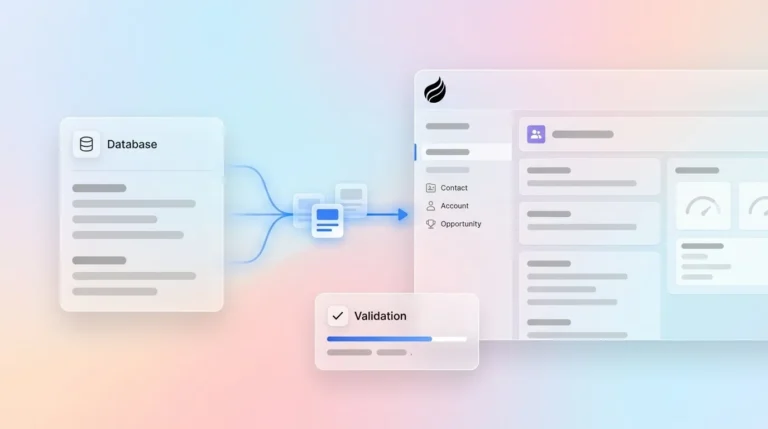
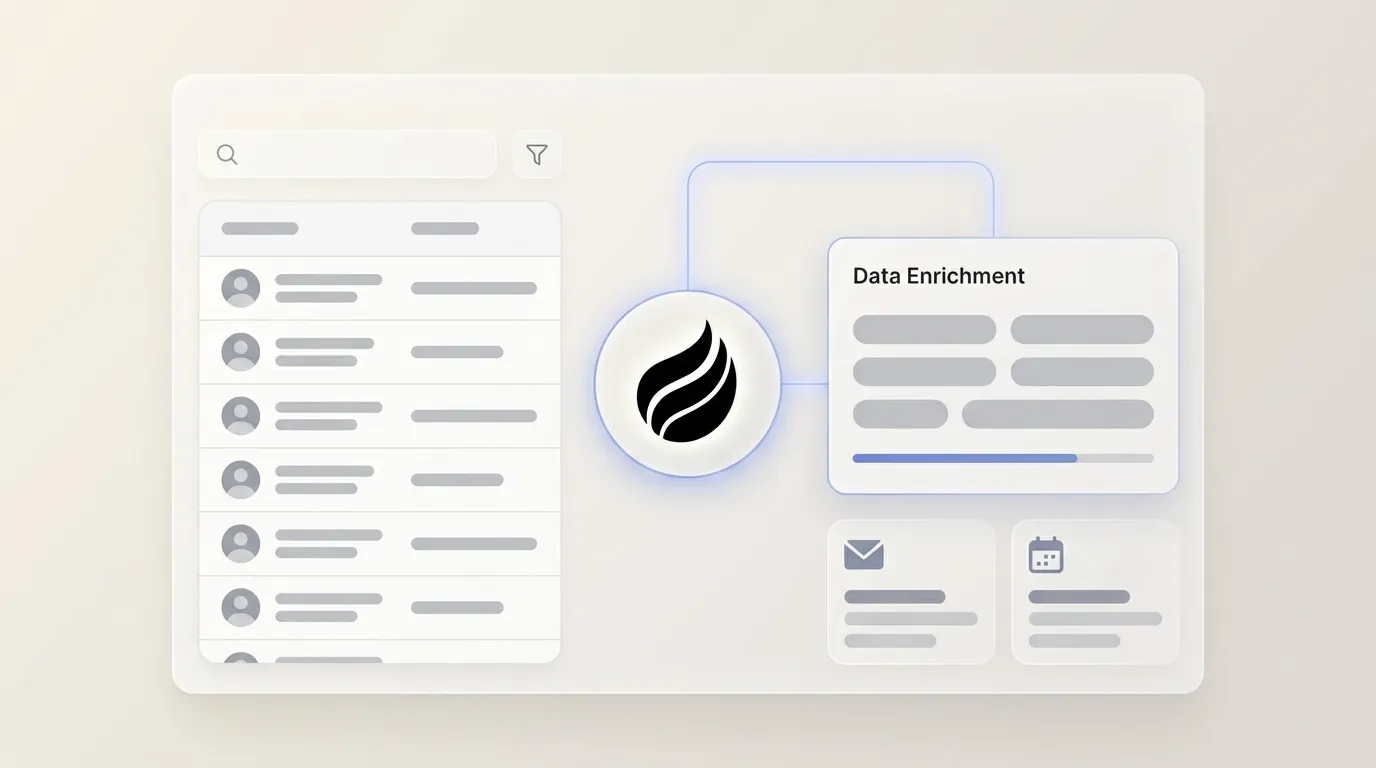
Data enrichment automatically augments CRM records with verified third-party attributes like job titles, firmographics, and intent signals for current accuracy.
-
Autonomous CRM agents can eliminate manual entry entirely, recovering 8–12 hours per rep each week while maintaining continuous data hygiene.
-
Enriched data drives measurable gains in lead qualification, forecast accuracy, personalization, and cost-per-qualified-lead reduction across the revenue cycle.
-
Teams ready to replace manual data entry with autonomous enrichment can get started with Coffee today.
The following sections walk through each benefit in detail, showing how they connect into a single, compounding system for revenue teams.
The Operational Problem: Reps as Data-Entry Clerks
Sales reps spend approximately 25% of their time on CRM data entry instead of selling. Many salespeople already spend less than half their time actually selling. The result is predictable. Records stay incomplete, contacts go stale, and pipeline forecasts rest on shaky assumptions. The Salesforce State of Sales report shows that many sales organizations lose revenue because of data silos. Leadership stops trusting the numbers, and the CRM shifts from asset to liability.
1. CRM Agent Automation for Hands-Off Data Entry
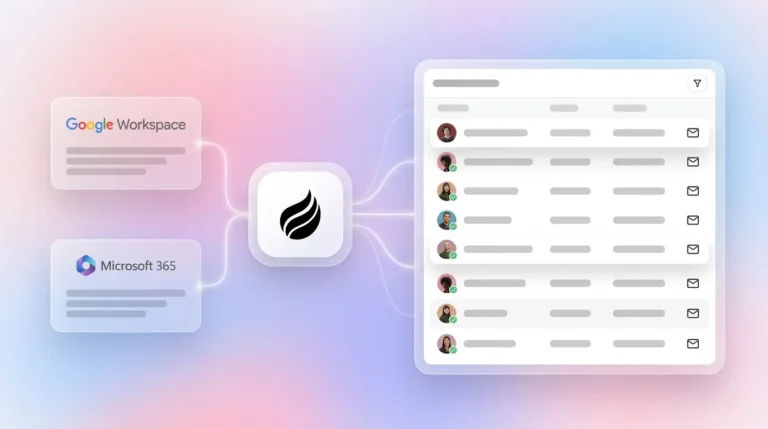
Involve Digital’s 2026 analysis of agentic AI deployments describes lead-enrichment agents turning a 10-minute manual task into a zero-minute automated process. An autonomous agent scans emails, calendars, and call transcripts, then creates and enriches contact and company records without human intervention. Coffee’s Agent executes this workflow natively. After you connect Google Workspace or Microsoft 365, it auto-creates contacts, appends job titles, funding data, and LinkedIn profiles via licensed data partners, and logs every activity on its own.
-
Reps recover 8–12 hours per week previously lost to manual entry, which they can redirect toward live selling and follow-up.
-
High-performing sellers already prioritize data hygiene more than underperformers, so automation supports the habits of your best reps at scale.
-
Agents that lack fresh data hallucinate more often on tasks that require current information, so live automated enrichment becomes a reliability requirement, not a preference.
Eliminate manual data entry from your sales workflow entirely by connecting Coffee to your workspace in a few minutes.
2. Data Accuracy That Holds Up Over Time
B2B contact data decays at 2.1% per month, compounding to 22.5% annually. Poor data quality costs the average organization $12.9 million per year according to Gartner. These numbers turn enrichment into a revenue-critical system, not a one-time cleanup project.
Coffee’s Agent continuously re-enriches records from integrated data partners, so field-level accuracy persists without scheduled manual audits. RevOps teams that govern enrichment as an ongoing system outperform those treating it as a quarterly project. The Coffee Agent makes that continuous standard the default operating mode.
With accurate, continuously refreshed data in place, the next operational impact shows up in how you qualify and prioritize leads.
3. Higher Lead Qualification Rates from Signal-Rich Records
Data enrichment for lead qualification produces measurable pipeline lift. Companies using enriched, signal-augmented CRM data can generate more sales-qualified leads than those relying on base contact data alone. Because these leads are pre-qualified by firmographic and intent signals, organizations using signal-qualified leads see better conversion rates and more closed deals per quarter.
Coffee’s List Builder turns this into a simple workflow. A rep gives the agent a natural-language command such as “Find me VPs of Sales in North America at companies with $10M+ funding using Salesforce.” The agent runs the query against integrated enrichment sources and returns a qualified prospect list with no manual research. Higher-quality, better-targeted leads then feed directly into more reliable pipeline forecasts.

4. More Reliable Pipeline Forecasting from Complete Activity Data
Businesses with more complete data achieve higher forecast accuracy, which links data completeness directly to pipeline predictability. Many seller interactions never reach the CRM, including conversations with decision-makers. These gaps distort every forecast that depends on them.
Coffee’s Pipeline Compare feature addresses this structurally. The Agent captures every interaction into a built-in data warehouse, then visualizes week-over-week deal progression, stalled opportunities, and new additions automatically. Teams replace manual CSV exports and spreadsheet gymnastics with a continuously accurate pipeline view. Higher lead quality from Section 3 flows into this richer activity history, which makes every forecast more trustworthy.
5. Sales Personalization Backed by Deep Context
Personalized outreach built on deep account research achieves 15–25% response rates compared to 3–5% for generic approaches. At the same time, 73% of B2B buyers actively avoid suppliers that send irrelevant outreach. Enriched data and captured interactions give reps the context they need to stay relevant.
Coffee’s Meeting Briefings feature applies enrichment data directly to the sales conversation. Before each call, the Agent prepares a briefing that covers attendee roles, company context, funding history, and prior interaction notes. Reps walk into every meeting with a full picture instead of a blank CRM record. The same enriched profiles that improve qualification and forecasting now power more tailored, effective conversations.

Give every rep a fully briefed, enrichment-powered view of every prospect with Coffee’s Meeting Briefings.
The personalization gains you see here depend on having enrichment data for nearly every record, which brings coverage into focus.
6. Waterfall Enrichment Coverage That Closes Data Gaps
Single-source enrichment tools typically cover 50–70% of records. Waterfall enrichment, which queries multiple providers in sequence, increases coverage to 80–95%. B2B sales teams now use multiple data providers at once, reflecting a shift toward orchestrated multi-source approaches.
Coffee’s Agent abstracts this complexity for RevOps teams. Instead of asking operations leaders to configure provider waterfalls by hand, the Agent queries licensed data partners automatically and writes the best available result back to the record. Teams gain near-complete coverage without extra tools or vendor management overhead. High coverage then supports accurate forecasts, consistent personalization, and reliable lead scoring.
So far, every benefit has focused on known contacts. The next step extends enrichment to the anonymous visitors who never fill out a form.
7. Anonymous Visitor Identification That Fuels Inbound Conversion
The enrichment benefits described above apply to contacts already in your CRM. Most website visitors never submit a form, yet they still show intent and evaluate your product. Traditional enrichment strategies ignore this anonymous traffic.
Coffee’s Visitor Identification feature closes that gap with a single tracking pixel. The Agent identifies visiting companies and infers named individuals, including name, title, email, and LinkedIn profile, along with pages viewed and session duration. Competing tools often surface only company-level data or long, undifferentiated people lists. Coffee instead applies your buyer persona to recommend the two or three specific individuals inside a visiting company who are most likely to convert, then surfaces their LinkedIn profiles for immediate outbound action. Real-time Slack notifications route high-fit visitors to reps before intent signals cool down.

These inbound signals, combined with enriched records and strong coverage, set up the final benefit: lower cost per qualified lead and a leaner tech stack.
8. Lower Cost Per Qualified Lead and a Leaner RevOps Stack
Automated programs often achieve a lower cost per qualified lead than manual programs. AI-based predictive lead scoring built on enriched data improves conversion rates by 38% to 75%. Higher conversion from the same or smaller budget reduces acquisition cost per qualified lead.
Fragmented point solutions create the opposite effect. Separate tools for enrichment, recording, forecasting, and visitor identification add cost, integration work, and data silos. Coffee consolidates enrichment, meeting intelligence, pipeline tracking, and visitor identification into a single Agent. RevOps teams manage fewer vendors, and all enrichment data writes to one unified record instead of scattered databases. The conversion gains described in Section 3 align with these cost savings to improve overall pipeline efficiency.
The eight benefits above all point to the same structural change. Manual data entry disappears, and an autonomous agent maintains the data foundation that modern sales teams need.
Summary: One Agent, Eight Compounding Revenue Gains
Dirty CRM data starts with a structural issue. Legacy systems depend on humans to enter information that humans reliably skip. Automated, agent-led data enrichment removes that dependency and keeps your CRM current without extra effort from reps.
By continuously capturing, verifying, and augmenting records from structured and unstructured sources, an autonomous CRM Agent converts fragmented data into trustworthy pipeline intelligence. The eight benefits above, from higher qualification rates and forecast accuracy to stack consolidation and visitor identification, all trace back to the same fix. A dedicated agent replaces manual data entry and treats enrichment as a living system instead of a periodic cleanup.
Put an autonomous agent to work on your CRM data today by reviewing Coffee’s pricing and starting your trial.
Frequently Asked Questions About Coffee and Data Enrichment
What is CRM data enrichment?
CRM data enrichment is the process of automatically augmenting contact and account records with verified third-party attributes, such as job titles, company size, funding history, technographic data, and intent signals, so that every record reflects current, accurate information. Instead of relying on reps to research and enter this data manually, an enrichment agent queries licensed data sources and writes the results directly to the CRM record in real time.
Does Coffee work with Salesforce and HubSpot?
Yes. Coffee operates as a Companion App that deploys the Coffee Agent as an intelligent layer on top of existing Salesforce or HubSpot installations. A simple authentication lets the Agent sync data, enrich records, log activities, and write insights back to the primary CRM without forcing teams to migrate away from their current system of record.
How does Coffee handle data security and compliance?
Coffee is SOC 2 Type 2 certified and GDPR compliant. Data ingested by the Coffee Agent is not used to train public AI models. For U.S.-based teams, this means enrichment workflows run inside a secure, auditable environment that meets standard enterprise security requirements without multi-year compliance reviews.
What data sources does the Coffee Agent use for enrichment?
The Coffee Agent enriches records from two primary source categories. The first category is structured external data, which includes job titles, firmographics, LinkedIn profiles, and funding data from licensed third-party data partners. The second category is unstructured internal data, which includes emails, calendar events, call transcripts, and meeting notes captured directly from Google Workspace or Microsoft 365. This dual-source approach keeps enrichment aligned with both market-level accuracy and deal-specific interaction context.
Is Coffee suitable for small sales teams, and what measurable impact can they expect?
Coffee is purpose-built for small to mid-sized companies. Teams using the Coffee Agent typically recover 8–12 hours per rep per week that previously went to manual data entry. Over time, enriched CRM records support more accurate pipeline forecasting, higher lead qualification rates, and more personalized outreach. These outcomes compound as the Agent accumulates interaction history and enrichment data. Coffee’s seat-based pricing includes unlimited Agent labor, which keeps the economics straightforward for growing teams without large RevOps budgets.