Key Takeaways
- BANT (Budget, Authority, Need, Timeline) qualifies enterprise B2B leads by assessing funding, decision power, business problems, and purchase timelines.
- A focused 4-week sales training program with role-playing and scoring helps your team master BANT qualification.
- Targeted questions such as “What budget is allocated?” and “Who approves?” uncover BANT criteria during discovery calls.
- Coffee AI automates BANT by capturing data from calls and emails, removing manual CRM entry and improving pipeline accuracy.
- Boost qualification rates and shorten sales cycles by deploying Coffee today.
How BANT Qualifies Modern Buying Committees
BANT (Budget, Authority, Need, Timeline) is a lead qualification framework for enterprise B2B sales training that prioritizes high-value opportunities. BANT assesses whether a prospect is sales-ready based on funding availability, decision-making authority, real business problems, and purchase timelines. The framework originated at IBM in the 1950s and still supports structured qualification for complex deals. Modern B2B buying groups range from 5 to 16 people across multiple functions, making systematic qualification essential.
Each BANT criterion serves a specific purpose in complex sales cycles, as shown in the breakdown below.
| Criteria | Definition | Why Enterprise Matters | Key Signals |
|---|---|---|---|
| Budget | Financial resources allocated | Enterprise deals require significant investment | Allocated line items, ROI requirements |
| Authority | Decision-making power | Multiple stakeholders in buying committees | Approval processes, sign-off hierarchy |
| Need | Business problem requiring solution | Strategic priorities drive enterprise purchases | Pain points, competitive threats |
| Timeline | Decision window | Budget cycles and implementation bandwidth | Contract expirations, deadlines |
Four-Step BANT Sales Process for Enterprise Teams
The BANT qualification process follows four structured steps tailored to complex buying groups. First, prepare your Ideal Customer Profile (ICP) with firmographics and behavioral signals. This foundation shapes which BANT questions you prioritize during discovery. Second, ask strategic BANT questions on discovery calls to uncover the qualification criteria defined in your ICP. Third, score prospects using weighted criteria based on their BANT responses so you can prioritize pipeline opportunities. Fourth, nurture qualified leads and disqualify poor fits to protect sales resources from low-probability deals.

Targeted BANT Qualification Questions
Effective BANT qualification uses clear, natural questions that reveal enterprise buying dynamics without sounding scripted. For Budget assessment, ask “What budget have you allocated for solving this problem?” and “How are similar purchases typically funded in your organization?” These questions surface funding constraints and approval patterns.
Authority questions clarify who decides and how. Ask “Who else is involved in deciding whether this product is the best fit for your team?” and “What steps are involved in approving an agreement like this?” These prompts map the buying committee and approval workflow.
Need discovery focuses on the business impact behind the project. Ask “What specific challenges are you facing that have led you to seek a solution?” and “How do you envision our product helping you address your needs?” These questions connect your solution to measurable outcomes.
Timeline qualification clarifies urgency and planning. Ask “When do you plan to implement a solution like ours?” and “Is there a specific deadline or timeframe you need to meet?” These answers guide forecasting and next steps.
Knowing which questions to ask only solves part of the challenge. Your team also needs structured practice so these questions feel natural in live conversations.
Four-Week BANT Sales Training Program
A structured 4-week BANT training program builds consistent qualification skills across your sales team. The program blends foundational concepts with live practice through role-playing exercises and real-world scenarios. The weekly progression below moves from core understanding to hands-on mastery.
| Week | Focus | Activities |
|---|---|---|
| 1 | BANT Foundations | Framework overview, enterprise buying dynamics, question development |
| 2 | Discovery Mastery | Role-play exercises, objection handling, conversation flow |
| 3 | Scoring & Prioritization | Lead scoring models, pipeline management, CRM integration |
| 4 | Advanced Scenarios | Complex enterprise deals, multi-stakeholder navigation, AI tools |
Run regular role-playing scenarios so sales teams can apply BANT in varied selling situations and build confidence. Layer in sales coaching, including real-time coaching via platforms, to sharpen BANT skills and enable course correction during calls.
Role-Playing Scripts and BANT Deal Examples
Practice these enterprise BANT scenarios to build qualification confidence. In the first scenario, a CTO at a 500-employee software company expresses interest in AI-powered CRM solutions. Sales Rep: “What budget considerations are you working with for CRM modernization?” CTO: “We’ve allocated $200K annually for sales technology improvements.” Sales Rep: “Who else would be involved in evaluating and approving a solution like this?” CTO: “Our Head of Sales, CFO, and I make the final decision together.” This exchange shows clear budget allocation and a defined authority structure.
The second scenario involves disqualification. Marketing Manager: “We’re interested in your platform but haven’t discussed budget internally yet.” Sales Rep: “When do you anticipate having those budget conversations?” Marketing Manager: “Probably sometime next year when we review our tech stack.” This response signals a weak timeline and undefined budget, so the prospect belongs in a nurture track rather than active pursuit.
Role-playing builds these instincts, yet manual BANT data capture still slows teams down. Reps spend hours logging notes instead of selling, which creates a natural opening for automation.
Automate BANT with Coffee AI Agent
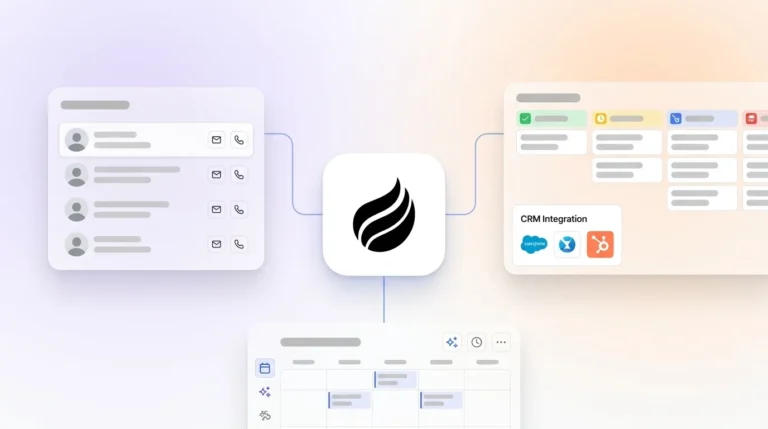
Coffee turns BANT qualification from manual data entry into automated intelligence capture. The Coffee Agent operates as both a Standalone CRM for small businesses and a Companion App for existing Salesforce or HubSpot installations. Coffee’s Intelligence layer allows users to define and store deep context on business model, product specifics, ICP, and competitors for tailored AI suggestions and insights.
Coffee automatically logs BANT criteria from Zoom, Teams, and email interactions and structures notes according to BANT, MEDDIC, or SPICED methodologies. The Agent enriches contact records with job titles, funding data, and LinkedIn profiles while preparing meeting briefings and drafting follow-up communications. Improved summary templates are customizable to match workflows and writable back to Coffee, HubSpot, or Salesforce.

Legacy CRMs fail because they rely on manual human data entry, which creates the “garbage in, garbage out” problem. Coffee’s Agent solves this by ensuring good data input, capturing unstructured information from calls and emails automatically, then outputting accurate pipeline insights without extra effort from reps. This automation delivers measurable impact, as sales teams save 8-12 hours weekly on administrative tasks while achieving higher qualification rates and shorter sales cycles.
Coffee’s Pipeline Compare feature visualizes week-over-week changes, highlighting progressed deals and stalled opportunities without manual spreadsheet exports. The Agent handles pre-meeting briefings with attendee context and post-call summaries with identified next steps, which turns pipeline reviews into strategic discussions instead of interrogation sessions. Start automating your BANT qualification across your enterprise sales team.

BANT vs MEDDIC and Other Frameworks
BANT is applied in B2B sales contexts with multiple stakeholders, including economic buyers, technical evaluators, end users, and influencers. It serves as a speed filter for high-velocity deals under $50K ACV with cycles shorter than 60 days, while MEDDIC functions as a deal map for enterprise deals above $50K ACV with three or more stakeholders and cycles of 90 days or longer. The key differences between these frameworks are outlined below.
| Criteria | BANT | MEDDIC |
|---|---|---|
| Ideal ACV | Under $50K | $50K+ |
| Sales Cycle | Under 60 days | 90+ days |
| Stakeholders | Multiple | 3+ |
| Best Use | SMB/High-velocity | Enterprise/Complex |
Coffee supports both frameworks, so teams can use BANT for initial qualification and then transition to MEDDIC for complex enterprise opportunities. Most experienced sellers use a hybrid approach with BANT to qualify in or out on the first call, then switch to MEDDIC for progression and closing deals over $50K ACV.
Measuring BANT Training Success and ROI
Clear metrics show whether your BANT training and automation efforts work. Track improvements in qualification rates, shorter sales cycles, and increased pipeline accuracy to gauge training impact. Persona-specific question sets and CRM instrumentation often improve conversion between sales stages, raise average selling prices, and reduce late-stage slip rates.
Coffee customers report automated pipeline reviews and the removal of manual data entry from their workflows. One company generating tens of millions in revenue selected Coffee instead of Salesforce and HubSpot because of its automated data capture capabilities and resulting pipeline visibility.
Conclusion: Turn BANT into a Scalable Advantage
This BANT sales training playbook gives your team a clear framework for qualifying enterprise B2B leads, yet manual execution limits scale. Coffee’s AI Agent automates BANT data capture so your pipeline reflects reality and your forecasts stay accurate. Deploy this training program with Coffee automation to turn qualification from an administrative burden into a competitive advantage. See Coffee’s pricing and features to implement automated BANT qualification across your enterprise sales organization.
How does Coffee automatically capture BANT data from sales interactions?
Coffee’s AI Agent joins Zoom, Teams, and Google Meet calls to record and transcribe conversations, then automatically extracts BANT criteria from the discussion. The Agent structures notes according to your chosen methodology (BANT, MEDDIC, or SPICED) and writes the information directly to your CRM without manual data entry. Coffee also processes email interactions and calendar data to enrich contact records with job titles, funding information, and LinkedIn profiles.

Is BANT still effective for enterprise B2B lead qualification in 2026?
BANT remains highly effective for enterprise B2B qualification when applied strategically rather than as a rigid checklist. Modern buyers complete 60-70% of their research before engaging salespeople, so BANT’s structured approach helps uncover decision criteria and buying processes. The framework works best for initial qualification, then transitions to deeper methodologies like MEDDIC for complex enterprise deals involving multiple stakeholders.
What integrations does Coffee support for existing CRM systems?
Coffee operates in two models: as a Standalone CRM for small businesses or as a Companion App for existing Salesforce and HubSpot installations. The Companion App authenticates with your existing CRM to sync data, enrich records, and write valuable insights back to the primary system. Coffee also integrates with Google Workspace and Microsoft 365 for email and calendar data, plus Zapier for additional tool connections.
How secure is Coffee for enterprise sales data?
Coffee maintains SOC 2 Type 2 and GDPR compliance for enterprise security requirements. Customer data is not used to train public AI models, so confidential sales information remains protected. The platform handles sensitive enterprise sales data with appropriate security controls for regulated industries and large organizations.
How does Coffee compare to other sales intelligence tools like Gong or ZoomInfo?
Coffee differs from point solutions by functioning as a complete CRM Agent rather than a single-purpose tool. While Gong focuses on conversation intelligence and ZoomInfo provides contact data, Coffee combines data capture, enrichment, CRM management, and pipeline intelligence in one platform. Coffee removes the need for multiple tools by handling the complete “data in, insights out” workflow through its AI Agent.