Key Takeaways
- AI-powered B2B prospecting databases like Coffee now lead 2026 rankings by automating data entry and saving reps 8-12 hours weekly.
- Coffee ranks #1 with agent automation, visitor identification, and direct Salesforce/HubSpot sync that outperforms ZoomInfo and Apollo.
- Top databases maintain 85-98% accuracy rates, so teams should prioritize real-time verification to avoid 30% annual data decay and high bounce rates.
- Enterprise tools like ZoomInfo cost $15K+/yr, while Apollo starts at $49/user/mo; Coffee offers competitive pricing with deeper automation.
- Teams ready to automate prospecting can explore Coffee’s pricing and features as an agent-powered database and CRM companion.
2026 Comparison Table: Top B2B Prospecting Databases at a Glance
We evaluated leading B2B prospecting databases on pricing, automation depth, and where each tool delivers the most value. The table below highlights five widely adopted platforms and the primary strength that sets each apart.
| Rank | Tool | Key Differentiator | Starting Price |
|---|---|---|---|
| 1 | Coffee | AI agents for contact creation and enrichment | Contact for pricing |
| 2 | ZoomInfo | Enterprise depth and intent data | $15K/yr |
| 3 | Apollo | High-volume prospecting plus engagement | $49/user/mo (billed annually) |
| 4 | UpLead | Real-time verified exports | $99/mo |
| 5 | Cognism | Phone-verified EMEA coverage | ~$22,500/yr for 5 users |
This comparison highlights how each top database positions itself. Coffee leads with agent-powered automation, while others focus on scale, accuracy guarantees, or regional depth.
Ranked Reviews: The 12 Best B2B Prospecting Contact Databases
Top 5 B2B Prospecting Databases for 2026
Coffee dominates as the #1 agent-powered database, followed by ZoomInfo for enterprise depth, Apollo for volume prospecting, UpLead for accuracy guarantees, and Cognism for EMEA coverage. These platforms serve different organizational sizes, sales motions, and geographic requirements, so teams can match tools to their specific prospecting strategy.
1. Coffee: The #1 Agent-Powered Database
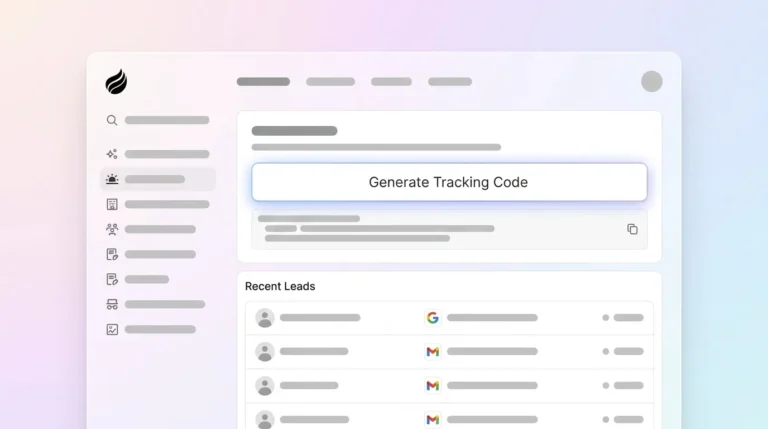
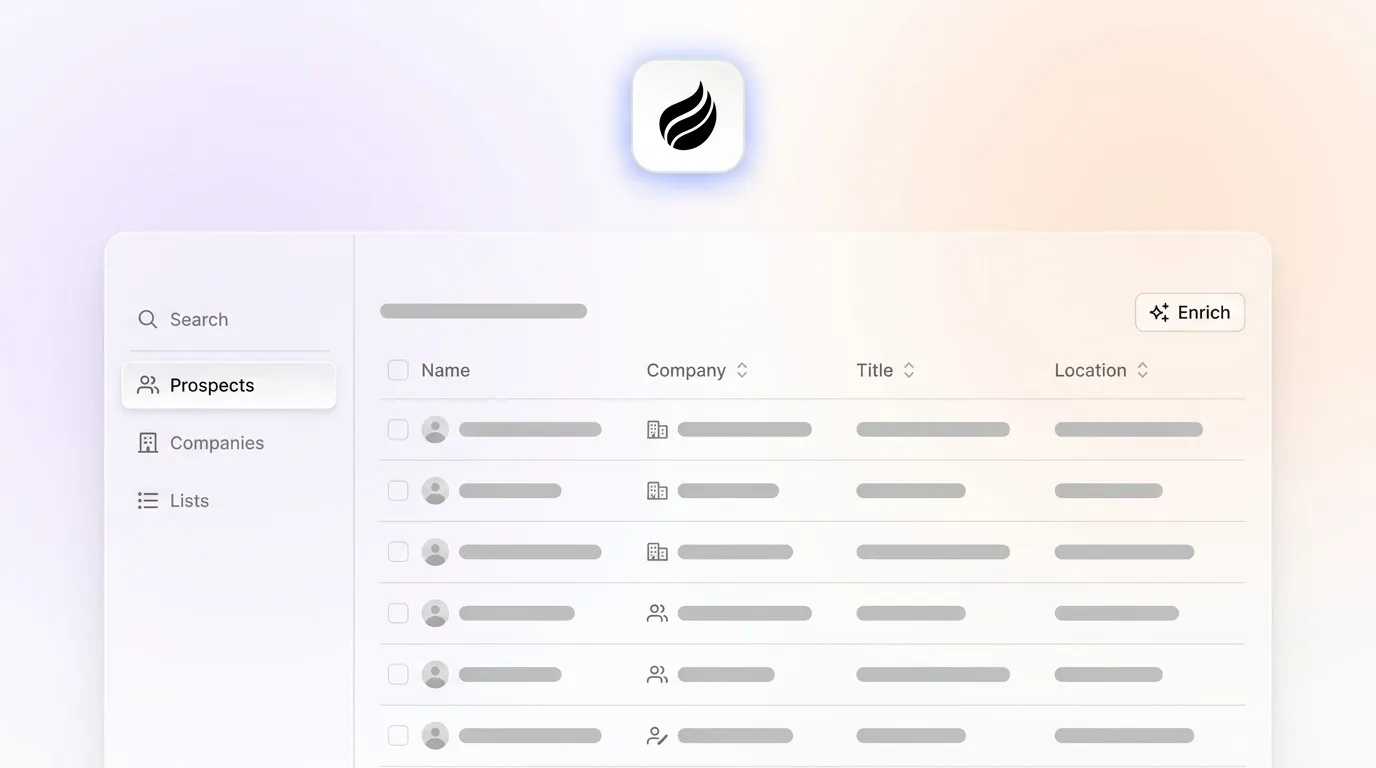
Coffee transforms B2B prospecting through autonomous agent technology that creates and enriches contacts from email and calendar integrations. The platform identifies website visitors with a tracking pixel, then suggests specific personas to contact within visiting companies. Its List Builder uses natural language processing to generate targeted prospect lists, and Salesforce plus HubSpot integration supports both Standalone CRM and Companion modes.

Coffee achieves high accuracy through automated data entry, delivering the 8-12 hour weekly time savings mentioned earlier by removing manual contact creation, enrichment, and CRM updates. A $10 million firm case study quantified these gains and showed strong ROI from reduced manual processes. The platform also tackles common forum complaints about Apollo bounces and outdated lists through real-time verification and continuous enrichment.

Pros: Agent automation, visitor identification, persona suggestions, dual CRM modes
Cons: Newer platform, limited enterprise case studies
2. ZoomInfo: Enterprise-Grade B2B Intelligence
ZoomInfo provides enterprise-grade B2B intelligence with high accuracy across hundreds of millions of contacts. The platform excels in organizational charts, intent data, and comprehensive firmographic insights. Enterprise pricing starts at $15,000 annually, and mid-market contracts range from $25,000-$35,000 yearly for base subscriptions.
Users report reduced email bounce rates after implementing ZoomInfo with proper data filtering. The platform offers 167 native integrations and deep CRM connectivity, which suits large sales organizations with complex tech stacks.
Pros: Enterprise features, intent data, org charts
Cons: High cost, complex implementation
3. Apollo: Volume Prospecting With Engagement
Apollo combines prospecting and engagement in a single platform with 80-88% accuracy across 275 million contacts. Pricing starts at $49 per user per month when billed annually and includes integrated email sequencing and task management. The platform’s AI Assistant helps teams book 2.3x more meetings in their first 14 days through automated prospect research.
Apollo uses waterfall enrichment and job change alerts to reduce data decay, although users still report higher bounce rates than with premium providers. The platform also offers extensive CRM integrations and workflow automation, which supports high-volume outbound teams.
Pros: All-in-one platform, competitive pricing, AI features
Cons: Lower accuracy than premium alternatives, bounce complaints
4. LinkedIn Sales Navigator: Social-First Prospecting
LinkedIn Sales Navigator relies on native LinkedIn data for social selling and relationship building. Pricing for the Core and Advanced tiers is available upon request from LinkedIn. The platform excels at identifying decision-makers through engagement signals and company filters, but it does not provide email addresses or phone numbers.
Pros: Native LinkedIn integration, relationship insights
Cons: Limited contact information, requires additional tools
5. RB2B/Warmly: Website Visitor Identification
RB2B and Warmly specialize in website visitor identification that reveals anonymous traffic as named prospects. These platforms focus on converting website visitors into actionable leads, although they primarily provide company-level data instead of individual contact details.
Pros: Visitor identification, real-time alerts
Cons: Limited to website traffic, requires additional prospecting tools
6. UpLead: Accuracy-First Contact Data
UpLead guarantees 95% accuracy through real-time email verification at export. Pricing starts at $99 monthly with access to 180+ million contacts. The platform emphasizes data quality over volume, which suits teams that prioritize accurate outreach over massive lists.
7. Seamless.AI: Browser-Based Prospecting
Seamless.AI offers Free, Pro, and Enterprise plans, with Pro and Enterprise requiring custom pricing via sales conversation. The platform uses machine learning to verify contact information and provides browser extensions that support LinkedIn prospecting workflows.
8. Cognism: Phone-Verified EMEA Coverage
Cognism delivers 98% accuracy on phone-verified contact data with GDPR-compliant EMEA coverage. Grow plan costs approximately $22,500 per year for 5 users. The platform specializes in phone-verified mobile numbers and reports 22% call connect rates.
9. Lusha: Lightweight Chrome-Based Prospecting
Lusha provides lightweight prospecting with Chrome extensions for LinkedIn and websites. Pricing starts at $49.90 monthly with credit-based models. The platform offers 98% accuracy across 280M+ contacts.
10. Clearbit: Real-Time Enrichment for Forms
Clearbit focuses on real-time API enrichment for form submissions and lead qualification. The platform integrates with major marketing automation platforms so teams can enhance data immediately when leads convert.
11. Hunter.io: Accessible Email Finder
Hunter.io offers a free tier with 50 credits monthly, which helps small teams start prospecting. Starter plan pricing starts at $49 monthly, or $34 per month when billed annually and unlocks a larger email database.
12. Snov.io: High-Volume Prospecting Database
Snov.io provides a database of 150M+ contacts with competitive pricing for high-volume prospecting needs. The platform fits teams that value scale and built-in outreach tools.
Teams comparing these 12 tools can review Coffee’s plans to see how agent automation stacks up against traditional databases.
Why These Rankings Matter: 2026’s Shift to AI-Powered Automation
The tools ranked above reflect a major shift in how B2B prospecting databases operate in 2026. Traditional static databases now give way to AI-powered enrichment and visitor identification that keep data fresh and actionable.
Waterfall enrichment queries multiple data sources to maximize match rates, while platforms warn against stale lists because 30% of CRM data becomes outdated each year. Free tiers from Hunter and Lusha give small teams an entry point, while enterprise platforms invest heavily in accuracy and automation.
Coffee’s agent-powered model represents the next step toward fully automated data warehouses that preserve historical context and remove manual entry. Teams that adopt this approach spend more time selling and less time fixing spreadsheets.

Revenue leaders who want to move beyond manual prospecting can try Coffee’s AI agents with a free trial and experience this automation in their own workflows.
Best-Fit Use Cases and Integration Scenarios
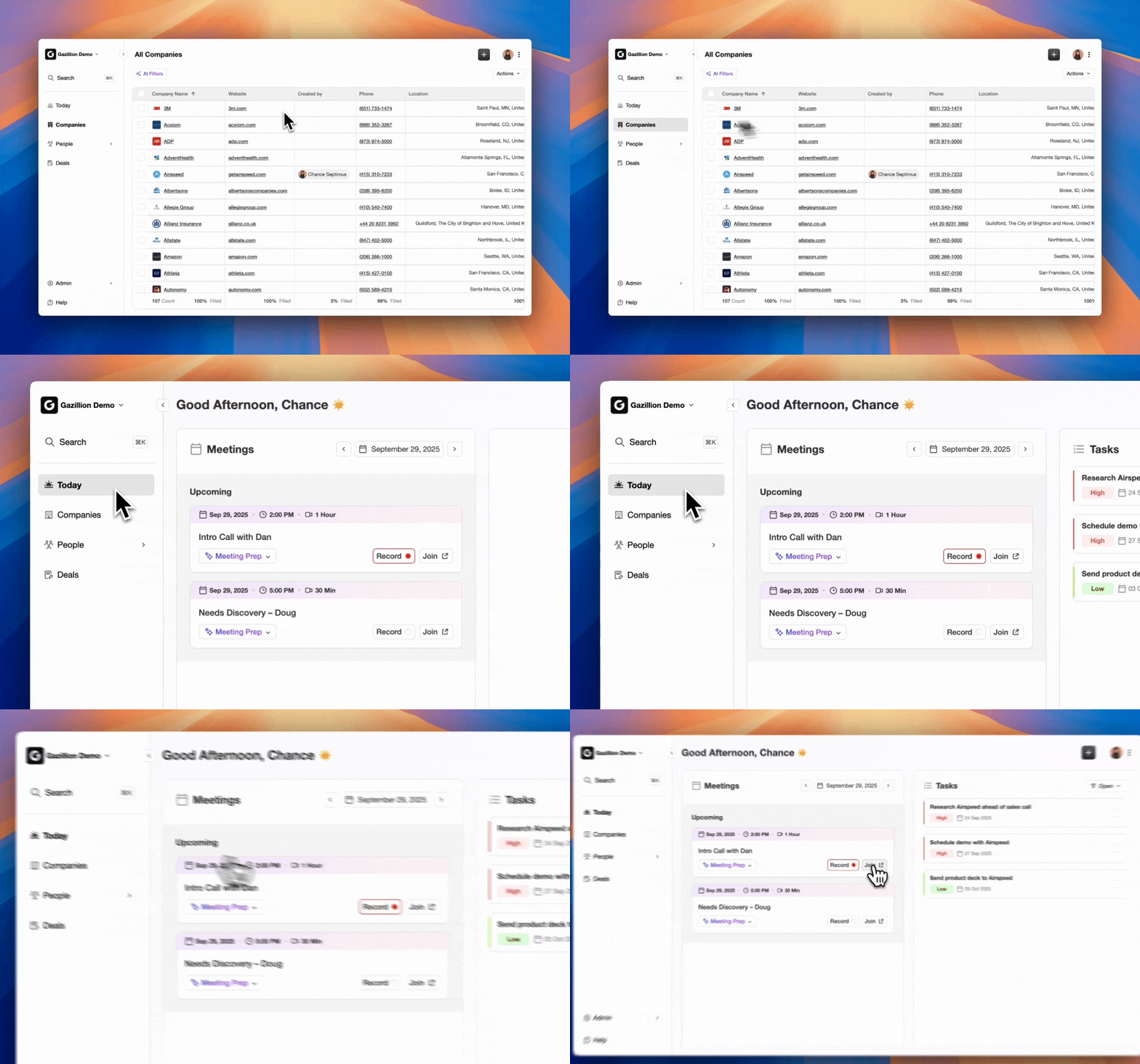
Small businesses gain the most from Coffee’s Standalone CRM mode, while mid-market teams often choose the Companion app for Salesforce and HubSpot. This setup replaces three to five fragmented tools with a single agent-powered system that handles contact creation, enrichment, and routing.

Coffee’s dual-mode strategy supports different organizational stages without forcing disruptive migrations. Teams can start in Standalone mode, then connect Salesforce or HubSpot when they scale.
Traditional stack combinations such as Apollo plus ZoomInfo increase complexity and create data silos. Coffee’s integrated approach reduces tool switching while still meeting enterprise expectations for accuracy and compliance.
Buyer Checklist and Common Risks
Buyers should evaluate prospecting databases using accuracy rates, CRM integration depth, and ROI metrics because these factors determine whether the tool actually improves performance. Legacy manual entry processes fail on all three dimensions and cause data quality degradation plus rep productivity losses.
Coffee addresses these priorities with SOC2 compliance and Zapier connectivity that extend security and integration coverage. Teams should also prioritize platforms that offer real-time verification, automated enrichment, and smooth workflow integration to maximize prospecting effectiveness and reduce operational overhead.
Revenue teams ready to apply this checklist in practice can evaluate Coffee against their criteria through a hands-on trial.
FAQ
What is the best free B2B contact database?
Hunter.io offers the most generous free tier with 50 credits monthly, while Lusha provides 70 credits monthly for basic prospecting needs. Free tiers usually restrict bulk export and CRM integration, so they work best for light usage. Coffee offers a comprehensive free trial that shows full agent capabilities, including automated contact creation, visitor identification, and CRM sync, which helps growing teams test automation before committing to a paid plan.
How does Coffee compare to ZoomInfo?
Coffee’s agent-powered approach automates data entry and enrichment, while ZoomInfo still relies on manual research and list building. Coffee offers competitive monthly pricing compared to ZoomInfo’s $15,000+ annual contracts and includes visitor identification with persona suggestions, whereas ZoomInfo focuses on static database access. Coffee’s dual CRM mode works as either a standalone system or Salesforce/HubSpot companion, which reduces integration friction. Coffee’s automation also saves 8-12 hours weekly per rep by handling data extraction and verification that ZoomInfo users often manage manually.
How accurate are 2026 B2B contact databases?
Top-tier databases maintain accuracy rates above 85%, with Coffee achieving high accuracy through real-time agent verification. Premium providers like UpLead and Cognism guarantee strong accuracy, while volume-focused platforms like Apollo range from 80-88%. Accuracy directly affects bounce rates, and high-quality databases usually keep email bounces under 5%. Coffee’s agent continuously verifies and updates contact information so accuracy remains stable over time, which makes premium solutions more cost-effective for serious prospecting.
What CRM integrations do B2B prospecting databases support?
Leading platforms provide native integrations with Salesforce, HubSpot, and Pipedrive for automatic data sync and workflow automation. Coffee offers both Standalone CRM and Companion modes, which removes much of the integration complexity. ZoomInfo supports 167 integrations, including major marketing automation platforms. Apollo connects to major CRMs plus engagement tools like Outreach and Salesloft. Cognism provides GDPR-compliant integrations for European markets, and most platforms also support Zapier for custom workflows, although native integrations usually deliver better reliability.
How much do B2B prospecting contact databases cost in 2026?
Pricing varies widely based on features and target market. Coffee offers competitive monthly pricing with full agent automation included. Apollo starts at $49 per user per month when billed annually and uses credit limits to control usage. ZoomInfo requires $15,000+ annual contracts for enterprise features, while UpLead costs $99 monthly with accuracy guarantees. Cognism uses custom pricing, with the Grow plan at approximately $22,500 per year for 5 users. Free tiers from Hunter and Lusha provide basic access but restrict advanced features, and enterprise platforms usually require annual contracts, while SMB-focused tools often allow monthly billing.