Key Takeaways for Choosing an Autonomous CRM in 2026
-
Sales reps lose 71% of their time to manual data entry. AI-native autonomous CRMs like Coffee auto-capture and update data from emails, calendars, and meetings.
-
Coffee leads as a dual-mode CRM, acting as a standalone system for SMBs with 1–20 employees and as a companion for Salesforce or HubSpot. Teams typically save 8–12 hours per week per seller.
-
Core capabilities include AI meeting briefings, Pipeline Compare for pipeline insights, and natural language List Builder for prospecting without extra tools.
-
Coffee outperforms Clarify, Day.ai, HubSpot AI, and Salesforce Einstein with greater deployment flexibility, data warehouse history, and compatibility with existing stacks.
-
Deployment stays simple and secure with SOC2 and GDPR compliance. Start your free Coffee trial to reclaim selling time and scale with an autonomous agent.
Defining an AI-Native, Autonomous CRM Agent
AI-native autonomous CRMs rely on proactive agents built on data warehouses rather than legacy relational databases. This architecture lets them process structured and unstructured data while preserving long-term history.
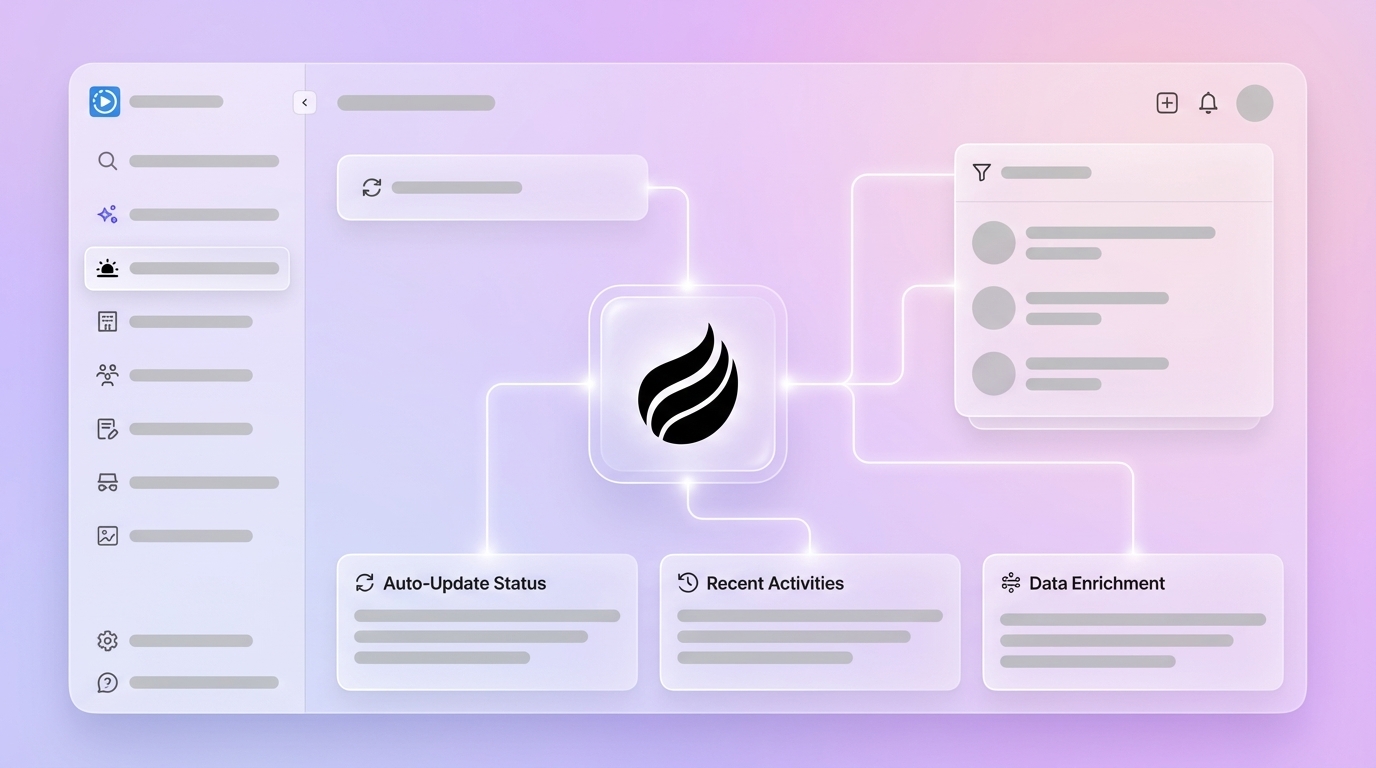
These systems update records after meetings, calls, and email interactions without manual input from sales representatives. The agent watches activity, interprets context, and writes clean data back into the system.

Key autonomous features include:
-
Automatic contact and company creation from email signatures and calendars
-
Meeting briefings with stakeholder context and deal history
-
AI-generated summaries and follow-up tasks after calls
-
Pipeline intelligence with automated stage progression
-
Real-time data enrichment with job titles and funding information
-
Natural language list building for prospect identification
-
Automated activity logging across all touchpoints
Legacy pre-ChatGPT tools primarily store data and depend on human input. AI-native CRMs built after 2023 use large language models to understand context and execute multi-step workflows on their own. Coffee represents this shift by acting as an intelligent agent instead of a passive database.
#1: Coffee as the Dual-Mode Autonomous CRM Leader
Coffee leads autonomous CRM technology with a dual-mode approach. It runs as a standalone system for companies with 1–20 employees that have outgrown spreadsheets and as a companion app for mid-market teams using Salesforce or HubSpot.
This structure lets Coffee support early-stage teams and established organizations with the same agent. Smaller teams gain a full CRM without legacy complexity. Larger teams keep their existing CRM while Coffee handles the heavy lifting.
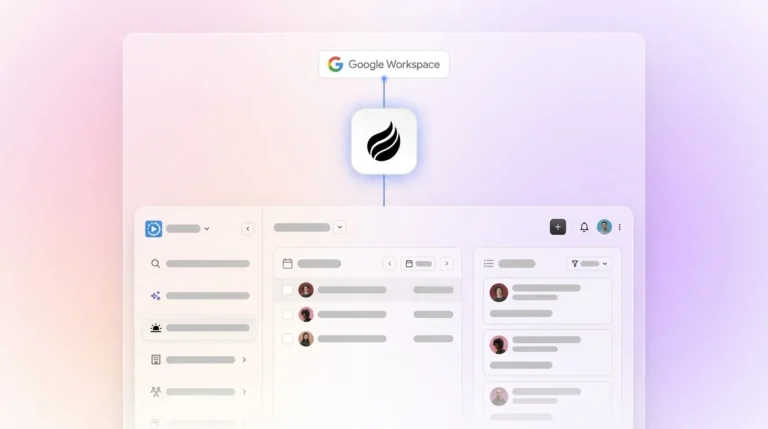
The Coffee Agent manages data entry and enrichment by scanning Google Workspace or Microsoft 365. It populates contacts, companies, job titles, and funding information through licensed data partners, which removes the need for separate enrichment tools such as Apollo or ZoomInfo.

Coffee’s AI meeting capabilities extend the autonomous model described above. The agent prepares pre-call briefings with stakeholder context and deal history, then drafts post-meeting follow-up emails directly in Gmail.

Coffee’s Pipeline Compare feature uses its built-in data warehouse to visualize week-over-week pipeline changes. Sales leaders see progressed deals, stalled opportunities, and new additions without exporting CSV files or building manual reports.
The List Builder supports natural language prospect searches such as “Find VPs of Sales in North America at $10M+ funded companies using Salesforce.” Coffee translates that request into a complex query and enriches the resulting list automatically.

A case study in Coffee’s changelog shows a tens-of-millions revenue AI firm that left spreadsheets and Salesforce for Coffee. Automated data capture and Pipeline Compare allowed the team to scale without adding manual entry overhead.
Explore Coffee’s autonomous features to see how they adapt to your existing workflow.
Coffee vs Top Competitors: The 2026 Listicle Comparison
Understanding Coffee’s position in the autonomous CRM market requires a direct comparison with emerging AI-native tools and legacy platforms adding AI layers. The following overview highlights how each product approaches automation, data handling, and deployment.
#2: Clarify CRM – Founded in 2024 with $22.5 million in funding, Clarify offers Ambient Intelligence for zero-touch pipeline updates and autonomous data capture. Its strengths include an intuitive interface and strong meeting transcription. Clarify, however, lacks Coffee’s dual-mode flexibility and data warehouse history tracking, which keeps it focused on startup environments.
#3: Day.ai – Backed by Sequoia with a $20 million Series A in February 2026, Day.ai operates as a Conversational System of Record that listens to Gmail, Slack, and video meetings. It excels at unstructured data processing but does not match Coffee’s full CRM functionality or integration with legacy systems.
#4: HubSpot AI (Breeze) – HubSpot AI serves more than 279,000 customers with Prospecting Agents and automated data enrichment. It works best for teams already committed to the HubSpot ecosystem. Many deployments still require significant manual configuration compared with Coffee’s more autonomous setup.
#5: Salesforce Einstein/Agentforce – Salesforce targets large enterprises and reported $540M ARR by Q3 FY2026 from its AI offerings. Einstein and Agentforce provide autonomous agents for complex organizations. Their impact is limited by 25 years of legacy architecture and the absence of an SMB-friendly standalone option similar to Coffee.
Coffee vs Clarify: Autonomous CRM Comparison for 2026
The following comparison shows how Coffee’s architecture and deployment options translate into time savings and flexibility across different team sizes.
|
Platform |
Automation Depth |
Data Handling |
Legacy Compatibility |
Time Savings |
|---|---|---|---|---|
|
Coffee |
Full warehouse agent with proactive updates |
Structured + unstructured with history |
Standalone + Salesforce/HubSpot companion |
8-12 hours/week |
|
Clarify |
Ambient intelligence with meeting focus |
Primarily unstructured data |
Startup-only, no legacy integration |
5-8 hours/week |
|
Day.ai |
Conversational logging |
Unstructured data focus |
Limited CRM functionality |
3-5 hours/week |
|
HubSpot AI |
Predictive insights + automation |
Structured data with some AI enhancement |
HubSpot ecosystem only |
4-6 hours/week |
Coffee’s competitive edge comes from its proactive warehouse agent architecture, dual deployment flexibility, and companion mode that lets mid-market teams extend existing Salesforce or HubSpot investments without full replacement, as detailed in Coffee’s February 2026 changelog. Clarify performs well for startups, while Coffee’s dual-mode approach supports a broader range of organizations.
Real-World Coffee Deployment and Proof Points
Coffee deployment relies on simple Google Workspace or existing CRM authentication. The agent becomes operational within days and maintains SOC2 and GDPR compliance while avoiding the use of customer data for public model training.
This rapid deployment is possible because the implementation process removes traditional CRM setup complexity. Teams authenticate workspace connections, configure CRM integrations, and activate the autonomous agent for immediate data capture and enrichment.
The AI firm case study mentioned earlier expanded to show how Coffee’s API enabled custom briefing prompts while preserving seamless team workflows. That example demonstrates scalability beyond standard CRM functionality.
Coffee’s integration approach avoids common pitfalls through native Zapier connectivity and direct API access. These options provide more reliable automation than Clarify’s limited integrations, keep data flowing consistently, and reduce the fragmentation that often affects legacy CRM rollouts.
Why Coffee Fits the Future of Autonomous CRMs in 2026
The agent inflection point has arrived, with Gartner predicting that 40% of enterprise applications will embed AI agents by the end of 2026. Coffee’s roadmap focuses on deeper integrations and smarter intelligence, which positions it as a leading autonomous CRM choice.
Coffee’s pricing model supports SMBs with seat-based standalone pricing that avoids LLM usage metering. Mid-market teams benefit from companion mode integration with existing CRMs.
Total cost of ownership drops by 40–50% when teams consolidate point tools into Coffee’s unified agent platform. Many organizations can retire separate enrichment, recording, and forecasting products.
Join the autonomous CRM revolution with Coffee and give your team back meaningful selling time.
FAQ
What is an AI-native autonomous CRM?
An AI-native autonomous CRM is an agent-led system that proactively captures, enriches, and updates customer data without manual intervention. Legacy CRMs depend on human data entry, while these newer systems use AI agents to process emails, meetings, and interactions, maintain accurate records, and generate insights. Coffee follows this model by acting as an intelligent agent instead of a passive database.
Does Coffee update itself after meetings?
Yes, Coffee’s meeting automation, described in the features section above, handles everything from transcription to CRM updates without manual work from sales representatives. The agent manages summaries, action items, and record updates once calls end.
How does Coffee compare to Clarify?
Coffee offers greater flexibility through its dual-mode architecture, working as a standalone CRM for SMBs and as a companion app for Salesforce or HubSpot. Clarify focuses on startup environments with strong interface design. Coffee’s data warehouse foundation adds historical context tracking and broader integration options that support growing organizations.
Is Coffee the right autonomous CRM for startups?
Coffee’s standalone mode suits startups and small companies with 1–20 employees that have outgrown spreadsheets. The autonomous agent handles data entry and enrichment, so founders and early sales hires can focus on selling instead of administration. Simple seat-based pricing scales as the team grows.
How secure is Coffee’s autonomous CRM?
Coffee maintains enterprise-grade compliance, including SOC 2 Type 2 and GDPR, as noted in the implementation section. The platform enforces strict data protection and access controls, and customer data never trains public AI models.
Conclusion
Coffee turns passive CRM databases into self-updating intelligent agents that remove the manual data entry burden from sales teams. Organizations that adopt Coffee’s autonomous approach reclaim selling time and gain accurate pipeline visibility through automated capture and enrichment.
Get started with Coffee today to experience the next generation of autonomous CRM technology.