Key Takeaways for Small-Team ABM
- ABM works for small businesses that focus on 5–20 high-value accounts and can deliver 3–5x ROI without large agencies.
- AI tools like Coffee handle ICP definition, personalized outreach, and visitor identification so your team avoids manual data entry.
- Use the 5-step ABM playbook in this guide: define ICP, personalize messaging, capture visitors, automate outreach, and track pipeline intelligence.
- Coffee improves on traditional CRMs through automation, persona-matched leads, and meaningful weekly time savings for sales reps.
- Run a focused 4-week ABM pilot with Coffee to land your first $50k deal and start your free trial.
How ABM Fits Small Business Sales Teams
ABM fits small businesses through one-to-few targeting of 5–20 ICP accounts and can deliver 3–5x ROI without agencies. Companies using mature account-based marketing tactics achieve 208% higher revenue compared to those using traditional marketing approaches. Small teams succeed when they pair this focus with low-cost tools and AI that fixes data issues at scale. With 91% of B2B marketers using AI in their ABM programs, AI support has become a standard part of modern ABM. Coffee’s visitor identification technology fits this shift by turning anonymous website traffic into persona-matched leads through its Suggested Leads feature. As a result, small teams can join the 70% of B2B marketers running active ABM programs and compete effectively with larger players.
5-Step ABM Playbook for Small Businesses
1. Define Your ICP with AI Assistance
Use Coffee’s List Builder to create precise target lists with commands like “Find VPs of Sales at $10M+ funded firms using Salesforce.” This AI-driven approach relies on analyzing closed-won deals from the past 12 to 24 months to identify patterns in industry, company size, tech stack, and buying behavior. The system learns from your best customers and then finds more accounts that look similar. After the AI surfaces these patterns, create a checklist template that captures the key attributes such as job titles, company revenue, technology stack, and geographic location.

2. Implement One-to-Few Personalization
Coffee’s AI briefings generate personalized emails for clusters of accounts that share similar characteristics. AI personalizes content for individual accounts by tailoring emails, ads, and landing pages using account data on industry, buying stage, and pain points. Focus on 5–20 accounts at a time and send semi-custom messaging that speaks directly to role-specific challenges for each buying persona.
3. Capture and Convert Website Visitors
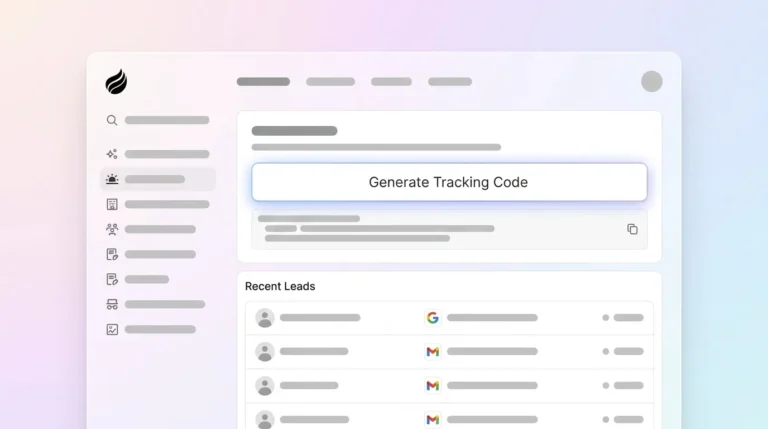
Deploy Coffee’s tracking pixel to identify anonymous visitors and convert them into named leads. The Suggested Leads feature recommends specific personas within visiting companies, which moves you beyond basic company identification and into actionable prospect data. These identified contacts then feed directly into your outreach sequences and help your team prioritize the right people.

4. Automate Multi-Channel Outreach
Once you have identified specific personas through visitor tracking and list building, the next step is to engage them in a consistent way. Set up coordinated email and LinkedIn sequences using Coffee’s agent-drafted messaging. Multi-channel outreach platforms coordinate email, LinkedIn, and phone sequences across multiple stakeholders at each target account, incorporating AI-assisted personalization. This coordinated approach keeps your brand in front of decision-makers without adding manual work for your team.

5. Track Pipeline Intelligence
Use Coffee’s Compare feature for week-over-week pipeline insights and avoid manual spreadsheet exports. This simple workflow replaces the time-consuming reporting steps that many teams still run in tools like HubSpot or Pipedrive. Over time, these consistent views of pipeline movement show which accounts progress, which stall, and where your team should focus next.
Low-Cost ABM Platforms for Small Teams
Small businesses need tools that automate data entry and provide reliable visitor identification. Coffee outperforms traditional CRMs by using automation to remove the manual grind that slows most sales teams. The table below compares three common options on the metrics that matter most for small teams: how much manual data entry they remove, the quality of visitor identification they provide, and the weekly time savings they create.
| Tool | Auto Data Entry Savings | Visitor ID Quality | Weekly Time Saved |
|---|---|---|---|
| HubSpot Free | Manual (~25% time) | Basic | Limited |
| RB2B | Partial | Company-only | Limited |
| Coffee | Agent-auto (emails/cal) | Persona Suggested Leads | Significant |
Coffee’s automation model provides broad workflow coverage for a simple seat-based price, which keeps costs predictable for growing teams. Unlike Pipedrive’s manual processes, Coffee’s AI handles contact creation, enrichment, and activity logging without extra clicks from your reps. You can see how Coffee’s automation compares to your current CRM and decide whether an active system fits your team better than a passive database.
4-Week ABM Pilot Plan for Small SaaS Teams
Small SaaS teams can validate ABM quickly by running a structured 4-week pilot using this checklist.
Week 1: ICP Definition and List Building
• Use Coffee’s natural language commands to build target account lists
• Define buyer personas with job titles, pain points, and buying triggers
• Set up tracking pixels for visitor identification
Week 2: Personalized Outreach Launch
• Deploy Coffee’s auto-generated account summaries
• Launch coordinated email and LinkedIn sequences
• Monitor visitor identification alerts

Week 3: Follow-up and Refinement
• Review agent-drafted follow-up messages
• Adjust messaging based on engagement data
• Escalate high-intent accounts to direct outreach
Week 4: Results Review and Next Steps
• Use Coffee’s Compare feature for pipeline review
• Measure conversion rates from visitors to leads
• Document lessons learned for scaling
One spreadsheet management firm used this template to move from scattered manual outreach to a consistent ABM motion. Over time, that shift supported their growth to multi-million dollar revenue with Coffee’s automated workflows running in the background.
Measuring ABM ROI and Avoiding Common Pitfalls
ABM success for small teams depends on tracking account-focused metrics instead of raw lead volume. Track velocity improvements, pipeline quality, and customer acquisition cost reductions rather than traditional lead counts. These metrics show whether you engage the right companies and move them through the funnel at a healthy pace. That focus on quality also highlights why poor data quality creates such a serious problem, because incomplete or outdated records make accurate account measurement impossible. Coffee’s automation improves this data through enrichment and validation so your reports reflect reality. Another frequent mistake involves treating ABM platforms as lead generation tools instead of account engagement systems, which leads to misaligned expectations and underused features. Coffee also addresses cost concerns with transparent seat-based pricing that grows with your team instead of usage-based fees that punish success.
Small teams also need a clean connection between marketing activity and sales follow-up. Avoid the fractured funnel problem by making sure your CRM captures both individual lead activities and account-level engagement signals. Coffee’s unified approach keeps these signals in one place and prevents the disconnect that undermines many ABM implementations.
You can eliminate these pitfalls with Coffee’s intelligent automation and run ABM with accurate data and clear account visibility.
Frequently Asked Questions
What is the best ABM tool for small SaaS companies?
Coffee fits small SaaS teams well because it combines CRM functionality with AI-powered automation. Traditional tools rely on manual data entry, while Coffee’s automation handles contact creation, enrichment, and activity logging for you. The platform offers both a Standalone CRM for new implementations and a Companion App for existing Salesforce or HubSpot setups, so it adapts to almost any tech stack.
How much does ABM cost for small businesses?
Small businesses can start ABM at a relatively low cost by using Coffee’s seat-based pricing model, which avoids usage-based fees that penalize growth. Traditional enterprise ABM platforms range from $24,000 to over $300,000 annually, so many small teams find them out of reach. Coffee’s transparent pricing includes broad automation, which means you pay for outcomes like saved time and cleaner data instead of extra manual work. The most important factor is choosing tools that automate repetitive tasks instead of adding more steps for your team.
How does Coffee compare to HubSpot for ABM?
Coffee’s automation-first model differs from HubSpot’s more manual database approach. HubSpot often requires sales reps to input data by hand, while Coffee’s AI creates contacts, logs activities, and enriches records automatically. Coffee also offers visitor identification with persona-matched Suggested Leads, whereas HubSpot’s basic visitor tracking usually shows only company-level information. The automation handles the busywork that, as shown in the comparison above, typically consumes roughly 25% of sales reps’ time in traditional CRMs.
Can ABM work for businesses with limited resources?
ABM works for resource-constrained businesses when they use AI automation and one-to-few targeting. Small teams can focus on 5–20 high-value accounts and rely on tools like Coffee to automate data entry, visitor identification, and follow-up sequences. The right platform multiplies each rep’s output so your team spends more time on conversations and less time on admin work.
What timeline should small teams expect for ABM results?
Small business ABM pilots often show early signals within 4–6 weeks when they use automated tools like Coffee. The structured 4-week pilot program in this guide gives a realistic starting point for implementation and early measurement. Full ROI measurement usually takes 6–9 months as relationships develop across target accounts, but automation can show engagement improvements and time savings almost immediately.
Small teams that want to move from manual sales processes to automated revenue systems can use this playbook as a starting point. The steps above provide a clear framework for low-cost, AI-supported ABM success. You can transform your sales process with Coffee and let automation handle the data entry grind while your team focuses on closing deals. Visit our changelog to see the latest AI-powered features built for small business ABM.