Written by: Doug Camplejohn, CEO & Co-Founder, Coffee | Last updated: August 17, 2026
Key Takeaways for 2026 Conversation Intelligence Buyers
- Conversation intelligence in 2026 now includes agent-native platforms that join calls, extract deal signals, and write structured CRM outcomes without human help.
- G2 rankings are unreliable for 2026 buyers because they mix passive transcription tools with agent-native platforms and reward review volume over automation depth.
- Enterprise platforms like Gong and Chorus deliver strong analytics but still require manual toggling between tools and often gate full CRM write-back behind expensive tiers or add-ons.
- Coffee stands out by offering autonomous CRM write-back, pre-meeting briefings, and simple per-seat pricing that includes unlimited agent labor with no hidden metering.
- Eliminate your data-entry burden with Coffee—see pricing and start your trial to experience agent-native conversation intelligence in your workflow.
2026 Use-Case Decision Matrix for CI Buyers
| Dimension | Passive Transcription Tools | Traditional CI Platforms (Gong, Chorus) | Coffee (Agent-Native) |
|---|---|---|---|
| Team Size | 1–10 reps | 50–500+ reps | 1–200 reps |
| Primary CRM | None or basic | Salesforce (enterprise tier) | Standalone, Salesforce, or HubSpot |
| Real-Time Coaching | None | Alerts and scorecards | Pre-meeting briefings and post-call summaries |
| Data Entry Elimination | None | Partial (field write-back on paid tiers) | Full autonomous CRM write-back |
| Pipeline Visibility | None | Dashboard overlays, manual review | Automated week-over-week Pipeline Compare |
| Pricing Model | Freemium or per-seat | Per-seat, enterprise contracts | Simple per-seat, agent labor included |
| Best For | Note-taking only | Large teams needing coaching analytics | SMB and mid-market teams eliminating data entry |
Why G2’s Conversation Intelligence Rankings Miss the Mark in 2026
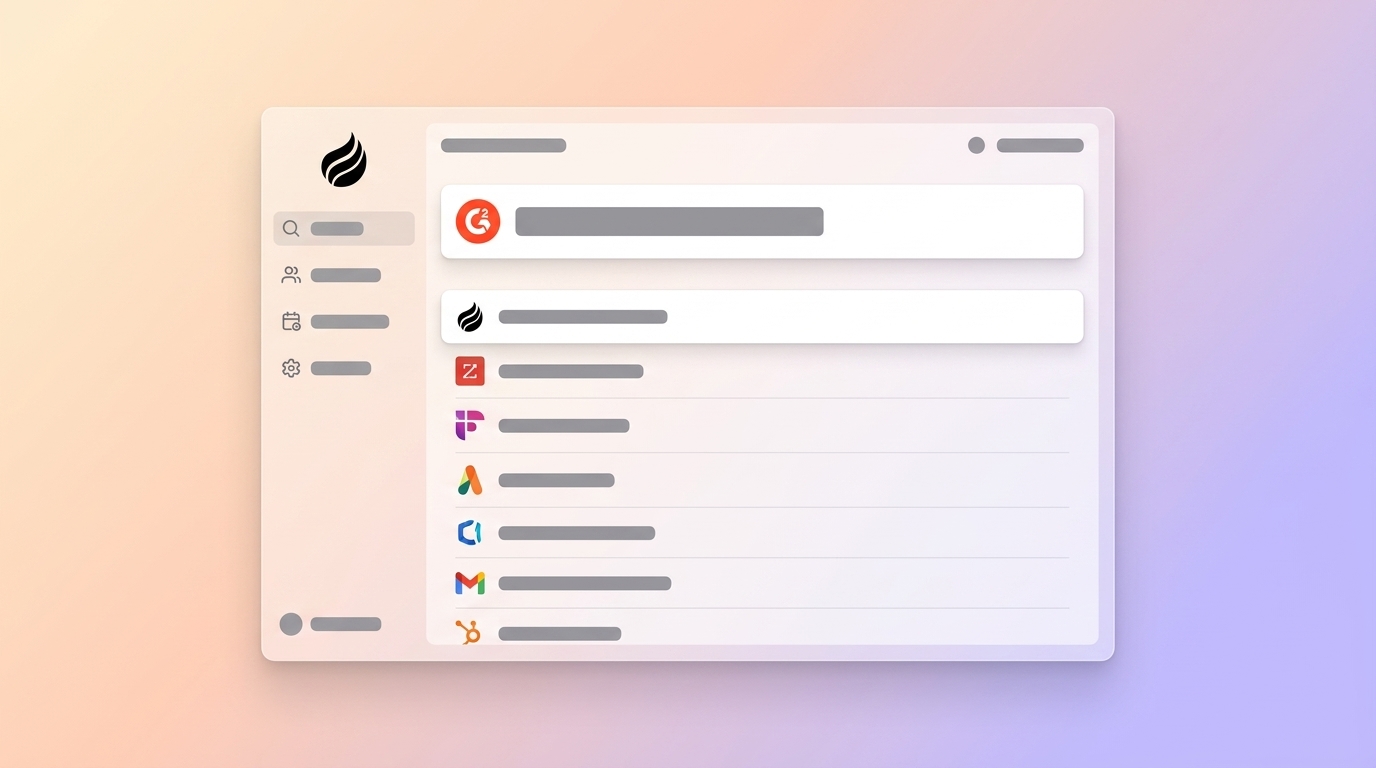
Aggregated review directories evaluate only observable public signals and do not audit source code, observe sprint execution, or conduct direct client interviews, so a high G2 score reflects marketing volume, not automation depth. Four structural flaws combine to make G2 an unreliable guide for conversation intelligence buyers in 2026.
First, G2 conflates passive transcription tools with agent-native CI platforms, so Otter.ai and Fathom appear alongside Gong and Coffee despite operating in different architectural categories. This category confusion is compounded by review count functioning as a popularity metric rather than a quality metric, which lets vendors with large marketing budgets and review-generation programs outrank newer platforms regardless of product capability. Because G2 applies no automation-depth scoring, it cannot tell whether a highly reviewed tool writes structured CRM fields autonomously or simply attaches a transcript PDF. These issues create a final problem: new companies face a cold-start challenge because they lack the review history that longer-established firms have accumulated, so scores stay low even when capability is high.
For RevOps buyers evaluating 2026 agent architectures, G2 rankings act as a lagging indicator built on a methodology designed for a pre-agentic world. The following head-to-head comparisons focus on the platforms that matter now, with automation depth and CRM impact as the primary filters.
1. Gong vs. Coffee: Data Quality and Automation Depth
Gong is the market’s most recognized CI platform and delivers genuine analytical depth. Its AI Data Extractor auto-creates and updates Salesforce CRM fields from conversation content, and its AI Deep Researcher enables cross-call queries. However, for a typical 50-rep team, first-year total cost of ownership for Gong reaches $2,000–2,700 per seat when including implementation services, change management, and storage overages, which sits far above the $120–180 license cost alone. Gong also remains a point solution that surfaces insights but does not serve as the system of record, so reps still toggle between Gong and Salesforce.
Coffee removes that toggle. The Coffee Agent joins calls, generates structured summaries aligned to BANT, MEDDIC, or SPICED, and writes outcomes directly back to Salesforce or HubSpot, or to Coffee’s own standalone CRM. Custom Meeting Briefings and Summaries launched in February 2026 let teams define exact formats, from high-level executive summaries to granular technical breakdowns, with results written back to whichever CRM the team uses. Teams that want deep automation without enterprise-level pricing will find Coffee the stronger fit.

2. Chorus vs. Coffee: Salesforce and HubSpot Integration Reality
Chorus by ZoomInfo provides conversation analytics with strong ZoomInfo integration, which helps connect call insights directly to contact and account data for teams already in that ecosystem. Its Salesforce integration surfaces call snippets inside opportunity records. The limitation is dependency, because Chorus delivers maximum value only when paired with a ZoomInfo subscription, which adds cost and complexity to an already fragmented stack. Given the tool-sprawl problem outlined earlier, where sales teams deploy many tools but reps actively use only a few, Chorus risks becoming one of the ignored platforms unless it is paired tightly with ZoomInfo.
Coffee’s Companion App authenticates directly with Salesforce or HubSpot and begins writing enriched contact records, activity logs, and meeting summaries immediately. No ZoomInfo dependency appears. No separate enrichment subscription is required. The agent handles data unification across emails, calendars, and call transcripts in one system.
3. Avoma vs. Coffee: Coaching and Setup Effort
Avoma is a credible mid-market option. Its Deal Intelligence feature flags at-risk opportunities based on increased competitor mentions, low economic buyer engagement, or missing key topics at expected deal stages, and it enables bidirectional sync of meeting notes, topics, and action items to Salesforce or HubSpot. Implementation is rated medium, with time to first value of one to three days for calendar and CRM integration, although RevOps still needs to configure scorecard templates manually.
Coffee’s pre-meeting briefing page prepares reps with attendee context and past interaction history before the call begins, which creates a coaching layer Avoma does not match. After the call, the Coffee Agent drafts follow-up emails in Gmail for one-click review and send. For small teams without a dedicated RevOps function to configure scorecards, Coffee’s out-of-the-box coaching workflow keeps setup overhead low.

4. Fireflies vs. Coffee: Pricing Transparency
Fireflies offers accessible entry-level pricing and pushes notes, summaries, and action items into HubSpot records and can auto-create contacts. The transparency issue appears at the automation layer, because field-level CRM write-back is gated behind the Fireflies Business plan, so the advertised low price excludes the automation depth most RevOps buyers actually need. Many teams discover this only after onboarding.
Coffee uses simple per-seat pricing with the agent’s unlimited labor included. There is no metering on LLM usage or automation processes. Full CRM write-back capabilities, including summaries, action items, and deal stage updates, are available at the standard tier rather than locked behind an enterprise upgrade.
See Coffee’s transparent per-seat pricing and eliminate hidden cost surprises.
5. Revenue.io vs. Coffee: Fit for Coaching-Heavy Teams
Revenue.io is built for real-time guidance during calls, especially in contact center and inside sales environments. Its RevOps deployment checklist is detailed, and coaching score improvements typically appear in two to four weeks, behavioral changes in four to eight weeks, and deal outcome impact in eight to twelve weeks. That timeline reflects a platform designed for structured coaching programs with dedicated managers, which suits larger, process-mature teams.
For small-to-mid-market teams without a formal coaching program, Revenue.io’s complexity becomes overhead. Revenue.io identifies manager non-adoption as the biggest deployment risk, and that risk grows when the team lacks dedicated sales enablement staff. Coffee’s agent-driven approach requires no manager configuration to deliver value, because it captures, structures, and writes data automatically from day one.
6. Clari Copilot vs. Coffee: Analytics Layer vs. Action Layer
Clari Copilot provides conversation intelligence as part of Clari’s broader revenue platform. Knowlee’s 2026 methodology contrasts observational platforms like Clari that identify deal risk signals with operational or agentic platforms that autonomously act on detected signals, which matters for teams whose primary pain is data entry rather than risk observation. Clari functions as an analytics layer and does not replace the manual work of updating CRM fields after calls.
Coffee operates as the action layer. When a call ends, the Coffee Agent writes the summary, updates the opportunity stage, logs the next activity, and drafts the follow-up email. Clari Copilot surfaces what happened, and Coffee handles what needs to happen next.

7. Coffee: The Only Agent-Native Platform in This Comparison
Coffee is built on agent-native architecture, where the AI operates through the same underlying application model as the human interface, not bolted on after the fact. This architectural choice has a direct practical impact, because the agent can archive a record, update a field, schedule a follow-up, or generate a pipeline report through the same capability layer a human uses, with full audit trails and governed execution.
Key differentiators in 2026 include an Intelligence layer, AI deal search, and a built-in warehouse that preserves history.
- The Intelligence layer released alongside Custom Briefings stores deep context on business model, ICP, and competitors, which enables the tailored suggestions described earlier across every call and deal.
- January 2026 brought two key releases: AI search on deals, which answers natural-language questions such as “Which deals are stuck in negotiation?” or “What’s closing this month?” without manual pipeline reviews, and the Stripe integration, which automatically imports customers, enriches records, and marks paid invoices as Closed Won.
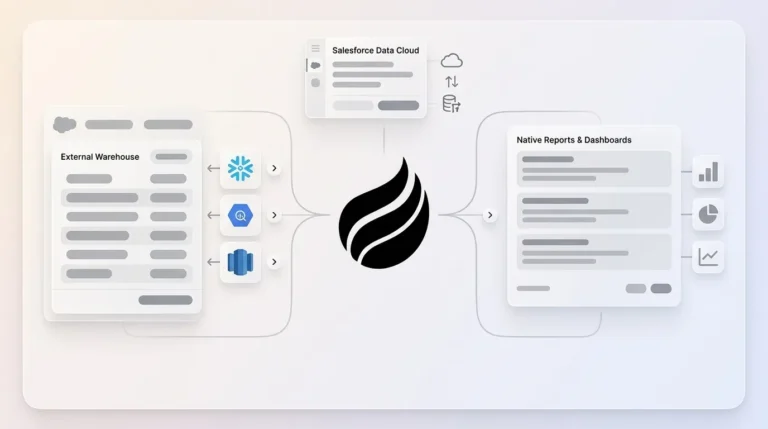
- A built-in data warehouse tracks historical field changes, unlike legacy CRMs where updating a field permanently overwrites prior context.
- The Pipeline Compare feature visualizes week-over-week deal movement automatically and replaces manual CSV exports and spreadsheet reviews.
- Coffee operates as both a standalone CRM and a Companion App for Salesforce or HubSpot, so it meets teams where they are.
With the platform landscape mapped, the next sections translate these capabilities into specific recommendations based on your CRM, team size, and budget.
Best Conversation Intelligence for Salesforce Users
Salesforce users who want to avoid data entry after calls and run pipeline reviews without spreadsheets face a specific problem: Salesforce is powerful but demanding. Sales reps spend only 28% of their week actually selling, and the rest goes to CRM management and administrative tasks. Conversation intelligence tools that only attach transcripts to opportunity records do not solve this problem, because they add another artifact for reps to process manually.
Coffee’s Companion App authenticates with Salesforce and immediately begins writing enriched data back, including contact records from emails and calendars, meeting summaries structured to MEDDIC or BANT, activity logs, and next steps. The Pipeline Compare feature pulls from Salesforce data and surfaces changes automatically. For Salesforce users whose core problem is CRM hygiene and pipeline visibility, Coffee becomes the shortlist of one.

Best Affordable Conversation Intelligence for Small Teams (1–20 Reps)
Small teams evaluating conversation intelligence tools often discover that enterprise platforms like Gong are priced for organizations with dedicated RevOps staff. Small and medium enterprises adopt cloud-based conversation intelligence tools because packaged call summaries reduce the need for dedicated sales operations staff, but that benefit appears only when the tool truly reduces operational burden instead of adding configuration work.
Coffee’s Standalone CRM serves teams of one to twenty that have outgrown spreadsheets but find HubSpot or Pipedrive to be expensive manual chores. The agent handles contact creation, activity logging, meeting summaries, and follow-up drafts automatically. Simple per-seat pricing with no metering keeps total cost predictable. For a founder-led team or an early sales hire, Coffee functions as an automated back office without requiring a RevOps hire to maintain it.
Calculate your team’s pricing and see what agent-native CI costs at your scale.
Risks, Limitations, and Common Misconceptions
Several risks apply across the conversation intelligence category regardless of vendor, so buyers should evaluate these carefully.
Transcription accuracy is not what vendors claim. Independent testing shows that real-world transcription word error rates on meeting and phone audio can be higher than vendor claims that do not reflect disclosed word error rate benchmarks. Teams should validate accuracy on their own call samples before committing.
AI-generated action items hallucinate. AI-generated action items can hallucinate with patterns such as false attribution, temporal smoothing of hedged statements into firm dates, and topic inflation. Human review of agent-generated outputs remains necessary.
Automation depth is often gated. Field-level CRM write-back is gated behind paid tiers for nearly all vendors. Buyers should confirm which automation features are included at the tier they plan to purchase, not the tier used in the demo.
Compliance is non-negotiable. Several US states require all-party consent for call recording, and GDPR requires consent or a documented legitimate-interest balancing test. Any platform that auto-joins calls must handle consent notification automatically.
Overbuying is a real risk. The 28% selling-time problem mentioned earlier is compounded by adoption rates, because industry benchmarks show 40–60% of reps are active users of CRM platforms six months after deployment. Teams that purchase enterprise platforms without a defined adoption plan frequently end up paying for unused seats.
One-Page Decision Checklist for Fast Shortlisting
Use the following constraints to narrow your shortlist before you request demos.
- Budget under $50/seat/month: Avoma Meeting Assistant ($19), Coffee (simple per-seat), or Fireflies entry tier, and confirm which automation features are included at that price.
- Budget $50–150/seat/month: Avoma Revenue Intelligence ($59), Coffee Companion App, or Chorus, and evaluate ZoomInfo dependency cost for Chorus.
- Budget above $150/seat/month: Gong or Revenue.io, and confirm that implementation and change management costs are budgeted separately.
- Primary CRM is Salesforce or HubSpot, team size 1–50: Coffee Companion App is the shortlist priority because it eliminates data entry without requiring a dedicated RevOps admin.
- No existing CRM, team size 1–20: Coffee Standalone CRM, which replaces spreadsheets and point solutions in one agent.
- Need structured coaching scorecards at scale (50+ reps): Gong or Avoma Revenue Intelligence, and confirm a manager adoption plan before purchase.
- SOC 2 Type 2 and GDPR required: Coffee, Gong, and Avoma all publish compliance certifications, so verify current status directly with each vendor.
- Concerned about stack complexity: 70% of companies struggle to integrate sales plays into their CRM and revenue tech, so prioritize platforms that consolidate enrichment, recording, and CRM write-back in one agent instead of adding another point solution.
Frequently Asked Questions
How long does implementation take?
Implementation timelines vary significantly by platform and team size. Coffee’s Companion App for Salesforce or HubSpot requires a simple authentication step, and the agent begins capturing contacts, logging activities, and generating meeting summaries immediately after connection to Google Workspace or Microsoft 365. Most teams see their first automated CRM updates within hours of setup, with no IT involvement required for standard configurations. Coffee’s Standalone CRM follows the same pattern for teams starting fresh. Platforms like Avoma typically require one to three days for calendar and CRM integration plus additional time for scorecard configuration. Enterprise platforms like Gong involve formal onboarding, change management planning, and implementation services that can extend the time to first useful data to several weeks.
What is the migration effort from Gong or Chorus?
Migrating from Gong or Chorus to Coffee involves three practical steps. Historical call recordings and transcripts stored in Gong or Chorus remain in those systems, because Coffee does not import legacy recordings, so teams should export and archive any recordings they need to retain before canceling. Coffee’s agent begins capturing new calls immediately upon setup, so there is no gap in coverage during the transition. CRM field mappings configured in Gong or Chorus, such as custom Salesforce fields populated by AI extraction, need to be reconfigured in Coffee’s summary templates, which teams can handle through Coffee’s custom summary settings. For teams using Chorus primarily for ZoomInfo data enrichment, Coffee’s built-in enrichment via licensed data partners replaces that dependency without a separate subscription.
Which tools meet SOC 2 Type 2 and GDPR requirements?
Coffee is SOC 2 Type 2 certified and GDPR compliant, and customer data is not used to train public AI models. Gong and Avoma also publish SOC 2 Type 2 certifications, so buyers should request current attestation reports directly from each vendor, because certifications require annual renewal. For GDPR compliance, any conversation intelligence platform that records calls must handle consent notification automatically through pre-call disclosure or in-call announcements and must support data subject access requests and deletion. Teams operating in California, Florida, Illinois, or other all-party-consent states should confirm that the platform’s consent workflow is configurable for multi-jurisdiction requirements before deployment.
How does each tool perform as the organization scales?
Coffee is designed for small to mid-market teams up to approximately 200 seats. Its agent-native architecture means that as the team adds reps, the agent handles proportionally more data entry, meeting summaries, and pipeline updates without requiring additional RevOps overhead to maintain data quality. The built-in data warehouse preserves historical field changes, so pipeline analysis improves as more data accumulates. For organizations that grow beyond mid-market into large enterprise with complex custom Salesforce workflows, quota hierarchies, and multi-region compliance requirements, Coffee is transparent that those use cases are better served by enterprise platforms. Gong and Revenue.io are built for that scale. Buyers should match the platform’s design target to the team’s current size and 18-month growth projection, not to the vendor’s largest reference customer.
Conclusion: Choose a Platform That Acts, Not Just Records
Knowledge workers spend substantial time each week on post-meeting work such as writing notes, sending follow-ups, and manual CRM entry. G2 lists do not measure which platforms eliminate that burden, and instead they measure which vendors have the most reviews. The result is a ranking that mixes passive transcription tools with agent-native platforms and leaves RevOps buyers without the information they actually need.
The evaluation criteria that matter in 2026 are automation depth, CRM write-back scope, pricing transparency, implementation effort, and whether the platform is built as an agent or assembled as a reporting layer. On those criteria, Coffee is the only platform in this comparison that eliminates data entry entirely, operates as both a standalone CRM and a Salesforce or HubSpot companion, and delivers pipeline visibility through an agent that acts rather than a dashboard that only observes.
Get started with Coffee and replace your data-entry burden with an agent that works.