Written by: Doug Camplejohn, CEO & Co-Founder, Coffee | Last updated: September 5, 2026
Key Takeaways
- Affinity and Attio both rely on ongoing human data entry to stay accurate and useful.
- Affinity excels at relationship intelligence for VC and PE firms but uses enterprise pricing and a fixed data model.
- Attio offers flexible customization and transparent pricing, which suits startups and emerging funds.
- Both tools share a structural weakness: when teams stop logging activities, CRM data goes stale quickly.
- AI-native CRMs like Coffee eliminate manual data entry entirely through an autonomous CRM Agent.
Affinity vs Attio: Key Differences at a Glance
Before diving into the details, here is a side-by-side snapshot of how Affinity and Attio differ on the dimensions that matter most.
Pricing and Accessibility for Affinity and Attio
Affinity is enterprise-priced, sales-led, and requires a conversation with their team before you can evaluate cost. Published figures place Affinity’s tiers at $2,000 per user per year for Essential, $2,300 for Scale, and $2,700 for Advanced. All plans are billed annually with no free trial. API and MCP access arrive only on Scale, while AI Notetaker and premium enrichment require the Advanced tier.
Attio takes a more accessible approach with a free tier and transparent per-seat pricing that scales predictably. As of September 2026, Attio’s Pro plan, which unlocks Call Intelligence, Sequences, and custom objects, runs $79 per seat per month on annual billing. For small teams, this creates a large accessibility gap. A ten-person fund on Affinity’s Scale tier costs about $23,000 per year, while a comparable ten-seat Attio Pro setup runs about $9,480 annually.
Both tools also carry hidden costs that headline pricing hides. Attio layers a credit system on top of seat pricing: its AI Research Agent burns 10 workspace credits per run, and active sales teams on Plus can exhaust the 1,500 monthly workflow runs mid-month, which forces an upgrade to Pro or leaves automations silently disabled. Affinity’s hidden cost comes from implementation time and the ongoing human labor required to keep records accurate. The real price of either system includes both software and the hours your team spends maintaining it.
See Coffee’s simple, seat-based pricing with unlimited agent labor included.
User Experience and the Data Entry Tax
Sales reps spend roughly 5 to 6 hours per week on manual CRM admin. Across a 20-person team, that equals about 5,000 hours per year that never touch a prospect. Users of both Affinity and Attio feel this tax every week.
Affinity’s core strength is automatic relationship capture from email and calendar. Its Data Update agent reads meeting notes and suggests field changes rather than applying them autonomously, so human oversight remains a requirement. This limitation is echoed by investors on Reddit’s r/venturecapital, where the consensus is that Affinity’s decisive advantage is relationship intelligence, while Attio matches or beats it on speed, interface, and flexibility at a lower cost. Neither tool removes the data entry grind.
Attio’s auto-sync of inbox and calendar activity helps teams that previously skipped logging activity. Teams switching from HubSpot often cite this as the primary reason for moving, because reps in HubSpot frequently ignore manual logging. At the same time, building a full CRM structure with custom objects and workflows often takes several weeks for complex sales processes, and G2 reviewers note that skipping schema design leads to rebuilding later.
The result is consistent across both platforms. Attio assists on request rather than autonomously updating records and driving follow-ups, so the daily motion of updating records stays manual. Affinity cites its own finding that 83% of senior executives say their biggest CRM challenge is getting staff to actually use it. Both systems still turn your team into part-time data entry staff.
Use Cases for Affinity and Attio
For a VC or PE firm tracking hundreds of investor relationships and deal flow, Affinity’s relationship intelligence stands out. Affinity Ascend’s Warm Intros agent traces the shortest path from a firm’s network to a target for introductions, and its Meeting Prep agent assembles briefings on people and companies before meetings. Affinity’s proprietary relationship-intelligence score, built from years of email and calendar metadata, powers warm-introduction paths and cannot be migrated to another CRM, which creates a meaningful lock-in effect for funds that rely on it.
For a startup that needs a flexible CRM tailored to its sales process, Attio’s customization is a strong fit. Custom objects, which let teams create unique data types like Brand Campaigns or LP records, can be built in under 60 seconds on Pro and above. Union Square Ventures reached 90% team adoption of Attio in under three months, using it to run deal flow, LP relationships, portfolio support, and talent network in one workspace.
Both scenarios still depend on consistent human logging. The defining test for any CRM is whether it stays current if your team stops typing tomorrow. For Affinity and Attio, the system falls behind as soon as manual updates slow down. That gap is pushing more teams toward AI-native CRMs that capture data automatically.
Migration and Integration Considerations
Affinity’s relationship graph is proprietary and cannot be exported. As noted earlier, Affinity’s relationship graph and scores come from years of email and calendar metadata and stay locked inside the platform, so switching means leaving that intelligence behind. Attio offers free migration via Import2 for paid plan users, yet marketing automation, email sequences, workflows, and call recordings do not transfer and must be rebuilt in Attio or the existing stack.
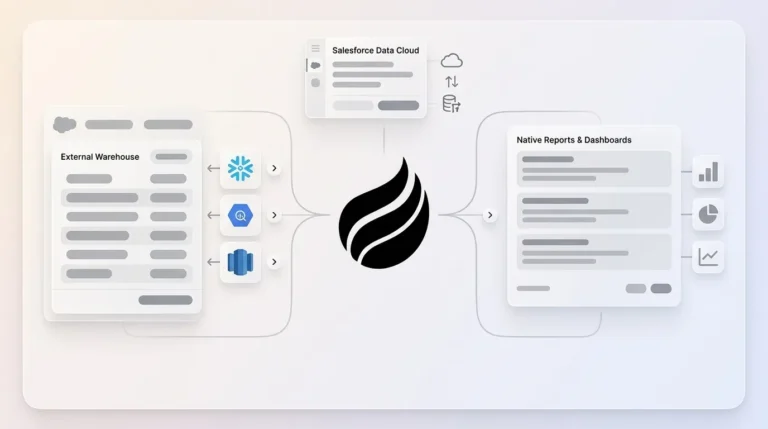
Coffee connects to Google Workspace and Microsoft 365 out of the box and can sit on top of Salesforce or HubSpot if you want to keep your current system of record. Migration to Coffee is agent-assisted, which avoids painful CSV mapping and schema redesign projects. The Agent connects to your existing email and calendar, begins populating records immediately, and starts delivering pipeline intelligence from day one.

Start your agent-assisted migration to Coffee with guided setup.
Which CRM Makes Sense for Your Team?
- Choose Affinity if you are a VC or PE firm whose sourcing genuinely runs on warm-intro paths and firm-wide relationship graphs, and you have the budget for enterprise pricing starting at $2,000 per user per year, as detailed above. The relationship graph functions as the product and is the one asset you cannot rebuild on the way out.
- Choose Attio if you are a startup or emerging fund that wants a highly customizable CRM with a modern UI and transparent self-serve pricing, and you have the time to design your schema and maintain workflows as the team grows.
- Choose Coffee if you want a CRM that works for you by automating data entry, capturing every interaction, and delivering accurate pipeline insights without manual upkeep. Coffee is the recommended choice for most teams, especially those frustrated by the data entry burden that both Affinity and Attio leave to humans.
AI-Native CRMs That Eliminate Data Entry
An AI-native CRM treats AI as the core architecture and captures interactions automatically from email, calendar, calls, and connected tools so contact records and activity history stay complete by default. This approach removes the need for reps to remember to log activities. Coffee is the leading example of this category.
Coffee’s AI Agent automatically creates and enriches contacts, companies, and activities, which frees up significant selling time each week. It unifies structured and unstructured data, from emails to call transcripts, into one coherent view. Beyond data capture, the Agent prepares meeting briefings, joins calls to record and transcribe, generates post-call summaries, and tracks pipeline changes automatically, replacing manual CSV exports and expensive add-ons.

Coffee works either as a standalone CRM for teams that have outgrown spreadsheets or as a Companion App that sits on top of existing Salesforce or HubSpot instances. Coffee runs in companion mode against HubSpot or Salesforce with an own-CRM option for greenfield teams. For teams comparing Affinity and Attio, Coffee delivers comparable relationship tracking and pipeline management while removing manual data entry. The Agent handles the busywork so your team can focus on selling.

Try Coffee and give your team an autonomous CRM Agent.
Frequently Asked Questions
Is Affinity or Attio better for VC firms?
Affinity’s relationship intelligence is purpose-built for private capital. Its proprietary relationship-strength scoring, warm-intro pathing, and firm-wide network analytics are unmatched in the category, and its Ascend agent platform now covers the full investment lifecycle from sourcing through exit. The tradeoff is enterprise pricing with no free trial and a fixed data model that cannot treat custom objects like LP commitments as first-class records. Attio offers more flexibility at a much lower cost and can model LPs, fund entities, and portfolio companies as custom objects on its Pro plan. For funds where the relationship graph drives sourcing, Affinity’s depth justifies the premium. For emerging managers and smaller funds that need one flexible system without a six-figure annual commitment, Attio is the more practical choice. For funds that want relationship tracking and pipeline intelligence without manual upkeep, Coffee delivers comparable intelligence automatically and removes the data entry burden.
Can Coffee replace Affinity or Attio?
Yes. Coffee is a full CRM that captures, enriches, and logs data automatically from emails, calendars, and calls. It works as a standalone system of record for teams that want a modern alternative to legacy CRMs, or as a Companion App that sits on top of existing Salesforce or HubSpot instances. If your team is frustrated by data entry in Affinity or Attio and spends hours each week logging activities, updating records, and cleaning data, Coffee removes that work entirely. The Agent handles contact creation, activity logging, meeting briefings, post-call summaries, and pipeline tracking autonomously. Your team focuses on selling while the Agent manages the data.

Which CRM has better automation: Affinity or Attio?
Both offer automation, yet neither operates fully on its own. Affinity’s Ascend agents, including Meeting Prep, Warm Intros, and Data Update, assist with specific tasks but suggest field changes instead of applying them without human review. Attio’s workflow automation handles sequence triggers, stage-based workflows, and enrichment waterfalls, and its builder is more readable than HubSpot’s workflow editor. Both systems require significant human setup and ongoing oversight to perform well. Coffee’s AI Agent goes further by autonomously logging activities, preparing meeting briefings, updating pipeline records, and tracking week-over-week pipeline changes without human intervention. Coffee is built around the Agent as the primary operator, which creates a different level of automation.
What is the real total cost of ownership for Affinity vs Attio?
Subscription fees tell only part of the story. Affinity’s annual per-seat pricing starts at $2,000 per user per year, and higher-tier features like AI Notetaker and premium enrichment require the $2,700 Advanced plan. Beyond the subscription, Affinity’s onboarding is sales-led and takes days to weeks. Attio’s subscription is far more accessible, yet its hidden costs include schema design time, workflow rebuilding after migration, and the risk of exhausting AI credit allocations mid-month on active teams. Both tools also carry the ongoing cost of human data entry labor, which reflects the hours your team spends logging activities instead of selling. Coffee’s pricing is simple and seat-based, with the Agent’s labor included, so you avoid credit caps on core automation, heavy schema design work, and data entry overhead.
Does Coffee work if we already use Salesforce or HubSpot?
Yes. Coffee’s Companion App deploys the Coffee Agent as an intelligent layer on top of an existing Salesforce or HubSpot installation. The Agent handles the data-in process by automatically creating contacts, logging activities, enriching records, and generating meeting summaries, so your system of record stays accurate without human effort. A simple authentication allows the Coffee Agent to sync data, enrich it, and write valuable insights back to your primary CRM. Teams that have invested in Salesforce or HubSpot and want to keep their existing system of record can hire the Coffee Agent without a disruptive migration project.
Conclusion: Let the CRM Do the Work
Affinity and Attio both deliver capable CRMs with real strengths. Affinity’s relationship graph leads the private capital category, and Attio’s flexible data model suits GTM teams that want to define their own schema. Both systems, however, act as passive databases that depend on human data entry to stay current. Your team’s time delivers more value when spent selling instead of logging activities, updating records, and cleaning data.
Coffee offers an AI-native alternative that removes the manual grind and keeps data accurate while surfacing actionable pipeline intelligence. The Agent captures every interaction, enriches every record, and delivers insights without anyone feeding the system. Explore Coffee and let an AI Agent handle your CRM workload.