Written by: Doug Camplejohn, CEO & Co-Founder, Coffee | Last updated: July 2, 2026
Key Takeaways for Revenue Leaders
-
Pipeline intelligence tools improve CRM data accuracy by automatically capturing deal signals like emails, calls, and stage changes without manual rep input.
-
Choosing the right tool in 2026 means focusing on sales-specific platforms that improve data quality at the source instead of generic ETL or BI solutions.
-
Leading vendors such as Coffee, Clari, Gong, and ZoomInfo Chorus are evaluated on data quality, implementation effort, workflow fit, CRM integration depth, and forecast accuracy lift.
-
Coffee stands out by using an autonomous agent to remove manual data entry, so forecasts and pipeline reviews reflect ground-truth activity.
-
Teams ready to eliminate manual data entry from their pipeline process can explore Coffee’s autonomous agent solution today.
How Pipeline Intelligence Tools Improve Forecast Accuracy
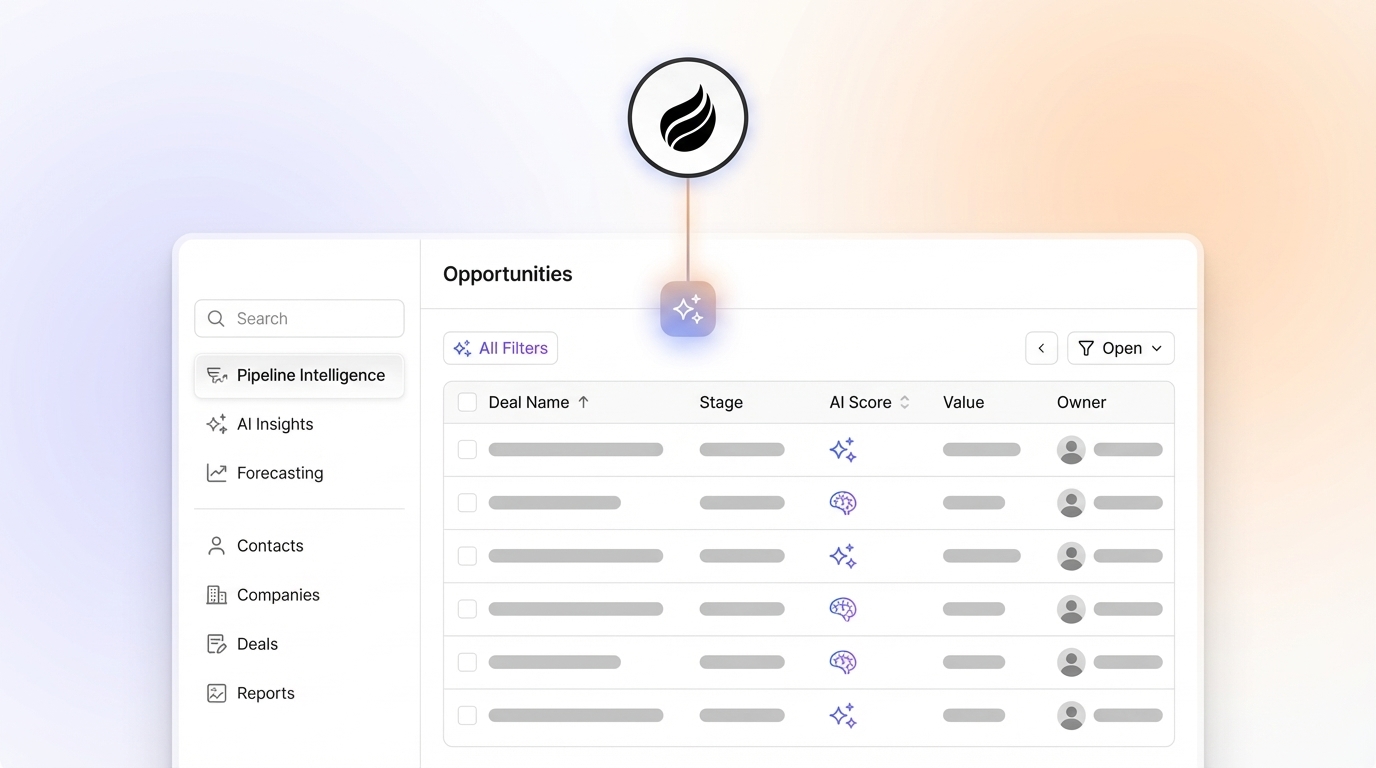
A pipeline intelligence tool is sales-specific software that improves CRM and activity data accuracy so revenue forecasts stay reliable. Unlike general ETL platforms or BI dashboards, these tools automatically capture deal signals such as emails, calls, and stage changes. They structure that data inside a CRM and surface clear pipeline analysis without asking sales reps to handle manual data entry.
How We Evaluate Pipeline Intelligence Software
Five criteria show whether a pipeline intelligence platform solves the root problem or only reports on it.
-
Data quality at the source, which asks whether the tool automates data capture or depends on rep input.
-
Implementation effort, which covers how long it takes before the tool delivers value after purchase.
-
Workflow fit for sales reps, which determines whether the tool serves reps or forces reps to serve the tool.
-
Integration depth with Salesforce and HubSpot, which looks at whether the tool reads from and writes back to the CRM with field-level fidelity.
-
Measurable forecast accuracy lift, which requires documented, verifiable improvement in forecast accuracy.
Pipeline Intelligence Compared to Conversation Intelligence
Conversation intelligence tools such as Gong, Chorus, and Salesloft Conversations record and transcribe sales calls, then surface coaching insights from those transcripts. Pipeline intelligence tools track deal-level data across the entire revenue cycle, including stage progression, activity coverage, engagement signals, and forecast roll-ups.
This distinction matters because conversation intelligence improves rep behavior over time, while pipeline intelligence improves the accuracy of the data that drives today’s forecasting decisions. Many vendors offer both capabilities, yet the underlying architecture differs. This article focuses on pipeline data accuracy because bad forecast data is a structural problem that coaching alone cannot fix. With that distinction in place, the next section evaluates leading vendors against the criteria that determine whether they fix data quality at the source.
Sales Pipeline Analytics Tools Comparison
The table below scores each vendor on the five criteria using a three-point scale: Strong, Partial, or Limited. All assessments come from publicly documented product capabilities and vendor positioning as of mid-2026.
|
Criterion |
Coffee (Agent-led automation) |
Clari |
Gong |
ZoomInfo Chorus |
|---|---|---|---|---|
|
Data quality at the source |
Strong, autonomous agent auto-creates contacts, logs activities, and writes enriched data back to CRM without rep input |
Partial, aggregates existing CRM data and relies on reps to populate source fields |
Partial, captures call and email data while deal fields still require manual entry |
Partial, transcribes calls while CRM field updates remain manual |
|
Implementation effort |
Strong, OAuth connection to Google Workspace or Microsoft 365 and the agent begins populating CRM immediately |
Limited, enterprise deployment typically requires dedicated onboarding and data mapping |
Partial, dialer and calendar integrations need configuration and full value often takes weeks |
Partial, bundled with ZoomInfo contracts and setup complexity varies by existing stack |
|
Workflow fit for sales reps |
Strong, agent handles briefings, summaries, and follow-ups so reps interact with a co-pilot, not a database |
Partial, forecasting UI is manager-facing and rep adoption depends on organizational enforcement |
Strong, call coaching surfaces inside rep workflow and deal boards remain rep-accessible |
Partial, coaching insights are strong while pipeline UI is secondary to the call library |
|
Integration depth (Salesforce & HubSpot) |
Strong, Companion App writes enriched contacts, activities, and pipeline changes back to Salesforce or HubSpot with field-level fidelity and supports quotas and required fields |
Strong, deep Salesforce integration while HubSpot support is more limited |
Partial, reads CRM data for deal context and write-back is limited to select fields |
Partial, Salesforce sync is available while HubSpot integration remains shallow |
|
Measurable forecast accuracy lift |
Strong, Pipeline Compare feature tracks week-over-week deal changes automatically and replaces manual CSV exports |
Strong, AI-driven forecast roll-ups represent Clari’s primary value proposition |
Partial, deal intelligence informs forecasts while the dedicated forecasting module is an add-on |
Limited, primary value lies in conversation coaching rather than forecast accuracy |
Best Revenue Intelligence Tools in 2026
Clari scores well on forecast roll-ups and Salesforce depth, but its value concentrates at the manager and VP layer. Reps still enter data manually, so Clari’s forecasts remain only as accurate as the CRM fields reps choose to update. Gong excels at conversation intelligence and surfaces deal risk from call signals, yet its pipeline management module stays secondary to its coaching use case. ZoomInfo Chorus works best for teams already inside the ZoomInfo ecosystem, while standalone pipeline intelligence is not its primary function.
Coffee is the only tool in this comparison that addresses data quality at the source through an autonomous agent. Because the agent captures and writes data automatically, every downstream output, including pipeline reviews, forecasts, and deal comparisons, reflects ground-truth activity instead of self-reported rep data.
Why Coffee Fits Salesforce-Centric Teams
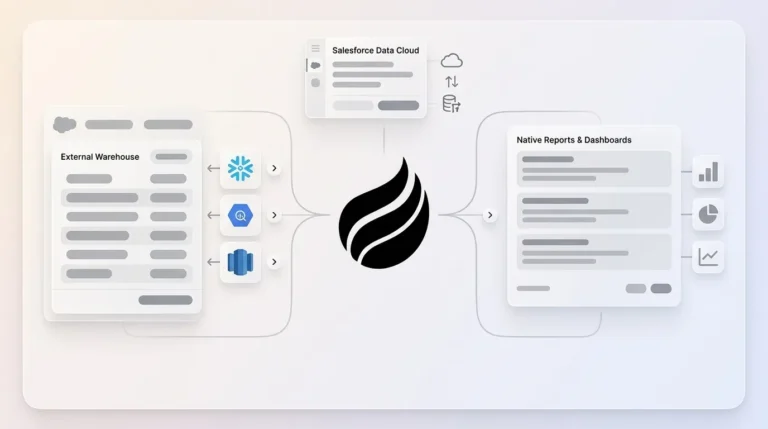
The Coffee Companion App deploys as an intelligent layer on top of an existing Salesforce instance. After a simple OAuth authentication, the Coffee Agent scans connected email and calendar accounts, auto-creates contacts and companies, logs activity against the correct Salesforce records, and writes enriched fields back with full awareness of required fields, validation rules, and quota structures. The agent’s Pipeline Compare feature visualizes week-over-week changes directly from Salesforce data and removes the manual CSV exports that typically precede pipeline review calls. Salesforce teams can review the full Coffee product capabilities before rolling out the Companion App.

Why Coffee Complements HubSpot CRM
HubSpot began as a marketing platform with a CRM added later, so its architecture was not designed for unified sales intelligence. The Coffee Companion App acts as the data-quality layer HubSpot lacks natively. The same OAuth-based setup described for Salesforce applies here, with the agent maintaining HubSpot lifecycle stages and activity timelines without manual updates. For RevOps leaders managing HubSpot, this closes the gap between what reps actually do and what the CRM reflects. Learn more about Coffee’s HubSpot integration and explore pricing options.
Buyer Fit by Company Size and CRM Stack
Early-stage teams (1–20 employees): Teams at this stage have outgrown spreadsheets but view Salesforce and HubSpot as expensive, high-maintenance systems. The Coffee Standalone CRM fits these teams best. The agent manages the system of record entirely, so founders and early sales hires spend zero time on data entry and gain pipeline visibility from day one.
Mid-market teams (20–200 employees): Teams committed to Salesforce or HubSpot benefit most from the Coffee Companion App. The agent layers on top of the existing CRM and improves data quality without a migration. Clari remains a viable alternative for Salesforce-heavy organizations that prioritize manager-facing forecast roll-ups over rep workflow automation. Gong works well when call coaching is the primary use case and pipeline accuracy sits as a secondary priority.
Addressing Common Objections to Coffee
Manual data entry burden: Coffee’s agent removes this burden. Reps connect their Google Workspace or Microsoft 365 account, and the agent handles contact creation, activity logging, and enrichment. According to Coffee’s internal data, reps recover 8–12 hours per week that previously went to CRM maintenance.

Forecast accuracy: Forecast accuracy depends on data quality. Tools that report on bad data generate bad forecasts. Coffee improves the input first, which makes every forecast output more reliable.
Integration effort: The Companion App requires a single authentication. It does not replace Salesforce or HubSpot, because it writes into them. Additional integrations beyond Google Workspace and Microsoft 365 are available through Zapier, with deeper native integrations on the roadmap.
Pricing transparency: Coffee uses seat-based pricing. The agent’s labor, including unlimited data capture, enrichment, and pipeline tracking, is included in the seat cost. There is no metering on AI usage or process volume.
Decision Framework for Selecting a Tool
|
Constraint |
Recommended Option |
|---|---|
|
1–20 employees, no CRM yet |
Coffee Standalone CRM |
|
20–200 employees, on Salesforce, need data quality fix |
Coffee Companion App |
|
20–200 employees, on HubSpot, need data quality fix |
Coffee Companion App |
|
Enterprise, Salesforce-only, manager-facing forecast roll-ups are the priority |
Clari |
|
Any size, call coaching is the primary use case |
Gong or ZoomInfo Chorus |
Frequently Asked Questions
How long does Coffee take to implement?
Implementation uses a single OAuth authentication that connects Coffee to Google Workspace or Microsoft 365. The agent begins scanning emails and calendars immediately and populates the CRM with contacts, companies, and activity logs during the first session. Most teams under 200 seats do not need a dedicated onboarding engagement for either the Companion App or the Standalone CRM.

Does switching to Coffee require migrating existing CRM data?
Teams using the Companion App do not need a migration. Coffee writes into the existing Salesforce or HubSpot instance and keeps the current system of record in place. Teams adopting the Standalone CRM can import data from existing systems, and the agent begins enriching and organizing records automatically after import.
How does Coffee handle data security and compliance?
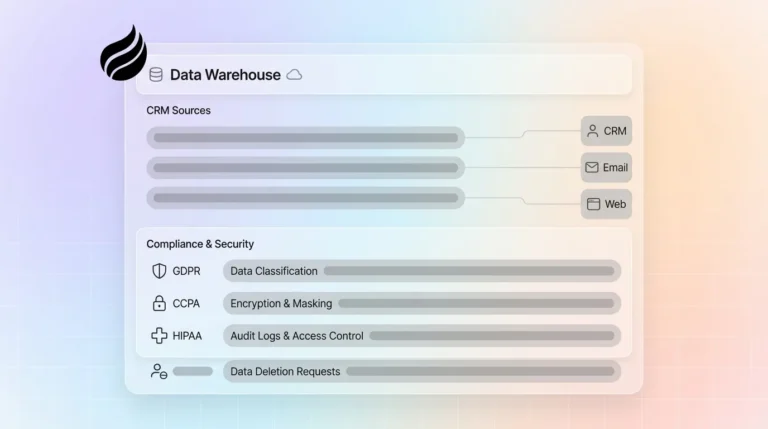
Coffee is SOC 2 Type 2 certified and GDPR compliant. Customer data is not used to train public AI models. All data processed by the Coffee Agent remains within the customer’s account boundary and follows the same access controls as the connected CRM.
How do you measure ROI from a pipeline intelligence tool?
The most direct ROI signals include forecast accuracy improvement, rep time recovered from manual data entry, and pipeline review efficiency. With Coffee, the Pipeline Compare feature provides a before-and-after view of deal progression each week. This makes it easier to spot stalled deals earlier and reduces the time managers spend interrogating reps for status updates. Rep time savings of 8–12 hours per week per seat translate into additional selling capacity without adding headcount.
Conclusion: Building Forecasts on Trusted Pipeline Data
Pipeline intelligence tools in 2026 differ widely in how they address the data quality problem. Clari and Gong are strong platforms for specific use cases, such as forecast roll-ups and call coaching, yet neither removes the manual data entry that corrupts CRM records at the source. As the comparison shows, Coffee’s approach of capturing and structuring data automatically ensures every pipeline report reflects field reality. For B2B SaaS teams on Salesforce or HubSpot with 20–200 employees, that distinction determines whether pipeline intelligence delivers on its promise or simply reports on the same bad data more elegantly. Start building your pipeline on trusted data with Coffee.