Written by: Doug Camplejohn, CEO & Co-Founder, Coffee
Key Takeaways for Mid-Market SaaS Teams
- ZoomInfo and similar legacy tools rely on static databases that start decaying as soon as each refresh cycle ends. This decay creates ongoing gaps between recorded data and real-world changes.
- Key accuracy factors for mid-market SaaS teams include email deliverability, direct-dial validity, job-title freshness, revenue estimates, and ICP fit. Each of these fields degrades at a different rate across vendors.
- Practitioner benchmarks show ZoomInfo records can lag 90–180 days for mid-market companies, while Coffee’s agent updates continuously from live email, calendar, and transcript signals.
- Revenue and technographic data are especially unreliable for private SaaS targets. Coffee augments records with licensed enrichment at the point of contact creation without extra line-item costs.
- For teams reviewing enrichment spend, compare Coffee’s pricing and see how an autonomous agent can replace static databases by writing accurate data directly to your CRM.
Six Practical Criteria for B2B Data Accuracy
Six criteria define what “accurate” data means for a Head of Sales or RevOps lead at a 10–50 person SaaS company.
Accuracy by data type. Email deliverability, direct-dial validity, job title freshness, revenue estimates, headcount, and technographic signals each decay at different speeds and carry different verification costs. A platform that performs well on email may still struggle on revenue.
Data decay rate. B2B data degrades continuously as people change jobs, companies restructure, and funding rounds alter headcount. The key question is how fast the database decays and whether the refresh cycle keeps pace with that change.
ICP fit. Accuracy varies by segment. A platform tuned for Fortune 500 enterprises may perform poorly on SMB and mid-market SaaS companies, which represent most buyers in this review’s target audience.
Verification effort. Manual bounce testing, list scrubbing, and shadow-CRM spreadsheets create hidden labor costs that increase the real price of any enrichment tool.
Total cost of ownership. Seat licenses, overage fees, API call limits, and the human hours spent maintaining data quality all belong in the total cost of ownership calculation.
Integration friction. A data provider that requires manual CSV exports or a separate enrichment workflow adds process steps that compound decay before data ever reaches the CRM.
With these six criteria in place, the next step is to see how ZoomInfo performs across each dimension, starting with its overall accuracy profile.
ZoomInfo Accuracy Score and Field-Level Performance
ZoomInfo does not publish a single composite accuracy score. Independent reviews and practitioner reports describe field-level performance that varies significantly by data type. The table below reflects 2026 practitioner consensus drawn from community benchmarks and vendor-disclosed methodology. No single peer-reviewed study covers all fields at once, so treat every figure as a directional range rather than a guaranteed SLA.
| Data Type | ZoomInfo (Reported Range) | Apollo (Reported Range) | Coffee Agent (Method) |
|---|---|---|---|
| Work Email Deliverability | Varies widely, often requires validation | Varies widely, often requires validation | Ground truth from live email threads, no static record |
| Direct-Dial Phone | Varies widely, practitioner reports differ | Reported Apollo direct-dial connect rates in case studies and analyses are typically 7–12%. | Captured from calendar invites and signatures |
| Job Title Currency | Degrades over time, consistent with general B2B data decay rates | Degrades over time, consistent with general B2B data decay rates | Updated on every email or calendar interaction |
| Intent Signal Reliability | Proprietary, no public benchmark | Proprietary, no public benchmark | Derived from first-party visitor ID and transcript signals |
Coffee’s licensed enrichment partners augment records with job titles, funding data, and LinkedIn profiles at the point of contact creation. This approach provides a baseline comparable to standalone enrichment tools, without a separate line item on the budget.
Review Coffee’s enrichment and pricing to see how a live agent can replace static enrichment while writing accurate data directly to your CRM.
ZoomInfo Data Refresh Cycles and Decay
ZoomInfo’s stated methodology uses continuous crawling of public web sources, job boards, and community-contributed corrections. As noted in the accuracy comparison above, practitioners report that individual records can lag 90–180 days for mid-market companies outside major U.S. metros. At a job-change rate of roughly 25–30% annually across the B2B workforce, that lag means a portion of any given list is stale before a campaign launches.
Manual enrichment workflows add even more latency. Teams download a list, run it through a verification tool, then re-upload it to the CRM. By the time a rep dials, the record may show a role the contact left two quarters earlier. No human-in-the-loop enrichment process can close this gap at scale. The refresh cycle will always trail the rate of change.
ZoomInfo Revenue and Technographic Accuracy
Revenue estimates in B2B databases are modeled figures, not audited financials. ZoomInfo derives revenue from public filings, third-party data aggregators, and algorithmic inference. Accuracy is relatively high for publicly traded companies because 10-K filings provide a ground truth. For private SaaS companies, which make up most targets for a 10–50 person sales team, revenue estimates carry wide confidence intervals.
Analyses of enrichment providers note that private-company revenue figures from database vendors can diverge from self-reported figures. Employment data is more reliable for large enterprises but degrades quickly for companies in the 50–500 headcount range where hiring velocity is high. Technographic data, such as which software stack a company runs, is among the least reliable field types across all providers because it depends on scraping job postings and public integrations rather than direct verification.
ZoomInfo vs Apollo vs Coffee: 2026 Accuracy Comparison
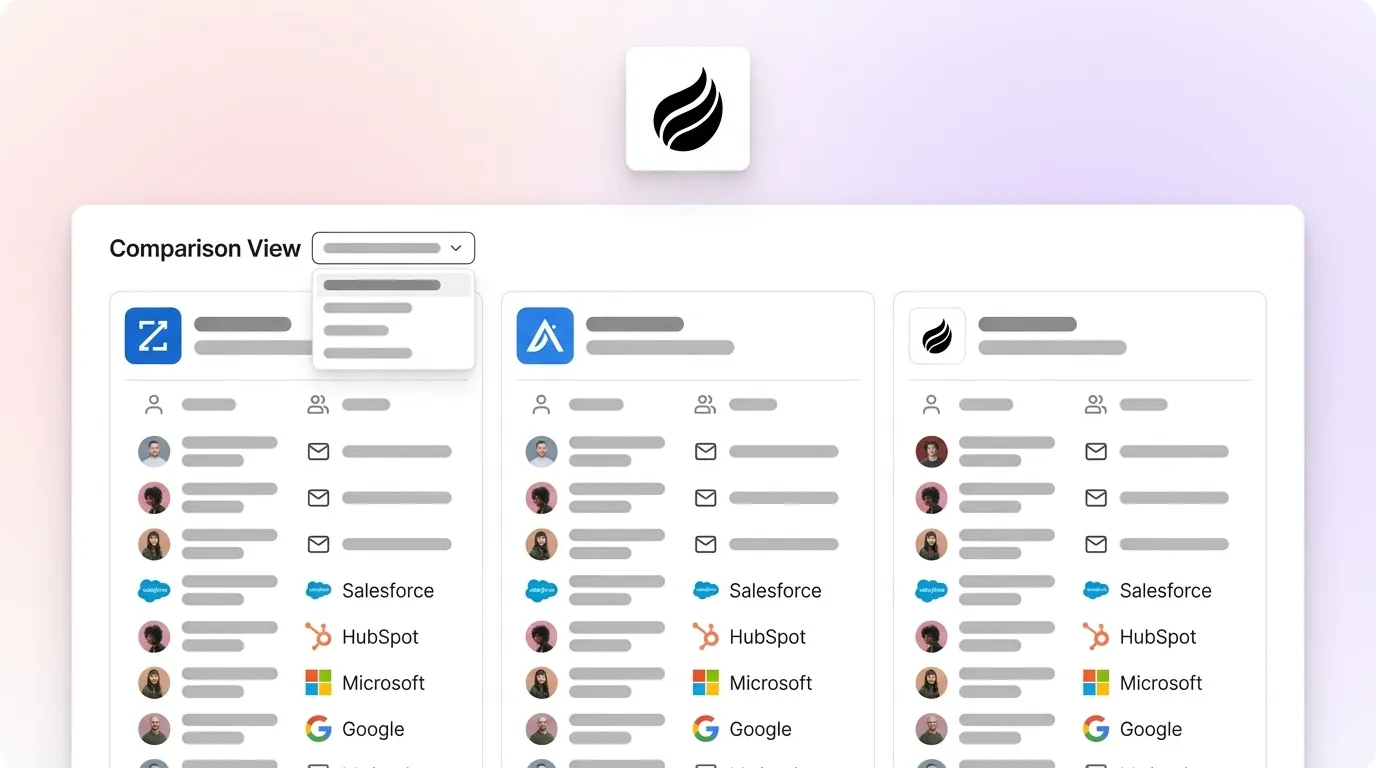
ZoomInfo and Apollo serve different segments of the enrichment market. ZoomInfo focuses on enterprise buyers with a premium database and intent layer. Apollo focuses on SMB and mid-market teams with a lower price point and a built-in sequencing tool. The table below compares both tools, plus Coffee, across the six evaluation criteria described earlier.
| Evaluation Criterion | ZoomInfo | Apollo | Coffee Agent |
|---|---|---|---|
| Data Decay Rate | 90–180 day refresh cycle | Similar crawl-based cycle | Continuous, updated on every interaction |
| ICP Fit (Mid-Market SaaS) | Strong for enterprise, weaker for SMB | Better SMB coverage, thinner enterprise | Captures any contact the team touches |
| Verification Effort | Manual bounce testing required | Manual bounce testing required | Zero, agent validates via live signals |
| Total Cost of Ownership | $15,000–$30,000+/year for small teams | Lower entry price, credit limits apply | Seat-based, enrichment included |
| Integration Friction | Native Salesforce/HubSpot sync, setup required | Native sync, sequencing adds complexity | Auth-based, writes directly to SF or HubSpot |
| Revenue Data Reliability | Strong for public companies, modeled for private | Modeled, less depth than ZoomInfo | Sourced from licensed partners plus live context |
The core difference is not which database holds more records. Both ZoomInfo and Apollo deliver a snapshot that starts aging immediately. Coffee’s agent writes data derived from live interactions such as emails, calendar events, and call transcripts, which reflect the current state of a relationship.

Accuracy by ICP: SMB, Mid-Market, and Enterprise
Database accuracy shifts with company size. Lead411’s practitioner benchmarks and Cognism’s competitive analysis show that enrichment platforms perform best where public data is abundant. Large enterprises with stable org charts benefit most. Accuracy drops where data is sparse and volatile, which describes the SMB and growth-stage SaaS segment most relevant to this review’s audience.
For SMB targets with 1–50 employees, job titles and direct dials are often missing or outdated. For mid-market targets with 50–500 employees, revenue and headcount estimates carry the widest error margins because these companies restructure frequently and rarely publish financials. Enterprise targets with 500+ employees benefit from richer public data but represent a smaller share of the pipeline for a 10–50 person SaaS sales team.
Coffee’s agent avoids this segmentation problem. It captures data from the actual emails and calls a team conducts, so accuracy depends on relationship activity rather than database coverage.
Where Coffee Fits Best in Your Stack
Early-stage teams (1–20 reps). A team that has outgrown spreadsheets but cannot justify a $20,000 ZoomInfo contract gains the most from Coffee’s Standalone CRM. The agent handles enrichment, logging, and pipeline tracking in a single seat-based subscription.
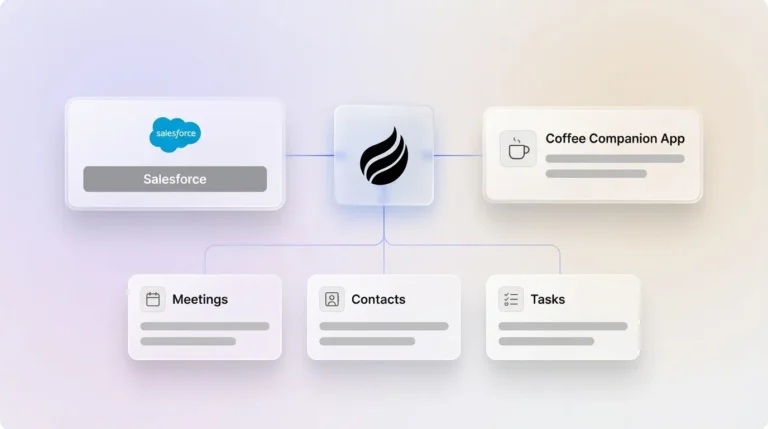
Scaling SaaS companies on Salesforce or HubSpot. Teams already committed to a CRM but frustrated by low adoption and dirty data deploy Coffee as a Companion App. The agent authenticates, reads emails and calendar events, and writes clean, enriched records back to the existing system of record without a migration.
Teams managing shadow-CRM spreadsheets. When reps maintain their own Notion pages or Google Sheets because the CRM is too painful to update, the root cause is manual data entry. Coffee’s agent removes the entry burden and turns the CRM into the path of least resistance instead of the path of most resistance.
Decision Framework: Renew ZoomInfo, Supplement, or Replace
Renew ZoomInfo when your team sells primarily to large enterprises with stable org charts. This segment aligns best with ZoomInfo’s database coverage. Renewal also needs high outbound volume so the per-seat cost makes financial sense. A dedicated RevOps resource should be in place to manage list hygiene and CRM sync, because static databases always require ongoing maintenance.
Supplement with Coffee when you keep ZoomInfo for prospecting volume but lose data quality once contacts enter the CRM. Coffee’s Companion App enriches and logs every interaction automatically. This approach keeps the records ZoomInfo creates from decaying inside Salesforce or HubSpot.
Replace with Coffee when your team has 10–50 people, your ICP is mid-market SaaS, your ZoomInfo renewal cost exceeds the value of the contacts it delivers, and reps maintain shadow CRMs because the primary system feels too stale to trust. Coffee’s agent provides enrichment, logging, pipeline intelligence, and visitor identification in a single product at a fraction of the cost.
Run the numbers on Coffee and see whether an autonomous agent can eliminate your enrichment spend.
Frequently Asked Questions
How long does Coffee take to implement?
Coffee connects to Google Workspace or Microsoft 365 through a simple authentication flow. Most teams have the agent reading emails, populating contacts, and logging activities within the same business day. For the Companion App on Salesforce or HubSpot, the agent authenticates to the existing CRM and begins writing enriched data back without a data migration or professional services engagement.
Is Coffee’s data as accurate as ZoomInfo?
For contacts a team is actively engaging, Coffee’s agent captures ground-truth data such as names, titles, email addresses, and context directly from live interactions. This data is more current than any crawl-based database. For net-new prospecting where no relationship exists yet, Coffee’s licensed enrichment partners provide firmographic and contact data comparable to standalone enrichment tools, built into the product at no additional cost. Most mid-market SaaS teams see equivalent or superior accuracy on active pipeline without a separate enrichment subscription.

How does Coffee handle data security?
Coffee is SOC 2 Type 2 and GDPR compliant. Customer data is not used to train public AI models. All data processed by the agent remains within the customer’s environment and follows Coffee’s security framework, which suits SaaS companies with standard enterprise security requirements.
What happens to existing CRM data during a migration?
Teams adopting Coffee’s Standalone CRM can import existing contacts and company records. The agent then starts enriching and updating those records from live signals immediately. Teams using the Companion App avoid migration entirely. Coffee writes to the existing Salesforce or HubSpot instance and improves the records already there instead of replacing them.
Does Coffee replace outbound prospecting tools entirely?
Coffee’s List Builder feature lets reps generate targeted prospect lists using natural language commands that pull from integrated enrichment data. The Visitor Identification feature converts anonymous website traffic into named leads with suggested outreach targets. For most 10–50 person SaaS teams, these capabilities cover the prospecting workflow that ZoomInfo or Apollo currently handle, without a separate subscription.

Conclusion: Static Databases vs Live CRM Intelligence
ZoomInfo data accuracy in 2026 reflects a structural limitation that no database vendor can fully solve. Static records decay faster than any crawl cycle can refresh them. Apollo shares the same constraint at a lower price point. For a Head of Sales or RevOps lead at a mid-market SaaS company, the choice to renew, supplement, or replace a legacy enrichment tool becomes a choice between funding ongoing decay or moving to a live system.
Coffee’s autonomous agent captures data from sources that stay current, including emails, calendars, call transcripts, and website visits. It then writes accurate, enriched records directly to the CRM without human intervention. The outcome is not just a better database. It is a system where good data enters automatically and reliable insights come out consistently, removing the manual maintenance loop that keeps legacy enrichment tools as a permanent line item.
Estimate your savings with Coffee and see how much of your enrichment budget a live autonomous agent can replace.