Written by: Doug Camplejohn, CEO & Co-Founder, Coffee | Last updated: June 17, 2026
What You Will Gain From Automated Contact Enrichment
- Manual CRM entry cannot keep pace with B2B data decay rates of 22.5–30% annually, which creates inaccuracies that disrupt sales workflows.
- Automated contact enrichment continuously pulls verified firmographic, demographic, and behavioral data into CRM records without human intervention, saving reps 8–12 hours per week.
- Accurate enriched data improves lead scoring reliability, intelligent routing, and AI forecasting outputs by feeding models current, validated inputs.
- AI-driven automation prevents dirty data accumulation through real-time validation, duplicate detection, and ongoing enrichment across Salesforce and HubSpot environments.
- Teams ready to eliminate manual research can evaluate Coffee’s agent-led enrichment to reclaim time and maintain reliable CRM data.
How Manual Entry Speeds Up CRM Data Decay
B2B contact data changes constantly. B2B contact data decays at an industry benchmark rate of 22.5% annually, or about 2.1% per month, based on Dun & Bradstreet’s B2B Data Benchmark. In high-turnover sectors such as SaaS and fintech, B2B contact data decay climbs to 30–40% per year. Landbase found that B2B email decay hit 3.6% per month in November 2024, nearly double the traditional rate.
The scale of the problem compounds quickly. In a CRM containing 10,000 contacts, between 2,250 and 3,000 records can degrade after one year without intervention. Validity’s 2025 State of CRM Data Management report found that 76% of organizations say less than half their CRM data is accurate. Manual entry cannot close that gap. Poor data quality costs U.S. businesses an estimated $3.1 trillion annually, and dirty CRM data costs companies an estimated 12% of annual revenue through wasted sales effort, failed campaigns, and poor customer experiences.
Time Savings Quantified for Modern Sales Teams
Sales representatives spend an estimated 27% of their time verifying contact information and chasing invalid data, which equals $21,600 per rep annually at an average fully loaded cost of $80,000. Coffee’s AI Agent removes the 71% of time typically spent on manual data entry and saves sales teams 8–12 hours per week. Across a ten-person sales team, that can reach 120 hours per week returned to pipeline-generating activity. The downstream effect is measurable, with fewer missed follow-ups, faster lead response times, and sales cycles that move at the pace of buyer intent rather than the pace of data cleanup.
See how Coffee reclaims 8–12 hours per rep per week →
How Clean Data Transforms Lead Scoring and Routing
Lead scoring models only perform as well as the fields they read. A missing job title produces a misfired seniority score. An outdated company size field routes an enterprise deal to an SMB rep. Without accurate enriched data, lead scoring becomes unreliable, while AI enrichment ensures only validated data is used by incorporating real-time intent signals, firmographics, and engagement trends into scoring models.
AI-powered enrichment enables intelligent lead scoring and automated lead routing by analyzing buying signals and verified decision-maker data, which allows agent-based CRM workflows to prioritize and assign high-value leads without manual intervention. When every record is complete and current, routing logic executes as designed and scoring outputs reflect actual buyer fit.
Why AI Forecasting Depends on Automated Enrichment
AI forecasting and agent-based revenue workflows share a single dependency: continuously fresh, unified data. By automating verification, standardization, and CRM sync, AI lead enrichment eliminates inconsistencies that would otherwise degrade the performance of forecasting, personalization, and agent-orchestrated processes in revenue systems. A forecast built on records where 30% of job titles and 25% of email addresses are stale functions more like a guess than a forecast.
Elizabeth Gerbel, CEO, described the impact after implementing enriched data practices: “Now we have a lot less data, but it’s quality data. That change allows us to use AI confidently, without second-guessing the outputs.” Agent-based CRM systems like Coffee follow this principle closely, since good data in produces reliable data out. Understanding this principle is one step. Putting it into practice requires specific automation.
How Automation Raises CRM Data Accuracy
Automated enrichment improves CRM accuracy by working across multiple data streams at once. After connecting to Google Workspace or Microsoft 365, Coffee’s agent scans emails and calendars to auto-create contact and company records. This approach ensures every interaction links to the correct record without rep involvement.
The agent then augments those records with job titles, funding data, and LinkedIn profiles via licensed data partners, which removes the need for separate tools like Apollo or ZoomInfo. Activity logging such as last contact date, next scheduled meeting, and call outcomes is written back to the CRM automatically, so deal state stays current.
AI-driven data enrichment employs pattern recognition to infer missing attributes such as seniority levels, natural language processing to extract structured data from emails and documents, and continuous learning from user feedback to improve accuracy over time. Automated point-of-entry validation, duplicate detection, and triggered enrichment prevent dirty data accumulation more cost-effectively than retroactive manual cleanup projects. Together, these capabilities create a CRM where records stay accurate instead of drifting out of date.
How Automation Speeds Up CRM Workflows
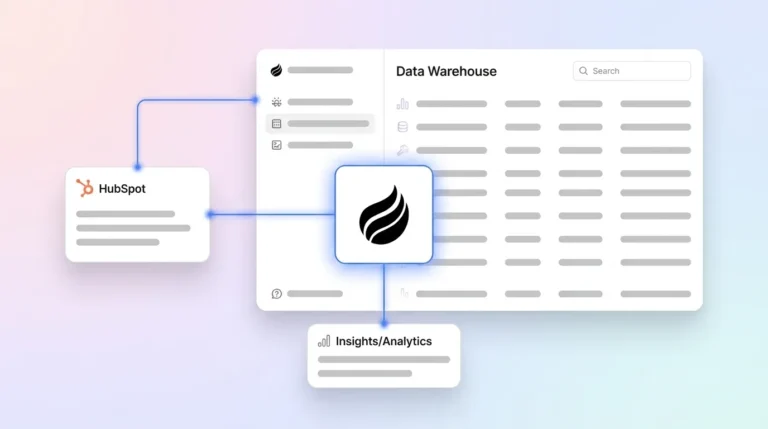
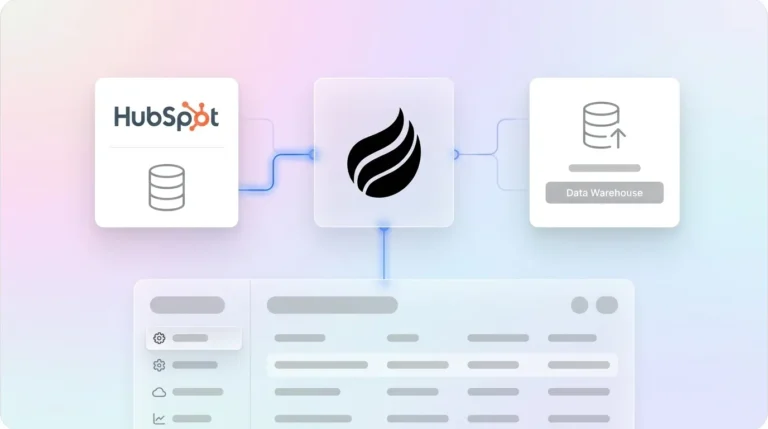
AI-driven lead enrichment automates real-time data flow directly into CRMs such as Salesforce and HubSpot, which gives teams consistent and centralized lead data without manual entry. The efficiency gain is end-to-end. Reps spend time selling, not researching. RevOps spends time on strategy, not data cleanup. Managers run pipeline reviews from accurate records rather than interrogating reps about data quality.
A single data quality initiative using automated hygiene typically delivers 5–10x ROI within the first year by recovering revenue lost to bad CRM data. Coffee’s Companion App deploys this agent layer directly on top of existing Salesforce or HubSpot instances, so teams keep their system of record while the agent handles all data-in operations.
Add Coffee’s enrichment layer to your existing CRM →
Automated vs. Manual Enrichment: A Side-by-Side View
| Dimension | Manual Enrichment | Automated Enrichment | Source |
|---|---|---|---|
| Data Freshness | Degrades at industry benchmark rates without intervention (see decay figures above) | Continuously refreshed, triggered within 24 hours of new record creation | Cleanlist / Dun & Bradstreet, 2026; Digital Applied, 2026 |
| Error Rate | 76% of orgs report less than half of CRM data is accurate | Automated validation and duplicate detection reduce inconsistencies at point of entry | Validity 2025 State of CRM Data Management; Digital Applied, 2026 |
| Rep Time Cost | 27% of rep time spent verifying contacts, about $21,600 per rep annually | Reclaims the time savings detailed in the section above | Digital Applied, 2026; Coffee, 2025 |
| AI / Agent Readiness | Stale, incomplete records degrade scoring, routing, and forecasting models | Verified, unified records enable reliable agent workflows and forecast outputs | Default, 2025 |
What to Look For in an Automated Enrichment Layer
Mid-market teams evaluating enrichment solutions should focus on a few core factors. Integration depth with Salesforce and HubSpot matters significantly, because newer CRM alternatives often lack support for required fields, quota structures, and forecasting hierarchies that established teams depend on. A solution that writes enriched data back to the correct objects and respects existing field mappings avoids the data corruption that shallow integrations introduce.
Beyond technical integration, security certifications are non-negotiable for teams handling customer data. SOC 2 Type 2 and GDPR compliance confirm that enrichment pipelines meet enterprise data-handling standards. Teams should also evaluate whether a solution handles unstructured data such as email threads, call transcripts, and meeting notes alongside structured firmographic fields, since contact data decays at the rates discussed earlier and even faster when tracking multiple fields, not just email addresses. Finally, mid-market teams benefit from seat-based pricing models that scale predictably without metered charges on AI usage or enrichment volume.
Key Benefits of Automated Contact Enrichment
- Time reclaimed: 8–12 hours per week returned to each rep by removing manual research and data entry.
- Reduced duplicates: Automated point-of-entry validation and duplicate detection prevent dirty data accumulation before it enters the system.
- Improved forecast accuracy: Complete, current records give AI forecasting models the verified inputs they need to produce reliable pipeline projections.
- Better personalization: Enriched records support faster qualification and personalized outreach by providing complete contact information, firmographic data, and behavioral engagement signals.
- Foundation for agentic workflows: Agent-based CRM processes such as automated routing, AI-generated briefings, and pipeline compare only perform reliably when the underlying data is continuously enriched and unified.
Frequently Asked Questions
What is automated contact enrichment and how does it differ from manual enrichment?
Automated contact enrichment uses software agents to continuously pull verified data such as job titles, email addresses, phone numbers, firmographics, and LinkedIn profiles from external sources and write it directly into CRM records without human involvement. Manual enrichment requires a sales rep or data analyst to research each contact individually, cross-reference multiple sources, and update fields by hand. The manual approach is slow, error-prone, and impossible to scale as contact volume grows, while automated enrichment runs in the background and keeps records current as professionals change jobs, companies restructure, and contact details change.
How does automated contact enrichment improve CRM data accuracy?
Automated enrichment improves CRM accuracy by validating new records at creation, filling missing fields from trusted data sources, and merging duplicates before they spread. It also re-enriches records when signals suggest a change, such as new domains or role shifts. Because this process runs continuously and at scale, most records stay current and verified instead of reflecting a snapshot from months or years ago.
Why does CRM data accuracy matter for AI and agent-based workflows?
AI forecasting models, lead scoring engines, and agent-based CRM workflows all depend on the quality of the data they read. When records contain stale job titles, invalid email addresses, or missing company data, scoring models produce unreliable outputs, routing logic misfires, and forecasts reflect a distorted view of the pipeline. Agent-based systems that automate tasks like meeting briefings, follow-up drafting, and pipeline analysis require a continuously fresh, unified data layer to function correctly, and automated enrichment provides that layer.
Can automated enrichment work alongside an existing Salesforce or HubSpot instance?
Automated enrichment layers can sit directly on top of existing CRM systems. Solutions like Coffee’s Companion App are designed to operate as an enrichment and automation layer on top of existing Salesforce or HubSpot installations. The agent connects via authentication, scans email and calendar activity, enriches contact and company records, logs activities, and writes verified data back to the primary CRM. Teams retain their existing system of record, field structures, forecasting hierarchies, and integrations while the agent handles the data-in operations that reps previously performed manually.
How quickly does CRM data decay without automated enrichment?
At the standard industry benchmark rate, approximately one in four CRM records becomes inaccurate within a single year. In high-turnover sectors like SaaS and technology, that rate climbs higher. Work email addresses decay fastest, followed by job titles and direct phone numbers. A database of 50,000 contacts loses roughly 11,000 valid records per year at a 22% decay rate. After two years without active enrichment, more than half of a typical CRM database becomes unreliable, which makes periodic manual cleanup insufficient.
Why Coffee’s Agent-Led Enrichment Is the New Baseline
Automated contact enrichment now acts as a prerequisite for reliable sales and RevOps workflows. Manual entry cannot keep pace with B2B data decay rates that invalidate 22.5–30% of records annually. Incomplete records break lead scoring, misfire routing logic, and feed AI forecasting models with inputs that produce unreliable outputs.
Automation closes that gap by continuously verifying, appending, and unifying contact data without rep involvement. This approach returns 8–12 hours per week to each seller and gives every agent-based workflow the accurate foundation it needs to perform. Coffee’s agent-led approach delivers this enrichment layer as a Companion App on top of existing Salesforce or HubSpot instances or as the engine behind a standalone AI-first CRM, so teams get good data in and reliable data out regardless of their current stack.