Written by: Doug Camplejohn, CEO & Co-Founder, Coffee | Last updated: August 24, 2026
Key Takeaways for RevOps and Sales Leaders
- Manual sales reporting still consumes a full workday per week for many teams, and the data is often outdated by the time anyone reads it.
- Legacy connectors and rule-based tools cannot process unstructured sources like call transcripts or email text, which creates stale, incomplete, or conflicting records.
- Autonomous AI agents now replace legacy automation by reasoning about context, handling exceptions, and removing manual data entry from daily workflows.
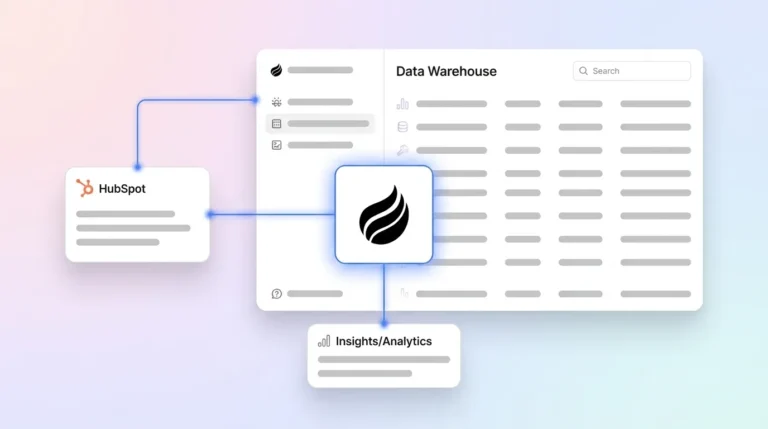
- Coffee brings structured and unstructured data into one agent-led system, either as a standalone CRM or as a companion app for Salesforce or HubSpot.
- Teams ready to stop copy-pasting can let Coffee’s agent handle consolidation automatically.
The High Cost of Fragmented Sales Data
Fragmented sales data drains hours from every week and still fails to give leaders a reliable picture of the pipeline. Manual reporting means logging into multiple sources, exporting CSVs or screenshots, formatting slide decks, reconciling conflicting numbers, writing commentary, and then distributing reports that are already out of date.
Spreadsheets, Zapier flows, and Power Query scripts share four structural failure modes that keep this problem in place. First, they produce stale data, because time-based scheduled triggers introduce lag of up to 15 minutes depending on the system and polling interval. Second, they lose history when legacy relational databases overwrite fields without preserving prior values, so context disappears permanently.
Third, they create ownership conflicts. Without explicit survivorship rules that define which source wins on a given field, two connectors writing to the same CRM record generate contradictory data. Fourth, they cannot handle unstructured sources. Traditional automation tools such as Zapier, Make, and n8n rely on rule-based if/then paths that work only for clean, predictable sequences, so email text, call transcripts, and PDF contracts fall outside those paths entirely.
These structural limitations show up in real revenue teams. Only around one-third (35%) of B2B marketers at companies with more than $100 million in revenue are fully confident in the accuracy and completeness of their marketing and sales data. That lack of confidence means roughly two-thirds of CRM records can trigger misfired tasks, inaccurate forecasts, or missed follow-ups unless strong validation gates exist.
The 2026 Answer: Autonomous Workflow Agents
Autonomous workflow agents solve these gaps by reasoning about context instead of following brittle rules. Agentic AI handles exceptions by reading the situation and choosing the next step. An agent can read a contract exception, understand why standard terms do not apply, draft a revised approval request, route it to the right stakeholder, and log the outcome in the CRM without a human in the loop.
AI-based automated data capture and CRM hygiene tools increase data completeness while reducing manual entry. McKinsey’s latest B2B Pulse Survey reports a 60–70% reduction in time spent on manual data entry and CRM updates for sales teams using AI. This shift frees reps to spend more time selling and less time reconciling fields.
This agent-led approach is already live in production. Coffee is the premier implementation of this model. It runs in two configurations that match how teams work today.
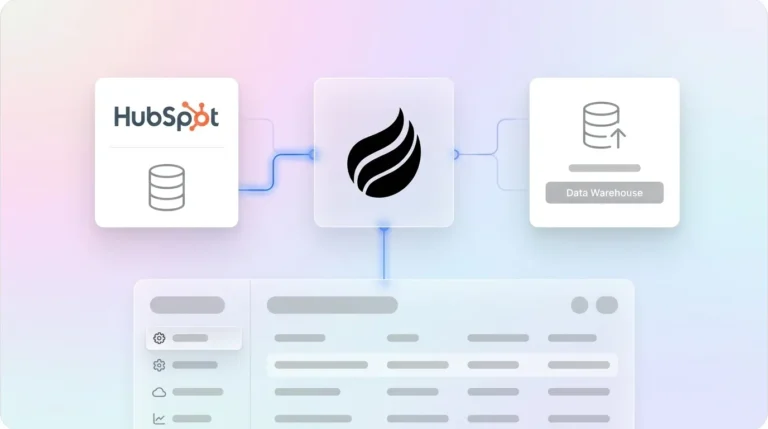
As a Standalone AI-First CRM, Coffee’s agent becomes the system of record. It automatically creates contacts, logs activities, transcribes calls, and generates pipeline intelligence without any human data entry. As a Companion App for Salesforce or HubSpot, Coffee’s agent authenticates to the existing instance, handles all data-in tasks, and writes enriched, structured insights back to the primary CRM. Teams keep their current workflows and quotas while removing the manual entry burden.
Eliminate manual data entry from your sales workflow with Coffee’s agent.
Six-Step Pipeline to Consolidate Sales Data Automatically
- Map every source and standardize formats. Start by inventorying all data sources such as the CRM, enrichment tools, email, calendar, call recordings, and spreadsheets. Map raw fields from each source to canonical CRM objects so every system speaks the same language. Define field ownership (which system has final authority), update direction (one-way or bidirectional sync), and sync timing (real-time or batch) before writing a single automation rule. This foundation prevents conflicting updates when multiple systems touch the same field.
- Decide when to use agents versus connectors. Survivorship rules explicitly define which source wins on conflicting fields, such as the CRM overriding marketing automation for job title. Use connectors for clean, structured, predictable data that follows clear patterns. Use agents for unstructured sources and exception cases that fall outside fixed if/then paths.
- Build scheduled triggers and event-driven transformations. Use scheduled fallback sweeps to catch events missed by real-time paths, and design triggers for idempotency so that duplicated events or overlapping schedules do not create duplicate records. Once triggers behave reliably, the next risk is data quality. Embed validation checks directly into each transformation stage, such as non-null primary keys and valid date ranges, to catch schema changes before they reach dashboards.
- Apply deduplication and exception routing. Autonomous AI agents score potential duplicates on a 0–100 confidence scale, routing matches above 90% to automatic merge, 60–89% to a human review queue, and below 60% to ignore. This approach routes exceptions based on uncertainty thresholds instead of simple rule failure, which keeps humans focused on edge cases that truly need judgment.
- Feed dashboards and Pipeline Compare views. Match scheduled dashboard refreshes to the cadence of the underlying data, using hourly refreshes for live business metrics and nightly refreshes for standard business reporting. Standardize metric definitions before scheduling any automated report so every stakeholder reads the same numbers the same way.
- Monitor results and scale one high-value flow first. Prove ROI through a controlled pilot by selecting one measurable workflow, capturing baseline metrics, setting automation boundaries, running the pilot, measuring exceptions, and scaling only after the operating model shows clear net benefit. This approach builds confidence and avoids automating broken processes.
How Coffee Unifies Structured and Unstructured Data
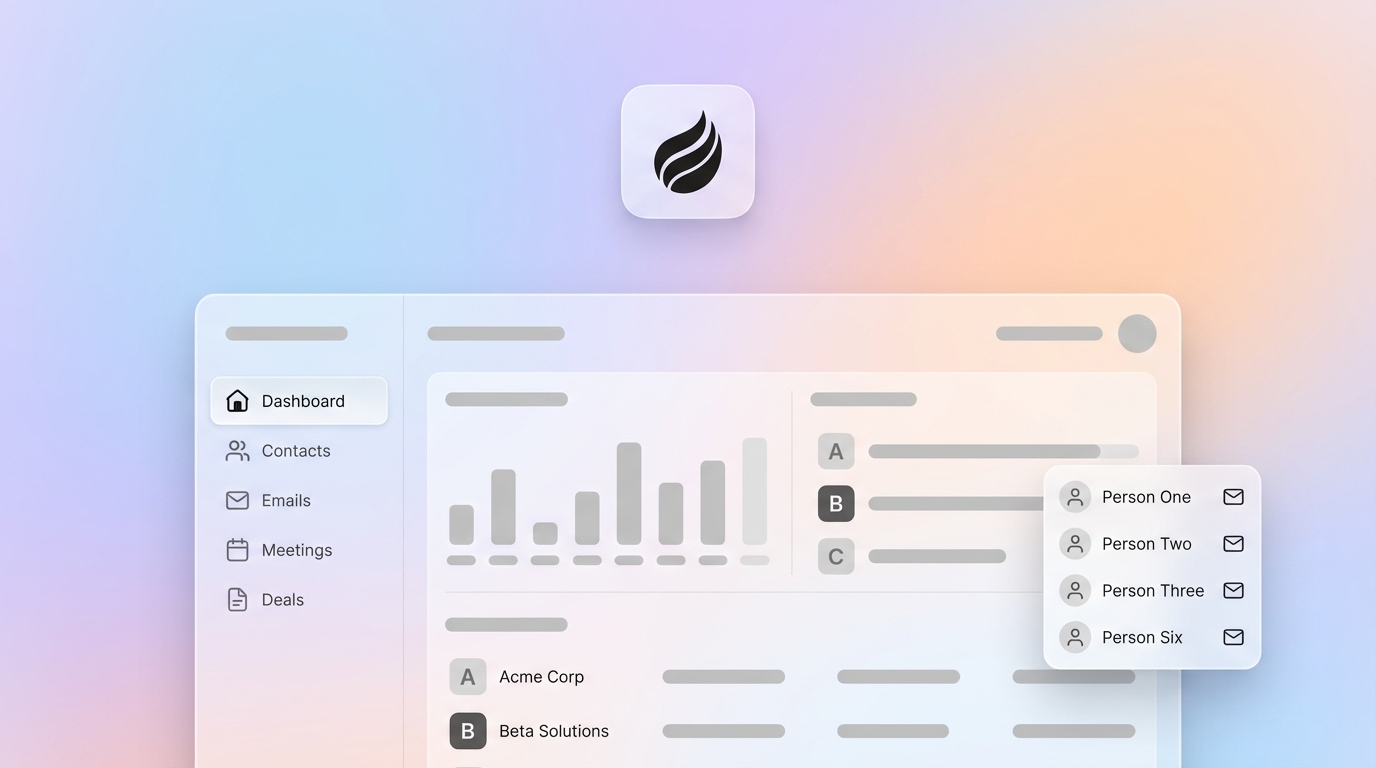
Coffee’s agent connects to Google Workspace or Microsoft 365 and immediately starts cleaning up the CRM. It scans emails and calendars to auto-create contacts and companies, log last and next activity, and enrich records with job titles, funding data, and LinkedIn profiles via licensed data partners. This consolidation removes the need for separate tools like Apollo or ZoomInfo, and every note and interaction attaches to the correct record without rep input.

For unstructured data, Coffee’s AI meeting bot joins Zoom, Teams, and Google Meet calls to record, transcribe, and summarize. After each call, the agent generates summaries, identifies next steps, and drafts follow-up emails for rep review. Notes follow consistent frameworks such as BANT, MEDDIC, or SPICED, so qualification data enters the system in a structured way on every deal.

Pipeline Compare replaces weekly CSV exports and manual slide building. Coffee’s agent captures history in a built-in data warehouse and visualizes week-over-week pipeline changes, including progressed deals, stalled opportunities, and new additions. Pipeline reviews shift from interrogation sessions to strategic discussions. Coffee also includes a built-in Lead Finder for natural-language prospect searches and a Campaigns module for AI-generated multi-step email sequences, which consolidates the work of six to eight point tools into one agent.

Coffee vs. Traditional Workflow Tools
Coffee handles both structured and unstructured data autonomously, while traditional workflow tools require manual intervention for exceptions and cannot process unstructured sources at all. Zapier and Power Automate use rule-based connectors that work only with clean, predictable inputs, so if/then paths cannot ingest call transcripts or email text, and exceptions route to human queues instead of being resolved automatically.
Power Query and Excel macros handle batch exports of structured data but still require manual reconciliation each reporting cycle and cannot ingest transcripts or email text because of their relational model. Coffee’s autonomous agent, by contrast, handles calls, emails, and meetings, extracts the relevant details, updates CRM fields, and manages all data-in tasks without human intervention. Auto-enrichment and deduplication run as part of the core workflow rather than as separate projects.
Nearly 7 in 10 RevOps teams now use AI and automation together, and Gartner’s May 2026 survey of 210 chief sales officers found that AI tools save sellers 4.8 hours per week on average. Rule-based connectors cannot deliver that outcome because they only route events. An autonomous agent reasons, adapts, and closes the loop without human intervention.
See how Coffee unifies structured and unstructured data in one agent-led system.
Real-World Results: Mid-Market SaaS Pipeline Reviews in Minutes
A mid-market SaaS company generating tens of millions in revenue and building custom AI solutions was running its entire sales operation from spreadsheets. Manual entry no longer scaled, and the team had evaluated Salesforce, HubSpot, and Rox, then rejected them for requiring too much human maintenance or lacking sufficient depth.
After deploying Coffee, automatic contact creation from Google Workspace kept the CRM clean without rep effort. The Pipeline Compare feature automated weekly pipeline reviews that previously consumed hours of preparation. API access let the team use Coffee’s underlying data to script bespoke briefings for their own AI workflows.
The outcome was simple and measurable. Pipeline reviews shifted from multi-hour preparation sessions to minutes of strategic discussion, and spreadsheets disappeared from the process.
Frequently Asked Questions
Does Coffee integrate with tools already in our sales stack?
Coffee currently connects to external tools via Zapier, which covers most common sales and marketing platforms. Deeper native integrations sit on the product roadmap. For Salesforce and HubSpot users, Coffee operates as a Companion App. A simple authentication lets the Coffee Agent sync data bidirectionally, enrich records, and write insights back to the primary CRM without disrupting existing workflows, quotas, or required fields.
Is Coffee secure and compliant with data privacy regulations?
Coffee is SOC 2 Type 2 and GDPR compliant. Data ingested by the Coffee Agent does not train public AI models. For teams in regulated industries or those subject to the EU AI Act, Coffee’s governance model maintains explicit data lineage and audit trails for every agent action, which supports the documentation requirements that compliance frameworks demand.
How does Coffee’s data quality compare to dedicated enrichment tools like ZoomInfo?
Coffee’s built-in enrichment, sourced via licensed data partners and augmented by signals from connected email and calendar accounts, matches ZoomInfo for most use cases at companies with 10–50 employees. The Lead Finder feature provides natural-language prospect search across Coffee’s own database, acting as a built-in alternative to standalone prospecting subscriptions. For highly specialized firmographic or intent-data needs, Coffee’s Zapier connection lets supplemental enrichment sources feed into the same unified record.
How long does it take to see results after deploying Coffee?
Coffee’s agent begins scanning connected Google Workspace or Microsoft 365 accounts immediately after authentication, so contact and company records start to populate within hours, not weeks. Pipeline Compare becomes useful as soon as the first week-over-week snapshot appears. Teams that follow the six-step pipeline above and start with one high-value workflow usually see measurable reductions in manual data entry time within the first two weeks.
Can Coffee replace our entire sales tech stack, or does it work alongside existing tools?
Coffee supports both approaches. As a Standalone CRM, it replaces the CRM, enrichment tool, meeting recorder, prospecting database, and sales engagement platform in a single agent-led system, which removes the cost and complexity of managing six to eight separate subscriptions. As a Companion App, it layers on top of an existing Salesforce or HubSpot instance and handles all data-in tasks while the primary CRM remains the system of record. Teams that stay committed to their current CRM investment still gain the agent’s capabilities without a migration.
Stop Copy-Pasting and Let the Agent Handle the Data
Fragmented sales data reflects an architecture problem, not a spreadsheet problem or a Zapier problem. Legacy tools were built to move clean, structured data between predetermined endpoints on a fixed schedule. They were never designed to ingest call transcripts, resolve duplicate records probabilistically, or adapt when a contract exception falls outside a predefined rule.
Many revenue leaders now expect a single agentic system to own sequencing, research, reply triage, and meeting briefs, which will collapse today’s stack of six to eight point tools. Teams that implement that architecture ahead of the curve will enter 2027 with cleaner data, more accurate forecasts, and reps who spend their time selling instead of reconciling CSVs.
Coffee delivers that architecture today in both standalone and companion-app form, with seat-based pricing that includes the agent’s unlimited labor at no additional cost.
Start consolidating sales data automatically with Coffee’s agent.