Written by: Doug Camplejohn, CEO & Co-Founder, Coffee | Last updated: July 6, 2026
Key Takeaways for 2026 Autonomous CRMs
- Agentic CRMs actively perceive, reason, act, and learn from data without human approval, while traditional CRMs wait for manual updates.
- Legacy CRMs suffer from poor data quality, with 76% of records inaccurate and reps spending 11.5 hours weekly on manual entry, which cuts revenue.
- Three CRM architectures now dominate: passive databases, standalone agents, and companion layers that enhance existing systems without migration.
- Coffee uniquely runs in both standalone and companion modes, preserving historical data in a warehouse while integrating deeply with Salesforce and HubSpot.
- Eliminate manual data entry from day one with Coffee’s autonomous CRM agent to boost pipeline visibility and turn anonymous visitors into named leads.
How Today’s CRM Architectures Compare
Three architectural approaches define the 2026 CRM market.
Passive database. Salesforce, HubSpot, Attio, and Pipedrive store structured records in relational tables. Traditional CRM systems function primarily as systems of record that require teams to manually update records and build reports reactively. When a field is overwritten, historical context disappears. These platforms have added AI features, but those additions assist humans instead of acting autonomously.
Standalone agent. Newer platforms such as Day.ai, Clarify, and Coffee’s standalone product replace the legacy system entirely. The agent handles data ingestion, enrichment, and workflow execution. This approach demands migration effort and sacrifices existing Salesforce or HubSpot configuration.
Companion layer. A companion sits on top of an existing CRM and handles the “data in” problem without migration. An AI action layer automatically responds to leads, runs outbound, qualifies prospects, and writes every result back to the CRM. Coffee is the only solution in this comparison that operates in both standalone and companion modes, so teams avoid a forced choice between replacing or augmenting their current stack.
Five Criteria That Separate Agentic CRMs From Rebranded Databases
Five criteria separate genuine agentic CRMs from rebranded passive databases in 2026.
- Data quality: The system must ingest unstructured data such as transcripts and emails and preserve historical context instead of overwriting records.
- Automation depth: The agent should execute multi-step workflows autonomously rather than only surfacing suggestions for humans to approve.
- Integration effort: Standalone tools create ongoing costs in integration maintenance and data reconciliation that buyers routinely underestimate.
- Team-size fit: 91% of businesses with more than 11 employees use CRM systems, which reflects real differences in workflow complexity.
- Pricing transparency: Seat-based, credit-based, and consumption models create very different total costs at 5–30 person scale.
The following table applies these five criteria across major platforms and highlights architectural differences and integration capabilities.
Side-by-Side Comparison Table
| Tool | Architecture | Automation Depth | Companion Mode (Salesforce / HubSpot) |
|---|---|---|---|
| Coffee | Data warehouse; structured + unstructured | Autonomous agent, auto-creates contacts, logs activity, drafts follow-ups, identifies visitors | Yes, full companion layer with deep Salesforce and HubSpot sync |
| Lightfield | AI-native relational | Assistive AI, requires human approval on key steps | Limited, no published deep companion integration |
| Attio | Passive relational with modern UI, retrofitted AI | Workflow triggers, no autonomous execution | No native companion mode |
| Clarify | AI-native, credit-based pricing per AI action | AI-assisted, limited Salesforce and HubSpot integration depth | Partial, lacks quota and forecasting field support |
| Day.ai | AI-native, unstructured-data focus | Productivity-oriented, limited pipeline automation | No published companion mode |
| Salesforce | Agentforce on relational + Data Cloud, $2/conversation consumption pricing | Autonomous within Salesforce org, requires Agentforce setup | Native, is the system of record |
| HubSpot | Relational, Breeze AI agents at $1,300+/month minimum for AI agents | Assistive to semi-autonomous, AI agents in premium tiers | Native, is the system of record |
| Pipedrive | Relational, visual pipeline focus, $14–$39/user/month | AI Sales Assistant, rule-based automation | No companion mode |
Why Data Warehouse Architecture Matters for CRM
Data warehouses are non-volatile and subject-oriented, preserving historical data that cannot be overwritten after storage, while relational database CRMs are process-oriented and volatile to enable real-time updates. For sales teams, this distinction is decisive. When a rep updates a deal stage in a relational CRM, the prior state disappears. A data warehouse retains every version and enables week-over-week pipeline comparison without manual CSV exports.
Without embedded machine-readable context, agent accuracy plateaus at around 70%, and with it, accuracy rises to 90–95%. Relational CRMs were designed for human analysts, not machine reasoning. Coffee’s data warehouse architecture stores both structured records and unstructured data such as email text, call transcripts, and meeting notes in a single queryable layer. This design creates the foundation for accurate agentic output.
Best for data integrity: Coffee in standalone or companion mode for teams that need historical pipeline context, and Salesforce Data Cloud for enterprises already committed to the Salesforce ecosystem.
Data Capture and Meeting Intelligence Capabilities
AI note-taking tools can substantially reduce the post-call admin time that contributes to reps’ manual data entry burden. The key difference between tools is whether the agent captures data passively through recording only or actively by enriching, structuring, and writing back to the CRM.

Coffee’s meeting agent joins Zoom, Teams, and Google Meet calls, transcribes them, generates summaries structured to BANT, MEDDIC, or SPICED frameworks, drafts follow-up emails in Gmail, and logs every action item back to the contact record without rep input. Lightfield and Attio require human review before CRM records update. Clarify and Day.ai offer meeting capture but lack the depth of Salesforce and HubSpot write-back that teams with required fields, forecasting categories, and custom objects expect.

Best for meeting intelligence: Coffee for teams that need automated post-call CRM updates across both standalone and companion deployments.
Pipeline Visibility and Visitor Identification in One Agent
Pipeline reviews at most 5–30 person companies still rely on manual exports because legacy CRMs overwrite records instead of preserving history. Coffee’s Pipeline Compare feature visualizes week-over-week changes such as progressed deals, stalled opportunities, and new additions directly from the data warehouse and replaces spreadsheet reconciliation.
Visitor identification creates a second pipeline input that most CRMs ignore. Coffee’s tracking pixel identifies anonymous website visitors by name, title, email, and LinkedIn profile, then surfaces real-time Slack alerts. The differentiating feature is Suggested Leads. Competitors like RB2B and Warmly surface either the visiting company or an undifferentiated list of employees, while Coffee uses the buyer persona to recommend the two or three specific individuals inside that company most likely to convert, with LinkedIn profiles pre-loaded for immediate outreach.

Leads contacted within five minutes are 21× more likely to qualify than those contacted after 30 minutes (InsideSales/MIT 2007 study), while the 2011 HBR audit found an average first-response time of 42 hours. Suggested Leads closes that gap without adding headcount.
Best for pipeline visibility and visitor identification: Coffee, as the only platform combining historical pipeline comparison with persona-matched visitor identification inside a single agent.
Salesforce and HubSpot Companion Capabilities in Practice
Newer AI CRM alternatives do not yet match the industrial-strength depth of legacy platforms like Salesforce or Dynamics. For teams with established instances that include custom objects, required fields, forecasting categories, and quota tracking, the migration risk outlined earlier makes a companion approach more practical than replacement.
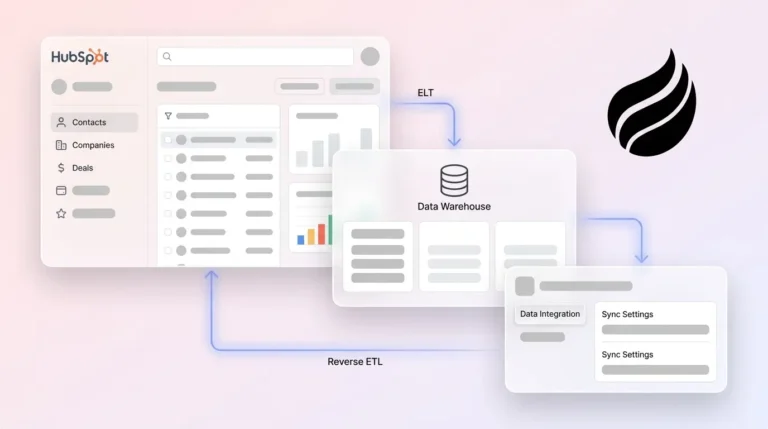
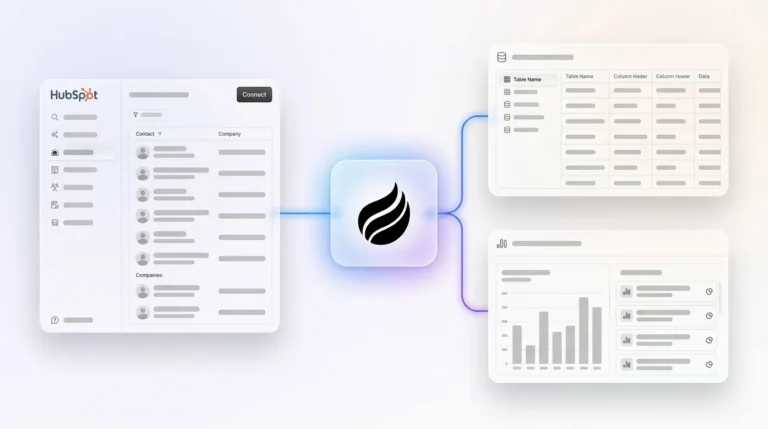
Coffee’s companion mode addresses this directly. A simple OAuth authentication connects the Coffee Agent to an existing Salesforce or HubSpot org. The agent then handles data ingestion, enrichment, and activity logging and writes clean structured data back to the primary system of record. This preserves existing configuration such as forecasting hierarchies, required fields, and custom objects while removing the manual entry that degrades data quality. Clarify and Day.ai lack the integration depth to handle these requirements reliably at mid-market scale.
Successful HubSpot-Salesforce integration requires first auditing every object, field, and lifecycle stage and explicitly designating a source of truth to prevent data conflicts. Coffee’s companion architecture is designed around this constraint, not against it.
Best for Salesforce and HubSpot companion: Coffee, as the only agentic solution purpose-built for deep companion integration with both platforms simultaneously.
Best-Fit Use Cases by Company Stage
Early-stage startups (1–10 employees). Teams that have outgrown spreadsheets but find Salesforce or HubSpot too expensive and maintenance-heavy fit Coffee’s standalone CRM well. The agent auto-creates contacts from Google Workspace or Microsoft 365 on day one, with no manual import required. Standalone AI tools typically require two to eight weeks for full deployment, during which teams experience a 20–30% productivity reduction. Coffee’s OAuth-based setup compresses that window to a single business day and removes the productivity gap that usually accompanies CRM adoption.
Growing sales teams (10–30 employees) without an existing CRM commitment. Teams scaling past founder-led sales need pipeline visibility, meeting intelligence, and visitor identification in a single agent instead of a stack of point solutions. Coffee’s seat-based pricing, where the agent’s labor is included at no additional metering cost, stays predictable at this headcount range, unlike consumption models that scale unpredictably with activity volume.
Mid-market companies committed to Salesforce or HubSpot. RevOps leaders and heads of sales at companies with established CRM configurations face a different problem: low adoption and dirty data, not platform selection. Coffee’s companion mode deploys the agent on top of the existing system without migration, change management overhead, or loss of historical data. Over 40% of agentic AI projects will be canceled by the end of 2027 due to escalating costs, unclear business value or inadequate risk controls. The companion approach addresses data quality at the source rather than downstream.
Decision Framework Summary Matrix
| Constraint | Best-Fit Option |
|---|---|
| No CRM today, 1–20 employees, want zero manual entry | Coffee Standalone |
| On Salesforce or HubSpot, low adoption, dirty data | Coffee Companion |
| Need modern UI, no Salesforce or HubSpot dependency, small team | Attio or Clarify (with integration caveats) |
| Enterprise, complex custom workflows, large org | Salesforce Agentforce |
| SMB, price-sensitive, simple pipeline only | Pipedrive or Zoho CRM |
| Need visitor ID plus persona-matched lead suggestions | Coffee (only platform with Suggested Leads) |
Frequently Asked Questions
How long does it take to implement Coffee?
For the standalone CRM, Coffee connects to Google Workspace or Microsoft 365 via OAuth and begins auto-creating contacts and logging activity immediately after authentication. There is no data migration required to start. For the companion mode on Salesforce or HubSpot, the same OAuth flow connects the Coffee Agent to the existing org, and the agent begins enriching and logging data without disrupting existing configuration. Most teams are operational within a single business day.
Is Coffee SOC 2 Type 2 and GDPR compliant?
Yes. Coffee is SOC 2 Type 2 certified and GDPR compliant. Customer data is not used to train public AI models. This makes Coffee suitable for U.S. companies handling customer data under standard commercial privacy requirements, though organizations in heavily regulated industries such as healthcare or finance with multi-year security review requirements fall outside Coffee’s current ICP.
How does Coffee’s pricing model work at 5–30 person scale?
Coffee uses seat-based pricing. The Coffee Agent’s labor, including data enrichment, meeting recording, contact creation, pipeline comparison, visitor identification, and Suggested Leads, is included in the seat price without additional metering on AI actions, LLM calls, or workflow executions. This structure differs from consumption models like Salesforce Agentforce, which charges per conversation, or credit-based models like Clarify, which charges per AI action. For a 5–30 person team with high meeting and email volume, seat-based pricing stays predictable and typically delivers lower total cost.
Can Coffee replace tools like ZoomInfo, Gong, and Fathom?
Coffee consolidates the core functions of several point solutions. The agent handles contact and company enrichment, which replaces ZoomInfo for most SMB use cases, meeting recording and transcription, which replaces Fathom, post-call summaries and CRM write-back, which replaces Gong for teams that do not need enterprise conversation analytics, and pipeline comparison, which replaces manual CSV exports or add-ons like Clari. Coffee’s enrichment data quality is described as roughly on par with ZoomInfo for standard commercial use cases. Teams with specialized enrichment requirements or enterprise conversation analytics needs may still require dedicated tools.
How do I evaluate whether Coffee is the right fit before committing?
The clearest signal is whether your primary pain is manual data entry and incomplete CRM records. If reps spend significant time logging calls, updating deal stages, and reconciling pipeline in spreadsheets, Coffee’s agent addresses that directly. If you are on Salesforce or HubSpot and the problem is adoption and data quality rather than platform selection, the companion mode is the lower-risk path because it requires no migration and preserves existing configuration. Coffee is not the right fit for large enterprises with complex custom workflows, heavily regulated industries requiring multi-year security reviews, or buyers who need a static feature checklist instead of an autonomous agent.
Conclusion: Choosing an Autonomous CRM in 2026
The 2026 CRM market divides cleanly between passive databases that require humans to act as data-entry clerks and autonomous agents that handle the work themselves. Lightfield and its closest competitors, including Attio, Clarify, and Day.ai, address parts of the problem but leave gaps in Salesforce and HubSpot companion depth, historical data architecture, or visitor identification. Salesforce Agentforce is genuinely autonomous but priced and configured for enterprise scale.
For U.S. founders, heads of sales, and RevOps leaders at 5–30 person companies, Coffee is the only solution that functions as both a standalone system of record and a companion layer on Salesforce or HubSpot. It runs on a data warehouse that preserves history, handles unstructured data, and closes the loop from anonymous website visitor to named pipeline opportunity through Suggested Leads.
Hire the autonomous agent that keeps your CRM clean without manual data entry.