Written by: Doug Camplejohn, CEO & Co-Founder, Coffee | Last updated: June 28, 2026
Why This Zero Data Entry CRM Guide Matters
- A zero data entry CRM uses an AI agent to capture emails, calendar events, and interactions automatically, without manual logging from sales reps.
- Legacy CRMs push SMB teams into hours of manual data entry, which creates fragmented records, low adoption, and unreliable forecasts.
- Coffee stands out in 2026 by pairing agent-driven automation with unstructured data capture, pipeline intelligence, and visitor identification that competitors do not match.
- Teams save 8–12 hours per rep each week with Coffee’s automatic contact creation, meeting prep, call transcription, and follow-up logging from Gmail and Calendar.
- Ready to see this in action for your team? Start your free Coffee trial today.
How Legacy CRMs Create Busywork for SMBs
Legacy CRMs behave like passive databases that only store data when a human enters it. For a small team of one to twenty people, that design becomes a liability. Sales reps bounce between Gmail, a calendar, an enrichment tool, and the CRM itself, copying information into each system by hand. Records fragment, follow-ups slip through the cracks, and nobody fully trusts what the CRM shows.
The numbers reflect the damage. 71% of sales reps report spending too much time on data entry. That time crowds out selling and customer conversations. For a founder wearing five hats, this imbalance quickly becomes unsustainable. Salesforce carries 25 years of legacy architecture. HubSpot bolted a CRM onto a marketing platform instead of building a unified intelligence system from scratch. Neither platform was designed to ingest unstructured data such as email threads, call transcripts, and meeting notes without human help. When a field gets overwritten in these systems, the historical context disappears permanently.
The downstream effect forms a vicious cycle. Low adoption produces bad data. Bad data produces bad forecasts. Bad forecasts erode trust in the CRM entirely. Teams retreat to spreadsheets and Notion, and the expensive CRM subscription turns into a glorified address book.
See how Coffee eliminates this data entry loop with an agent that logs work for your team.
2026 Zero Data Entry CRM Comparison for SMB Teams
The table below compares Coffee with four leading alternatives. Focus on contact creation, unstructured data handling, pipeline intelligence, integration depth, visitor identification, and whether each tool can run as a standalone CRM or a companion to your existing system.
| Feature | Coffee | Attio | Copper | Salesflare | Method |
|---|---|---|---|---|---|
| Auto contact & company creation | Yes, agent-driven from Gmail/Calendar | Partial, requires manual triggers | Partial, Gmail sync only | Yes, email-based | No, manual or QuickBooks import |
| Unstructured data capture (emails, transcripts) | Yes, structured into data warehouse | No | No | Limited | No |
| Pipeline intelligence | Yes, week-over-week Compare feature | Basic views | Basic views | Basic views | Accounting-focused only |
| Gmail & QuickBooks integration depth | Deep, QuickBooks sync launched Feb 2026 | Gmail only | Gmail deep; no QuickBooks | Gmail; no QuickBooks | QuickBooks deep; limited Gmail |
| Visitor identification | Yes, named individuals plus Suggested Leads | No | No | No | No |
| Standalone vs. companion flexibility | Both, standalone CRM or Salesforce/HubSpot companion | Standalone only | Standalone only | Standalone only | Standalone only |
| Time saved per rep per week | 8–12 hours | Not published | Not published | Not published | Not published |
Coffee’s Agent-First Workflow That Logs Everything for You
Coffee’s agent connects to Google Workspace or Microsoft 365 with a single authentication. From that point, the agent handles work that previously fell to the rep. Every email, meeting, and call becomes structured CRM data without extra clicks.
How Coffee works with Gmail and Calendar, step by step:

- A rep sends or receives an email with a new prospect. The Coffee agent detects the contact, creates the record, and enriches it with job title, LinkedIn profile, and company funding data, with no manual input.
- A meeting is scheduled. Coffee prepares the rep with a briefing that covers attendee history, open deals, and past interactions.
- The meeting runs. Coffee’s AI bot joins the call, records, transcribes, and structures notes against BANT, MEDDIC, or SPICED, depending on the team’s chosen methodology.
- After the call, the agent drafts a follow-up email in Gmail and logs next steps to the deal record automatically.
- Pipeline Compare highlights week-over-week changes such as progressed deals, stalled opportunities, and new additions, without any CSV exports.
The result is a rep who reclaims the time previously lost to admin, the 8–12 hours per week mentioned earlier, and redirects it to actual selling. Coffee also runs as a companion app that writes enriched data back to existing Salesforce or HubSpot instances. Teams already committed to those platforms still gain the zero-entry benefit. Coffee’s February 2026 Intelligence layer stores deep context on ICP, product, and competitors so every AI suggestion feels tailored instead of generic.

Attio vs Coffee: Modern UI Without Autonomous Logging
Attio delivers a clean, modern interface and flexible data modeling. In 2026, it still behaves as a passive database at its core. Contacts and companies appear only when a user triggers a sync or imports a list. No autonomous agent scans email threads to create records on its own. Unstructured data such as call transcripts and email body text does not get ingested or structured. For a founder who wants the CRM to log activity without any effort, Attio still falls short.
Copper vs Coffee: Helpful Gmail Sidebar, Manual Creation Work
Copper’s native Gmail integration adds real value for many teams. It surfaces CRM context inside the Gmail sidebar and logs sent emails to existing contacts. The gap appears in contact creation. Copper does not autonomously create new contact records from email threads the way Coffee’s agent does. Visitor identification is also missing. Teams using Copper still spend meaningful time on initial data population and deal updates.
Salesflare vs Coffee: Reliable Logging, Limited Intelligence
Salesflare automates email and meeting logging reliably and improves on fully manual CRMs for small teams. In 2026, its limits show up in AI depth. Unstructured data from call transcripts does not flow into a structured intelligence layer. No pipeline intelligence feature matches Coffee’s Compare view. Visitor identification is absent, and there is no companion mode for teams already on Salesforce or HubSpot. Salesflare logs activity well, yet it does not think about the pipeline for you.
Method vs Coffee: Accounting-First, Sales Admin Second
Method focuses on QuickBooks workflows, which suits service businesses that live inside accounting tools. The CRM functionality comes second. Contact creation depends on QuickBooks imports instead of email and calendar activity. No AI agent handles meeting prep, call transcription, or pipeline intelligence. For an SMB that needs a true zero data entry sales CRM rather than an accounting extension, Method leaves significant admin work on the rep’s plate.
Visitor Identification and Suggested Leads That Turn Traffic into Pipeline
Most SMB CRMs ignore anonymous website traffic. A prospect visits the pricing page three times and then disappears from view. Coffee closes that gap with a single tracking pixel placed in the site’s <head> tag. The agent identifies the visitor by name, title, email, and LinkedIn profile. It logs pages visited and time on site, then sends a real-time Slack notification to the rep.

Suggested Leads extend this further. Tools like RB2B and Warmly surface either the company or a long list of employees. Coffee uses the team’s defined buyer persona to recommend the two or three specific individuals inside that visiting company who deserve outreach first. LinkedIn profiles appear ready for immediate contact or auto-enrollment into a drip campaign. No other CRM in this comparison includes this capability natively.

Turn your anonymous traffic into named pipeline with Coffee and give reps warm leads instead of guesswork.
Risks, Limitations, and Common SMB Objections
Integrations beyond Gmail and Calendar: Coffee currently connects to third-party tools through Zapier, with deeper native integrations on the roadmap. Teams with complex multi-tool stacks should map critical workflows against current Zapier options before committing.
Security and compliance: Coffee is SOC 2 Type 2 certified and GDPR compliant. Data ingested by the agent does not train public models, which matters for teams handling sensitive deal information.
Data quality vs. dedicated enrichment tools: Coffee’s built-in enrichment via licensed data partners covers job titles, funding, and LinkedIn profiles at a level that fits most SMB use cases. Teams that rely on the depth of a dedicated ZoomInfo contract for enterprise prospecting should compare coverage against their ICP before replacing that tool.
Decision Checklist: Matching a Zero Data Entry CRM to Your SMB
Choose Coffee (Standalone) if: You have 1–20 employees, use Google Workspace or Microsoft 365, have outgrown spreadsheets, and want an agent that handles all data entry from day one without a lengthy implementation. Coffee also fits if visitor identification and pipeline intelligence play a central role in your workflow.
Choose Coffee (Companion) if: You already use Salesforce or HubSpot, struggle with adoption and data quality, and want the agent to write clean data back to your existing system of record without a migration.
Consider Salesflare if: You need basic email logging on a tight budget and do not require AI-depth features or visitor identification.
Consider Copper if: Your entire workflow lives inside Gmail and you have no need for call intelligence or pipeline analytics beyond basic views.
Consider Method if: QuickBooks sits at the center of your business operations and CRM remains a secondary need.
Frequently Asked Questions
How long does Coffee take to implement?
Most small teams have Coffee running within a single session. Connecting Google Workspace or Microsoft 365 via OAuth takes only a few steps. The agent immediately begins scanning email and calendar history and populates the CRM with contacts, companies, and past activities. A working pipeline view usually appears shortly after setup.
How difficult is it to migrate existing data into Coffee?
Companion mode removes the need for migration for teams on Salesforce or HubSpot, because the agent works on top of the existing system. Teams moving from spreadsheets or a legacy CRM follow a straightforward import process, and the agent begins enriching records automatically once connected.
Is Coffee secure enough for business-sensitive sales data?
Coffee holds SOC 2 Type 2 certification and complies with GDPR. The agent does not use customer data to train public AI models. For most SMBs outside heavily regulated industries such as healthcare or finance, Coffee’s security posture meets standard requirements. Teams in heavily regulated industries with multi-year security review processes sit outside Coffee’s current target profile.
How do I verify that a CRM is truly zero data entry and not just using the label?
Test three specific scenarios before you commit. First, send an email to a brand-new contact and check whether the CRM creates the record without any manual action. Second, schedule a meeting and confirm the CRM logs it and prepares a briefing automatically. Third, complete a call and verify the CRM generates a summary and logs next steps without rep input. A genuine zero data entry CRM passes all three scenarios without a single user click. Partial automation tools require at least one manual step in each case.
Does Coffee work if my team already uses Salesforce or HubSpot?
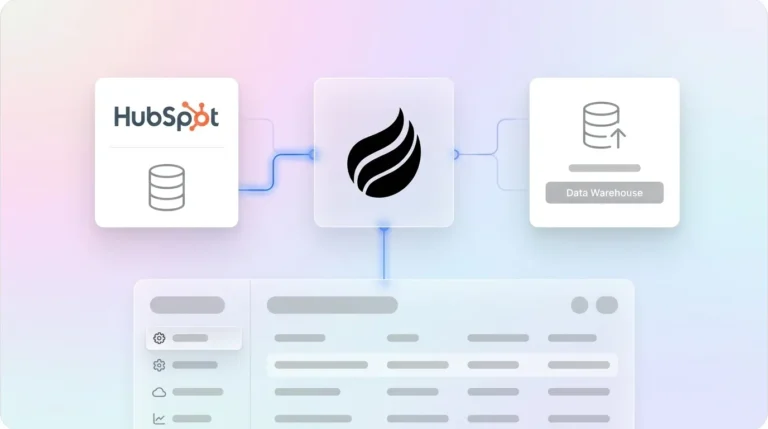
Yes. Coffee’s companion mode deploys the agent as an intelligent layer on top of an existing Salesforce or HubSpot instance. The agent handles data capture, enrichment, and activity logging, then writes clean, structured data back to the primary CRM. Teams keep their current system of record and reporting while removing the manual entry burden that drives low adoption and poor data quality.
Conclusion: Let the CRM Work While You Sell
In 2026, small business sales reps no longer need to spend 8–12 hours a week entering data into a CRM. Tools now exist that automate that work completely. The real distinction lies between platforms that partially automate logging and a true agent that handles every step. Contact creation, enrichment, meeting prep, call transcription, follow-up drafting, pipeline tracking, and visitor identification all move off the rep’s to-do list.
Coffee is the only CRM in this comparison that meets every criterion. It delivers true zero data entry from Gmail and Calendar, deep QuickBooks integration launched earlier this year, named visitor identification with Suggested Leads, pipeline intelligence with week-over-week Compare, and the flexibility to serve as a standalone system of record or a companion agent for existing Salesforce and HubSpot deployments.
For SMB founders and early sales teams who have outgrown spreadsheets and refuse to become data entry clerks, the choice stays clear. Let Coffee’s agent handle the busywork while you focus on selling.