Key Takeaways on Demandbase Alternatives
- Coffee leads as the top Demandbase alternative with 98% accuracy powered by agent-led automation across emails, calendars, and website visitors.
- B2B data decays at 2.1% monthly, and 75% of teams report at least 10% inaccurate lead data, so real-time refresh is now a baseline requirement.
- ZoomInfo fits enterprises that need scale, but email accuracy sits below 75% and contracts often start around $15,000 per year.
- Apollo offers budget-friendly pricing from $49/user/month but trails in phone accuracy and enrichment depth compared with specialist tools.
- Cognism excels in GDPR-compliant data for Europe, while Coffee delivers automated CRM hygiene that outperforms the manual workflows common in traditional platforms. See how Coffee’s agent works.
How We Evaluated Demandbase Alternatives
This analysis compares ABM and CRM platforms that prioritize data accuracy, real-time refresh, and automation. Our criteria include: 1) Email accuracy and enrichment quality based on Q1 2026 testing across 5,000 contacts, 2) Data refresh cadence and staleness mitigation, 3) CRM automation and agent-led workflows, 4) Pricing transparency and ROI, and 5) Scalability for SMB to mid-market teams.
The table below summarizes how each platform performs across these dimensions so you can quickly see the trade-offs between accuracy, automation depth, and cost.
| Tool | Best For | Email Accuracy | Starting Price |
|---|---|---|---|
| Coffee | Agent automation | High accuracy agent-captured | Seat-based |
| ZoomInfo | Enterprise scale | Tested for accuracy | $15,000/year |
| Apollo | Budget-conscious | Apollo’s email accuracy is below 75% in Q1 2026 testing on 5,000 B2B leads | $59/user/month |
| Cognism | GDPR compliance | Tested for accuracy | Cognism Grow plan costs approximately $22,500 per year for 5 users (about $4,500 per user per year) |
Top Demandbase Alternatives Ranked
1. Coffee: Automated Accuracy for RevOps and Sales Teams
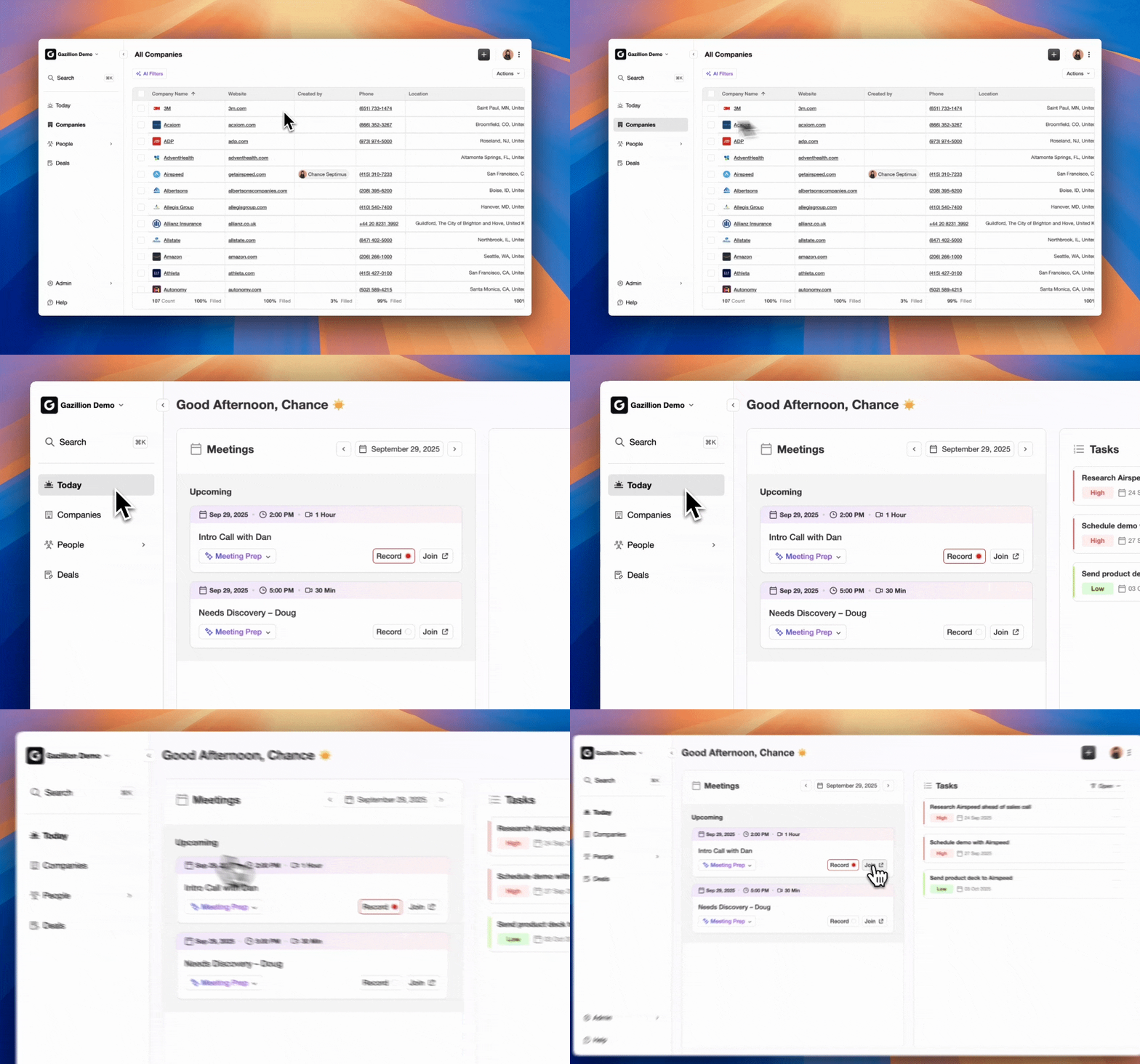
Coffee uses an agent-led approach to reach 98% accuracy by automatically capturing ground-truth data from emails, calendars, and website visitors. This automation replaces the manual enrichment workflows that slow down Demandbase users and create inconsistent data quality. The Coffee Agent then keeps records clean by handling data entry, enrichment, and CRM hygiene autonomously across your database.

The automation also extends to anonymous traffic. Coffee’s visitor identification pixel turns unknown website visitors into named prospects with enriched profiles, LinkedIn URLs, and suggested outreach contacts, while Demandbase often depends on manual account research to reach the same outcome.

Pros: Agent automation, 98% accuracy, visitor-to-lead conversion, unified CRM workflows
Cons: Newer platform, limited enterprise case studies
Best for: Teams that want automated CRM hygiene and agent-led data quality

See Coffee’s agent-led pricing to eliminate manual data entry and reach higher accuracy through automation.
2. ZoomInfo: Enterprise-Scale Data Verification
ZoomInfo delivers real-time data verification across its professional profiles and intent signals. ZoomInfo provides real-time data verification for its B2B contacts, firmographics, and intent signals, though email accuracy is below 75% in Q1 2026 testing on 5,000 B2B leads. Enterprise pricing starts at $15,000 per year for entry-level plans, which suits larger teams with bigger budgets.
Pros: Massive database, enterprise integrations, intent signals
Cons: High cost, manual enrichment required, verified contact data accuracy lags outside North America
3. Apollo: Budget-Friendly All-in-One Platform
Apollo combines prospecting, enrichment, and engagement tools in a single platform. It offers 97% email accuracy through multi-layer verification and waterfall enrichment via sequential lookups across multiple verified data sources. Apollo.io offers paid plans ranging from $49/user/month for Basic to $119/user/month for Organization when billed annually, which keeps it accessible for growing teams that need broad coverage.
Pros: Integrated workflows, competitive pricing, 230M+ contacts
Cons: Lower phone number accuracy than email accuracy, less enrichment depth than dedicated platforms
4. Cognism: GDPR-Compliant European Focus
Cognism’s Diamond Data targets teams that need strong phone reach and compliance in Europe. Cognism’s phone-verified mobile numbers have 20%+ connect rates and benefit from ongoing re-verification using machine learning. Cognism’s in-house research team manually verifies phone numbers and emails alongside algorithmic checks, although data coverage for North America can sometimes be less comprehensive compared to competitors.
5. 6sense: Intent-Driven ABM Platform
6sense focuses on intent data and account prioritization for ABM programs. It offers frequent data refresh combined with AI, machine learning, and human verification for buyer intent and behavioral signals. Automox increased closed-won deals by 88% and total sales by 35% after implementing 6sense for intent data and account prioritization, which shows its impact on pipeline when intent is the main priority.
Category Analysis: Automation vs Manual Workflows
Choosing the right Demandbase alternative depends on three connected factors: the accuracy ceiling each platform can reach, how much that accuracy relies on automation versus manual work, and how pricing models match your usage patterns. The sections below break down each dimension so you can see where Coffee, ZoomInfo, Apollo, Cognism, and 6sense differ in practice.
Accuracy and Enrichment Leaders
Coffee’s agent-led approach delivers the highest accuracy by capturing real-time data from actual business interactions instead of depending on static third-party databases. High-accuracy B2B data providers like Cleanlist (98% email accuracy) and Cognism often had higher nominal per-record prices but lower effective cost-per-verified-contact due to fewer unusable records, which mirrors Coffee’s focus on verified, usable data.
Automation vs Manual Data Entry
Traditional platforms like Demandbase rely on manual account research and data entry, while Coffee’s agent automatically handles enrichment, activity logging, and CRM updates. This automation gap has direct quality implications. Many RevOps teams require a bounce rate below 3% as the minimum threshold for B2B data providers, a target that manual workflows struggle to maintain consistently but automated verification can hit reliably.

Pricing and ROI Considerations
Hidden costs such as credit overages at premium rates, add-ons like ZoomInfo’s Streaming Intent module, and auto-renewal price escalations can push B2B data bills far beyond headline rates. Coffee’s seat-based pricing removes credit systems and usage caps, which simplifies forecasting and keeps total cost tied to team size instead of query volume.
Migration Tips for Moving Off Demandbase
Migration from Demandbase works best when you treat it as both a data cleanup project and a workflow redesign. Coffee’s API supports seamless CRM synchronization, and SBL.so recommends configuring CRM integrations with short sync cadences, such as hourly for hot leads and daily for accounts, plus audit logs and dashboards to monitor match rates and data freshness. Teams should also review contract terms for auto-renewal price escalations so long-term platform costs stay predictable after the switch.
Decision Framework: Matching Platforms to Team Priorities
Teams that prioritize automated data quality should choose Coffee, since its agent-led approach removes the manual enrichment burden that makes Demandbase workflows inefficient. If database size and enterprise integrations matter more than automation, mid-market and enterprise teams can consider ZoomInfo despite its higher cost and manual processes. Budget-conscious organizations face a different trade-off and often pick Apollo’s integrated platform, accepting reduced phone accuracy and enrichment depth in exchange for lower pricing.
European teams operate under strict GDPR requirements, which makes Cognism’s verified, compliant data a strong fit even at higher per-user costs. The main differentiator across all these tools is automation. Coffee’s agent captures ground-truth data from live business interactions, while traditional platforms depend on third-party databases that decay over time. Poor data quality undermines AI agentic workflows and forces upfront investments in data hygiene, centralization, and enrichment, so platforms that automate this work create a lasting advantage.
Hire your CRM hygiene agent to escape manual enrichment workflows and maintain high data quality automatically.
Frequently Asked Questions
How does Coffee’s data quality compare to ZoomInfo?
Coffee reaches 98% accuracy through the agent-captured approach described earlier, while ZoomInfo’s email accuracy is below 75% in Q1 2026 testing on 5,000 B2B leads. Coffee’s agent removes manual data entry, whereas ZoomInfo still depends on ongoing human verification and enrichment workflows. Coffee’s visitor identification also converts anonymous website traffic into named prospects with full enrichment, which ZoomInfo does not provide in the same automated way.
What is the typical migration timeline from Demandbase?
Most Coffee migrations finish within a few weeks, including CRM integration setup, agent training on existing data patterns, and workflow automation configuration. The Coffee Agent starts capturing new data from connected email and calendar systems as soon as it is live. Historical data can run through batch enrichment, and many teams see noticeable data quality improvements during the first week.
How do 2026 pricing structures compare across platforms?
Coffee uses transparent seat-based pricing without credit systems or usage caps, while many competitors rely on complex models. ZoomInfo requires $15,000+ annual contracts with per-seat licensing. Apollo starts at $49/user/month, as noted earlier, and uses credit limits to control usage. Cognism’s Grow plan costs approximately $22,500 per year for 5 users (about $4,500 per user per year). Coffee’s model avoids hidden costs such as credit overages and auto-renewal escalations that often appear in traditional contracts.
What accuracy benchmarks should teams expect in 2026?
Leading platforms can deliver high email accuracy with low bounce rates when they rely on verified, frequently refreshed data. Coffee’s agent-captured data reaches 98% accuracy by sourcing information directly from business interactions instead of static databases. Traditional providers like Apollo, which tested below 75% in Q1 2026 on 5,000 B2B leads, and ZoomInfo lag behind this benchmark because they depend more heavily on database verification that introduces staleness over time.
Which platform works best for automated CRM hygiene?
Coffee is the only platform in this group that offers true agent-led CRM hygiene, with automatic data entry, enrichment, activity logging, and record updates. Traditional platforms require manual workflows and ongoing maintenance, while Coffee’s agent maintains continuous data quality through real-time capture from email, calendar, and website interactions. This automation prevents the data quality problems that arise when teams rely on manual entry alone.
Explore Coffee’s agent-led alternative to replace Demandbase’s manual data workflows with continuous automation.