Written by: Doug Camplejohn, CEO & Co-Founder, Coffee | Last updated: July 22, 2026
Key Takeaways for Sales Leaders
- Manual CRM data entry consumes 3.4–6.5 hours per rep weekly, leaving sales teams with only 35% of their time for actual selling.
- Day.ai captures unstructured call and email data but lacks structured field updates and Salesforce/HubSpot compatibility.
- Folk CRM enables fast one-day setup for contact management and outreach but still requires ongoing manual data entry and administration.
- Coffee eliminates manual entry entirely with an AI agent that auto-creates contacts, logs activities, enriches records, and integrates as a companion layer on existing Salesforce or HubSpot instances.
- Eliminate manual data entry for your entire team with Coffee—see how Coffee’s agent works.
How This Comparison Evaluates Each Platform
This comparison uses seven criteria to evaluate Day.ai, Folk CRM, and Coffee.
- Data capture automation, meaning depth of automatic logging across email, calendar, and calls, and the percentage of fields filled without human input
- Implementation effort and timeline, meaning days to first value and total onboarding burden for a 10–20 rep team
- Workflow fit, meaning suitability for inbound versus outbound motions and deal complexity
- User adoption and admin burden, meaning ongoing maintenance required from reps and RevOps after go-live
- Integration depth with existing CRMs, meaning native compatibility with Salesforce and HubSpot, including field mapping, forecasting, and required fields
- Pipeline visibility and reporting, meaning accuracy of forecasting and automated pipeline change tracking
- Long-term scalability, meaning viability beyond 25 reps without rip-and-replace migration
Side-by-Side Comparison of Day.ai, Folk CRM, and Coffee
The table below applies these seven criteria to Day.ai, Folk CRM, and Coffee, so you can see where each platform excels and where it falls short. Focus on the data capture automation and Salesforce/HubSpot integration rows if your team already relies on a core CRM.
| Criterion | Day.ai | Folk CRM | Coffee |
|---|---|---|---|
| Data capture automation | Captures unstructured call and email data automatically, while structured fields such as deal stage, close date, and forecast category require manual update | Automates contact import, while pipeline stages, deal updates, and activity logging require manual entry | Auto-creates contacts, logs activities, enriches records, and updates structured fields such as deal stage, close date, and forecast category without manual entry |
| Implementation timeline | Reaches basic setup in days, while deeper automation can require additional configuration | Can be set up in a single day by importing contacts and configuring pipeline stages | Connects to Google Workspace or Microsoft 365, and the agent begins populating records immediately with no manual configuration required |
| Workflow fit | Strongest for inbound and relationship-driven cycles, with limited outbound tooling | Strongest for outbound sequencing and list-based prospecting | Handles both inbound and outbound, and includes visitor identification, list builder, and meeting intelligence |
| User adoption and admin burden | Starts with low initial burden, while ongoing maintenance increases as memory models require tuning | Requires ongoing manual data entry and administration | Uses an agent for data entry, so reps review and send agent-drafted follow-ups instead of writing them from scratch |
| Salesforce/HubSpot integration | Provides limited integration and does not address Salesforce-native requirements such as quotas, forecasting hierarchies, and required fields | Offers limited native CRM sync and operates primarily as a standalone tool | Acts as a deep companion app, with an agent that writes enriched data back to an existing Salesforce or HubSpot instance, including required fields and forecast categories |
| Pipeline visibility | Surfaces deal context from memory but does not replace structured pipeline reporting | Provides a visual pipeline view and requires manual review during pipeline meetings to identify stalled deals | Uses a Pipeline Compare feature to track week-over-week changes automatically and highlight progressed, stalled, and new deals without manual CSV exports |
| Long-term scalability | Scales for memory and context but is not designed for mid-market CRM complexity | Scales for outreach volume but is not designed for deep CRM reporting at 25+ reps | Uses a dual-model architecture that scales from standalone SMB use to a companion layer on enterprise Salesforce or HubSpot |
Setup and Onboarding Speed for Each Platform
Folk CRM’s primary competitive advantage is speed of initial setup. A team can import contacts, configure pipeline stages, and invite members in a single day. For teams that need a working outreach tool within 24 hours, this speed creates a real advantage.
Day.ai’s basic memory layer activates quickly, while deeper automation can require additional configuration before the system reflects real deal context accurately.
Coffee’s onboarding model works differently. Connecting a Google Workspace or Microsoft 365 account triggers the agent immediately. It scans emails and calendars to auto-create contacts, populate company records, and begin logging activity, with no manual configuration phase. For teams already on Salesforce or HubSpot, a simple authentication deploys the companion agent against the existing instance. Most SMB teams reach basic CRM proficiency in one to two weeks and full adoption in 30 to 60 days on a well-designed platform, and Coffee’s agent-first approach removes the data cleanup prerequisite that typically extends that timeline.
Automatic Data Entry and Enrichment Capabilities
Fast setup loses value when reps still spend hours each week on manual data entry. As noted earlier, manual CRM data entry consumes significant rep time each week. The SPOTIO Field Sales Report 2026 found that 71% of field sales reps spend five or more hours per week on this task, and some estimates put the total as high as 10–11 hours when including all CRM administration.
Folk CRM does not remove this burden. It streamlines contact management and sequencing, while reps still log call outcomes, update deal stages, and maintain record accuracy manually.
Day.ai reduces manual logging for calls and emails through autonomous memory capture. Its architecture focuses on unstructured data and does not handle structured field updates such as deal stages, close dates, and forecast categories without human intervention.
Coffee’s agent auto-creates contacts and companies from email and calendar data, then enriches those records with job titles, funding data, and LinkedIn profiles via licensed data partners. Because the agent also logs last and next activity autonomously, reps avoid manual data entry. This end-to-end automation can fill many CRM fields through meeting transcripts, email sync, and enrichment, saving reps 8–12 hours per week according to Coffee’s internal benchmarks. For a rep earning $100,000 per year who spends 25% of time on admin, this represents $25,000 in misallocated compensation annually.
Reclaim those 8–12 hours per week for your team—see Coffee’s pricing and ROI calculator.
Meeting Management and Follow-Up Automation
Meeting intelligence matters because every missed note or follow-up creates more manual entry and lost revenue. All three platforms address meeting intelligence to varying degrees.
Day.ai captures call context and surfaces it as memory, which reduces the need for reps to manually recall prior conversation details. Because it does not generate structured follow-up drafts or enforce sales methodology frameworks like MEDDIC or BANT, reps still handle follow-up content and structure on their own.
Folk CRM does not include a native meeting bot or post-call automation. Follow-up emails are written manually or through connected outreach sequences.
Coffee deploys an AI meeting bot that joins Zoom, Teams, and Google Meet calls to record and transcribe. After each call, the agent generates summaries, identifies next steps, and drafts follow-up emails in Gmail for rep review and send. The agent structures notes according to BANT, MEDDIC, or SPICED, so consistent qualification data enters the system on every deal. Before meetings, the agent prepares reps with a briefing covering attendees, roles, and prior context. Conversation intelligence tools that surface deal insights during live calls can shorten sales cycles and improve win rates.

Pipeline Intelligence and Forecasting Accuracy
Pipeline visibility depends on data quality. High-performing sales teams tend to prioritize data hygiene more than average performers, so clean CRM data becomes the gating factor for any forecasting accuracy claim.
Folk CRM provides a visual pipeline board but does not generate automated deal health scores or proactive risk alerts. Identifying stalled deals requires manual review during pipeline meetings.
Day.ai surfaces deal context from memory but does not replace structured pipeline reporting or produce forecast-ready data for Salesforce or HubSpot.
Coffee’s Pipeline Compare feature visualizes week-over-week changes automatically and highlights progressed deals, stalled opportunities, and new additions. Because the agent keeps data accurate on an ongoing basis, the output such as forecasts, pipeline reviews, and deal health reflects ground truth rather than what reps remembered to log. Autonomous CRM forecasts typically fall within three to four percent of actual outcomes by removing human bias and analyzing full pipeline data.
Salesforce and HubSpot Compatibility
Teams already committed to Salesforce or HubSpot need AI tools that respect existing CRM structure. Salesforce deployments include quotas, forecasting hierarchies, required fields, validation rules, and custom objects. HubSpot instances carry deal pipeline configurations, lifecycle stage logic, and reporting dependencies. Newer AI-native CRMs, including Day.ai, are not designed to write data back into these environments in a way that respects their structural complexity.
Folk CRM operates as a standalone tool and does not function as a companion layer to an existing CRM instance.
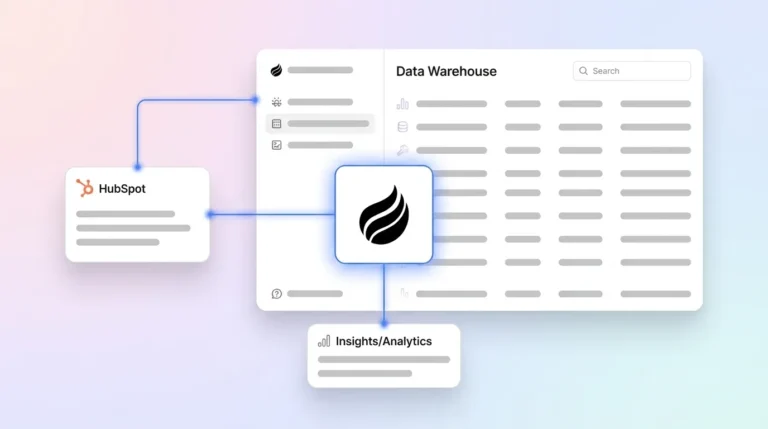
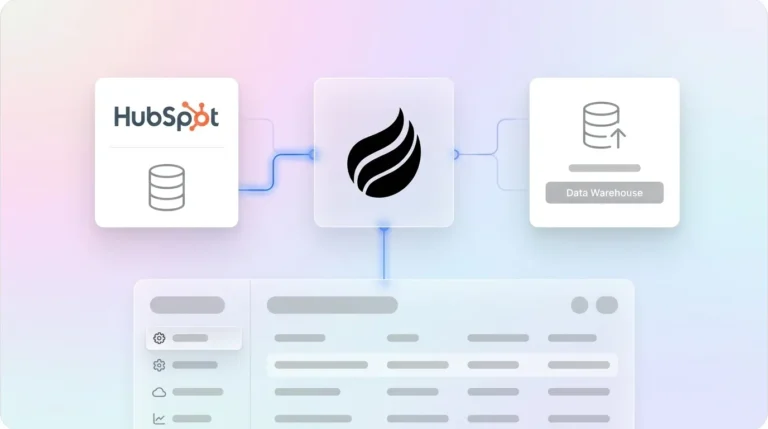
Coffee’s companion app is the only option in this comparison built specifically for teams that cannot or will not replace their existing CRM. The agent authenticates against Salesforce or HubSpot, syncs data, enriches records, and writes insights back to the primary system, including required fields and forecast categories, without disrupting existing configurations. Bolt-on integrations for AI agents break over time, create context gaps, require ongoing maintenance as third-party APIs change, and add latency. Coffee’s companion architecture avoids this failure mode through native, authenticated sync rather than middleware.
If your team runs Salesforce or HubSpot and cannot migrate, deploy Coffee’s companion layer without a rip-and-replace project.
Pricing, Team Size, and Total Cost of Ownership
Folk CRM’s basic tier (Standard) is priced at $24 per user per month when billed annually ($30 monthly), which makes it accessible for very small teams that prioritize outreach over automation depth.
Day.ai’s pricing is seat-based and positioned for small teams, while the total cost of ownership increases when the memory layer requires supplemental tools for enrichment, forecasting, and CRM sync.
Coffee uses straightforward seat-based pricing. The agent’s labor, including data entry, enrichment, meeting management, and pipeline tracking, is included in the seat cost without metering on LLM usage or process volume. For 5–25 rep teams, this model removes the hidden cost of assembling a stack of point solutions such as enrichment tools, recording tools, and forecasting add-ons that Coffee consolidates into a single agent.
Visitor Identification and List-Building Features
Folk CRM includes contact import and list management for outbound sequences but does not identify anonymous website visitors or generate prospect lists from behavioral signals.
Day.ai does not include native visitor identification or list-building functionality.
Coffee includes both capabilities. A single tracking pixel identifies anonymous website visitors by name, title, email, and LinkedIn profile, alongside company, pages visited, time on site, and visit frequency. Real-time Slack notifications surface high-fit visitors, and one click adds the prospect to Coffee with enrichment pre-filled. Coffee’s Suggested Leads feature goes further than standalone visitor identification tools. Where competitors surface either company-level data or undifferentiated people lists, Coffee uses the team’s buyer persona to recommend the two or three specific individuals inside a visiting company most likely to convert. The List Builder feature generates targeted prospect lists via natural language commands and executes outbound workflows without manual research.

Operational and Long-Term Considerations
55% of CRM implementations fail to meet their objectives, with over 60% of those failures attributed to people-related challenges such as low user adoption rather than technical issues. The platform that removes the most friction from rep workflows is the one that gets used.
Folk CRM’s simplicity reduces initial change management burden but does not eliminate the underlying data entry problem. As team size grows beyond 15–20 reps, the manual maintenance requirement scales linearly with headcount.
Day.ai’s autonomous memory reduces logging friction and requires ongoing tuning of enrichment models and data source integrations. Buying an AI sales system before cleaning CRM data creates downstream accuracy problems, and Day.ai does not include a mechanism for continuous data hygiene enforcement.
Coffee’s agent-led architecture addresses the data hygiene problem at the source by keeping data accurate on a continuous basis. AI tools can help new reps ramp up faster, which creates a scalability advantage that compounds as teams grow.
Risks and Limitations by Platform
Each platform carries specific risks that teams should evaluate honestly before committing.
Day.ai risks:
- Memory-focused architecture does not address structured field updates, forecasting, or Salesforce/HubSpot required-field compliance, which limits suitability for data-driven leadership teams
- Pipeline visibility remains dependent on human review, with no automated deal health scoring or week-over-week change tracking for RevOps leaders
- Lack of design for mid-market CRM complexity makes scalability beyond 25 reps with existing CRM infrastructure uncertain
Folk CRM risks:
- Manual data entry burden persists, so ongoing CRM administration remains a significant time cost for reps
- No native Salesforce or HubSpot companion capability, which blocks teams committed to existing CRMs from using Folk as an automation layer
- Pipeline intelligence stays reactive rather than proactive, so stalled deals surface only during manual review and can slip through the cracks
Coffee risks:
- Third-party integrations beyond Salesforce and HubSpot currently route through Zapier, which can concern teams with many niche tools
- Lack of design for large enterprises with complex custom workflows or heavily regulated industries requiring multi-year security reviews limits fit for some global organizations
- Teams with severely degraded CRM data quality need an initial cleanup pass before the agent’s output reaches full accuracy, which affects go-live timing
Decision Framework for Choosing a Platform
Use the following questions to match each platform to your team’s constraints.
- Is your team already on Salesforce or HubSpot and unable to migrate? Coffee’s companion app is the only option in this comparison that writes enriched data back to an existing instance without disrupting its configuration.
- Does your primary pain point involve outbound sequencing and contact management, with manual entry as a secondary concern? Folk CRM’s speed of setup and outreach tooling may be sufficient for teams under 10 reps with simple pipelines.
- Is your primary pain point unstructured data capture from calls and emails, with no existing CRM dependency? Day.ai addresses this specific use case but does not eliminate the broader manual entry burden.
- Do you need zero manual entry, accurate forecasting, meeting intelligence, and CRM compatibility in a single platform? Coffee is the only option in this comparison that delivers all four without requiring a separate enrichment tool, recording tool, or forecasting add-on.
- Are you scaling from 10 to 25+ reps within 12 months? Coffee’s dual-model architecture, which supports standalone CRM or companion layer, avoids the rip-and-replace migration that Folk and Day.ai would require at mid-market scale.
Frequently Asked Questions
How long does implementation typically take for 10–20 rep teams?
Folk CRM can be operational within a single day for basic contact management and outreach. Day.ai’s memory layer activates quickly and requires several weeks of configuration for enrichment and data source integrations to reflect accurate deal context. Coffee’s agent begins populating records immediately upon connecting Google Workspace or Microsoft 365, with no manual configuration phase. For teams using Coffee as a Salesforce or HubSpot companion, a simple authentication deploys the agent against the existing instance. Most teams reach full adoption within the 30–60 day window typical for well-designed platforms.
What migration effort is required when moving from Salesforce or HubSpot?
Coffee’s companion app model removes the migration question for teams committed to Salesforce or HubSpot. The agent operates as an intelligent layer on top of the existing instance and writes enriched data back without replacing the system of record. Teams that choose Coffee’s standalone CRM instead of migrating from a legacy system need to export and import existing contact and deal records, a process that typically takes one to five days for SMB-scale data volumes. Folk CRM and Day.ai are standalone tools, and neither offers a companion architecture that preserves an existing Salesforce or HubSpot investment.
How much internal expertise is needed to maintain data quality?
Folk CRM and Day.ai both require ongoing human effort to maintain data quality. Folk relies on manual rep entry, and Day.ai relies on periodic tuning of its memory and enrichment models. Coffee’s agent-led architecture is designed to handle data quality maintenance autonomously. The agent continuously ingests emails, calendar events, and call transcripts to keep records current, enriches contacts with third-party data, and logs activity without rep intervention. RevOps oversight shifts from data entry enforcement to reviewing agent output and configuring pipeline stages, which creates a significantly lower ongoing burden. Teams with severely degraded existing CRM data should plan for an initial cleanup pass before deploying any AI-driven platform.
How does Coffee’s data quality compare with ZoomInfo?
Coffee’s enrichment agent provides data quality roughly on par with ZoomInfo for most B2B SaaS use cases, including job titles, company funding, and LinkedIn profiles, via licensed data partners. The key difference lies in delivery. ZoomInfo is a standalone enrichment tool that requires manual export, import, and field mapping into a CRM. Coffee’s agent performs enrichment automatically as part of the same workflow that creates contacts and logs activity, which removes the integration overhead. Teams that currently pay separately for ZoomInfo, a recording tool, and a forecasting add-on can consolidate those costs into a single Coffee seat.
Which option fits best for different team sizes, deal sizes, and sales cycles?
Folk CRM fits best for teams under 10 reps running high-volume outbound with short sales cycles and simple pipelines, where speed of setup outweighs automation depth. Day.ai fits best for small teams whose primary pain is unstructured data capture from calls and emails, with no existing CRM dependency and no requirement for structured pipeline reporting. Coffee fits best for teams of 5 to 25 reps that need zero manual entry, accurate forecasting, and either a modern standalone CRM or a companion layer on existing Salesforce or HubSpot. It works particularly well for deal sizes above $10K and sales cycles longer than 30 days, where pipeline visibility and consistent qualification data directly affect forecast accuracy and win rates.
What security and compliance certifications are available?
Coffee is SOC 2 Type 2 certified and GDPR compliant. Data processed by the Coffee agent is not used to train public models. Folk CRM and Day.ai maintain their own compliance postures, and teams in regulated industries or with enterprise security review requirements should request current documentation directly from each vendor before committing.
Conclusion: Choosing the Right AI Sales Platform
Day.ai solves the unstructured data capture problem. Folk CRM solves the outreach and contact management problem. Neither eliminates the manual entry burden for teams already running Salesforce or HubSpot, and neither delivers the pipeline intelligence that accurate forecasting requires.
Coffee is the only platform in this comparison that addresses all three failure modes at once. It captures structured and unstructured data automatically, integrates as a companion layer with existing Salesforce and HubSpot instances without disruption, and delivers pipeline visibility grounded in agent-maintained data quality rather than rep-dependent logging. For 5–25 rep B2B SaaS teams evaluating this category in 2026, that combination provides a path to zero manual entry without sacrificing CRM compatibility or forecast accuracy.