Written by: Doug Camplejohn, CEO & Co-Founder, Coffee | Last updated: July 20, 2026
Key Takeaways for Revenue Teams
- Day.ai excels at unstructured data from meetings but lacks structured pipeline depth and forecasting tools.
- HubSpot’s Breeze AI still requires manual data entry, which limits forecast accuracy and increases admin overhead.
- Coffee’s agent captures and structures data from transcripts automatically, lifting data quality from 30–40% to 70–80% within 90 days.
- Coffee offers both a standalone CRM and a Companion App that layers on top of existing HubSpot or Salesforce instances without migration.
- Teams ready to remove data-entry work and improve forecasting accuracy can explore Coffee’s pricing and deployment options today.
Evaluation Criteria for Day.ai, HubSpot, and Coffee
| Criteria | Day.ai | HubSpot AI CRM (Breeze) | Coffee |
|---|---|---|---|
| Pipeline forecasting accuracy | No native pipeline forecasting module | Breeze deal scoring available, forecast reliability limited by incomplete rep-entered data | Built-in data warehouse enables week-over-week Pipeline Compare views grounded in captured behavioral signals, not rep-reported stages |
| Integration effort | Connects to Google Workspace, Zoom, Slack, limited Salesforce/HubSpot depth | Native HubSpot ecosystem, Salesforce sync described by practitioners as unreliable on custom objects | Standalone CRM or Companion App on top of existing Salesforce or HubSpot, simple OAuth authentication |
| User adoption and time saved | High adoption for meeting workflows, reps still manage pipeline manually | Familiar UI aids adoption, 5–15 hours per week of admin workarounds persist at growth stage | Agent handles busywork, reps interact with a co-pilot rather than a data entry form, saves 8–12 hours per week per rep |
| Scalability | Early-stage, reached general availability in February 2026 | Scales to mid-market, structural limits surface above 200 users and at 500K+ records | Seat-based pricing with unlimited agent labor, Companion App preserves existing Salesforce/HubSpot investment as teams grow |
| Total cost of ownership | Low entry cost, additional point tools required for pipeline management add complexity | $8–12K/month all-in for a 50-user org on Sales Hub Professional + Ops Hub Professional with 100K contacts, contact-tier overages trigger automatically | Simple seat-based pricing, agent labor included, consolidates CRM, enrichment, recording, and forecasting into one cost |
Setup and Onboarding Across the Three Platforms
Day.ai connects to Google Workspace, Zoom, and Slack and begins ingesting unstructured signals immediately. Time-to-value for meeting intelligence is fast. Teams that need a structured pipeline with stage definitions, required fields, and quota tracking must build that layer themselves or maintain a separate CRM in parallel.
HubSpot onboarding is well-documented and faster than Salesforce. CRM migration to or from HubSpot typically takes 2–3 months for a mid-market org, though it can extend to 3–6 months depending on data complexity due to custom fields, automation logic, and integrations. Many teams underestimate this complexity.
Coffee connects via OAuth to Google Workspace or Microsoft 365 and starts auto-creating contacts, logging activities, and enriching records right away. For teams already on HubSpot or Salesforce, the Companion App deploys as an agent layer without replacing the existing system of record, which reduces change-management risk.
The agent begins handling data from day one, so teams see value quickly. Start your free trial to see how this works in your environment.
Automatic Data Capture from Email, Calendar, and Transcripts
Manual CRM entry consumes rep time and still leaves gaps. Sales reps often spend five or more hours per week on data entry, and much opportunity data never reaches the CRM. Salesforce’s 2026 State of Sales report states that sales reps spend 60% of their time on non-selling tasks, including typing in customer notes.
Day.ai focuses on the unstructured side of this problem. Its LLM creates and updates records from email, calendar, Zoom, and Slack ingestion, and human overrides rank above LLM inferences so corrections are durable. The gap appears on the structured side, where deal stages, amounts, close dates, and custom qualification fields still need consistent population.
HubSpot Breeze AI assists with email drafting and deal scoring. However, most conversation intelligence tools record and summarize calls but never write structured values to CRM fields, so they function as observation tools rather than execution-layer automation. Breeze makes HubSpot easier to use but does not fix the core data-quality issue.
Coffee’s agent extracts structured signals directly from transcripts at call end, including budgets, stakeholder names, decision timelines, objections, and next steps. It maps these to CRM fields across BANT, MEDDIC, and SPICED frameworks. Typical CRM data quality improves from a baseline of 30–40% accuracy to 70–80% accuracy within 90 days of full AI automation deployment.
Meeting Management and Follow-Up Automation
Beyond capturing data from emails and calendars, the three platforms differ in how they manage meetings from preparation through follow-up. Day.ai’s core strength sits in this meeting workflow. It ingests Zoom recordings, surfaces context, and updates records from conversation signals. For teams whose primary pain is fragmented meeting notes, it delivers clear value.
HubSpot’s Breeze Copilot provides meeting summaries and suggested follow-ups inside the HubSpot interface. External AI agents have shown stronger performance than Breeze in side-by-side evaluations by providing reasoning, historical comparisons, and suggested actions, while Breeze only supplied scores.
Coffee’s agent operates as a pre- and post-meeting executive assistant. Before calls, it generates a briefing on attendees, roles, and past context. During calls, the AI meeting bot joins Zoom, Teams, or Meet to record and transcribe. After calls, it generates summaries, identifies next steps, drafts follow-up emails in Gmail for rep review, and writes structured values back to the CRM record with no rep input required.


Pipeline Intelligence and Week-over-Week Change Visibility
Forecast accuracy depends on data quality more than on review style. AI forecasting tools that analyze deal activity signals can outperform manager-adjusted pipeline reviews when the underlying data is complete and reliable.
Day.ai has no native pipeline forecasting module, so teams using it for meeting intelligence still export to spreadsheets for pipeline reviews.
HubSpot forecasting relies on rep-reported stage and close-date data. Legacy CRM data models treat fields like Stage, Close Date, and Amount as ground truth, which causes bolt-on agents to generate confident but distorted pipeline forecasts when reps manipulate stages or slip dates to satisfy internal reviews.
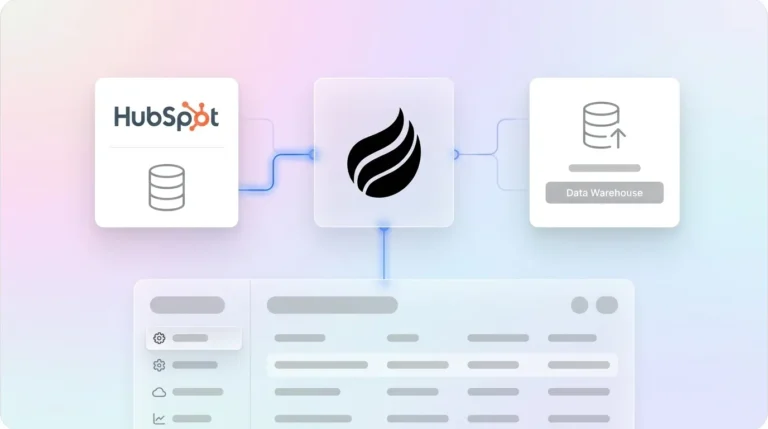
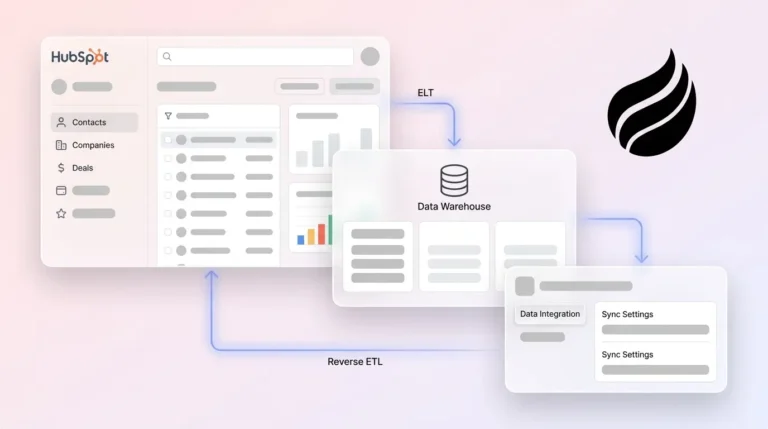
Coffee’s Pipeline Compare feature runs on a data warehouse that retains historical context. Because the agent captures every interaction automatically, the week-over-week view reflects actual deal behavior, including progressed deals, stalled opportunities, and new additions, rather than only what reps chose to update. Pipeline reviews shift from interrogation sessions to strategic discussions.
Visitor Identification and Lead Routing with Coffee
Day.ai does not include website visitor identification, and HubSpot offers basic visitor tracking tied to known contacts in its database.
Coffee’s visitor identification uses a single tracking pixel that turns anonymous website traffic into named, qualified prospects. It surfaces name, title, email, LinkedIn profile, pages visited, time on site, and visit frequency. Real-time Slack notifications highlight high-fit visitors, and one click adds the prospect to Coffee with enrichment pre-filled.

Coffee’s Suggested Leads feature extends this further. Where standalone tools like RB2B and Warmly surface company-level data or undifferentiated people lists, Coffee uses the buyer persona to recommend which two or three individuals inside a visiting company to contact, with LinkedIn profiles ready for immediate outreach.

Long-Term Flexibility as the Organization Grows
Day.ai remains early-stage. It reached general availability in February 2026 and newer alternatives like Day.ai lack an understanding of how sophisticated Salesforce and HubSpot integrations are, including quotas, forecasting, and required fields. Teams of any size may encounter issues when integrating with these CRMs.
HubSpot scales well to mid-market but faces structural constraints at larger scales. Data model limits silently block revenue ops teams scaling past 10M records or handling complex B2B deal structures. HubSpot’s contact-based pricing punishes growth, with contact overages triggering automatically.
Coffee’s seat-based pricing includes unlimited agent labor. The no-migration deployment mentioned earlier becomes especially valuable as the organization scales, because the agent improves data quality without the risk and cost of replacing an established system. As the company grows, the agent scales without adding admin overhead.
Teams evaluating long-term cost and flexibility can compare standalone and Companion App pricing to model different growth paths.
Best-Fit Use Cases by Company Size and Tech Stack
Three distinct profiles map to different solutions, organized by current infrastructure and primary pain point.
- Early-stage teams (1–20 people) outgrowing spreadsheets: Coffee’s Standalone CRM is purpose-built for this segment. The agent manages the system of record from day one and prevents the data-entry habits that corrupt legacy CRMs.
- Mid-market teams already on HubSpot or Salesforce: Coffee’s Companion App deploys as an agent layer on top of the existing installation. The agent handles data capture so the system of record stays accurate without human effort, and the team avoids migration.
- Teams frustrated by fragmented point solutions: Teams maintaining separate tools for CRM, enrichment (ZoomInfo), recording (Gong/Fathom), and forecasting (Clari) manage a stack that is complex, expensive, and inconsistent. Coffee consolidates these functions into one agent.
Operational Considerations for Change Management and Data Hygiene
Coffee is SOC 2 Type 2 and GDPR compliant, and data is not used to train public models. For teams in regulated-adjacent industries, this removes a common procurement objection.
Many organizations agree that data readiness is essential for successful AI implementation, and 45% say their CRM data is not prepared for AI. Coffee’s agent addresses this at the input layer rather than through periodic cleanup sprints, so data quality improves continuously from the first connection.
Training requirements stay low because the agent removes the tasks reps resented. Adoption improves when the tool serves the rep instead of demanding constant data entry.
Risks and Limitations of Each Platform
Day.ai’s primary limitation is structured-data depth. Teams that need quota tracking, required-field enforcement, and forecast rollups will find the platform insufficient as a standalone CRM. Its integration with existing Salesforce or HubSpot instances carries the same risks as other newer alternatives that lack deep knowledge of those platforms’ object models.
HubSpot’s data-entry burden persists even with Breeze AI. Smart teams treat HubSpot as a system of record rather than a system of intelligence, pushing enrichment and signal checks to external tools before records touch HubSpot, which adds cost and complexity.
Coffee’s current third-party integrations route through Zapier, with deeper native integrations on the roadmap. Teams with highly customized existing workflows should verify specific integration requirements before committing. Coffee is also not designed for large enterprises with complex multi-entity structures or heavily regulated industries requiring multi-year security reviews.
Decision Framework: Matching Constraints to the Right Solution
The right platform depends on your primary constraint and current stack.
- Primary pain is meeting notes and unstructured data only, no pipeline management needed: Day.ai covers this use case at low cost.
- Already on HubSpot, need to fix data quality and forecasting without migration: Coffee Companion App deploys on top of HubSpot and solves the data-in problem without disrupting the existing system of record.
- Starting fresh or replacing spreadsheets, want an agent-first CRM: Coffee Standalone CRM is the appropriate choice.
- Need full marketing automation suite alongside CRM: HubSpot remains the broadest platform, with the understanding that data quality requires supplemental tooling or the Coffee Companion App.
- Forecasting accuracy is a board-level requirement: Neither Day.ai nor HubSpot alone delivers reliable forecasts without clean structured data. Coffee’s agent is the only path here to the data quality that accurate forecasting requires.
Frequently Asked Questions
How long does Coffee take to implement and show value?
Coffee connects to Google Workspace or Microsoft 365 via OAuth. The agent begins auto-creating contacts, logging activities, and enriching records immediately after authentication. Most teams see a populated, accurate CRM within the first week with no rep input required. The Companion App for HubSpot or Salesforce follows the same authentication pattern and does not require migration of existing records.
How difficult is it to migrate from HubSpot or Day.ai to Coffee?
Teams moving to Coffee’s Standalone CRM can import existing contact and deal records. For teams on HubSpot or Salesforce who do not want to migrate, the Companion App removes the migration question entirely. Coffee operates as an agent layer on top of the existing system of record and writes clean data back into it, which creates a low-friction path for mid-market teams with established CRM investments.
Is Coffee secure and compliant?
Coffee is SOC 2 Type 2 and GDPR compliant, and customer data is not used to train public AI models. For teams handling sensitive deal data, the agent operates within a governed security boundary. Teams in heavily regulated industries such as healthcare or finance with multi-year security review requirements fall outside Coffee’s current target profile.
How does Coffee’s data quality compare to dedicated enrichment tools like ZoomInfo or Apollo?
Coffee’s agent provides enrichment such as job titles, funding data, and LinkedIn profiles via licensed data partners, which covers the majority of use cases for 5–50 person teams without a separate enrichment subscription. Data quality is roughly on par with ZoomInfo for most standard B2B enrichment needs. Teams with highly specialized data requirements for enterprise prospecting may still benefit from a dedicated enrichment tool, although Coffee’s List Builder feature handles most outbound prospecting workflows natively through natural language commands.
How do I evaluate whether Coffee is the right fit before committing?
The clearest evaluation signal is the Pipeline Compare feature. Connect Coffee to your email and calendar, let the agent run for two weeks, then open the pipeline view. If the week-over-week changes reflect what actually happened in your deals without any rep data entry, the agent is working. Compare that view to what your current CRM shows for the same period. The gap between those two pictures represents the cost of your current manual approach.
Conclusion: Why Coffee Wins on Data Quality
The Day.ai versus HubSpot AI CRM comparison in 2026 ultimately centers on data quality. Day.ai solves unstructured data capture but leaves structured pipeline management to the team. HubSpot provides a full platform, yet its architecture still depends on rep-entered data, and Breeze AI improves the experience without fixing the input layer. Leaders often say AI is only as good as the data behind it, and neither Day.ai nor HubSpot alone guarantees that data.
Coffee’s dual standalone and companion agent model addresses both sides of the equation. It captures structured and unstructured data automatically, writes it to the correct records, retains historical context in a built-in data warehouse, and delivers forecasts grounded in actual deal behavior rather than rep-reported stages. For 5–50 person teams that have already felt the cost of manual CRM upkeep, the agent model finally delivers a CRM that works.