Written by: Doug Camplejohn, CEO & Co-Founder, Coffee | Last updated: June 26, 2026
Key Takeaways for Busy Sales Leaders
- Coffee is an autonomous AI CRM agent that fully automates data entry by capturing contacts, logging activities, and generating pipeline intelligence without human input.
- Day.ai functions as a conversational co-pilot that guides sales reps through prompts, so users still perform most data entry.
- Coffee outperforms Day.ai across data entry automation, meeting handling, pipeline intelligence, CRM integration depth, pricing simplicity, and visitor identification.
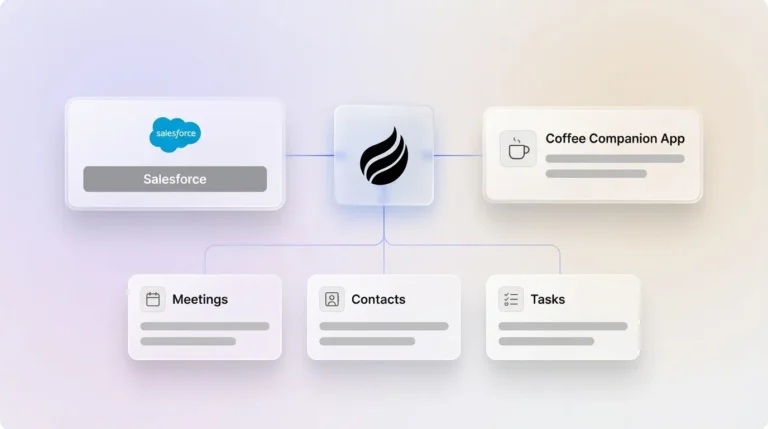
- Teams using Salesforce or HubSpot benefit from Coffee’s deep Companion App integration that respects quotas, required fields, and forecasting structures.
- For sales teams ready to eliminate manual data entry entirely, explore Coffee’s pricing and start your trial today.
How This Coffee vs Day.ai Comparison Works
This comparison evaluates Coffee and Day.ai across six criteria relevant to small tech sales teams in 2026: data entry automation, meeting handling, pipeline intelligence, Salesforce and HubSpot integration depth, pricing model, and visitor identification. These criteria reflect the core operational pain points, including fragmented tools, poor CRM data quality, and the manual entry burden that sales leaders, founders, and RevOps professionals face when managing a modern revenue stack. The following tables summarize how each product performs on these dimensions.
Side-by-Side Feature Comparison for Coffee and Day.ai
| Feature | Coffee | Day.ai | Winner |
|---|---|---|---|
| Data Entry Automation | Fully autonomous, agent auto-creates contacts, logs activities, enriches records from email and calendar | Conversational prompts guide reps to enter data manually | Coffee |
| Meeting Handling | AI bot joins calls, auto-generates summaries, action items, and follow-up drafts | Co-pilot assists with meeting prep and note suggestions via conversation | Coffee |
| Pipeline Intelligence | Pipeline Compare tracks week-over-week deal changes automatically from a built-in data warehouse | Pipeline views require rep-driven updates and conversational queries | Coffee |
| Salesforce/HubSpot Integration | Deep integration with quotas, forecasting, and required fields, Companion App model | Limited integration depth, does not fully address required fields or quota structures | Coffee |
| Pricing Model | Simple seat-based, unlimited agent labor included per seat | Seat-based with feature tiers | Coffee |
| Visitor Identification | Named individual identification with Suggested Leads matched to buyer persona | Not a documented core feature | Coffee |
| Summary | Coffee | Day.ai |
|---|---|---|
| Architecture | Autonomous agent | Conversational co-pilot |
| Human Input Required | Minimal | Significant |
Deep Dive: Where Coffee and Day.ai Differ Most
Data Entry Automation for CRM Hygiene
Coffee’s agent connects to Google Workspace or Microsoft 365 and immediately begins auto-creating contacts, enriching records with job titles, funding data, and LinkedIn profiles, and logging last and next activity. Reps do not need to touch the keyboard for these tasks. According to Coffee’s internal market data, 71% of sales reps report spending too much time on data entry, leaving only 35% of their time for actual selling. Day.ai’s conversational co-pilot surfaces prompts that guide reps through data entry steps, which still requires a human to execute the input. For teams whose core problem is the data-entry grind, this architectural difference often decides the tool choice.

| Coffee | Day.ai |
|---|---|
| Agent auto-populates all records from email and calendar signals | Rep completes entry through a conversational interface |
Meeting Handling and Follow-Up Workload
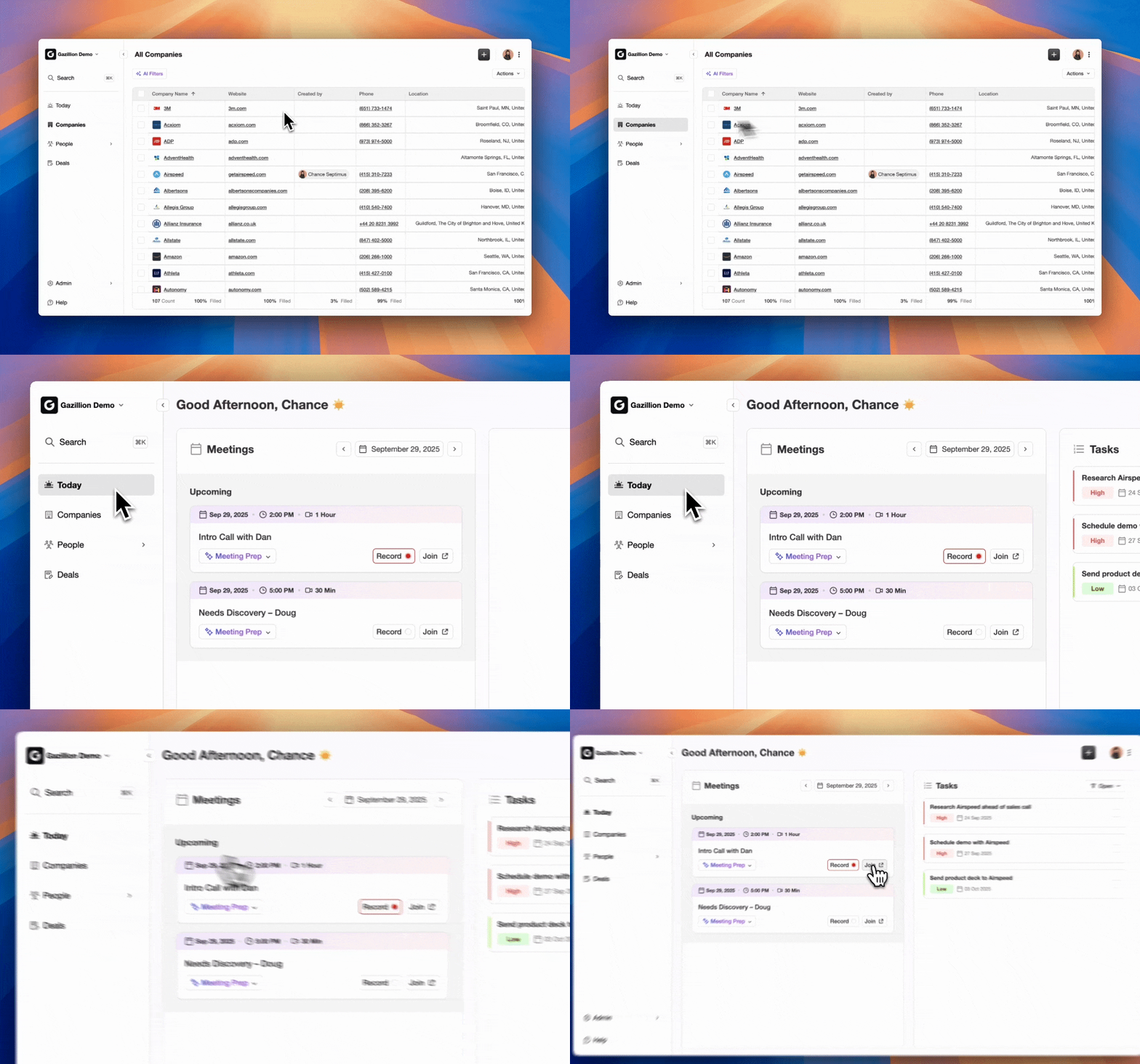
Coffee’s agent joins Zoom, Teams, and Google Meet calls, records and transcribes them, then generates structured summaries, next steps, and Gmail-ready follow-up drafts aligned to BANT, MEDDIC, or SPICED frameworks. The rep reviews and sends, while the agent handles the heavy lifting. Day.ai offers conversational meeting prep and note suggestions but relies on the rep to capture and structure the output. For a 5 to 15 person team running multiple calls daily, Coffee’s approach removes a compounding administrative burden.
| Coffee | Day.ai |
|---|---|
| Autonomous bot joins, transcribes, summarizes, and drafts follow-ups | Co-pilot guides prep and note-taking, rep drives output |
Pipeline Intelligence and Forecast Clarity
Coffee’s Pipeline Compare feature visualizes week-over-week changes such as progressed deals, stalled opportunities, and new additions. It draws from a built-in data warehouse that preserves historical context. This setup replaces manual CSV exports and removes the interrogation dynamic of traditional pipeline reviews. Day.ai surfaces pipeline data through conversational queries, but because data entry remains partially manual, the underlying data quality depends on rep compliance. Coffee’s agent-first architecture keeps inputs clean so pipeline views stay accurate.
| Coffee | Day.ai |
|---|---|
| Automated Pipeline Compare with historical data warehouse | Conversational pipeline queries, accuracy depends on rep input |
Salesforce and HubSpot Integration Depth
Coffee’s Companion App is purpose-built to operate on top of existing Salesforce or HubSpot instances and accounts for quotas, forecasting structures, and required fields that enterprise-grade CRM configurations demand. Day.ai, as a newer entrant, does not demonstrate the same depth of support for these integration complexities. Teams already invested in Salesforce or HubSpot cannot afford integration gaps that break required-field validation or corrupt forecast categories.
| Coffee | Day.ai |
|---|---|
| Deep Salesforce/HubSpot integration, handles quotas, required fields, forecasting | Limited integration depth for complex CRM configurations |
Visitor Identification and Outbound Targeting
Coffee’s Visitor Identification feature converts anonymous website traffic into named prospects by surfacing name, title, email, LinkedIn profile, pages visited, and time on site. Its Suggested Leads capability goes further by recommending two or three specific individuals inside a visiting company who match the user’s buyer persona. This support enables immediate LinkedIn outreach or drip enrollment. Day.ai does not offer a comparable visitor identification feature.

Best-Fit Use Cases for Coffee vs Day.ai
| Choose Coffee if… | Choose Day.ai if… |
|---|---|
| Your team of 5–15 reps loses hours weekly to manual CRM updates | Your team prefers guided, conversational AI assistance over full automation |
| You run Salesforce or HubSpot and need an agent to keep it clean without rep effort | You are evaluating lightweight AI tooling without deep CRM integration requirements |
| You want pipeline intelligence grounded in automatically captured, high-quality data | Your reps are disciplined data-entry practitioners and need prompting, not replacement |
| You need website visitor identification and outbound lead generation built in | Your primary use case is conversational sales coaching rather than data automation |
See how Coffee eliminates data entry for your team, purpose-built for teams that are done acting as data entry clerks.
Operational Costs and Long-Term Fit
Total cost of ownership for Coffee stays straightforward, with simple seat-based pricing and unlimited agent labor included. There are no additional charges for LLM usage or automated processes. For teams currently paying separately for enrichment tools like Apollo or ZoomInfo, recording tools like Fathom, and forecasting add-ons, Coffee consolidates those costs into one agent. Day.ai’s pricing follows a seat-and-tier model, but because it does not replace enrichment or recording tools, the surrounding stack cost remains.
Integration realities matter at scale. Coffee’s Companion App accounts for Salesforce required fields, quota structures, and forecasting hierarchies, which are the operational details that often break simpler integrations. Teams migrating from spreadsheets or Notion to Coffee’s Standalone CRM face minimal friction, since the agent begins populating records immediately after Google Workspace or Microsoft 365 authentication.
Risks and Limitations to Consider
| Coffee | Day.ai |
|---|---|
| Deeper integrations beyond Salesforce and HubSpot currently route through Zapier, with native connectors on the roadmap | Integration depth with complex Salesforce and HubSpot configurations is limited, which risks data gaps in required fields and quota structures |
| Not suited for large enterprises with custom multi-system workflows or heavily regulated industries that require multi-year security reviews | Conversational architecture means data quality depends on rep engagement, so low adoption produces the same “garbage in” problem as legacy CRMs |
| SOC 2 Type 2 and GDPR compliant, data not used to train public models | Security posture and compliance certifications should be independently verified for your use case |
Decision Framework for Your Team
| Criteria | Recommended Tool |
|---|---|
| Team size 5–15, Salesforce or HubSpot stack, low rep CRM adoption | Coffee |
| Need to eliminate manual data entry entirely | Coffee |
| Require pipeline intelligence from clean, automatically captured data | Coffee |
| Need website visitor identification and persona-matched lead suggestions | Coffee |
| Prefer conversational AI guidance with existing disciplined data entry habits | Day.ai |
For sales leaders, founders, and RevOps professionals at 5–15 person tech companies whose primary problem is the manual data-entry burden and fragmented tooling, Coffee is the recommended solution in 2026. For teams where CRM adoption is low and data quality is poor, Coffee’s agent-first approach addresses the root cause by removing the human bottleneck entirely.
Frequently Asked Questions
How long does it take to implement Coffee?
Coffee is designed for fast activation. Connecting Google Workspace or Microsoft 365 triggers the agent immediately, and it begins auto-creating contacts and logging activities without a lengthy configuration process. Small teams can often be operational quickly. The Companion App for Salesforce or HubSpot requires authentication that varies with CRM complexity.
How difficult is it to migrate existing CRM data to Coffee?
For teams moving from spreadsheets or Notion, the Coffee agent begins building the CRM from live email and calendar signals, which reduces the need for bulk data migration. For teams using Coffee as a Companion App on top of Salesforce or HubSpot, existing records remain in place. Coffee enriches and updates those records rather than replacing them, so migration risk stays minimal.
How does Coffee ensure data quality over time?
Coffee’s core architecture follows a simple principle, where good data in produces good data out. The agent continuously ingests signals from emails, calendars, and call transcripts, then updates records in real time. Because the agent, not the rep, is responsible for data entry, quality does not degrade as team workloads increase. The built-in data warehouse also preserves historical context that standard CRM field updates would overwrite.
Is Coffee secure and compliant?
Coffee is SOC 2 Type 2 certified and GDPR compliant. Customer data is not used to train public AI models. For teams in lightly regulated industries that are evaluating AI tooling, Coffee meets the standard security bar. Teams in healthcare or finance with multi-year security review requirements fall outside Coffee’s current ideal customer profile.
Can Coffee scale as the sales team grows beyond 15 people?
Coffee’s seat-based pricing model scales linearly, so each additional seat adds agent capacity without metered usage charges. The Companion App model suits teams growing into mid-market territory while remaining on Salesforce or HubSpot, since the agent handles increasing data volume autonomously. Very large enterprises with deeply customized CRM environments align better with Coffee’s roadmap than with its current feature set.
Conclusion and Next Steps
The fundamental difference between Coffee and Day.ai in 2026 is architectural. Coffee deploys an autonomous agent that removes humans from the data-entry loop entirely, capturing contacts, logging activities, managing meetings, and delivering pipeline intelligence from a clean data foundation. For 5–15 person tech sales teams running Salesforce or HubSpot stacks, where CRM adoption is low and data quality is poor, Coffee addresses the root cause rather than the symptom. Deploy your autonomous CRM agent and put Coffee to work on your pipeline today.