Written by: Doug Camplejohn, CEO & Co-Founder, Coffee
Key Takeaways for RevOps Leaders
- Manual CRM maintenance consumes 65% of sales reps’ time, which corrupts forecasts and leaves records stale across your revenue stack.
- Claude can automate data entry, pipeline reporting, lead scoring, and visitor-to-lead handoff through API integrations with Salesforce, HubSpot, and email or calendar systems.
- Running Claude in production requires steady engineering effort to handle prompt drift, API limits, schema changes, and model version stability.
- Coffee provides a no-code alternative that delivers the same automation outcomes in minutes with zero ongoing maintenance or prompt engineering.
- Teams ready to eliminate manual RevOps work can explore Coffee’s pricing and setup options for reliable, production-grade revenue intelligence.
Readiness Checklist Before Any Automation
Strong automation starts with clean, connected data. Before you wire Claude or any agent into your CRM, confirm that your systems and records meet these baseline requirements.
- CRM admin access to Salesforce or HubSpot with API credentials enabled so agents can read and write records safely.
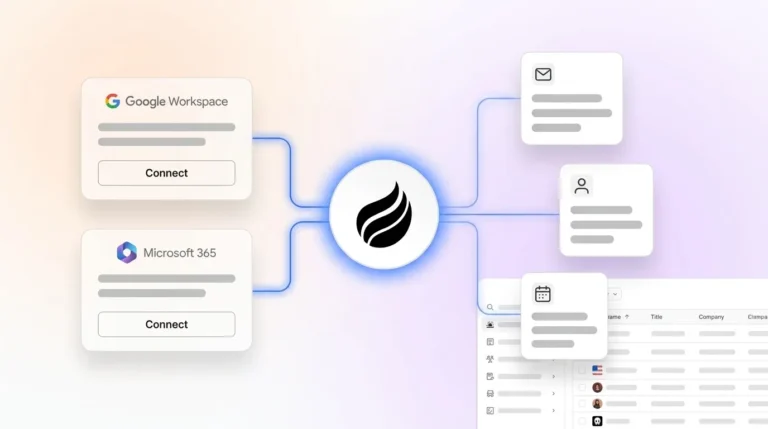
- Google Workspace or Microsoft 365 connected and OAuth-authorized to allow email and calendar activity capture.
- Standardized field naming conventions across contact, company, and deal objects to avoid mismatched mappings.
- No duplicate records exceeding 5% of total contacts, because duplicate records degrade AI prediction quality in production RevOps environments.
- Historical closed-won and closed-lost data covering at least 90 days to support meaningful lead scoring and pipeline analysis.
- Defined lead lifecycle stages with documented entry and exit criteria so automation can move records consistently.
Step 1: Connect Claude to Salesforce or HubSpot
- Generate a Salesforce Connected App or HubSpot Private App token with read and write scopes on Contacts, Companies, Deals, and Activities.
- Store credentials in an environment variable, never in prompts or source files. This keeps authentication secure and makes credential rotation straightforward.
- With credentials secured, use Claude Code Terminal to scaffold a thin API wrapper that authenticates, paginates, and surfaces field metadata.
- Run a test read on 10 records and verify that field names match your CRM schema exactly before you attempt any writes.
- Assign a human owner to review and approve the field map so every write operation reflects your current data model.
Failure mode: Salesforce enforces org-wide API request limits of 100,000 calls per 24 hours base plus 1,000 per user on Enterprise edition. Custom fields not present in the metadata response silently drop data. Audit your field list before building any write loop. Production AI RevOps requires centralized error handling and retry logic, not one-time deployment.
Step 2: Build an Automated Data-Entry Loop
- Instruct Claude to read new email and calendar events from Google Workspace or Microsoft 365 on a scheduled trigger, such as every 15 minutes.
- Parse sender, recipient, subject, and timestamp into a structured payload that your CRM can accept.
- Match the payload to an existing CRM contact by email address, then create a new contact record when no match exists.
- Write an Activity record back to the CRM with type, date, and a Claude-generated summary capped at 150 words.
- Log every write operation to a persistent audit file so RevOps can review and correct issues quickly.
This workflow looks straightforward at first glance, yet it carries a hidden production risk that often appears weeks after launch.
Failure mode — prompt drift: Claude’s summarization output format will shift across model versions. Pin your model version explicitly and run weekly regression tests against a fixed set of sample emails. Treating automation as a one-time project is a documented failure mode, because revenue processes evolve and stale logic breaks production.
Step 3: Create a Weekly Pipeline-Compare Report
- Pull all open opportunities with stage, amount, close date, and last-modified timestamp via the CRM API.
- Store a snapshot to a local or cloud database at the end of each business week so you can compare changes over time.
- On Monday morning, instruct Claude to diff the current snapshot against the prior week’s snapshot and flag deals that changed stage, slipped close date, or went unmodified for more than seven days.
- Generate a structured Markdown report with three sections: Progressed, Stalled, and At Risk, so leaders can scan quickly.
- Deliver the report via Slack webhook or email to the RevOps lead and sales managers.
Step 4: Implement Lead Scoring and Routing
- Export 90 days of closed-won and closed-lost records with firmographic fields such as company size, industry, and title, plus behavioral signals like email opens and page visits.
- Feed the dataset to Claude with a prompt that identifies the top five predictive attributes of closed-won deals.
- Translate the output into a numeric scoring rubric, for example VP title equals plus 20 and fewer than 50 employees equals plus 10.
- Apply the rubric to inbound leads via an API call on record creation and write the score to a custom CRM field.
- Configure a CRM workflow rule that routes leads above a threshold score to senior reps automatically.
Failure mode — data-quality gaps: AI lead scoring requires clean demographic, behavioral, and historical conversion data. Missing firmographic fields produce scores that are statistically meaningless. Audit field completeness before training any model.
Step 5: Set Up Visitor-to-Lead Handoff
With lead scoring in place, you can now connect anonymous website activity to your CRM. This step captures high-intent visitors before they submit a form and gives SDRs a head start on outreach.
- Deploy a tracking pixel in the
<head>tag of your marketing site. - Configure a webhook to fire on each identified visitor event and pass name, company, pages visited, and time on site.
- Instruct Claude to match the visitor’s company domain against existing CRM accounts and check for duplicate contacts.
- Create a new Contact and Company record with enrichment data pre-filled when no match exists.
- Trigger a real-time Slack notification to the assigned SDR with the visitor summary and a direct CRM link.
Claude Code Terminal vs. Coworker vs. Coffee: Production Comparison
The table below compares three approaches across the dimensions that matter most for production RevOps: setup speed, maintenance effort, forecast impact, and total cost of ownership. Use it to match your choice to your team’s engineering capacity and timeline.
| Metric | Claude Code Terminal | Claude Coworker | Coffee |
|---|---|---|---|
| Setup Time | Days to weeks, with API scaffolding, field mapping, and authentication. Agentic coding still requires workflow design even for non-engineers. | Hours to days, because pre-built connectors reduce scaffolding. Low-code platforms are faster than full code but slower than no-code for basic use cases. | Minutes, with one-click OAuth to Salesforce, HubSpot, Google Workspace, or Microsoft 365. |
| Ongoing Maintenance | High, since prompt drift, model version pinning, and schema changes require developer intervention. RevOps automation must be treated as a living system reviewed and updated regularly. | Medium, because connector updates are managed by the vendor, while custom logic still needs operator upkeep. | Zero code maintenance, as Coffee ships continuous product updates including new integrations and AI improvements without operator intervention. |
| Forecast Accuracy Lift | Variable and dependent on data hygiene and prompt stability. Inconsistent pipeline data makes AI insights unreliable. | Moderate, because structured connectors improve data consistency compared with raw Terminal workflows. | Consistent, with a Pipeline Compare feature built on a dedicated data warehouse that captures full history. AI search answers natural-language pipeline questions like “What’s closing this month?”. |
| Total Cost of Ownership | Low license cost and high labor cost, since engineering time covers build and maintenance. Code-based approaches require ongoing developer support for larger-scale projects. | Medium license cost and medium labor cost, with reduced engineering but continued operator time for logic changes. | Seat-based pricing with no metering on agent tasks, so agent labor is included. No-code solutions are more cost-effective for small to medium teams via subscription pricing. |
The No-Code Path with Coffee for RevOps Teams
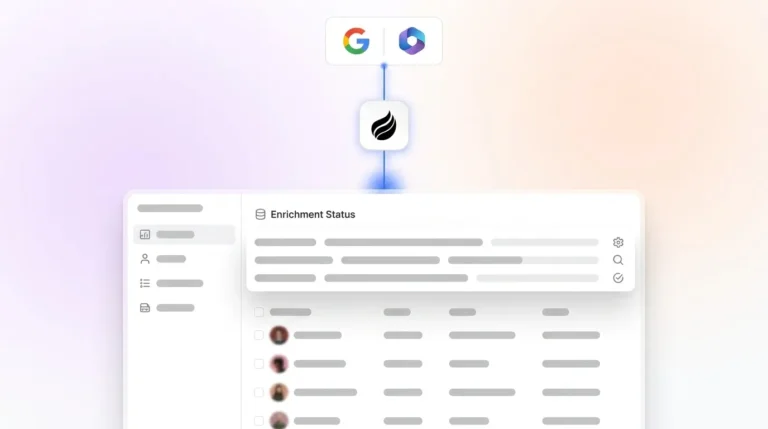
Coffee deploys as either a standalone AI-first CRM or a Companion App layered on top of an existing Salesforce or HubSpot instance. Authentication uses a single OAuth flow. After that step, the Coffee Agent scans emails and calendars to auto-create contacts, log activities, and enrich records with no prompt engineering.
Coffee’s Pipeline Compare feature mirrors Step 3 automatically by surfacing week-over-week deal changes, stalled opportunities, and new additions without a scheduled script or snapshot database. The January 2026 AI search release lets operators query pipeline state in plain English, with no SQL and no API calls.
Case study: A mid-market company generating tens of millions in revenue managed sales in spreadsheets after rejecting Salesforce and HubSpot for requiring too much manual input. After connecting Coffee, automatic contact creation from Google Workspace removed manual data entry entirely. The Pipeline Compare feature replaced their weekly CSV export process. The team also used Coffee’s API access to script bespoke briefings on top of clean, agent-maintained data, achieving the same outcome as a Claude Terminal workflow without the maintenance burden.
Validate Results with Data-Quality and Time-Saved Metrics
Measure automation success against three criteria that together capture operational efficiency and business impact. First, track field completeness by measuring the percentage of contact and deal records with required fields populated before and after deployment and target above 90 percent. This data quality metric directly enables the second measure, which is time-on-task reduction. Benchmark the hours per week each rep spends on manual CRM updates and aim to recover most of the time currently lost to data entry. These operational improvements should support better forecasting. Third, track forecast variance by comparing the delta between called pipeline and actual closed revenue week over week, since tightening variance signals improved data quality.
AI-driven forecasting should be layered only after foundational automation is stable, so validate data completeness before you trust any model output.
Scaling Automation for Different Team Structures
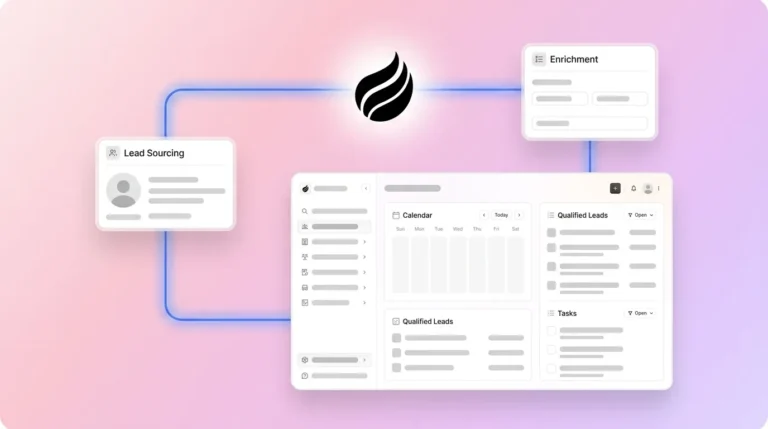
For teams of five to ten reps, a single Claude workflow or Coffee seat tier covers the full data-entry and pipeline-reporting surface area. For teams of 15 to 30 reps, routing logic becomes the critical variable, because lead assignment rules must account for territory, product line, and capacity. This complexity explains why the industry is moving toward unified agent platforms. IBM Research predicts 2026 will feature cross-functional super agents operating across environments from a single control plane, and Coffee’s architecture reflects this by consolidating CRM, enrichment, visitor identification, and pipeline intelligence into one agent instead of many point solutions.
Multi-product teams should define separate ICP criteria per product line and configure distinct lead-scoring rubrics for each motion. Channel or partner-sourced deals need a separate activity type so they do not pollute direct-sales pipeline data.
Frequently Asked Questions
How complex is it to set up Coffee on top of an existing Salesforce or HubSpot instance?
Setup uses a single OAuth authentication. Coffee reads your existing field schema, begins logging activities, and starts enriching records immediately. There is no field mapping exercise, no API wrapper to build, and no prompt to maintain. For teams already on Salesforce or HubSpot, Coffee functions as a Companion App, where the existing CRM remains the system of record and Coffee handles the data-in process that reps currently perform manually.
How does Coffee handle data security and compliance?
Coffee is SOC 2 Type 2 certified and GDPR compliant. Data ingested by the Coffee Agent is not used to train public models. For teams in lightly regulated industries such as SaaS, this coverage usually satisfies the standard security review. Coffee is not currently positioned for heavily regulated verticals such as healthcare or financial services that require multi-year compliance audits.
What ongoing maintenance does Coffee require after initial setup?
None from an operator perspective. As mentioned in the comparison above, all product updates deploy automatically without customer action. There are no prompts to version-pin, no schema changes to reconcile manually, and no scripts to debug when a CRM field is renamed. This creates a clear operational contrast with Claude Terminal or Coworker workflows, which require active maintenance as models and CRM schemas evolve.
When does it make sense to choose a purpose-built agent like Coffee over building with Claude directly?
Building with Claude Code Terminal fits when your RevOps workflow has highly bespoke logic that no packaged product supports and when you have engineering capacity to maintain it. For most mid-market SaaS teams, where the core need is clean contact data, automatic activity logging, pipeline visibility, and lead routing, a purpose-built agent delivers the same outcomes faster with lower total cost of ownership and no ongoing maintenance burden. The inflection point arrives when the engineering time required to keep a Claude workflow production-stable exceeds the cost of a seat-based agent subscription.
Conclusion: Move from Experimentation to Reliable Revenue Intelligence
The 65 percent time drain from manual CRM work remains unresolved in many revenue organizations. Claude provides a capable foundation for automating data entry, pipeline analysis, lead scoring, and visitor-to-lead handoff, yet each workflow carries real production failure modes such as prompt drift, API rate limits, schema mismatches, and the engineering cost of keeping scripts current. For RevOps leaders who need reliable outcomes this quarter without a full-time engineering investment, Coffee delivers the same agentic automation through one-click authentication, automatic activity logging, Pipeline Compare, and AI-powered pipeline search with no code to maintain.
Review Coffee plans and move from CRM experimentation to production-grade revenue intelligence.