Written by: Doug Camplejohn, CEO & Co-Founder, Coffee | Last updated: July 6, 2026
Key Takeaways
-
Clarify CRM is an AI-native autonomous CRM that auto-creates deals from email, calendar, and call data with no manual input.
-
Its ambient intelligence model works well for 1–5 person founder-led teams that want instant setup and minimal admin time.
-
As teams scale, Clarify’s limits show up in reporting depth, integration breadth, and outbound sequencing, which only launched in March 2026.
-
Coffee offers a dual model with a standalone CRM and a companion agent that adds deeper pipeline intelligence and visitor identification.
-
Coffee’s seat-based pricing includes agent labor without metering LLM usage, which keeps costs predictable as teams grow.
How Clarify CRM Automates Sales Work
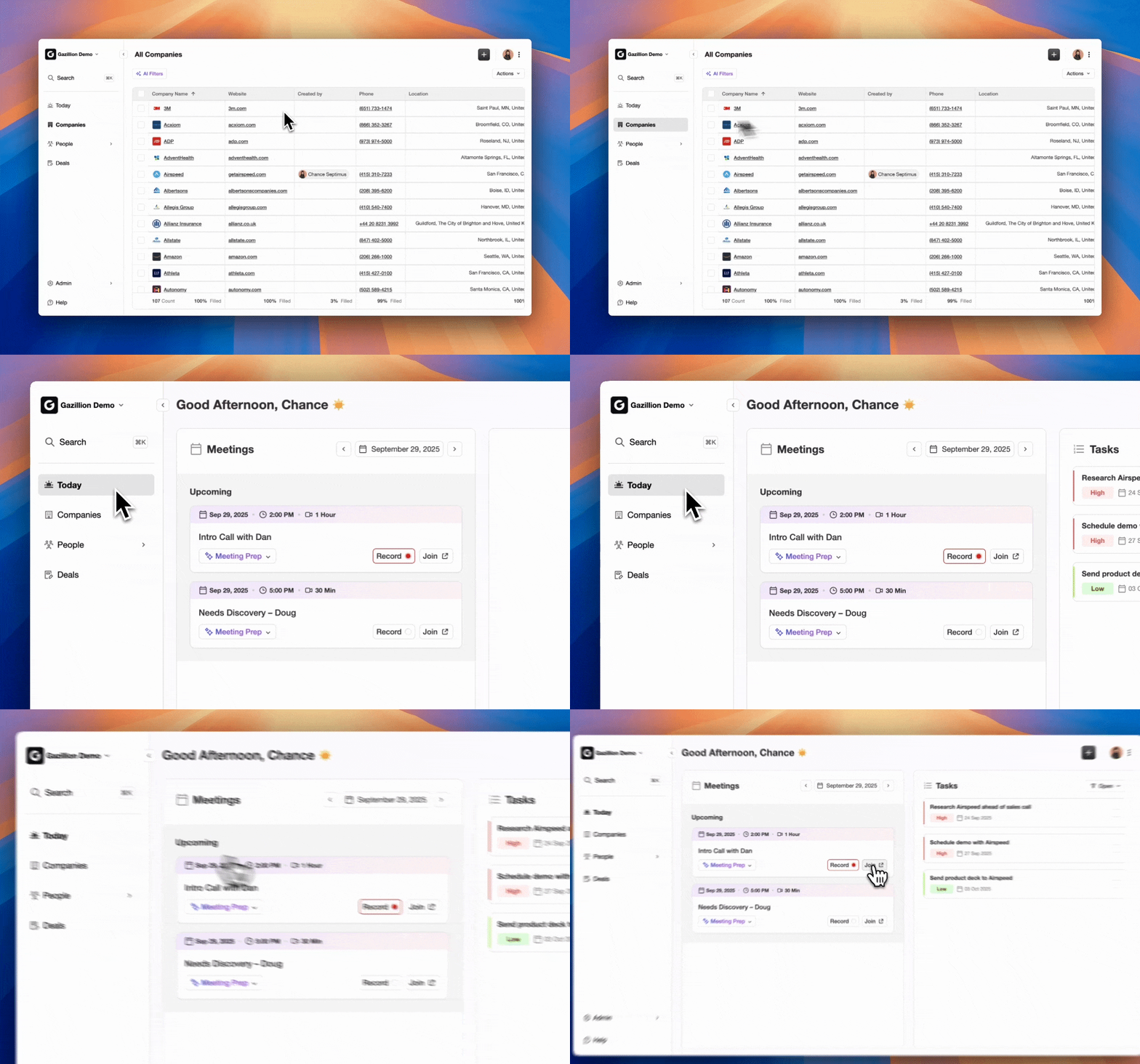
Clarify’s core architecture centers on what it calls Ambient Intelligence. The CRM behaves like an agent that works in the background without user prompts. In practice, the system scans emails, calendars, calls, transcripts, and notes autonomously. It summarizes interactions, updates fields, and manages tasks with no manual input from reps.
Pipeline hygiene runs through autonomous interaction analysis and customizable rules. These rules separate real sales deals from other conversations such as investor updates. Clarify also records meetings via Zoom, Meet, and Teams. It then extracts goals, pain points, stakeholders, and objections, and updates the pipeline automatically.
A personal sales agent called “Rep” handles briefings and follow-ups for each user. On implementation, Clarify ships with optimized defaults that work immediately. Teams avoid configuration, data imports, and field mapping during setup.
Is Clarify CRM Good?
Clarify delivers strong value for a 1–5 person founder-led team. The zero-touch setup removes the weeks of configuration that often derail HubSpot and Salesforce deployments. The clean interface and ambient capture model help reps treat the system as a co-pilot instead of a data entry form. Sift reports a 90% reduction in CRM admin time with Clarify, and Paramark and Volca report additional time savings.
The limitations become visible as teams grow or need deeper operational infrastructure. For example, outbound sequencing in Clarify (via Campaigns) only became generally available in March 2026, so teams that scaled outbound earlier had no native option. Native landing page tracking relies on configurable fields instead of automated capture, which reintroduces manual setup work. Integration breadth beyond email and calendar remains limited, with open APIs and Zapier support serving as the main connectors, which can add maintenance overhead as the stack expands.
The broader market context reinforces this point. Ninety percent of leaders say a strong data strategy is critical to AI success, yet 45% admit their CRM data is not ready for AI tools. Clarify solves the data-in problem cleanly for small teams. Its reporting and integration architecture, however, limit what larger teams can extract as they scale.
Clarify CRM Pros and Cons for Small Teams
Pros:
-
Zero-configuration setup: no spreadsheet exports, CSV uploads, or cleanup projects required
-
Ambient capture of email, calendar, calls, and transcripts with no manual input
-
4.9/5 G2 rating with task and activity management at 73% positive mentions
-
Rep agent handles briefings and follow-ups autonomously
-
Free tier plus Starter plan at $50/month with credit-based pricing
Cons:
-
Outbound sequencing only became available in March 2026
-
No institutional-grade reporting or pre-built compliance frameworks
-
Integration breadth limited to email, calendar, and Zapier, with no native data warehouse
-
macOS stability complaints surfaced in forum feedback from 2025–2026 users
-
Founded in 2024 and still maturing, and Salesforce or HubSpot companion capability is not a core product offering
If Clarify’s integration limits or lack of companion mode create blockers for your team, Coffee’s dual-model approach offers an alternative path.
Clarify CRM vs Coffee: Head-to-Head Comparison
The table below compares how Clarify and Coffee handle key CRM capabilities. It focuses on data capture, reporting depth, integration approach, visitor identification, and pipeline intelligence so you can see which model fits your team’s stage and stack.
|
Criteria |
Clarify CRM |
Coffee Standalone |
Coffee Companion (Salesforce/HubSpot) |
|---|---|---|---|
|
Data capture automation |
Autonomous capture from Google Workspace or Microsoft 365, auto-creating contacts, companies, and activities |
Agent syncs, enriches, and writes interactions back to existing Salesforce or HubSpot |
|
|
Reporting depth |
Basic reporting with no pre-built compliance or institutional frameworks |
Pipeline Compare visualizes week-over-week deal changes from a built-in data warehouse, removing manual CSV exports |
Pipeline intelligence written back to the existing CRM to augment native Salesforce or HubSpot reporting |
|
Salesforce/HubSpot companion capability |
Not offered, standalone only |
Not applicable, replaces legacy CRM |
Core product, agent handles data-in so the system of record stays accurate without human effort |
|
Visitor identification |
Not documented as a native feature |
Single-pixel visitor ID identifies named individuals, infers title, email, and LinkedIn, and surfaces Suggested Leads that match your buyer persona |
Same visitor ID capability available inside the companion layer |
|
Pipeline intelligence |
Autonomous pipeline updates without week-over-week comparison |
Pipeline Compare highlights progressed, stalled, and new deals automatically |
Pipeline intelligence feeds into existing CRM records |
|
Pricing model |
Free tier and Starter at $50/month with credit-based pricing |
Seat-based pricing with agent labor included and no LLM usage metering |
Seat-based pricing with agent labor included and no LLM usage metering |
|
Integration breadth |
Google Workspace, Microsoft 365, Zoom, Teams, Meet, Zapier, plus enrichment via licensed data partners |
Salesforce or HubSpot as the system of record, with the same enrichment and meeting integrations |
The table above highlights functional differences. The final choice often depends on deployment model and existing infrastructure. Coffee’s dual approach, as a standalone CRM or companion agent, covers scenarios that the feature grid alone does not explain.
How Coffee Replaces or Extends Clarify CRM
Coffee operates a dual-model strategy that fits the two most common situations founder-led and early revenue teams face in 2026. Some teams need a full system of record. Others already rely on Salesforce or HubSpot and want reliable data quality without switching platforms.
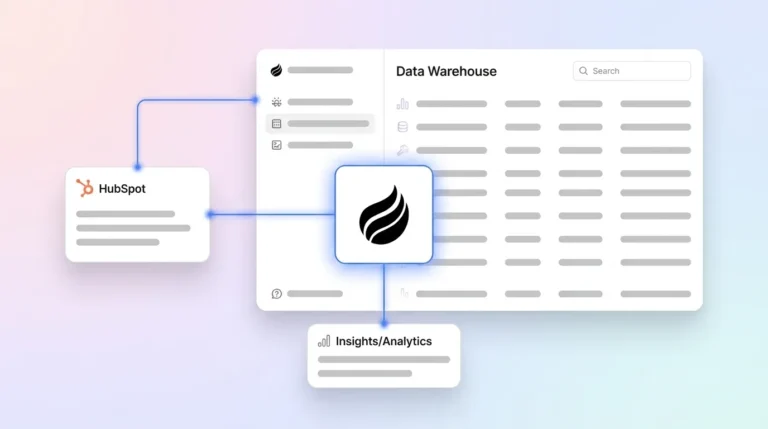
In standalone mode, the Coffee Agent handles the complete data capture workflow. It automatically creates and enriches contacts and companies from email and calendar data. It then joins calls to record and transcribe them. From those transcripts, it generates BANT, MEDDIC, or SPICED-structured summaries. These summaries flow into a built-in data warehouse that tracks all pipeline changes over time. The Pipeline Compare feature replaces manual weekly review spreadsheets with an automated week-over-week view of progressed, stalled, and new deals.
Beyond pipeline management, Coffee covers a critical gap in early prospecting that Clarify does not address. Tools like RB2B and Warmly surface company-level data or broad people lists. Coffee instead identifies named individuals from anonymous website traffic and uses your buyer persona to recommend two or three specific people inside each visiting company to contact. It surfaces LinkedIn profiles for immediate outreach, which turns passive website traffic into actionable outbound targets without manual research.

For teams already committed to Salesforce or HubSpot, Coffee’s companion layer solves the same data quality problem without a platform migration. The agent handles the data-in process so the existing system of record stays accurate without human effort. This matters because tech silos can limit AI and CRM effectiveness, and the companion model keeps your current platform while improving its data.

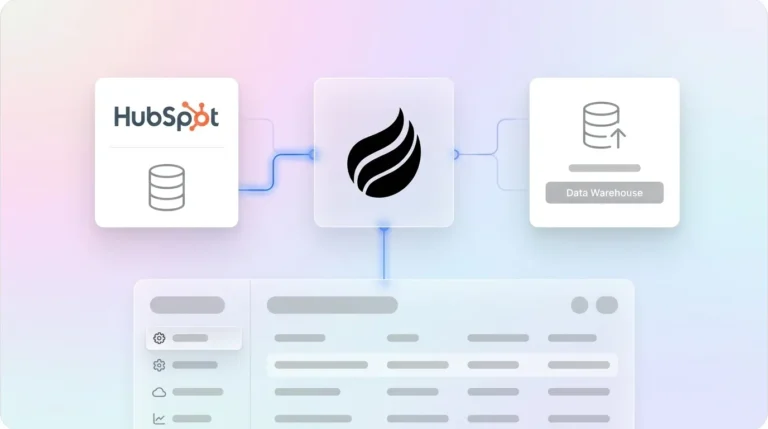
See how Coffee’s companion agent connects to your Salesforce or HubSpot instance.
Which CRM Works Best for Beginners?
Clarify fits founder-led teams of one to five people that need immediate, zero-configuration automation and have no existing CRM investment. Its ambient model removes the setup friction that causes many early-stage teams to abandon HubSpot within weeks. Clarify’s free tier and low-cost Starter plan make it accessible at pre-revenue stages.
Coffee Standalone fits teams of one to twenty that have outgrown spreadsheets and want an automated system of record with deeper reporting, visitor identification, and pipeline intelligence from day one. Coffee Companion fits teams of any size already running Salesforce or HubSpot that need an agent to solve the data quality problem without a platform migration. Poor CRM adoption causes pipeline leakage. The companion model reduces that risk without forcing change management around the system of record.
Best-Fit Use Cases and Operational Considerations
Choose Clarify if: You are a one-to-five person founding team with no existing CRM, call-heavy B2B sales, and a need for immediate zero-touch setup. At this stage, configuration projects and data migrations slow you down more than they help. Clarify’s ambient model removes manual entry and surfaces follow-ups without any upfront admin work.
Choose Coffee Standalone if: You are a team of one to twenty that has outgrown spreadsheets and needs a full system of record. At this stage, stitching together separate tools for call recording, enrichment, and forecasting creates integration debt and extra maintenance. Coffee’s built-in data warehouse consolidates these needs into a single agent that handles recording, enrichment, visitor identification, and week-over-week pipeline intelligence.
Choose Coffee Companion if: You already use Salesforce or HubSpot and need an agent to handle data quality, meeting capture, and pipeline hygiene without migrating your system of record. In 2026, the CRM that becomes the hub for AI agents wins, while others risk becoming overpriced databases. Coffee’s companion model keeps your existing CRM as that hub while assigning the agent to do the work.
Sales reps spend about 70% of their time on non-selling tasks such as updating records and entering data. Clarify and Coffee both reduce this burden. Coffee’s data warehouse architecture and dual deployment model, however, create a more durable foundation as headcount and pipeline complexity grow.
Decision Framework for Clarify vs Coffee
The framework below groups recommendations by team stage and primary constraint. Use it to match your situation to the model that best addresses your current bottleneck.
|
Team Stage |
Primary Constraint |
Best Fit |
|---|---|---|
|
1–5 person founding team, no CRM |
Zero setup time and minimal budget |
Clarify (free or Starter tier) |
|
1–20 person team, outgrown spreadsheets |
Automated system of record with reporting and visitor ID |
Coffee Standalone |
|
Any size, existing Salesforce or HubSpot |
Data quality and adoption without migration |
Coffee Companion |
|
Scaling team needing outbound sequencing now |
Live sequencing capability |
Coffee (Clarify sequencing launched March 2026) |
|
Team prioritizing pipeline review automation |
Week-over-week pipeline visibility without spreadsheets |
Coffee (Pipeline Compare feature) |
Use the framework above to identify your best-fit model. Then review Coffee’s pricing to see how seat-based costs compare with your current or planned CRM spend.
Frequently Asked Questions
How long does it take to implement Coffee versus Clarify?
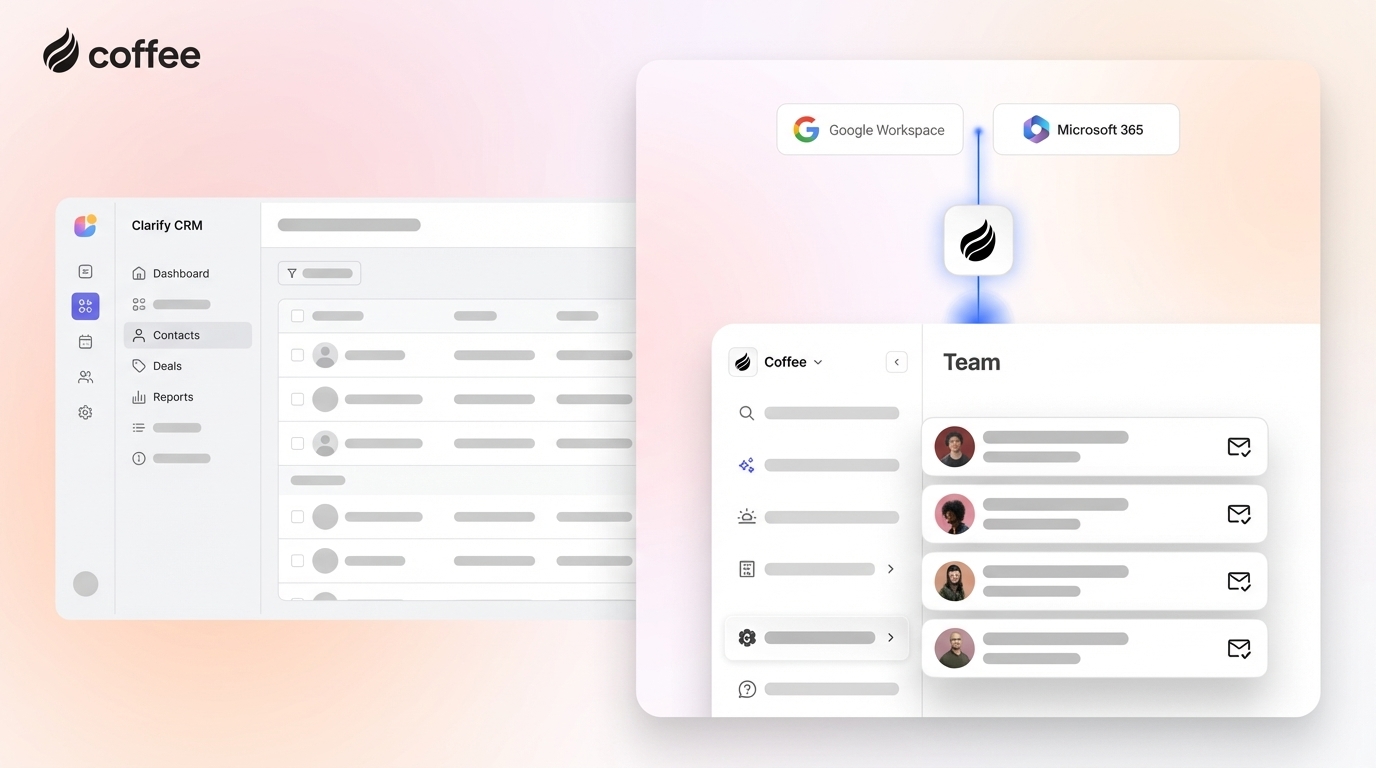
Both platforms support fast deployment. Clarify connects to email and calendar and begins capturing data immediately with no configuration. Coffee Standalone follows a similar pattern. You connect Google Workspace or Microsoft 365, and the agent begins auto-creating contacts, logging activities, and joining calls in the same session. Coffee Companion requires a simple authentication to your existing Salesforce or HubSpot instance. After that, the agent starts syncing and enriching data. Neither platform needs dedicated ops resources, data migration, or field mapping during initial setup.
What happens to data quality over time with an autonomous CRM agent?
The core architectural difference between autonomous agents and traditional CRMs is reliance on human input. Autonomous agents do not depend on reps to maintain data quality. Coffee’s agent ingests structured data such as contacts, companies, and deal stages, along with unstructured data like email text and call transcripts, into a built-in data warehouse that preserves historical context. Week-over-week pipeline comparisons and forecasts then draw from a complete, continuously updated record instead of a snapshot that degrades when reps skip manual entry. Clarify uses a similar ambient capture model but does not document a native data warehouse, which limits the depth of historical analysis as the team scales.
Can Coffee work alongside an existing Salesforce or HubSpot investment?
Yes. Coffee’s Companion App is built for teams committed to Salesforce or HubSpot. The agent authenticates to the existing instance and handles the data-in process, capturing meetings, enriching records, and logging activities so the system of record stays accurate without human effort. This approach addresses the most common failure mode of legacy CRM deployments: low adoption that leads to bad data and unreliable forecasts. The companion model avoids migration and does not displace the existing platform. It acts as the agent layer that makes the current investment productive.
Is Coffee secure, and how is customer data handled?
Coffee is SOC 2 Type 2 and GDPR compliant. Customer data is not used to train public models. For teams in regulated industries or with strict data governance requirements, Coffee’s security posture covers the standard needs for SMB and mid-market deployments. Teams with multi-year security review processes typical of healthcare or financial services enterprises fall outside Coffee’s current target profile.
How does Coffee’s pricing compare to Clarify’s credit-based model?
Coffee uses seat-based pricing where the agent’s labor is included without metering LLM usage or process counts. You pay for human seats, and the agent works without extra per-action charges. Clarify’s Starter plan is priced at $50/month with credit-based pricing, which suits very early teams. Coffee’s seat-based model becomes more predictable as team size and automation volume grow because there are no usage caps or credit limits to manage. Full pricing details for both standalone and companion models appear on Coffee’s pricing page.