Written by: Doug Camplejohn, CEO & Co-Founder, Coffee
Key Takeaways For CRM Data Lakes
- Most CRM data lakes fail because the source data is not trustworthy. Duplicates, missing fields, and overwritten history spread through every layer.
- Fix the source before building the pipeline. Deploy an agent-led data entry layer so clean, ground-truth data lands in Bronze.
- Use the Medallion Architecture to structure the pipeline: Bronze for raw ingestion, Silver for cleaned and conformed records, Gold for business-ready entities.
- Apply SCD Type 2 in Silver to preserve full record history. Enforce deduplication and validation gates before records promote to Silver.
- Coffee automates data entry, enriches contacts and companies, and logs activity autonomously so clean data reaches the lake from day one.
The Problem: Step 0 — The CRM Is Your Weakest Link
Every downstream model, forecast, and Customer 360 inherits the errors present in the CRM at ingestion time. Bad data in, bad data out, and a data lake amplifies the problem at scale instead of fixing it.
71% of sales reps say they spend too much time on data entry, leaving only 35% of their time for selling, according to market data shared by Coffee. Legacy CRMs like Salesforce and HubSpot rely on fallible human entry, so the lake inherits duplicates, missing fields, and overwritten history. About 70% of customer data becomes outdated within a year, and 76% of companies report that less than half of their CRM data is complete and accurate.
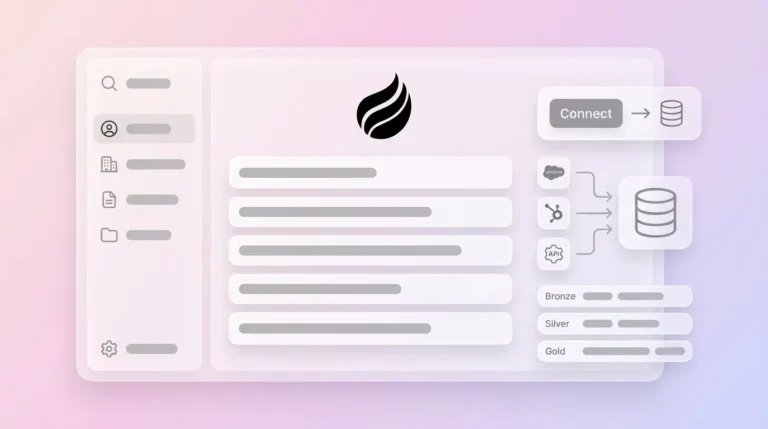
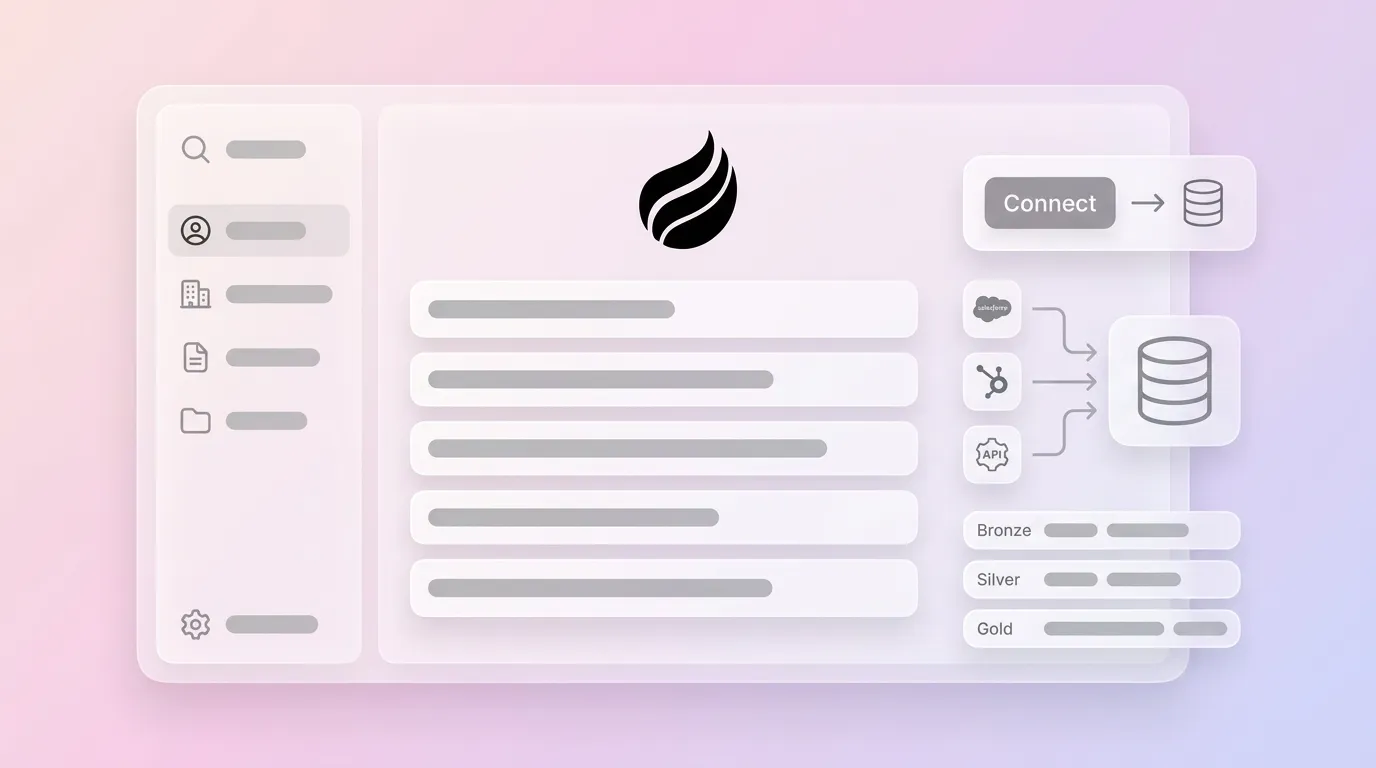
The upstream fix is Coffee. Because the Coffee Agent automates data entry, enriches contacts and companies, and logs activity autonomously, clean ground-truth data is what lands in Bronze. It also unifies structured and unstructured data such as emails and call transcripts, so the lake receives a single coherent record instead of a patchwork. Coffee runs either as a standalone AI-first CRM for SMBs or as a companion app on top of Salesforce and HubSpot, and it is SOC 2 Type 2 and GDPR compliant without using customer data to train public models.

Fix CRM Data Quality With Coffee
The Solution: Practical Roadmap For A CRM Data Lake
A practical CRM data lake follows a clear sequence. First, fix the source with an agent-led data entry layer. Next, choose an ingestion pattern that matches your CRM and latency needs. Then land raw payloads in Bronze with metadata columns intact and no transformations. In Silver, implement SCD Type 2 to preserve record history and apply deduplication and validation gates. Finally, model Bronze, Silver, and Gold layers and enforce governance, including PII masking, access controls, lineage, and retention.
Ingestion Patterns: Full Load, Incremental, CDC, And Webhooks
Ingestion pattern selection depends on CRM platform, acceptable latency, and API budget. The table below shows that Salesforce and HubSpot require different ingestion patterns, so a single design rarely serves both well.
| CRM | Primary Ingestion Method | Retention Window | Best-Fit Use Case |
|---|---|---|---|
| Salesforce | An optional initial historical load via Bulk API 2.0, then real-time CDC via the Pub/Sub API (gRPC, HTTP/2, binary Avro); Bulk API 2.0 can alternatively be used for periodic polling | 72-hour event bus retention | Warehouse replication, Customer 360, near-real-time pipeline |
| HubSpot | Webhooks as control signals triggering re-fetch; cursor-based pagination for batch | For subscription-based webhooks, failed notifications are retried up to 10 times, spread out over the next 24 hours with varying delays; workflow webhooks follow different retry rules | Contact and deal sync, activity capture, incremental refresh |
| Either (no CDC) | Incremental batch with high-water mark on updated_at | Bounded by source API query window | Teams tolerating delay; sources without stable event ordering |
ETL Vs. ELT For CRM Data: ELT fits a CRM data lake. Raw payloads land in Bronze first with schema-on-read, and transformation happens downstream in Silver and Gold. ETL that transforms before landing destroys the authoritative record of what the source sent and makes debugging discrepancies months later much harder.
CDC Payload Handling: A Salesforce CDC event is a JSON payload split into a ChangeEventHeader (replayId, commitTimestamp, transactionKey, schemaVersion) and a body listing only the fields that changed. Unchanged fields are absent, so consumers must apply deltas instead of overwriting full rows. Recommended metadata columns on every Bronze CDC record:
_source— originating system (for example,salesforce,hubspot)_ingested_at— pipeline ingestion timestamp_batch_id— load batch identifier for lineage_operation— CDC operation type:CREATE,UPDATE,DELETE,UNDELETE
Salesforce CDC has no historical backfill: it captures only changes after it is enabled, so a new integration requires a full Bulk API load first, then CDC on top. Coordinate the cutover carefully to avoid gaps.
Fivetran Vs. Custom API Ingestion: Fivetran and similar managed connectors handle replayId checkpointing, schema evolution, and rate-limit back-pressure out of the box. Custom ingestion gives full control over metadata columns, CDC payload routing, and cost, but requires engineering investment in replayId checkpointing from day one, dead-letter queues, and idempotent processing. Teams without a dedicated data engineering function usually reduce operational risk with managed connectors. Teams with specific metadata or routing requirements often justify custom ingestion.
How To Preserve CRM Record History With SCD Type 2
Legacy relational CRMs lose historical context when fields are updated because the old value is overwritten. The lake must capture every version of every record. SCD Type 2 preserves full history by inserting a new row every time a tracked attribute changes. The prior row is closed with a valid_to timestamp and an is_current flag.
The following DDL creates a Silver opportunity dimension with SCD Type 2 history:
CREATE TABLE silver.dim_opportunity ( opportunity_key BIGINT GENERATED ALWAYS AS IDENTITY PRIMARY KEY, opportunity_id VARCHAR(18) NOT NULL, -- CRM natural key account_id VARCHAR(18), opportunity_name VARCHAR(255), stage_name VARCHAR(100), amount NUMERIC(18,2), close_date DATE, owner_id VARCHAR(18), valid_from TIMESTAMP NOT NULL, valid_to TIMESTAMP, -- NULL = currently active is_current BOOLEAN NOT NULL DEFAULT TRUE, _source VARCHAR(50) NOT NULL, _ingested_at TIMESTAMP NOT NULL, _batch_id VARCHAR(64) NOT NULL ); CREATE UNIQUE INDEX uq_opp_current ON silver.dim_opportunity (opportunity_id) WHERE is_current = TRUE; Worked Example — Opportunity Moving $50K → $75K → $100K: The table below shows how a single opportunity produces three rows over time, with only the latest row flagged is_current = true.
| opportunity_key | opportunity_id | amount | valid_from | valid_to | is_current |
|---|---|---|---|---|---|
| 1001 | 006Xx0000001 | 50000.00 | 2026-01-10 09:00:00 | 2026-03-15 14:22:00 | false |
| 1002 | 006Xx0000001 | 75000.00 | 2026-03-15 14:22:00 | 2026-06-01 11:05:00 | false |
| 1003 | 006Xx0000001 | 100000.00 | 2026-06-01 11:05:00 | NULL | true |
With that table in place, the SCD Type 2 load logic runs in two passes inside a transaction. When a change is detected on opportunity_id:
- Update the existing current row and set
valid_to = incoming_valid_fromandis_current = false. - Insert a new row with updated attribute values,
valid_from = incoming_timestamp,valid_to = NULL,is_current = true, and a fresh surrogate key.
Point-in-time fact joins use the predicate JOIN ON opportunity_id AND fact.ts >= dim.valid_from AND (fact.ts < dim.valid_to OR dim.valid_to IS NULL). Fact tables should store the surrogate key at load time to avoid the range predicate at query time.
A robust SCD Type 2 pipeline must guard against late-arriving data by skipping the close step when the incoming timestamp is not newer than the current version, and must be idempotent so re-running the same batch does not create duplicate versions.
Bronze, Silver, And Gold Layers For Salesforce And HubSpot Data
Bronze is an immutable, append-only archive. Bronze stores raw Account, Contact, Lead, Opportunity, and Activity payloads without transformation, adding only the metadata columns described above. A common Bronze-layer failure mode is transforming data at ingestion, which destroys the authoritative record of what the source sent.
Silver is the cleaned, conformed, and deduplicated layer. CRM objects map to analytical entities as follows:
- Account + Contact →
silver.dim_customer(SCD Type 2, unified on email or normalized name) - Opportunity →
silver.dim_opportunity(SCD Type 2, as shown above) - Lead →
silver.dim_lead(converted leads merged into dim_customer on conversion) - Activity (Task, Event, EmailMessage) →
silver.fact_activity(append-only, keyed on activity_id)
Sample Silver transformation SQL for deduplicating Bronze contacts:
SELECT * FROM ( SELECT id AS contact_id, email, first_name, last_name, account_id, title, TRY_CAST(created_date AS TIMESTAMP) AS created_at, TRY_CAST(last_modified_date AS TIMESTAMP) AS updated_at, _ingested_at, _source, ROW_NUMBER() OVER ( PARTITION BY id ORDER BY TRY_CAST(last_modified_date AS TIMESTAMP) DESC, _ingested_at DESC ) AS rn FROM bronze.salesforce_contact WHERE _operation != 'DELETE' ) WHERE rn = 1; Gold is the business-ready layer with Kimball-style fact and dimension tables materialized as physical tables. Example Gold entities:
gold.fact_opportunity_snapshot— one row per opportunity per week. It joins dim_opportunity on the surrogate key to support point-in-time revenue reporting.gold.dim_customer_current— current-state customer dimension filtered onis_current = truefor dashboard performance.gold.fact_activity_summary— activity counts by customer, rep, and period for pipeline coverage analysis.
How To Handle CRM Duplicates And Bad Data Before It Hits The Lake
Even with clean ingestion and SCD Type 2 history, duplicates that already exist in the source will reach Silver unless you gate them. Duplicates accumulate when a prospect enters the CRM through a webinar list, an SDR later creates the same person manually from LinkedIn, and a B2B data tool syncs a third version with a different company name or email format, splitting activity history across records owned by different reps. The Silver layer must reconcile these before they reach Gold.
Recommended deduplication gates before Bronze-to-Silver promotion:
- Exact Matching: deduplicate on normalized email address and CRM record ID.
- Fuzzy Matching: catch variants like “Bob Smith at IBM” vs. “Robert Smith at International Business Machines” using token-based similarity on name plus domain.
- ID Reconciliation: map Salesforce
AccountIdto HubSpotcompany_idvia a shared identifier table keyed on domain or external system ID. - Validation Gates: reject or quarantine records with null email, malformed phone, or missing
account_idbefore Silver promotion and route them to a quarantine table for investigation.
Coffee’s agent-led data entry prevents duplicates and missing fields at the source. When the Coffee Agent creates a contact from an email or calendar event, it checks for existing records before writing, so the Silver layer’s deduplication workload is materially smaller. Cleaning existing CRM records without fixing the intake process means the same data quality issues return within months.

Prevent Duplicates With Coffee
Governance And PII In Your CRM Data Lake
PII Masking: Under UK GDPR Article 4(5), pseudonymisation requires that the re-identification key be kept separately from the pseudonymised dataset, protected by technical and organisational measures. In practice, tokenize email addresses and phone numbers in Bronze using a KMS-managed key, store the mapping table in a separate, access-controlled database, and expose only tokens in Silver and Gold. The ICO recommends bcrypt or tokenisation over MD5 or SHA-1, which are vulnerable to brute-force attacks.
Row And Column Controls: AWS Lake Formation provides fine-grained row and column-level security on S3-backed tables. Apply column masks on PII fields such as email, phone, and address for analyst roles. Restrict row-level access to records within a rep’s territory for sales-facing Gold views.
Lineage And Retention: Lineage and retention both depend on metadata that must be captured at ingestion. Tag every Bronze table with _source, _ingested_at, and _batch_id, then use Delta Lake’s transaction log or Iceberg’s snapshot tree as the audit trail. Retention policies build on that same metadata: set S3 lifecycle policies to expire Bronze raw payloads after your contractual retention period, typically 7 years for financial records and 2 years for general CRM activity under GDPR minimization principles. Deletion requests require a different path. Implement soft deletes in Bronze by setting a gdpr_erased_at column, then propagate hard deletes to Silver and Gold via a scheduled erasure job.
When A CRM Data Lake Is The Wrong Choice
Some teams gain more value by improving CRM data quality and reporting on existing platforms than by building a lake this quarter. Use these criteria to decide.
- Your CRM Data Is Not Trusted. If fewer than 90% of required CRM fields are populated and duplicates exceed 5% of records, fix the source first because retroactive cleanup costs often exceed what proactive governance would have required.
- Your Analytical Questions Are Well-Defined And Structured. A small team running dashboards over a few terabytes will likely ship faster and operate more cheaply on a managed warehouse than by assembling a lakehouse stack.
- You Lack Data Engineering Capacity. A lakehouse is assembled from components, not bought as one product. If the team cannot maintain CDC checkpointing, schema evolution, and SCD Type 2 pipelines alongside primary responsibilities, a managed warehouse or a BI tool with a direct CRM connector delivers more value sooner.
- You Are An SMB With A Clean CRM. For some SMB teams, fixing CRM data quality at the source with an agent-led CRM like Coffee delivers more analytical value than building a lake at all. Coffee’s built-in data warehouse and Pipeline Compare feature provide week-over-week pipeline visibility without a separate ingestion pipeline.
The questions below address the most common points of confusion that arise once teams begin evaluating a CRM data lake.
Frequently Asked Questions
What Is A CRM Data Lake And How Does It Differ From A CRM Data Warehouse?
A CRM data lake lands raw CRM payloads such as JSON, CSV, and CDC events in object storage (S3, ADLS, GCS) using schema-on-read. It preserves every version of every record for historical analysis, ML, and exploratory workloads. A CRM data warehouse applies schema-on-write, so data is transformed and validated before loading, which produces consistent, audit-ready outputs suited to governed reporting. A CRM data lakehouse combines both. Open table formats like Delta Lake, Apache Iceberg, or Apache Hudi add ACID transactions, schema evolution, and time travel on top of object storage, enabling BI and ML workloads on the same physical tables. For most mid-market teams building a Customer 360 or revenue analytics layer, a lakehouse pattern on top of S3 is the practical target.
How Do I Handle Salesforce CDC Without Losing Events During Downtime?
As noted in the ingestion table, Salesforce CDC events are retained for 72 hours, so subscribers must persist the last processed replayId externally in a database, S3 object, or Redis. This persistence lets the pipeline resume from the correct position after a restart. Implement idempotent processing at the destination so replayed events do not create duplicate rows. Use a dead-letter queue for events that fail after several retry attempts. Monitor daily allocation usage against the org’s delivery ceiling (25,000 deliveries per 24 hours on Enterprise Edition) and alert at 70% to avoid silent event loss during quarter-end bulk loads.
What Is The Recommended Way To Deduplicate CRM Records In The Silver Layer?
Use a two-pass approach. First, apply exact matching on normalized email address and CRM record ID using a ROW_NUMBER() window function partitioned by the natural key and ordered by updated_at and _ingested_at descending. Second, apply fuzzy matching on name plus domain to catch the kinds of variants described in the deduplication section above. Route records that fail validation, such as null email, malformed phone, or missing account_id, to a quarantine table rather than dropping them so issues can be investigated and reprocessed. The most durable fix is preventing duplicates at the source, where Coffee’s agent checks for existing records before creating new ones so the Silver deduplication workload is smaller from the start.
How Does Coffee Fix CRM Data Quality Before It Reaches The Lake?
Coffee addresses the source-data problem described at the top of this article by automating the data entry work sales reps currently do manually. It scans emails and calendars to auto-create contacts and companies, enriches records with job titles, funding, and LinkedIn profiles via licensed data partners, and logs activity autonomously. It also processes unstructured data such as call transcripts and email threads and structures it against sales methodologies like MEDDIC or BANT, so qualification fields are populated rather than blank. The result is that the data landing in Bronze is ground-truth instead of a patchwork of manual entries. Coffee is available as a standalone CRM for SMBs or as a companion app layered on top of existing Salesforce or HubSpot instances, and is SOC 2 Type 2 and GDPR compliant.

When Should A Team Choose A Lakehouse Over A Plain Data Lake For CRM Data?
Choose a lakehouse when the workload includes record-level updates and deletes such as GDPR erasure requests and late-arriving corrections, CDC ingestion from Salesforce or HubSpot, or multiple query engines over one copy of data. Open table formats such as Delta Lake, Apache Iceberg, and Apache Hudi add ACID transactions, schema evolution, and time travel on top of object storage. These features solve the concurrent-write and partial-read problems that make plain data lakes unreliable for governed CRM analytics. A plain data lake remains appropriate as a cheap landing zone and archive for raw event dumps or ML training corpora where transactional consistency is not required. For most teams building a CRM analytics layer this year, a lakehouse pattern is the correct target.
Conclusion
A CRM data lake is a mirror of the CRM feeding it. The Medallion Architecture, with Bronze for raw ingestion, Silver for cleaned and conformed history, and Gold for business-ready analytical entities, is a proven pattern for turning CRM data into governed, queryable assets. The architecture delivers ROI only when the source data is trustworthy. The source-data problems described earlier propagate through every layer and corrupt every downstream model, forecast, and Customer 360.
Step 0 is fixing the source. Coffee’s agent-led data entry layer ensures clean, ground-truth data enters the CRM before it ever reaches Bronze. It automates contact creation, activity logging, and record enrichment so the Silver layer has less to clean and the Gold layer has more to trust. For teams that have already decided to build, the ingestion patterns, SCD Type 2 DDL, and Medallion modeling guidance above provide an executable starting point. For teams still evaluating, source data quality determines lake ROI more than any architectural choice downstream.
Start Improving CRM Data With Coffee