Written by: Doug Camplejohn, CEO & Co-Founder, Coffee
Key Takeaways
- Accurate CRM forecasting starts with high-quality data capture, not with more advanced dashboards that analyze flawed inputs.
- Manual data entry, unclear ownership, and fragmented tools create most CRM data hygiene issues and drive missed revenue targets.
- Clari, Salesforce Einstein, HubSpot Forecasting, and Pipedrive analyze existing data but still depend on reps to log information correctly.
- Coffee uses an autonomous agent that captures contacts, activities, and call insights automatically, without relying on rep behavior.
- Teams ready to improve forecast reliability should explore Coffee’s pricing to see how an agent layer can upgrade their existing CRM.
Why Automated Data Capture Drives Forecast Accuracy
CRM data hygiene directly affects whether sales forecasts hit or miss their targets. Improving CRM data hygiene raises forecast accuracy metrics in a measurable way. The scale of the problem is significant: only 7% of companies achieve 90%+ forecast accuracy, with the remaining 93% operating on forecasts that miss by double digits, and Clari Labs reported that 87% of enterprises missed revenue targets in 2025, linking the misses to systemic CRM pipeline data management failures.
The root cause sits in how data enters and lives inside the CRM. Poor CRM data quality stems from five sources: manual entry errors, lack of data ownership, natural data decay, duplicate records, and tool fragmentation. B2B contact data decays at 22.5% per year even in a perfectly clean CRM, and 76% of organizations report that less than half of their CRM data is accurate and complete. At the same time, emails, calls, and meetings happen outside the CRM without automatic capture because reps move immediately to the next activity after productive calls without logging details. Forecasting then runs on incomplete, stale, and subjective inputs, and no dashboard can repair that after the fact.
Five Practical Criteria for Evaluating Sales Reporting Platforms
1. Data Capture Automation: Focus on how fully the platform removes manual logging of contacts, activities, emails, calls, and meeting outcomes. Platforms that depend on rep-initiated entry inherit the same gaps, delays, and biases that manual processes always create.
2. Integration Depth with Salesforce or HubSpot: Check whether the platform reads from and writes back to the existing system of record or creates a separate data silo. Companion-agent approaches that enrich the primary CRM behave very differently from standalone overlays that sit beside it.
3. Pipeline Visibility and Change Tracking: Look for automatic tracking of week-over-week deal movement, stage changes, close-date drift, and stalled opportunities. This should happen without manual CSV exports or scheduled reports that someone must maintain.
4. Implementation and Ongoing Admin Burden: Consider time to first value, configuration complexity, and the maintenance effort required as the team and deal volume grow. A platform that needs constant admin attention rarely sustains accurate reporting.
5. Total Cost of Ownership vs. Forecast Reliability: Evaluate the full cost, including licenses, add-ons, integration tools, and admin time. Compare that cost to measurable improvements in forecast accuracy, not just to feature lists.
Platform Comparison: How Each Tool Handles Data Entry
Clari ingests CRM and activity data from connected systems but does not solve the upstream manual entry problem. Reps still log activities in Salesforce or HubSpot, and Clari reads that data and applies AI scoring on top. When CRM hygiene is weak, Clari’s insights reflect those same gaps.
Salesforce Einstein offers activity capture through Einstein Activity Capture, which syncs emails and calendar events. However, siloed tools that never sync to CRM remain a persistent gap, and unstructured data from call transcripts does not flow natively into opportunity records without extra configuration or third-party tools.
HubSpot Forecasting benefits from HubSpot’s native email and calendar logging. Even so, forecast accuracy depends on clean CRM data and consistent deal stage management. Those conditions rely on rep discipline rather than automated enforcement.
Pipedrive offers basic email sync and activity reminders but remains a rep-driven system. Data quality mirrors rep behavior directly, because no agent layer fills gaps when reps skip logging under quota pressure.
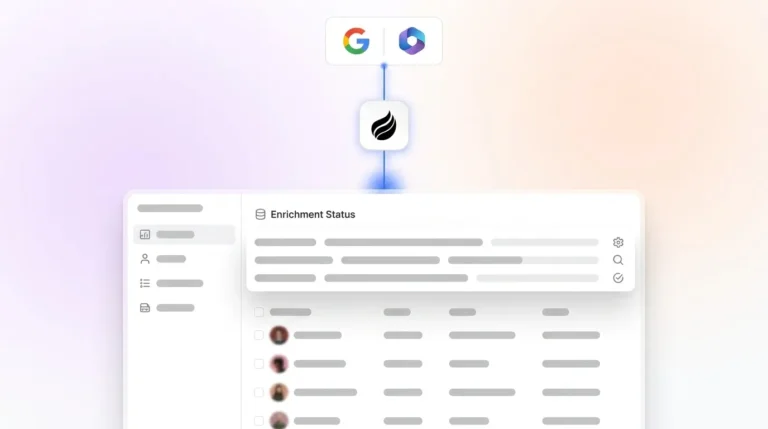
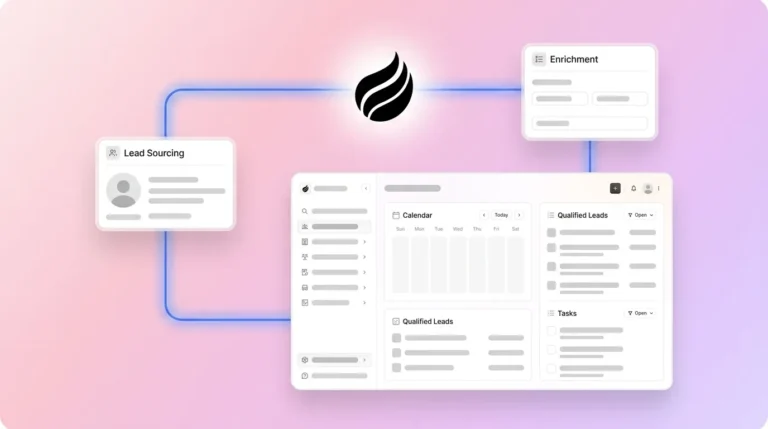
Coffee uses an autonomous agent that creates contacts and companies from email and calendar data, logs last and next activity without rep input, and turns call transcripts into structured CRM fields. The agent runs data entry as a background function and removes dependency on rep behavior entirely.


Platform Comparison: Pipeline Intelligence Built on That Data
Once data is captured reliably, the next priority is how each platform surfaces pipeline insights and deal intelligence. Analytics cannot compensate for missing activity data, yet strong capture makes intelligence features far more actionable for frontline teams.
Clari provides robust pipeline inspection and AI-driven deal scoring. Its value sits downstream, because it analyzes data that already exists in the CRM. The reliability of its insights tracks directly with the quality of upstream CRM hygiene.
Salesforce Einstein delivers predictive scoring and opportunity insights inside the Salesforce ecosystem. Deals with no activity in the past 14 days carry dramatically lower close probability, and Einstein can highlight these risks. It can only do so when activity data is present and current.
HubSpot Forecasting generates forecast views directly from live pipeline activity across multiple pipelines without spreadsheet exports. Weighted pipeline calculations and customizable forecast categories support quarterly projections when teams apply stage definitions consistently.
Pipedrive offers visual pipeline management and straightforward forecasting. It lacks the AI-driven deal intelligence of Clari or Einstein and fits teams that prioritize simplicity over analytical depth.
Coffee includes a Pipeline Compare feature that visualizes week-over-week changes automatically. It highlights progressed deals, stalled opportunities, and new additions without manual exports. Because the agent stores history in a built-in data warehouse, change tracking remains continuous and complete instead of point-in-time.
Platform Comparison: Integration with Existing Salesforce or HubSpot Stacks
Clari integrates with Salesforce and HubSpot as a read layer that pulls data for analysis. It does not write enriched data back to the CRM in a way that improves underlying record quality for other tools or reports.
Salesforce Einstein is native to Salesforce, so integration inside that ecosystem feels seamless. Teams on HubSpot or mixed stacks face significant configuration work before they can access Einstein’s capabilities.
HubSpot Forecasting is native to HubSpot CRM. Teams on Salesforce cannot use it without migrating their system of record, which rarely works for mid-market organizations with established Salesforce workflows.
Pipedrive operates as a standalone CRM. Teams already committed to Salesforce or HubSpot must either migrate or maintain parallel systems, and both paths increase data fragmentation instead of reducing it.
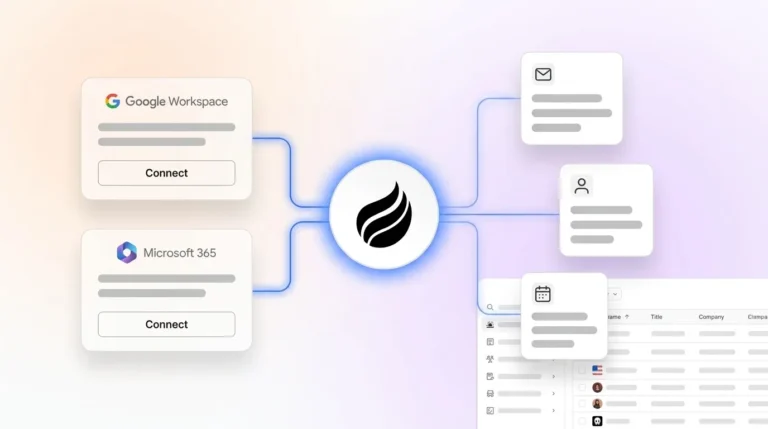
Coffee operates in two modes. As a standalone CRM, it serves teams without an existing system. As a Companion App, it authenticates against Salesforce or HubSpot, enriches records, and writes insights back to the primary CRM. This companion-agent approach improves the existing system of record without migration or parallel maintenance.
Platform Comparison: Long-Term Scalability for Growing Teams
Clari and Salesforce Einstein come with enterprise-grade pricing and configuration complexity. For small-to-mid-market teams, implementation and ongoing admin work can absorb the efficiency gains these platforms promise. Fewer than 30% of sales leaders express high confidence in their forecasts, and adding a complex analytics layer without fixing data quality rarely changes that number.
HubSpot Forecasting scales reasonably inside the HubSpot ecosystem but demands consistent process enforcement as headcount grows. Stage drift and close-date slippage, and close-date slippage above 40% indicates a systemic forecasting or sales process problem, often stemming from rep optimism bias or poor qualification, compound over time when no automated correction exists.
Pipedrive remains cost-effective for small teams but lacks the depth required for mid-market forecasting as deal complexity and rep count increase.
Coffee uses seat-based pricing with no metering on agent activity. The cost of automated data capture stays stable as usage volume grows. As deal count and headcount rise, the agent absorbs extra logging and enrichment work without additional per-action charges.
Best-Fit Use Cases by Team Size and Tech Stack
Early-stage teams (1–20 employees) that have outgrown spreadsheets but view Salesforce or HubSpot as expensive and maintenance-heavy fit best with Coffee’s Standalone CRM. The agent manages the system of record from day one and prevents the manual entry habits that create data quality debt in legacy systems.
Mid-market teams already committed to Salesforce or HubSpot that struggle with low CRM adoption, missing activity data, and unreliable forecasts fit best with Coffee’s Companion App. The agent authenticates against the existing CRM, fills data gaps automatically, and improves forecast reliability without migration or major process changes. Clari and Salesforce Einstein work for larger organizations with dedicated RevOps resources to manage configuration and maintenance, yet they still leave the upstream data capture problem in place.
Operational Considerations and Risks for Forecasting Platforms
Change management represents the most common implementation risk across all platforms. This risk appears when new tools add friction to rep workflows and require more manual logging. When that happens, poor data entry practices can worsen data quality instead of improving it. Platforms that remove rep burden, rather than adding reporting requirements, achieve higher adoption because they avoid the behavior change that often derails implementations.
Forecasts become unreliable when departments work from different metrics, such as marketing measuring sourced pipeline, sales tracking late-stage movement, and finance focusing on booked revenue timing. No forecasting platform can resolve this misalignment without a shared data foundation. Cross-tool data hygiene requires that every system writing to the CRM use consistent field definitions and stage criteria.
A persistent misconception holds that forecasting software fixes bad data. When forecast accuracy falls below 85%, the recommended starting point is CRM data quality audits and deal-stage hygiene enforcement, not changes to forecasting methodology. Platforms that automate data capture address the problem at the source. Platforms that only analyze existing data leave the underlying issues untouched.
Decision Framework Summary Matrix
The matrix below connects common team scenarios to the platform that best fits each situation. Use your current CRM, team size, and data quality challenges to identify which option closes your specific forecast reliability gaps.
| Scenario | Primary CRM | Recommended Platform | Key Reason |
|---|---|---|---|
| Early-stage team, no CRM yet | None | Coffee Standalone | Agent manages system of record from day one |
| Mid-market, Salesforce committed, low adoption | Salesforce | Coffee Companion | Agent fills data gaps without migration |
| Mid-market, HubSpot committed, low adoption | HubSpot | Coffee Companion | Agent enriches and writes back to HubSpot |
| Enterprise, Salesforce, dedicated RevOps team | Salesforce | Salesforce Einstein or Clari | Native depth for complex enterprise workflows |
| SMB, HubSpot, process-consistent team | HubSpot | HubSpot Forecasting | Native, low-cost option when data hygiene is maintained |
Frequently Asked Questions
How long does implementation typically take for each platform?
Coffee’s Companion App connects to Salesforce or HubSpot through a simple authentication flow and begins capturing data immediately. Most teams reach active use within a single business day. The Standalone CRM is similarly fast to configure for small teams without legacy data migration. Clari and Salesforce Einstein often require weeks or months of configuration, data mapping, and admin setup before they produce reliable outputs, especially in mid-market environments with custom Salesforce objects. HubSpot Forecasting is available natively within HubSpot and can be activated quickly, although meaningful forecast accuracy still depends on existing pipeline data quality. Pipedrive is fast to set up as a standalone system but requires manual data migration for teams moving from another CRM.
What migration effort is required when adding an agent layer to Salesforce or HubSpot?
Coffee’s Companion App does not require data migration. It authenticates against the existing Salesforce or HubSpot instance, reads current records, enriches them, and writes new data back. The existing system of record remains the source of truth. No parallel database needs maintenance, and no historical data needs to move. This approach differs from standalone forecasting tools that require their own data pipelines and create a second system that must stay in sync with the primary CRM. Teams with complex Salesforce configurations, including custom objects, required fields, quota structures, and forecasting hierarchies, benefit from Coffee’s deep understanding of these integration requirements, which many newer CRM alternatives lack.
How do these platforms handle data security and compliance in 2026?
Coffee is SOC 2 Type 2 certified and GDPR compliant. Data processed by the Coffee Agent does not train public AI models, which matters for sales organizations handling confidential deal information, customer communications, and financial projections. Salesforce Einstein and HubSpot operate under their respective enterprise security frameworks, both of which include SOC 2 compliance and robust data residency options. Clari maintains enterprise-grade security certifications appropriate for mid-market and enterprise deployments. Pipedrive offers standard security controls suitable for SMB use cases. Teams in regulated industries or with strict data governance requirements should still conduct a formal security review of any platform before deployment, regardless of stated certifications.
What measurable improvements in forecast accuracy can teams expect after automating data capture?
Evidence shows substantial gains when teams implement data capture automation correctly. Improving CRM data hygiene raises forecast accuracy metrics, especially when combined with regular pipeline velocity tracking that automated capture makes sustainable. The improvement comes from complete, current, and unbiased data as the input, not from more complex forecasting models. Teams that automate contact creation, activity logging, and call transcript processing remove manual entry errors, missing fields, and stale records that drive forecast misses. Pipeline reviews then shift from debating data accuracy to discussing deal strategy, which Coffee customers describe as the most immediate operational benefit.
Conclusion: Selecting a Platform That Produces Reliable Forecasts
As noted earlier, the vast majority of organizations miss their forecasts by double digits. The platforms that close that gap focus on getting accurate, complete data into the system from the start. Clari, Salesforce Einstein, HubSpot Forecasting, and Pipedrive each provide real value in specific contexts, yet all still depend on manual data entry that creates forecast-degrading gaps and errors. Coffee’s agent-first architecture addresses the data-quality problem at the source, either as a standalone system for early-stage teams or as a companion layer that strengthens an existing Salesforce or HubSpot investment. For Heads of Sales and RevOps leaders who need forecasts they can act on, the most effective starting point is automating what goes into the CRM, not adding more analysis on top of incomplete data.