Written by: Doug Camplejohn, CEO & Co-Founder, Coffee | Last updated: July 13, 2026
Key Takeaways for Sales and RevOps Leaders
- Monaco CRM and similar legacy platforms still force sales reps to spend most of their time on manual data entry, which produces incomplete and inaccurate CRM records.
- Autonomous AI CRM agents capture, enrich, and structure data from emails, calendars, calls, and web activity without human input, replacing passive databases that rely on manual updates.
- Coffee stands out as the only dual-model solution, working as both a standalone CRM and a companion layer with deep Salesforce and HubSpot integration.
- Key differences across alternatives include autonomous data capture depth, native CRM integration quality, pipeline intelligence features, and transparent seat-based pricing without usage metering.
- You can eliminate manual data entry and improve sales productivity with Coffee.
What an AI CRM Agent Means in 2026
An AI CRM agent is software that autonomously captures, structures, and enriches customer data from emails, calendars, call transcripts, and web activity, then executes follow-up actions without human input. It replaces the passive relational database model, which stores only what a human types into a field and loses historical context when that field is overwritten.
2026 Comparison Table: Seven Monaco CRM Alternatives
The comparison below focuses on two elements that buyers can evaluate consistently across tools: integration depth with Salesforce and HubSpot, and pricing structure for ongoing use.
| Tool | Salesforce / HubSpot Integration | Pricing Model |
|---|---|---|
| Coffee | Deep companion layer with bidirectional sync, quota and forecast field awareness | Seat-based, agent labor unlimited |
| folk | Via Zapier only, no native Salesforce or HubSpot connector | Seat-based tiers |
| Attio | No native Salesforce or HubSpot integration | Seat-based tiers |
| Clarify | Basic connectors, lacks quota, forecast, and required-field awareness | Seat-based tiers |
| Day.ai | Limited, not built for Salesforce or HubSpot pipeline complexity | Seat-based tiers |
| HubSpot Sales Hub | Native HubSpot, Salesforce sync via official connector | Tiered, AI features gated to higher plans |
| Pipedrive | Via third-party integrations and Zapier | Seat-based tiers |
Coffee: Dual-Model Autonomous Agent for Standalone and Companion Use
Coffee operates in two modes, so it can replace a legacy CRM or sit on top of Salesforce or HubSpot. This flexibility lets teams adopt autonomous data capture without a disruptive migration if they already run a major CRM.
As a Standalone CRM, Coffee replaces legacy platforms entirely. After connecting Google Workspace or Microsoft 365, the Coffee Agent scans emails and calendars to auto-create contacts and companies, enriches records with job titles, funding data, and LinkedIn profiles via licensed data partners, and logs every activity automatically. Reps do not need to type data into fields.

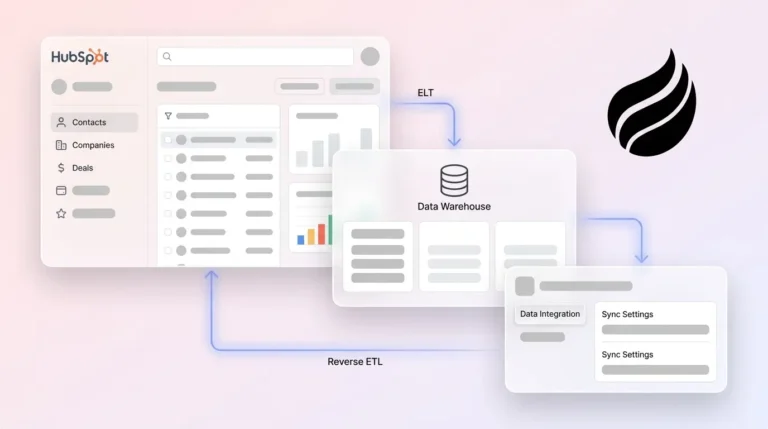
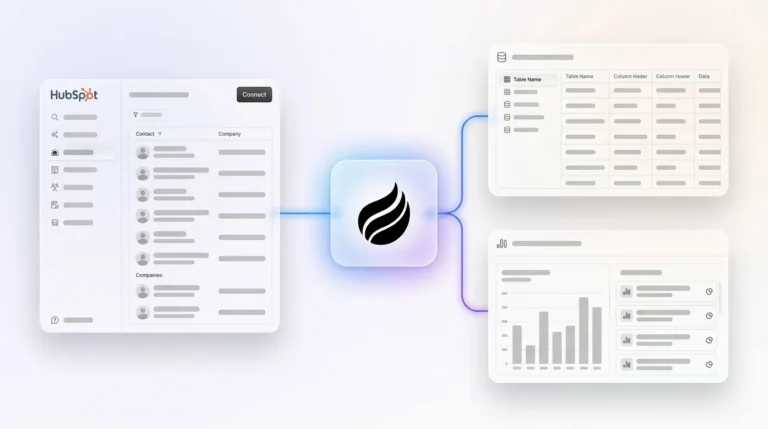
As a Companion App, Coffee runs as an intelligent layer on top of an existing Salesforce or HubSpot instance. A simple authentication lets the agent sync data, enrich it, and write insights back to the primary CRM. Coffee understands Salesforce and HubSpot structures, including quotas, forecast categories, required fields, and custom objects. Newer entrants have not yet reached this depth.

Additional capabilities include:

- AI Meeting Bot: Joins Zoom, Teams, and Meet calls to record, transcribe, and generate BANT, MEDDIC, or SPICED-structured summaries automatically.
- Pipeline Compare: Visualizes week-over-week pipeline changes, including progressed deals, stalled opportunities, and new additions, without spreadsheet exports.
- Visitor Identification: A single tracking pixel turns anonymous website traffic into named prospects with inferred name, title, email, and LinkedIn profile. Coffee’s Suggested Leads feature then recommends the two or three specific individuals inside a visiting company who match the buyer persona, which standalone tools like RB2B and Warmly do not provide.
- Seat-based pricing: Teams pay per human seat, and the agent’s labor is unlimited and unmetered.
Get started with Coffee and eliminate manual data entry from your sales process.
folk: Network CRM with Limited Autonomous Capture
folk excels at relationship management and LinkedIn-based contact capture, which suits founder-led sales and network-driven pipelines. Its Chrome extension surfaces contact data efficiently from social profiles. The gap appears in autonomous data capture, because folk does not natively log emails and calendar events without manual work, and it connects to Salesforce and HubSpot only through Zapier. Teams that need a system of record that writes itself will find folk’s architecture too manual.
Attio: Flexible Schema, Passive Data Model
Attio’s flexible, spreadsheet-like data model appeals to operations-minded teams that want to define their own CRM schema. Its interface feels modern and its pipeline views are highly configurable. The limitation is architectural, because Attio still behaves like a passive database. Enrichment and field population depend on human action, and there is no native integration with Salesforce or HubSpot.
Sellers overwhelmed by too many tools are 45% less likely to attain quota, and Attio’s lack of a companion-layer model means it adds to stack complexity instead of reducing it for teams already committed to legacy CRMs.
Clarify: AI-First CRM with Shallow Enterprise Integrations
Clarify reflects a post-ChatGPT CRM design philosophy, with a clean interface and AI-assisted workflows. Its autonomous capture capabilities continue to improve. The critical gap for mid-market teams lies in integration depth, because Clarify’s Salesforce and HubSpot connectors do not yet handle quota management, forecast categories, and required-field enforcement at the level established revenue teams expect. Teams running Salesforce at meaningful scale will feel friction.
Day.ai: Relationship Context Without Deep Pipeline Intelligence
Day.ai focuses on unstructured data and surfaces context from emails and conversations to give reps a richer view of relationships. This focus improves individual productivity. The gap appears on the structured pipeline side, because Day.ai does not deliver robust pipeline intelligence, forecast tracking, or deep Salesforce and HubSpot integration. It behaves more like a productivity layer than a full revenue intelligence system.
HubSpot Sales Hub: Mature Platform with Partial Autonomy
HubSpot Sales Hub is a mature, all-in-one platform with strong marketing and service integrations. HubSpot’s Spring 2026 update introduced the Agentic Engagement Object and Smart Deal Progression features, which move the product toward more autonomous workflows. Breeze AI assists reps but does not remove manual data entry at the field level. Coffee’s Companion App can sit on top of HubSpot and act as the autonomous data layer that keeps records complete without extra rep effort.
Pipedrive: Intuitive Pipeline, Manual Data Work
Pipedrive’s visual pipeline interface remains one of the most intuitive options for tracking deal stages. Small teams with simple sales motions adopt it quickly. The limitation is minimal autonomous data capture, because reps still log calls, update fields, and manage enrichment manually. As discussed in the operational considerations section, the hours reps spend on manual data entry produce no direct revenue impact. Pipedrive does not change that reality.
Is AI Going to Replace CRM Systems?
AI is replacing the human labor that CRM has historically demanded, not the core need for a system of record. Sales teams still require a structured, queryable repository of contacts, companies, deals, and activities. AI removes the requirement for humans to populate and maintain that repository manually.
Eighty-seven percent of sales organizations now use some form of AI, and 54% of sellers have already used AI agents specifically, according to Salesforce’s 2026 State of Sales report. Companies that embed AI deeply into CRM workflows report meaningful gains in lead conversion and customer retention. The trajectory is clear: passive databases are giving way to active, agentic CRMs, while the underlying need to track and manage customer relationships remains. AI in CRM augments human judgment by handling data capture, prioritization, and pattern detection, while humans focus on relationship strategy and exceptions.
Is Traditional CRM Architecture Outdated?
The passive database architecture of legacy CRM is outdated, but the concept of managing customer relationships with software is not. Over 40% of agentic AI projects will be canceled by the end of 2027 due to escalating costs, unclear business value, or inadequate risk controls, according to Gartner 2025 research, which shows that passive systems never fully solved the data-quality problem.
Agentic architectures provide a more durable answer. Unlike traditional CRM systems that serve primarily as systems of record, AI-powered CRM functions as an intelligent system of action that continuously learns, makes decisions, and drives outcomes across the customer lifecycle. The global Agentic AI market was valued at $6.36 billion in 2024 and is forecast to reach $45.39 billion by 2029, with a CAGR of 48.17%, and sales operations sit among the primary adoption drivers. CRM itself is not outdated, but its architecture is, and autonomous agents now represent the replacement pattern.
Best-Fit Use Cases by Team Size and Tech Stack
Early-stage startups (1–20 employees): Coffee Standalone CRM fits naturally. These teams have outgrown spreadsheets but cannot absorb the administrative overhead of Salesforce or HubSpot. The agent handles all data entry from day one, and seat-based pricing scales without surprise costs.
Growing sales teams (20–50 employees) without a legacy CRM: Coffee Standalone or Clarify can work, depending on pipeline complexity. Coffee is the stronger choice for teams that need built-in pipeline intelligence and visitor identification.
Teams committed to Salesforce or HubSpot: Coffee Companion App fits best. It deploys as an autonomous data layer on top of the existing system of record, improving data quality without a migration. folk and Attio are not viable here because they lack native integration depth.
Operational Considerations for Autonomous CRM Agents
CRM adoption usually fails when reps see the system as a chore instead of a tool that helps them sell. Sales professionals spend an average of 11.5 hours per week on manual CRM data entry. When an agent handles that burden, adoption improves naturally.
Operational considerations for any autonomous agent deployment include:
- Change management: Reps accustomed to manual workflows need clarity on what the agent handles and what still requires human review. Coffee’s automated summaries and follow-up drafts appear for rep approval before sending, which keeps humans in control.
- Training: Coffee’s onboarding connects to Google Workspace or Microsoft 365 and begins capturing data immediately. The learning curve stays low compared with legacy CRM configuration.
- Shadow CRM reduction: When the agent logs activities automatically, reps stop maintaining parallel spreadsheets and Notion databases. The system of record becomes trustworthy because software maintains it instead of human memory.
- Data hygiene ownership: The agent enforces consistency at the point of capture, which removes the typos, incorrect fields, and inconsistent formatting that manual entry creates and that degrade overall data quality.
Risks and Limitations of AI CRM Agents
Autonomous AI agents introduce real risks that buyers should evaluate carefully before rollout.
Integration breadth: Coffee currently connects to many third-party tools through Zapier, and deeper native integrations are on the roadmap. Teams with complex, multi-tool stacks should map their integration requirements against Coffee’s current connector library before committing.
Security and compliance: Coffee is SOC 2 Type 2 and GDPR compliant, and customer data does not train public models. Teams in heavily regulated industries such as healthcare and financial services, which often require multi-year security reviews, are not the primary target customers for Coffee or most AI-native CRM alternatives.
Enterprise custom workflows: Large enterprises with heavily customized Salesforce instances, complex approval chains, and bespoke workflow logic will find that Coffee’s agent model is not designed to replicate every configuration a Fortune 500 RevOps team has built over a decade. As noted earlier, Gartner’s research on agentic AI project cancellation rates highlights the importance of clear use-case scoping, especially for large organizations.
Data quality baseline: Coffee’s enrichment data is roughly on par with ZoomInfo for most mid-market use cases. Teams that require the highest-tier verified contact data at enterprise scale should evaluate enrichment sources independently.
Decision-Framework Checklist for Choosing an AI CRM Agent
Use the following criteria to match your team to the right solution:
- Do your reps spend more than 5 hours per week on CRM updates? If yes, a passive database will not solve the problem. Treat autonomous data capture as a non-negotiable requirement.
- Are you already on Salesforce or HubSpot? If yes, evaluate companion-layer models. Coffee is the only option in this group with deep structural awareness of both platforms’ pipeline complexity.
- Is your team 1–50 people? Coffee’s standalone and companion models are purpose-built for this range. Large enterprises with custom workflow requirements should evaluate Salesforce Einstein or Microsoft Copilot for Sales.
- Do you need pipeline intelligence without spreadsheet exports? Coffee’s Pipeline Compare feature is the only built-in solution in this comparison that visualizes week-over-week deal movement automatically.
- Do you need to convert anonymous website traffic into named leads? Coffee’s Visitor Identification with Suggested Leads is the only tool here that identifies specific individuals, not just companies, and maps them to your buyer persona.
- Is pricing predictability important? Coffee’s seat-based model with unlimited agent labor removes the usage-based billing complexity that many AI tools now use.
Frequently Asked Questions About Coffee
How long does Coffee take to implement?
Coffee connects to Google Workspace or Microsoft 365 through a simple authentication flow. The agent begins capturing contacts, companies, and activities immediately after connection. Most teams become operational within a single business day. The Companion App for Salesforce or HubSpot uses the same authentication step plus a field-mapping review, which usually takes one to two hours with a RevOps lead.
How difficult is it to migrate existing CRM data to Coffee?
Teams moving to Coffee Standalone can import existing contact and deal records via CSV. The agent then enriches and maintains those records automatically. Teams using Coffee as a Companion App do not need a migration, because Coffee writes data into the existing Salesforce or HubSpot instance instead of replacing it.
How does Coffee’s data quality compare to ZoomInfo?
Coffee’s enrichment data, sourced through licensed data partners, is roughly on par with ZoomInfo for most mid-market use cases, including job titles, company funding, and LinkedIn profiles. Teams that require the highest-tier verified contact data at enterprise volume, such as direct-dial phone numbers and deep org charts, should evaluate their enrichment needs separately. For most 10–50 person sales teams, Coffee’s built-in enrichment removes the need for a separate ZoomInfo subscription.
What security certifications does Coffee hold?
Coffee is SOC 2 Type 2 certified and GDPR compliant. Customer data does not train public AI models. Teams in heavily regulated industries such as healthcare or financial services, which often require extended security reviews, should consult Coffee’s security documentation before proceeding.
How is Coffee priced?
Coffee uses seat-based pricing. Teams pay per human user, and the agent’s labor, including data capture, enrichment, meeting transcription, pipeline tracking, and visitor identification, is included without usage-based metering on LLM calls or automated processes. This structure keeps total cost of ownership predictable as the team scales.
Conclusion: Choose the Agent That Removes Human Data Entry
The core problem with Monaco CRM and every passive database in this comparison is the reliance on humans as data-entry clerks. Sellers spend a significant portion of their week on activities that software can handle, including manual CRM record maintenance. Interface improvements or isolated AI features cannot fix an architecture that depends on human memory and discipline to stay accurate.
Coffee is the only solution in this comparison that behaves as a true autonomous agent in both standalone and companion-layer configurations. It captures good data from emails, calendars, transcripts, and website visitors, so teams receive good data out in the form of accurate pipeline intelligence, reliable forecasts, and actionable lead recommendations.