Written by: Doug Camplejohn, CEO & Co-Founder, Coffee
Key Takeaways for HubSpot Sales Teams
- This comparison evaluates seven HubSpot companion apps across meeting capture, conversation intelligence, onboarding, and prospecting using measurable rep time savings and integration depth.
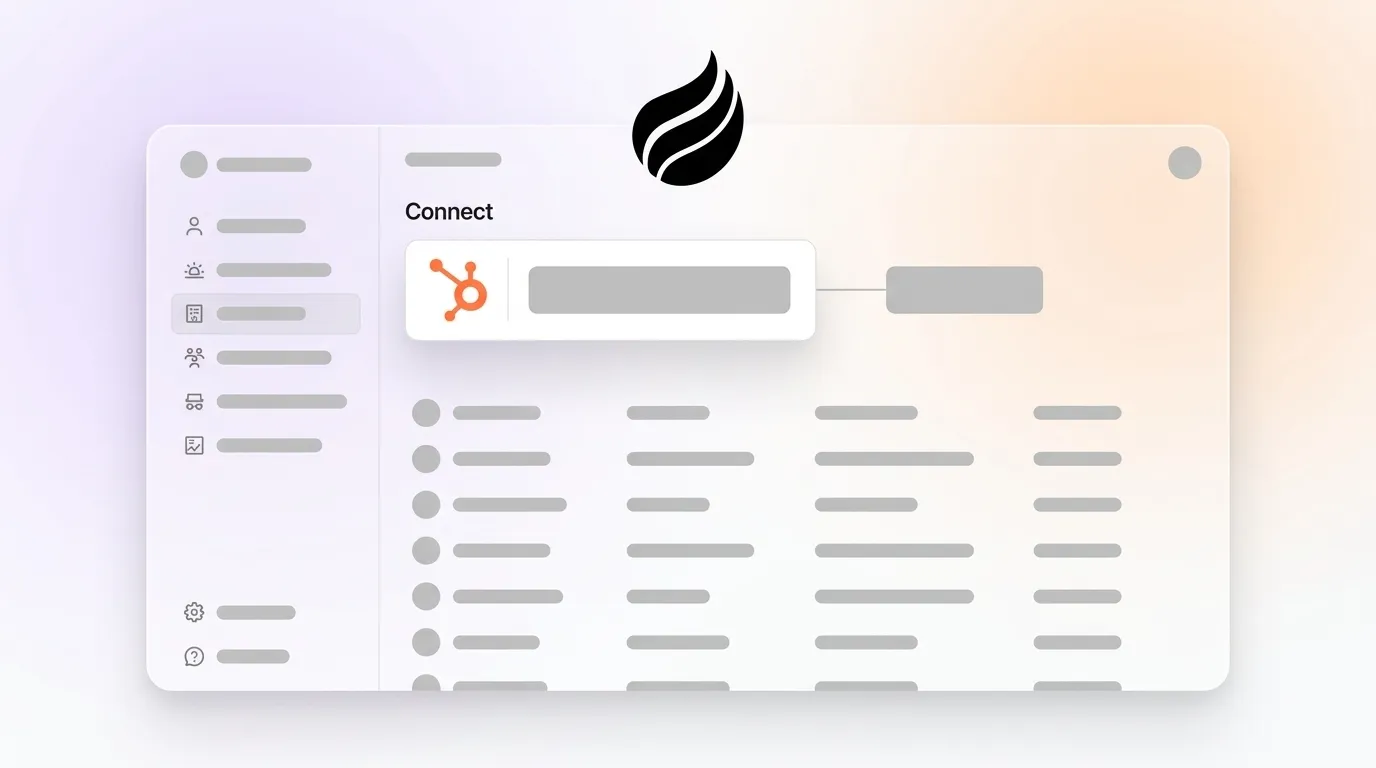
- Coffee is the only reviewed option that functions as a unified AI agent, replacing multiple point solutions while maintaining a single data layer inside HubSpot.
- Evaluation criteria prioritize hours saved per week, native HubSpot sync depth, and the ability to write clean data back without manual effort.
- Mid-market SaaS teams of 20–80 reps benefit most from Coffee’s consolidation potential, reducing admin time and cognitive load compared to fragmented tools.
- See how Coffee consolidates your stack in one HubSpot-native agent and keep your CRM data accurate with less manual work.
7 HubSpot-Native Sales Enablement Apps Reps Should Evaluate
- Coffee — AI agent for automated data entry, meeting intelligence, pipeline tracking, and stack consolidation on top of HubSpot
- Fathom — AI meeting recorder and note-taker with HubSpot activity logging
- Gong — Conversation intelligence and revenue forecasting platform with bidirectional CRM sync
- Aircall — Cloud calling with native HubSpot contact and activity sync
- PandaDoc — Document automation and e-signature with HubSpot deal-stage triggers
- DealHub — CPQ and revenue workflow automation connected to HubSpot pipelines
- LinkedIn Sales Navigator — Prospecting intelligence with HubSpot contact enrichment via native integration
Use-Case Comparison Table for HubSpot Teams
The following table compares each app on three practical dimensions for mid-market teams: estimated hours saved per rep each week, how deeply the tool syncs with HubSpot, and how many existing subscriptions it can realistically replace.
| App | Hours Saved / Week (Est.) | Native HubSpot Sync Depth | Consolidation Potential |
|---|---|---|---|
| Coffee | 8–12 hrs (automated data entry, meeting prep, follow-up, pipeline tracking) | Bidirectional: contacts, activities, transcripts, enrichment, pipeline changes written back automatically | High, replaces meeting recorder, enrichment tool, and pipeline add-on in one agent |
| Fathom | ~2–3 hrs (manual note-taking eliminated per meeting) | Moderate, logs summaries and action items to HubSpot activities, no enrichment or pipeline write-back | Low, single-function note-taker, requires separate tools for enrichment and forecasting |
| Gong | Varies, Frontify reported 30% increase in lead conversion after consolidating RevOps into Gong | High, numerous integrations including bidirectional HubSpot sync, deal and forecast data flows both ways | Medium-High, consolidates conversation intelligence, forecasting, and coaching, still a separate platform |
| Aircall | ~1–2 hrs (auto-logs calls and dispositions to HubSpot contact records) | Moderate, call recordings and outcomes sync to HubSpot, no enrichment or meeting intelligence | Low, calling-only, requires Fathom or Gong alongside it for intelligence |
| PandaDoc | ~1–2 hrs (eliminates manual proposal creation and signature chasing) | Moderate, deal-stage updates and signed document status sync to HubSpot | Low, document workflow only, no call, enrichment, or forecasting capability |
| DealHub | ~2–3 hrs (CPQ automation reduces quote cycle time) | Moderate, quote and approval status syncs to HubSpot deals, limited activity logging | Low, CPQ-specific, does not address meeting capture or data enrichment |
| LinkedIn Sales Navigator | ~1–2 hrs (reduces manual prospect research and contact creation) | Moderate, contact and account data syncs to HubSpot via native integration, one-directional enrichment | Low, prospecting only, no meeting, calling, or pipeline intelligence |
Meeting Capture and Notes for HubSpot Reps
B2B sales reps spend a significant portion of their week on administrative work, and post-meeting note-taking accounts for a substantial share of that burden. Fathom addresses this with AI-generated summaries that log to HubSpot activities, saving approximately two to three hours weekly per rep. The limitation is scope, because Fathom captures what was said but does not enrich contact records, draft follow-up emails, or update deal stages autonomously.
Coffee’s agent handles the full meeting lifecycle. Before a call, it generates a briefing from HubSpot history, email context, and enrichment data. During the call, the bot records and transcribes. After the call, it writes structured summaries formatted to BANT, MEDDIC, or SPICED directly back to HubSpot, drafts follow-up emails for rep review, and logs next activities. This setup eliminates the overlap between a standalone recorder and a separate follow-up tool, so teams consolidate two line items into one agent layer.

Conversation Intelligence for Deal Progress
Beyond capturing what was said in meetings, conversation intelligence platforms analyze how deals progress and where they stall. Gong is the category benchmark. Its Revenue AI OS combines call analysis, deal-risk scoring, coaching, and forecasting on a single platform with bidirectional HubSpot sync. For teams that need deep coaching workflows and revenue forecasting as separate disciplines from their CRM, Gong delivers. The tradeoff is cost and a second platform login, and conversation intelligence tools integrate with CRMs for data sharing but require moving data between systems rather than operating as native unified agents.
Sales reps spend about 70% of their time on non-selling tasks, and fragmented tool logins compound that problem. Coffee’s conversation intelligence is embedded in the same agent that handles data entry and pipeline tracking, so call insights surface inside HubSpot without a separate platform context switch. For mid-market teams of 20–80 reps where budget and admin overhead matter, that consolidation reduces both cost and cognitive load.

In-App Training and Onboarding for New Reps
Reducing admin time matters most when reps already know how to use the tools. For teams with high turnover or complex HubSpot setups, onboarding speed determines how quickly new hires reach full productivity. Sales enablement platforms can reduce new rep onboarding time, according to industry research. Supered addresses this directly as a HubSpot-native digital adoption layer, surfacing in-app guidance and playbooks inside the CRM UI. For teams with high rep turnover or complex HubSpot configurations, Supered reduces the time a new hire spends learning the system.
Coffee contributes to onboarding differently, because the agent handles data entry automatically, so new reps are not burdened with learning CRM hygiene workflows on day one. The agent’s structured note templates, including BANT, MEDDIC, and SPICED, also enforce qualification consistency from the first call. This reduces the coaching overhead that typically falls on managers during ramp. Sellers spend only about 28-30% of their time actually selling, and removing the data entry learning curve from onboarding improves that ratio from week one.
Prospecting Enrichment and Pipeline Intelligence in HubSpot
LinkedIn Sales Navigator and Apollo serve different ends of the prospecting workflow. Sales Navigator provides account and contact intelligence with a native HubSpot sync that creates and enriches contact records. Apollo adds sequencing and outbound automation. Both require separate subscriptions and produce data that reps must still review and act on manually.

Coffee’s enrichment layer, which pulls job titles, funding data, and LinkedIn profiles via licensed data partners, runs automatically on every contact the agent creates from email and calendar activity. Its Visitor Identification feature converts anonymous website traffic into named prospects with enrichment pre-filled, routed directly into HubSpot. The Pipeline Compare feature then tracks week-over-week deal movement without CSV exports or manual review. Globally, top-performing sales teams are 1.7x more likely to use AI agents than underperformers; AI agents are expected to slash research time by 32% and content creation by 34% for Singapore sellers, a figure that reflects the overlap Coffee eliminates between enrichment tools and pipeline add-ons.

Agent vs. Point Solutions for HubSpot Workflows
Agentic AI now sits at the center of many sales tech roadmaps. Agentic AI ranked as the number one technology priority for 17.1% of enterprise IT decision-makers in Futurum Research’s 1H 2026 survey, up 4.1 points from the prior period. Many organizations expect AI agents to support various sales tasks, and Gartner predicts 40% of enterprise applications will include task-specific AI agents by end of 2026. Point solutions like Fathom or PandaDoc automate one task well. An agent like Coffee automates the connective tissue between tasks, such as capture, enrich, log, brief, and follow up, inside a single HubSpot data layer.
Sales training software also fits into this picture. Supered accelerates HubSpot adoption through in-app guidance. Gong supports coaching through call analysis. Coffee reduces the training burden structurally, because when the agent handles data entry and enforces qualification frameworks automatically, new reps spend their ramp time selling rather than learning CRM maintenance. Sellers can lose hours per week to manual data entry in disconnected systems, and Coffee removes that friction before it becomes a training problem.
Replace your point solution stack with Coffee’s unified agent layer.
Best-Fit Use Cases for 20–80 Rep SaaS Teams
Mid-market SaaS teams of 20–80 reps represent the optimal fit for Coffee as a HubSpot companion. These teams have enough deal volume to generate meaningful pipeline intelligence but lack the RevOps headcount to maintain data quality manually. Tool satisfaction at this scale depends on whether the stack reduces admin rather than adding it.
Smaller teams under 20 reps may find Coffee’s Standalone CRM a better fit than the companion model. Enterprise teams with complex custom HubSpot configurations, multi-region compliance requirements, or deeply embedded Gong workflows may need to evaluate Coffee’s roadmap integrations before full adoption. Change management carries a real cost, and 59% of businesses regret at least one software purchase in the past 18 months, with 42% of those reporting increased costs. Cross-functional alignment between Sales, RevOps, and IT on data ownership and sync rules remains essential before deployment at any scale.
Risks, Limitations, and Hidden Costs of Consolidation
No companion app eliminates all manual work. 51% of enterprises view data management as the single most pressing challenge for AI, surpassing cost and talent, per a Semarchy survey on agentic capabilities, and Coffee is not exempt from that reality. Initial authentication and field-mapping configuration requires RevOps involvement. Teams with non-standard HubSpot pipeline structures may need to validate that Coffee’s write-back logic maps correctly to required fields.
Gong’s depth of coaching analytics and revenue forecasting exceeds what Coffee’s conversation intelligence currently offers for large enterprise coaching programs. PandaDoc and DealHub address CPQ and document workflows that Coffee does not replace. These gaps matter because organizations average 897 applications with only 29% integrated, so any consolidation effort requires an honest audit of which point solutions serve workflows the agent does not yet cover. Coffee’s broader integration roadmap currently routes through Zapier for tools outside its native connections.
Stack-Consolidator Scorecard and Decision Framework
Teams can use the following framework to match options to their constraints. Score each criterion 1–3, where 1 means the tool does not meet the need and 3 means it fully meets the need, then sum across rows. A total score of 12 or higher indicates strong alignment with mid-market consolidation needs, while scores below 10 suggest the tool addresses only isolated workflows.
- Hours saved per rep per week ≥ 5: Coffee (3), Gong (2), Fathom (1), others (1)
- Writes clean data back to HubSpot natively: Coffee (3), Gong (2), Fathom (1), LinkedIn Sales Navigator (2), others (1)
- Replaces ≥ 2 existing point solutions: Coffee (3), Gong (2), all others (1)
- Implementation time under 1 week for 20–80 reps: Coffee (3), Fathom (3), Aircall (2), Gong (1)
- SOC 2 Type 2 / GDPR compliant: Coffee (3), Gong (3), all major vendors (3)
Teams whose primary constraint is admin time and data quality should prioritize Coffee, since it consolidates the most point solutions while maintaining a single HubSpot data layer. If coaching depth at enterprise scale is the primary constraint instead, Gong’s analytics justify evaluating it alongside Coffee rather than as a replacement. For teams that have already solved admin overhead but face isolated document or CPQ gaps, adding PandaDoc or DealHub as targeted point solutions makes more sense than replacing the agent layer.
Frequently Asked Questions
How long does it take to implement Coffee as a HubSpot companion app?
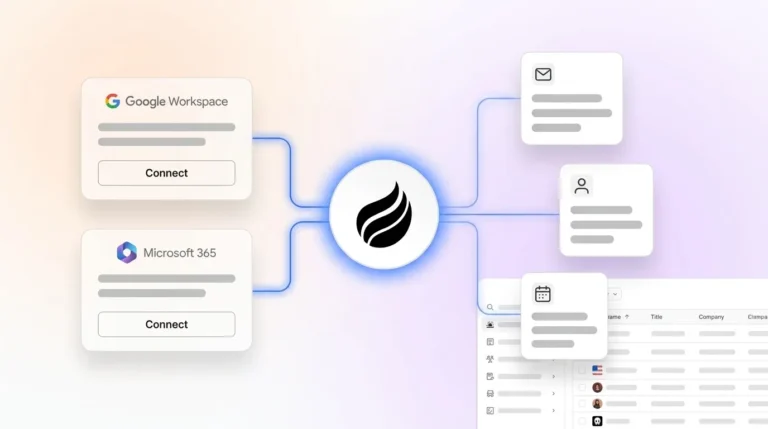
Most teams of 20–80 reps complete implementation with a single authentication connecting Coffee to HubSpot and Google Workspace or Microsoft 365. The agent begins creating contacts, logging activities, and syncing data immediately after connection. Full configuration of meeting templates, qualification frameworks, and pipeline sync rules typically takes less than one week with RevOps involvement. Standard HubSpot instances avoid code deployment or custom integration work.
What does migrating from a stack of point solutions to Coffee involve?
Migration works as an additive layer rather than a destructive replacement. Coffee sits on top of HubSpot without replacing it, so existing records, pipelines, and workflows remain intact. The practical migration work involves auditing which point solutions Coffee replaces, typically a meeting recorder, an enrichment tool, and a pipeline reporting add-on, and canceling those subscriptions after a parallel-run validation period of two to four weeks. Teams should map any custom HubSpot required fields to Coffee’s write-back logic before going live to avoid data gaps during transition.
Is Coffee secure enough for mid-market SaaS companies handling customer data?
Coffee is SOC 2 Type 2 and GDPR compliant. Customer data processed by the agent is not used to train public AI models. For mid-market SaaS companies in non-regulated industries, this meets standard procurement requirements. Teams in healthcare or financial services with multi-year security review cycles or HIPAA obligations should consult Coffee’s security documentation before committing, because those verticals fall outside Coffee’s current ideal customer profile.
How do we evaluate whether Coffee is the right fit before purchasing?
The most reliable evaluation method is a structured pilot with five to ten reps over 30 days, measuring three metrics. Track hours of admin time eliminated per rep per week, the percentage of HubSpot contact and activity records created automatically versus manually, and rep satisfaction with the quality of post-meeting summaries and follow-up drafts. Compare those results against your current point solution costs and the time your RevOps team spends on data hygiene. If Coffee saves each rep five or more hours weekly and reduces manual record creation by more than 50%, the consolidation math typically justifies the switch within one quarter.
Conclusion: Choose the Agent That Unifies Your HubSpot Stack
With reps spending the majority of their time on admin rather than selling, point solutions reduce that burden in isolation, since a recorder saves note-taking time, an enrichment tool saves research time, and a pipeline add-on saves reporting time. An agent removes the overhead connecting all three while writing clean, structured data back to HubSpot automatically. For mid-market SaaS teams of 20–80 reps already committed to HubSpot, Coffee is the only companion app in this comparison that functions as that unified agent layer. Turn your HubSpot instance into an always-accurate system of record with Coffee.