Written by: Doug Camplejohn, CEO & Co-Founder, Coffee | Last updated: July 1, 2026
Key Takeaways for Sales and RevOps Leaders
- Autonomous AI sales agents capture calls, emails, meeting notes, and contacts without manual rep entry, then write directly to the CRM.
- Three categories compete in 2026: autonomous agents like Coffee, native CRM AI tools such as Agentforce and Breeze, and call-intelligence platforms like Gong and Fathom.
- Coffee saves 8–12 hours per rep weekly by running full capture, enrichment, and write workflows across Salesforce and HubSpot.
- Teams of 20–100 reps benefit most from Coffee’s companion layer, while smaller teams can rely on its standalone CRM mode.
- Eliminate manual CRM data entry and calculate your stack savings with Coffee.
How This Comparison Looks at CRM Data Entry Tools
Three distinct categories now compete for the CRM data entry workflow in 2026. Autonomous AI sales agents such as Coffee operate across the full capture, enrich, and write cycle. Native CRM AI features like Salesforce Agentforce and HubSpot Breeze extend existing platform functionality as embedded tools. Call-intelligence platforms including Gong, Chorus, and Fathom specialize in conversation capture and coaching but rely on a separate CRM to receive the output. Each category solves a specific slice of the problem, so the right choice depends on stack, team size, and tolerance for integration complexity.
Evaluation Criteria for 20–100 Rep Teams
The comparison below uses eight criteria that matter most to sales leaders and RevOps teams at 20–100 rep organizations:
- Depth of capture, covering calls, emails, notes, contacts, and enrichment in one pass
- Hours saved per rep per week, with a quantified productivity return
- Approval steps required, describing how much human review the agent needs before writing to CRM
- CRM fit, including native support for Salesforce, HubSpot, or both
- Total cost of ownership (TCO), combining seat cost and required add-ons
- Implementation time, measured in days to first automated log for a 50-rep team
- Pipeline intelligence, focusing on forecast-grade output rather than raw logs
- Scalability, showing performance from 30 to 80 reps without re-architecture
The table below applies these eight criteria across all three categories so you can see where each option excels and where it needs workarounds or extra tools.
Side-by-Side Comparison of AI Sales Data Entry Options
| Criterion | Autonomous AI Agent (Coffee) | Native CRM AI (Agentforce / Breeze) | Call-Intelligence Platform (Gong / Fathom) |
|---|---|---|---|
| Depth of capture | Calls, emails, contacts, enrichment, and notes in one agent, with call data ingested via Zapier integrations with Fathom, Gong, and Fireflies as of January 2026. | Structured CRM fields only, while unstructured data such as transcripts and email bodies requires additional configuration. | Call transcripts and summaries only, and contact plus email capture requires a CRM push through API connections. |
| Hours saved / rep / week | Delivers the documented 8–12 hour weekly savings through full-cycle automation across capture, enrichment, and write actions. | Partial coverage, since it automates field updates but not full activity logging without rep-initiated triggers. | Partial coverage, removing manual call notes but not logging emails or enriching contacts. |
| Approval steps | Summaries auto-write to CRM, while reps review follow-up drafts before send as one optional review step, and custom summary templates write back to Coffee, HubSpot, or Salesforce as of November 2025. | Varies by workflow, since most Agentforce automations rely on admin-configured approval rules. | Reps usually push or approve sync to CRM manually in common configurations. |
| CRM fit | Works as a standalone CRM or as a companion layer on Salesforce and HubSpot, with both modes supported natively. | Single-platform only, because Agentforce is Salesforce-exclusive and Breeze is HubSpot-exclusive. | Integrates with both through APIs, while depth of field mapping depends on CRM version and plan tier. |
| Pipeline intelligence | Week-over-week Pipeline Compare feature surfaces progressed, stalled, and new deals automatically from agent-captured data. | Forecast dashboards exist but depend heavily on rep-entered data quality. | Deal intelligence focuses on conversation signals and does not include native pipeline change tracking. |
See Coffee’s autonomous data entry in action with a live view of the capture, enrich, and write workflow.
The comparison above shows how each category performs across the eight criteria. The next three sections examine each category in more detail, starting with autonomous AI agents and their full-lifecycle approach to CRM data.
Category Analysis: Autonomous AI Sales Agents
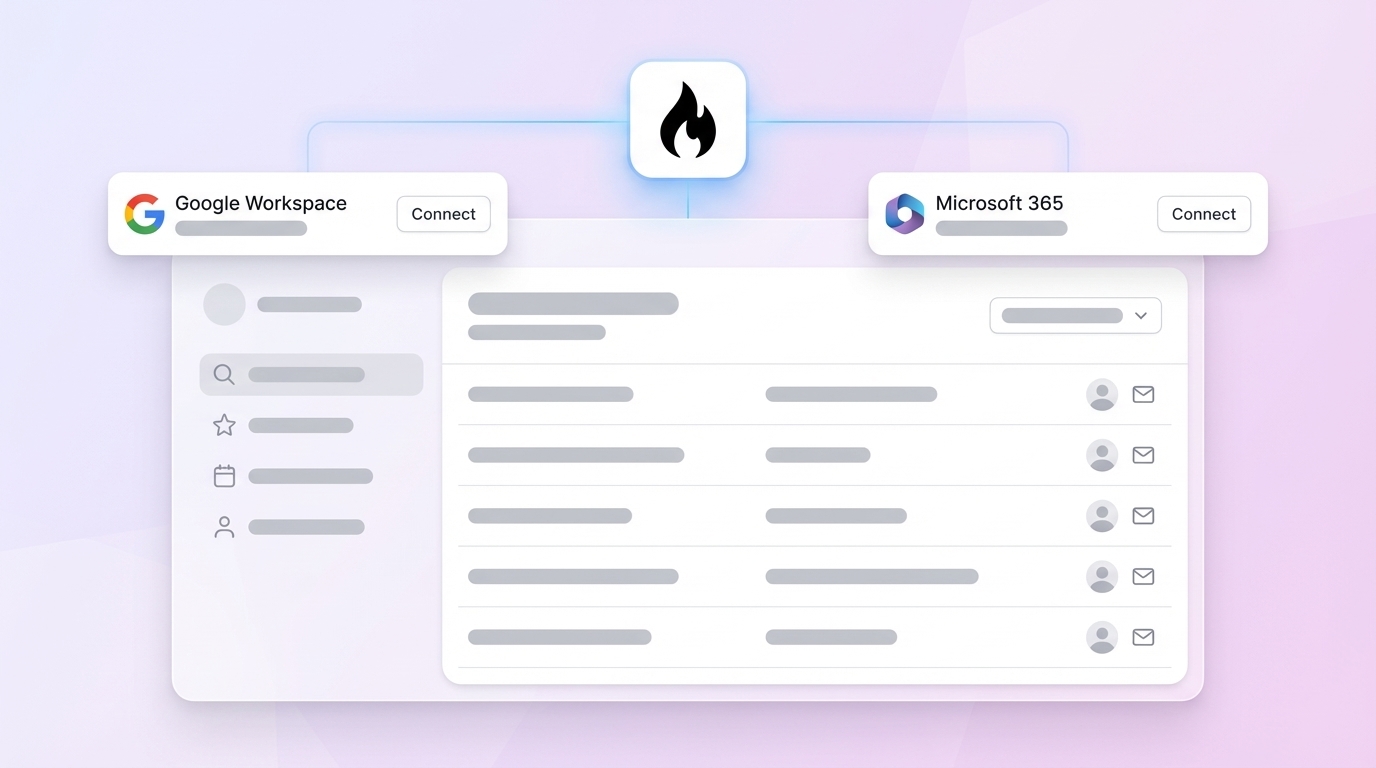
Autonomous AI sales agents handle the full data lifecycle across capture, structure, enrichment, and write steps. Coffee connects to Google Workspace or Microsoft 365 on authentication, then begins auto-creating contacts, logging activity, and associating interactions with the correct records. Custom Meeting Briefings and Summaries launched in February 2026 so teams can define exact output formats such as executive summaries, BANT qualification fields, and MEDDIC frameworks, then write them directly to Salesforce or HubSpot without a rep touching the CRM. An Intelligence layer released in February 2026 stores business model, ICP, and competitive context so AI suggestions stay accurate as deal complexity increases. This creates a system where the agent owns data quality instead of relying on rep discipline.

Category Analysis: Native CRM AI Features in Salesforce and HubSpot
Salesforce Agentforce and HubSpot Breeze extend existing platforms with AI-assisted automation inside the CRM. Both tools reduce some manual entry, since Breeze can suggest contact properties and Agentforce can trigger workflow actions from defined events. Platform lock-in creates the main structural limitation, because Agentforce operates only within Salesforce and Breeze only within HubSpot. Neither tool captures unstructured data from calls or email bodies without extra configuration or third-party connectors. Teams already invested in one platform benefit from lower integration overhead, while mixed-stack teams or those evaluating a CRM switch face meaningful constraints.
Category Analysis: Call-Intelligence Platforms for Coaching
Gong, Chorus, and Fathom record and transcribe sales calls with high accuracy for coaching and enablement. Their core output such as conversation intelligence, talk-time ratios, and keyword tracking helps managers improve rep performance. For CRM data entry, these platforms require a downstream push, because summaries must map to CRM fields, contacts must already exist in the system, and email activity sits outside their capture scope. They solve one dimension of the data entry problem well but leave enrichment, contact creation, and email logging to other tools or to reps.
Best-Fit Use Cases by Size, Structure, and Stack
1–20 reps with no existing CRM: Coffee’s Standalone CRM offers the lowest-friction path. The agent acts as the system of record from day one, with no migration or integration required.
20–100 reps on Salesforce or HubSpot: Coffee’s Companion App deploys the agent as an enrichment and logging layer on top of the existing instance. RevOps keeps the system of record, while Coffee handles the data-in process. This profile matches the primary audience for this guide.
Teams with a call-coaching mandate: A call-intelligence platform addresses coaching needs, and Coffee addresses data entry. The two work together effectively, and Coffee’s Zapier integrations with Gong and Fathom, released in January 2026, consolidate outputs into one CRM record.
Single-platform enterprises standardized on Salesforce or HubSpot: Native CRM AI offers a reasonable starting point for teams with dedicated Salesforce admins or HubSpot operations staff who can configure and maintain automation rules.
Operational and Long-Term CRM Data Considerations
Data hygiene compounds over time, because small errors multiply as your dataset grows and manual entry inconsistencies become structural forecast problems. An agent that writes clean, structured data from day one produces a CRM that improves in forecast accuracy as the dataset grows, since the quality foundation exists before bad habits take root. A system that depends on rep entry degrades as team size increases and rep discipline varies. For 20–100 rep teams, the operational cost of maintaining data quality manually through audits, re-entry campaigns, and pipeline review prep usually exceeds the cost of an autonomous agent within the first year.
TCO calculations should include the tools an autonomous agent replaces rather than only its seat price. Coffee consolidates CRM, enrichment that replaces Apollo or ZoomInfo for most use cases, call recording, and pipeline reporting into one seat-based price. Point solutions for each function carry individual licensing costs that add up quickly at 50 or more seats.
Calculate your consolidated stack savings and see how Coffee replaces multiple point solutions.
Risks and Limitations Across Categories
Autonomous agents introduce a dependency on AI accuracy, which means the system relies on correct classification and summaries before data reaches reports. If the agent misclassifies a contact or writes an incorrect summary field, the error flows into pipeline reports before a rep catches it. Coffee mitigates this with a rep-review step for follow-up emails and customizable summary templates that enforce structured output formats. Teams should run a lightweight audit cadence with weekly spot-checks on a sample of auto-logged records during the first 60 days of deployment.
Native CRM AI tools carry platform-lock risk that affects long-term flexibility. Switching CRMs after building automation logic inside Agentforce or Breeze requires rebuilding those workflows from scratch. Autonomous agents that operate as a companion layer stay more portable, because the agent logic remains independent of the CRM schema.
Call-intelligence platforms present a data-fragmentation risk when teams treat them as the primary logging mechanism. Without a unified agent writing to one system, reps end up with conversation data in one tool, contact data in another, and email history in a third. That pattern recreates the fragmentation problem the CRM was meant to solve.
Decision Framework for Selecting Your Approach
Use the following criteria to select a category:
- Need full-stack automation across calls, emails, contacts, and enrichment on Salesforce or HubSpot: Choose the Coffee Companion App. It is the only agent in this comparison that functions as both a standalone CRM and a companion layer, supports both Salesforce and HubSpot at the same time, and handles structured plus unstructured data from a single authentication.
- Need automation within one platform and have dedicated CRM admin resources: Select native CRM AI such as Agentforce or Breeze if the team accepts single-platform scope.
- Need call coaching with existing CRM data entry workflows: Add a call-intelligence platform as a complement rather than a replacement for a data entry solution.
- Starting from zero with a team under 20 reps: Use Coffee Standalone CRM to avoid purchasing and configuring a separate CRM.
Frequently Asked Questions
Which AI works best for CRM data entry?
For sales teams, the best AI for CRM data entry captures all activity types such as calls, emails, and meeting notes, then writes them to the CRM without a rep initiating the log. Coffee performs this across all three data types at once, connecting to email and calendar on authentication and joining calls through a meeting bot. Native CRM AI tools handle structured field updates well but need additional configuration to process unstructured inputs like transcripts. Call-intelligence platforms focus on call data only. For teams that need comprehensive, autonomous coverage across every interaction type, a purpose-built CRM agent outperforms both alternatives.

How long does implementation take for a 50-rep team?
Coffee’s Companion App deploys through a simple authentication to Google Workspace or Microsoft 365 and a CRM connection to Salesforce or HubSpot. For a 50-rep team, initial data capture can begin soon after authentication. Full configuration, including custom summary templates, sales methodology frameworks like BANT or MEDDIC, and pipeline reporting, often completes within a few weeks. Native CRM AI features can require admin configuration, which may extend implementation time depending on CRM complexity. Call-intelligence platforms deploy quickly for recording but need extra time to map outputs to CRM fields accurately.
What internal expertise keeps data quality high?
With an autonomous agent handling data entry, the ongoing maintenance burden shifts from reps to a lightweight RevOps audit function. Coffee’s agent auto-creates contacts, logs activity, and enriches records continuously, so the primary maintenance task involves reviewing agent output for edge cases rather than filling gaps left by rep non-compliance. Native CRM AI requires a Salesforce admin or HubSpot operations specialist to maintain automation rules as the team and product evolve. Call-intelligence platforms require ongoing field-mapping maintenance as CRM schemas change. The autonomous agent model reduces the expertise required for day-to-day data quality because the agent owns the input process instead of auditing it after the fact.
How do these tools perform when scaling from 30 to 80 reps?
Autonomous AI agents scale linearly with seat additions because the agent logic stays rep-agnostic, so each new rep’s email, calendar, and call data is captured under the same rules without extra configuration. Coffee’s seat-based pricing model means the agent’s labor scales with the team at a predictable cost. Native CRM AI performance at scale depends on admin capacity to maintain and extend automation rules as team structure, territories, and product lines change, which creates an operational bottleneck at higher rep counts. Call-intelligence platforms scale well for conversation capture but do not address the broader data entry problem that grows with team size. For teams projecting growth from 30 to 80 reps within 12–18 months, an autonomous agent architecture avoids the re-implementation risk that comes with outgrowing a point solution.
Conclusion: Picking the Right Path for Your CRM Data Entry
Manual CRM data entry remains the primary reason pipeline data stays unreliable at 20–100 rep companies. The three categories covered here, including autonomous AI agents, native CRM AI, and call-intelligence platforms, each address a portion of the problem. Only an autonomous AI sales agent handles the complete capture, enrich, and write cycle without rep intervention. Coffee’s dual-mode architecture, the standalone CRM and companion layer capability discussed earlier, makes it the only agent that meets teams where they are regardless of their current stack.
Eliminate manual CRM data entry for your team and start your Coffee trial today.