Key Takeaways
- AI agent-powered ABM software like Coffee removes manual data entry so sales reps can focus on real selling.
- Strong ABM platforms deliver accurate visitor identification, deep CRM integrations, clear pricing, and setup times under one week.
- Coffee leads for SMBs and mid-market teams with HubSpot and Salesforce companion mode and persona-matched leads starting at $970 per year.
- Enterprise tools like Demandbase (24k-300k per year) and 6sense offer rich intent data but demand complex rollouts, while Coffee delivers faster value for lean teams.
- Teams that want scalable AI automation for ABM can review Coffee’s pricing and plans to see if the platform fits their growth stage.
ABM Software Explained and How to Choose the Right Platform
Account-based marketing software helps teams identify, engage, and coordinate outreach to high-value accounts through aligned sales and marketing efforts. Teams used to stitch together separate tools for visitor tracking, intent monitoring, and campaign execution, which created data silos and workflow gaps. Modern ABM platforms now unify visitor identification, intent data, and multi-channel campaign automation into a single system so teams can run coordinated programs without juggling point solutions.
Essential evaluation criteria for ABM software include:
- Visitor and account identification accuracy, which means real-time website visitor identification with reliable contact-level data
- AI automation and agent capabilities, including automated lead enrichment, persona matching, and workflow orchestration
- CRM integration depth, with native HubSpot and Salesforce connectors that support bidirectional sync
- Transparent pricing structure, with clear per-user or account-based pricing and no surprise data fees
- Setup time under one week, so teams can launch quickly without heavy technical projects
- Data unification capabilities, creating a single source of truth for account engagement and pipeline data
- Pipeline visibility and attribution, including account-level reporting with multi-touch attribution
- Team adoption and usability, with an intuitive interface that sales reps actually use every day
Reddit discussions highlight the challenge of “ABM without $50k budget”, while ZoomInfo emphasizes intent accuracy and orchestration depth as critical differentiators. With these criteria in mind, the next section shows how leading ABM platforms compare on pricing, target market, and capabilities.
Quick Picks: Top 10 ABM Software Comparison
This comparison table highlights the best ABM software options across company sizes and shows which vendors publish transparent pricing versus those that require sales conversations. The mix of open pricing and “contact for pricing” signals whether a platform primarily targets SMBs, mid-market teams, or large enterprises.
| Tool | Best For | Pricing Tier | Key Features/Integrations/AI |
|---|---|---|---|
| Coffee | SMB/Mid SaaS | Coffee CRM offers a Lite plan for $970 (yearly billing) with a 7-day free trial | HubSpot/Salesforce companion, AI agent visitor ID and persona leads, auto-enrich |
| Demandbase | Enterprise | $24k-300k/yr | Intent data, Salesforce, AI orchestration |
| 6sense | Enterprise | $60k-200k/yr | Predictive intent, CRM sync, Revenue AI agents |
| RollWorks | Mid-market | Contact for pricing | Ads, HubSpot/Salesforce |
| HubSpot ABM | SMB/Mid-market | Contact for pricing | Native CRM, account dashboards |
| Terminus | Mid-market | Contact for pricing | Multi-channel, Bombora intent |
| ZoomInfo | Enterprise | Contact for pricing | Database, intent signals |
| Warmly | SMB | starts at $15,000 per year | Visitor ID, engagement scoring |
| RB2B | SMB | $79-199/mo | Website visitor identification |
| Apollo.io | SMB/Growth | $49-149/user/mo | Prospecting, sequences, CRM sync |
Top 10 ABM Platforms for 2026 and When to Use Each
1. Coffee – AI Agent ABM for Growing SaaS Teams
Coffee ranks as the top ABM choice for SMBs and mid-market teams that want AI agent automation without enterprise complexity. The platform’s AI agent automatically enriches website visitors into persona-matched leads, which reduces the manual data entry that consumes 71% of sales time. Coffee’s Intelligence layer, launched in February 2026, lets users define detailed context on business models and ICP for tailored AI suggestions.
Pros: Sub-week setup, SOC2 compliance, HubSpot and Salesforce companion mode, AI-driven visitor identification with persona suggestions, automated meeting briefings and summaries. Cons: Roadmap integrations still developing, newer platform compared to long-standing enterprise vendors.

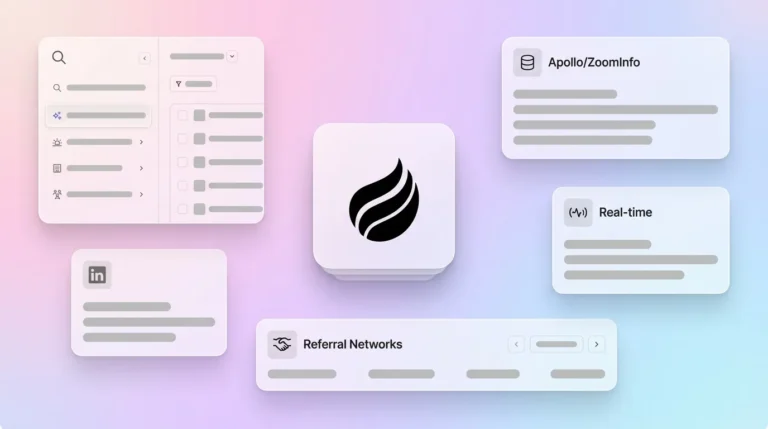
Coffee’s visitor identification feature turns anonymous website traffic into named prospects with LinkedIn profiles and suggested outreach strategies. This contact-level view matters because sales teams can reach specific people instead of guessing who to contact at a visiting company, and Coffee’s AI agent highlights individuals who match your buyer persona.

2. Demandbase – Enterprise ABM Platform Leader
Demandbase One dominates enterprise ABM with comprehensive intent data and account orchestration. Demandbase launched connected AI agents (Agentbase) on March 4, 2025, which unify sales, marketing, and RevOps teams through automated account engagement insights and campaign optimization.
Pros: Gartner leader, extensive intent data, Salesforce integration, AI predictive scoring. Cons: $24k-300k annual cost, complex implementation, enterprise-focused feature set.
3. 6sense Revenue AI – Predictive ABM Intelligence
6sense Revenue AI’s “Dark Funnel” tracking predicts when an account is in-market using proprietary neural networks. The platform’s conversational email agents handle early-stage discovery so SDRs can focus on later-stage opportunities.
Pros: Advanced predictive analytics, comprehensive intent signals, CRM integration. Cons: $60k-200k pricing, enterprise complexity, lengthy setup process.
4. RollWorks – Ad-Led ABM for Mid-Market Teams
RollWorks specializes in account-based advertising with strong HubSpot and Salesforce integration. The platform combines display advertising, email, and social campaigns so teams can coordinate account engagement across paid channels.
Pros: Ad-focused approach, mid-market positioning, CRM integration. Cons: Limited capabilities beyond advertising, requires separate ad spend, less comprehensive than all-in-one ABM platforms.
5. HubSpot Marketing Hub ABM – ABM Inside Your CRM
HubSpot’s ABM features provide account-level dashboards and targeting within the familiar HubSpot ecosystem. Many mid-market B2B organizations already run marketing automation platforms, so HubSpot’s native ABM often feels like a natural extension of existing workflows.
Pros: Native CRM integration, familiar interface, included in Marketing Hub Enterprise. Cons: Limited AI automation, basic visitor identification, lacks advanced intent data.
6. Terminus – Multi-Channel ABM Orchestration
Terminus, now part of DemandScience, offers multi-channel ABM with Bombora intent data integration. The platform focuses on account-based advertising and web personalization for teams that want coordinated campaigns across channels.
Pros: Multi-channel approach, intent data integration, established platform. Cons: Complex setup, requires technical expertise.
7. ZoomInfo Marketing – Database-Driven ABM
ZoomInfo Marketing builds on the company’s extensive B2B database for account identification and intent signals. Teams gain access to rich contact and company data that supports targeted ABM campaigns.
Pros: Extensive database, intent signals, CRM integration. Cons: Data-heavy approach, less AI automation than Coffee.
8. Warmly – Visitor Identification for SMBs
Warmly focuses on website visitor identification with engagement scoring and CRM integration. SMBs use it when they need basic visitor identification and simple scoring instead of full ABM orchestration.
Pros: Simple setup, visitor identification, engagement scoring. Cons: Limited AI agents, basic orchestration, lacks the persona-level insights that Coffee provides.
9. RB2B – Entry-Level Website Visitor Tracking
RB2B provides straightforward website visitor identification for small teams that want company-level data. The platform offers basic CRM integration so teams can route identified accounts into existing workflows.
Pros: Low cost, simple implementation, visitor identification. Cons: Company-level only, no AI agents, limited compared to Coffee’s persona-matched leads.
10. Apollo.io – Prospecting-First Platform with ABM Add-ons
Apollo.io combines prospecting, sequences, and basic ABM features in a growth-focused platform. Teams that prioritize outbound prospecting over full ABM orchestration often start here and add other tools later.
Pros: Prospecting focus, sequences, CRM sync. Cons: Limited ABM features, many manual processes, no AI agent automation.
Compared to these enterprise and mid-market platforms, Coffee delivers cost savings for SMBs while providing advanced AI automation for visitor identification and persona matching.
ABM Picks by Company Size and Growth Stage
Best ABM for Small Business and SaaS Startups
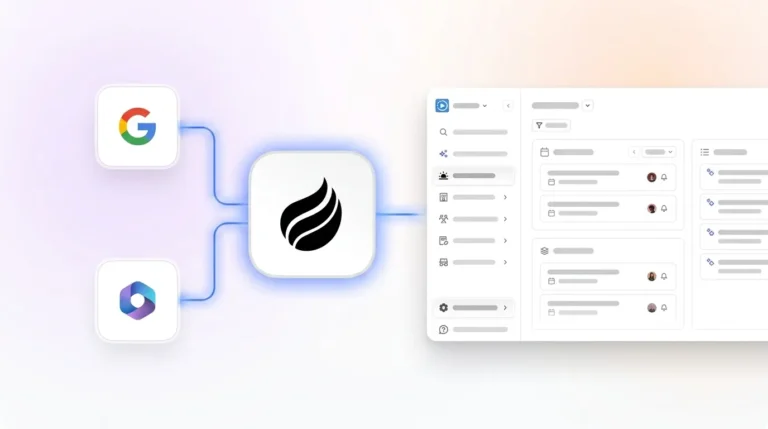
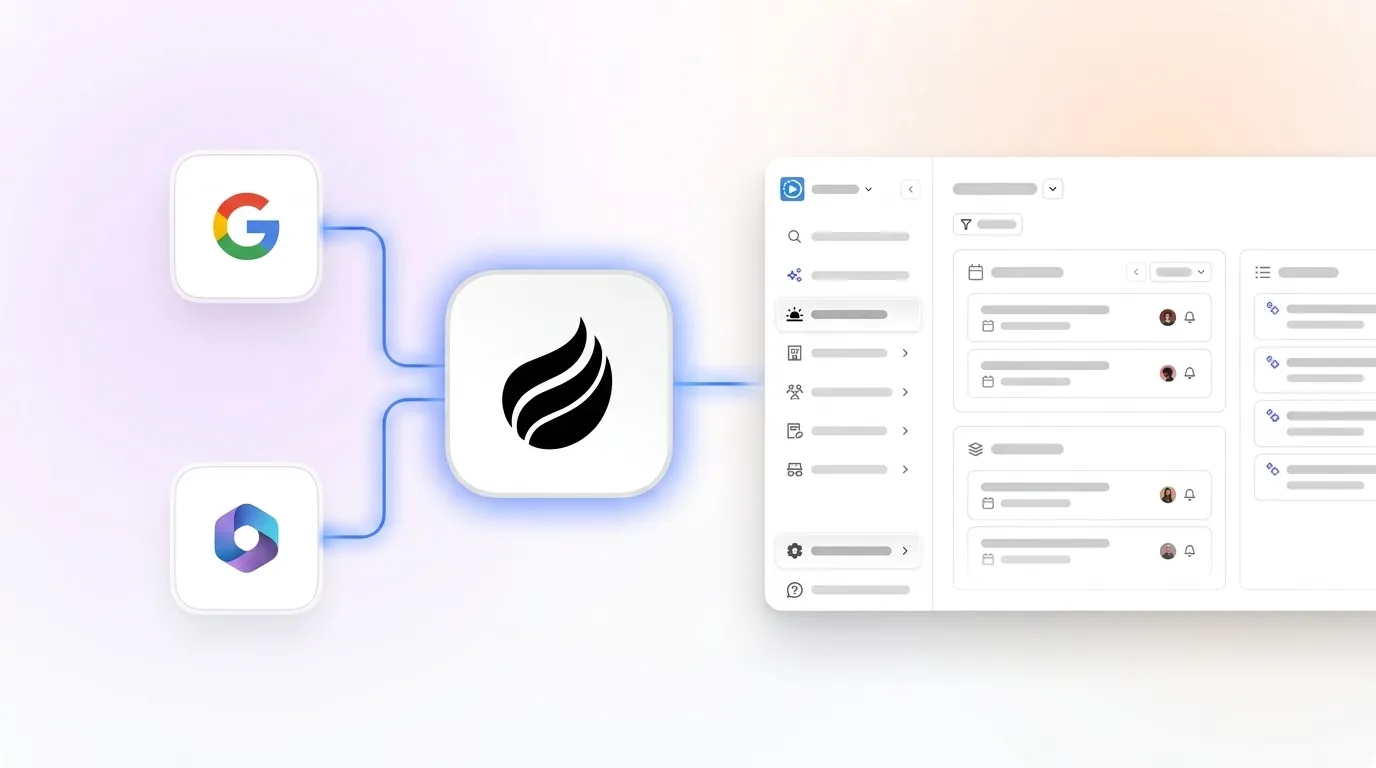
Coffee leads the SMB category with an AI agent that automatically converts website visitors into persona-matched leads. The platform’s companion mode runs alongside existing HubSpot or Salesforce instances so small teams can keep their current CRM. Coffee’s 7-day free trial and guided onboarding help resource-constrained teams adopt ABM without long projects.

Warmly offers an alternative for basic visitor identification, and Apollo.io fits prospecting-heavy teams, although neither matches Coffee’s AI-driven automation.
Best ABM for Mid-Market Teams
Mid-market teams often pair Coffee’s AI automation with RollWorks for advertising-led campaigns. Coffee’s dual approach supports both standalone CRM use and companion mode, so teams can scale from early adoption to more advanced programs without migrating platforms.
Best ABM for Enterprise Organizations
Enterprise teams usually select Demandbase or 6sense for deep intent data and complex orchestration. Coffee’s companion mode still plays a role here because it lets enterprises add AI agent automation on top of existing Salesforce deployments while keeping their core systems in place.
2026 ABM Trends: AI Agents Reshape Account Engagement
AI agents represent the most significant ABM shift in 2026. AI-orchestrated, composable ABM stacks save sales reps up to 40 hours per month by automating intent signal processing and outreach workflows.
Coffee leads this transformation with AI agents that handle unstructured data from website visits, emails, and call transcripts. Traditional platforms rely on manual data entry, while Coffee’s agent enriches visitor data and suggests specific personas for outreach. Demandbase’s AI agents and 6sense’s conversational email agents show how the broader market is moving toward autonomous ABM execution.
Try Coffee’s AI agent automation to see how autonomous visitor enrichment reduces manual data entry for your team.
Implementation Risks and a Practical Decision Checklist
ABM software implementations often run into data security concerns, integration complexity, and resistance from end users. Coffee addresses security requirements with SOC2 Type 2 and GDPR compliance, and its companion mode reduces integration risk by working alongside existing CRM systems instead of replacing them.
This decision framework checklist helps teams compare platforms on the factors that matter most:
- Evaluate AI automation capabilities against the manual processes your team currently runs.
- Assess CRM integration depth, including bidirectional sync and field-level mapping.
- Review pricing transparency and any potential hidden costs such as data add-ons.
- Confirm security compliance, including SOC2 and GDPR coverage.
- Test visitor identification accuracy and the quality of persona matching.
- Validate setup time and the level of onboarding support offered.
Coffee scores strongly on automation and setup speed, which helps teams avoid the manual data entry and long rollout cycles that often derail traditional ABM projects.
Frequently Asked Questions
What’s the best ABM software for HubSpot users?
Coffee provides a strong ABM option for HubSpot users through its companion mode, which adds AI agent automation to existing HubSpot instances. The platform enriches website visitors into persona-matched leads and syncs data bidirectionally with HubSpot CRM. Coffee’s AI agent also prepares meeting briefings, summaries, and follow-ups so teams gain automation without replacing HubSpot. Native HubSpot ABM features offer basic account dashboards but do not match Coffee’s AI automation or visitor identification depth.

What does ABM software cost for small teams?
ABM software pricing varies widely by platform and feature set. Coffee CRM’s Lite plan at $970 per year with a 7-day free trial sits at the accessible end of the market for small teams. Enterprise platforms like Demandbase often cost $24k-300k annually, while mid-market options such as RollWorks typically use custom pricing. Hidden costs, including data add-ons, implementation fees, and ad spend, can increase total investment by 30 to 40 percent, so small teams should favor transparent pricing and fast setup.
How does Coffee compare to Demandbase for growing teams?
Coffee offers strong value for growing teams by pairing AI agent automation with lower costs than Demandbase. Demandbase delivers extensive intent data and enterprise features, while Coffee focuses on automating visitor identification and persona matching so teams spend less time on manual tasks. Coffee’s companion mode works with existing CRM systems, and Demandbase usually requires more complex implementation and larger budgets, which makes Coffee a better fit for teams that want quick setup and immediate automation.
How long does ABM software implementation take?
Implementation timelines depend on platform complexity and internal resources. Coffee supports sub-week setup through companion mode that connects to HubSpot or Salesforce with straightforward authentication. Enterprise platforms like Demandbase and 6sense can take several months for full rollout, including data integration, workflow configuration, and training. Coffee’s AI agent starts enriching visitor data as soon as the pixel goes live, which shortens time-to-value compared to traditional ABM platforms.
Which ABM tools do Reddit users recommend?
Reddit B2B marketing communities often discuss the challenge of running ABM without enterprise-level budgets. Users look for alternatives to expensive platforms like Demandbase and 6sense that still provide meaningful automation. Coffee addresses these pain points with affordable AI agent automation that connects to existing CRM systems. Its visitor identification and persona matching capabilities directly address the “ABM for small SaaS without $50k budget” problem that appears frequently in Reddit threads.
Conclusion: Coffee and the Future of Practical AI-Powered ABM
The most effective ABM software in 2026 reduces manual data entry through AI automation while fitting smoothly into existing CRM workflows. Coffee stands out for SMBs and mid-market teams by offering enterprise-grade AI at accessible pricing and with straightforward implementation.
Enterprise platforms like Demandbase and 6sense still serve large organizations with complex needs, yet Coffee’s AI agent gives growing teams powerful automation for visitor identification, persona matching, and enrichment so website traffic converts into qualified pipeline with less manual effort.
Coffee’s companion mode lets teams layer AI-powered ABM on top of HubSpot or Salesforce, which avoids the risk and cost of full platform migration. With transparent pricing, quick setup, and fast value delivery, Coffee presents a practical path to modern ABM for teams that care more about growth than complexity.
Start your 7-day Coffee trial to see how AI agents turn website visitors into qualified opportunities without heavy manual data entry.