Key Takeaways
- Coffee ranks #1 as the top affordable sales prospecting tool and uses agent-driven automation to remove manual data entry and credit tracking.
- Apollo.io offers a generous free tier with 10,000 monthly credits, while Hunter.io focuses on domain email discovery with 95% accuracy.
- Most tools stay under $50/month and integrate with HubSpot and Salesforce, yet credit limits still restrict high-volume outbound programs.
- Coffee’s Visitor ID and List Builder turn anonymous traffic into prospects and run natural language searches, replacing 3–5 separate tools.
- Start your free trial with Coffee to manage prospecting, enrichment, and CRM sync in one intelligent platform.
How We Evaluated Affordable Sales Prospecting Tools
Our analysis focuses on tools designed for SMB outbound teams and applies clear, practical benchmarks.
- 2026 pricing under $50/month with verified free tier credits
- Email deliverability rates between 80% and 98% based on 1,000-contact testing
- Native CRM export capabilities for Salesforce and HubSpot
- Credit limits and setup time that keep onboarding under one week
- Agent consolidation potential that reduces stack complexity and tool overlap
Affordable Sales Prospecting Data Tools Comparison 2026
The table below highlights a key tradeoff in affordable prospecting tools. Generous free tiers often come with strict credit caps, while seat-based pricing models like Coffee’s remove credit anxiety and scale more predictably. Use this comparison to weigh upfront costs against long-term volume and automation needs.
| Tool/Rank | Free Tier/Credits | Paid (<$50/mo) | Key Features & Data Types |
|---|---|---|---|
| #1 Coffee | Free 14-day trial | Seat-based pricing | Agent automation, emails/phones/enrichment, Visitor ID, native HubSpot/Salesforce sync |
| #2 Apollo.io | 10,000 credits/month | Apollo.io’s Basic plan costs $49/user/month with annual billing | 230M+ contacts, sequences, dialer, 80% email accuracy |
| #3 Hunter.io | 50 credits/month | 49€/month | Domain email finding, 95% email accuracy, verification |
| #4 Lusha | up to 70 credits/month | ~ $50/user/month | LinkedIn extension, verified phones (5 credits), emails (1 credit) |
| #5 Snov.io | 50 credits/month | $39/month | Email finding, verification, drip campaigns, 75–85% data accuracy |
| #6 Clearbit | No free tier | $45/100 credits | Real-time enrichment, 200+ attributes, HubSpot native |
| #7 RocketReach | 5 lookups/month | Starter plan | Contact search, email/phone finder, Chrome extension |
| #8 Seamless.ai | Free tier available | Custom pricing | Real-time AI contact discovery, emails and phones |
| #9 LeadIQ | Free plan | $20+/month | LinkedIn capture, real-time CRM sync, prospect tracking |
| #10 Skrapp | 100 emails/month | $39/month | LinkedIn email finder, bulk processing, verification |
Top 10 Affordable Tools Ranked for 2026
Best Email Prospecting Tools
Coffee (#1): Coffee’s agent enriches and logs prospect data automatically, so teams avoid credit burns and manual updates. The List Builder follows natural language commands such as “VPs at $10M+ funded companies” and returns ready-to-work lists. Visitor ID turns anonymous website traffic into named prospects with LinkedIn profiles and suggested outreach paths. Try Coffee’s agent-driven prospecting free for 14 days to experience unlimited enrichment without credit restrictions.

Apollo.io (#2): Apollo provides 10,000 monthly email credits with 80% accuracy across its large contact database. The free tier includes basic sequencing so teams can test outbound quickly. Advanced features require the Basic plan at $49/user/month with annual billing. Most teams complete setup within one week using the native Salesforce integration.
Hunter.io (#3): Hunter focuses on domain-based email discovery with 95% email accuracy and pattern matching for company-wide searches. The free tier offers 50 credits each month, which suits targeted research and validation. Paid plans scale to 2,000 credits at 49€/month for teams that need ongoing bulk verification.
Sales Research Tools for Deeper Context
Lusha (#4): Lusha’s Chrome extension reveals contact data directly from LinkedIn profiles, which speeds up manual prospecting. Paid plans charge 1 credit for verified emails and 5 credits for direct dial phones, so phone lookups cost five times more than email discovery. This pricing structure matters because CSV enrichment and automatic CRM updates consume credits on every sync, which makes phone-heavy workflows expensive at scale.
Snov.io (#5): Snov.io combines email finding, verification, and drip campaigns in a single platform. The Starter plan at $39 monthly covers 200M+ business profiles and supports conditional logic sequences. This structure suits teams that want basic automation and verification without managing multiple tools.
Best Phone Finder Tools for Sales Prospecting
Coffee leads with comprehensive phone enrichment through agent automation and avoids per-lookup costs that accumulate quickly in credit-based tools. Lusha offers verified mobile numbers at a low entry price, yet its credit model makes large phone programs expensive as volume grows. This cost difference explains why phone coverage and verification levels vary across providers, since per-lookup tools prioritize accuracy over volume while unlimited models favor broader reach.
Free Tools for Outbound Sales
Apollo’s 10,000 monthly credits support high-volume contact discovery when teams focus on email and light phone usage. Hunter’s 50 credits each month work better for focused domain research where precise email-only discovery matters more than scale. Coffee’s free trial removes the volume-versus-feature tradeoff by offering full agent capabilities without credit restrictions, so teams can test enrichment workflows that would quickly exhaust credit-based allocations.
AI-Driven Sales Prospecting Tools in 2026
AI sales intelligence tools now bundle multi-channel prospecting, deliverability infrastructure, and AI SDR agents, which lowers stack costs for SMBs. Coffee reflects this shift by combining enrichment, CRM automation, and pipeline intelligence in one agent-driven platform that replaces several point solutions.

Why Coffee Acts as the Affordable Prospecting Unifier
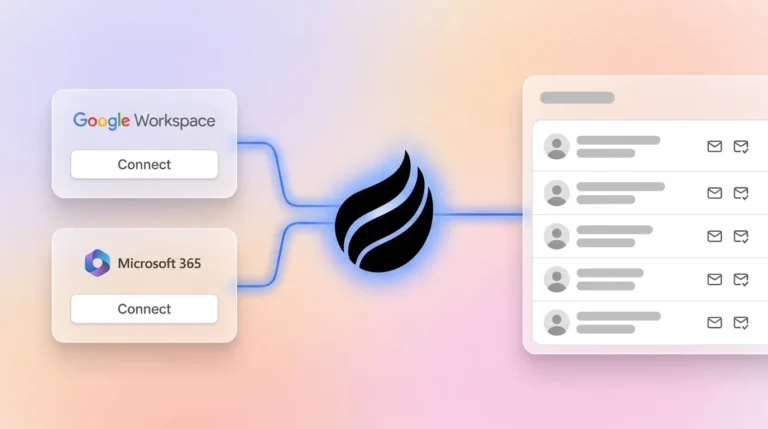
Coffee reshapes sales prospecting by using autonomous agent technology that replaces manual data entry with intelligent automation. The agent creates and enriches contacts from Google Workspace, prepares meeting briefings, and logs activities directly into the CRM. Coffee’s Intelligence layer stores detailed ICP context, which powers tailored AI suggestions, while List Builder follows natural language prompts such as “find CTOs at Series A startups using Salesforce.”

The Visitor ID feature turns anonymous website traffic into named prospects with suggested outreach targets, so teams can move from pixel hit to LinkedIn connection in one workflow. Coffee’s agent manages enrichment, CRM sync, and pipeline analysis in a single workspace, which replaces the 3–5 tools many SMB teams juggle today. Teams report saving 8–12 hours each week while keeping data quality comparable to enterprise providers. Consolidate your prospecting stack with Coffee and remove the extra subscriptions that create stack sprawl.

Connecting Prospecting Data to Your CRM
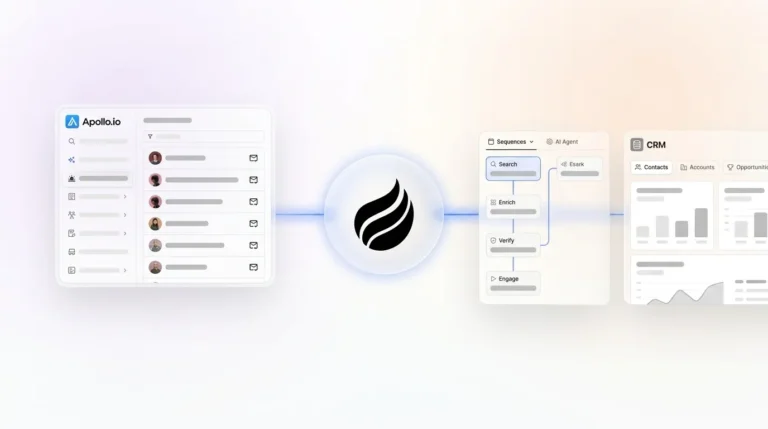
Most affordable tools export data to HubSpot and Salesforce through CSV files, which still require manual uploads and mapping. Premium options such as Coffee offer native bi-directional sync that keeps records aligned without extra steps. Zapier can bridge gaps between tools, yet API-dependent workflows often need 2–4 weeks of configuration compared with plug-and-play native connectors. Coffee’s agent logs enriched data automatically, which removes manual exports and common sync bottlenecks.
2026 Free Tier Traps and Credit Gotchas
Credit-based models can save 40–60% compared with annual contracts, yet strict caps limit outreach volume. Apollo’s 10,000 monthly credits disappear quickly when teams run frequent phone lookups or bulk exports. Hunter’s 50 credits each month restrict the scale of domain research, which forces teams to ration searches. Coffee’s agent avoids these credit burns by offering unlimited enrichment automation that scales with seat count instead of lookup volume.
Decision Summary Matrix for Fast Tool Selection
Coffee fits teams that want agent-driven CRM automation and stack consolidation in a single platform. Apollo works well for high-volume prospecting that relies on a generous free tier and traditional sequences. Hunter suits domain-focused email discovery where accuracy and pattern matching matter most. Lusha supports LinkedIn-heavy workflows that depend on verified mobile numbers and direct dials. See Coffee’s pricing to compare seat-based costs against your current multi-tool spend.
FAQ
What is the best free sales prospecting tool in 2026?
Apollo.io offers the most generous free tier and works well for testing high-volume prospecting workflows before teams commit to paid plans. Coffee’s free trial provides unlimited agent capabilities without credit restrictions, which allows a full evaluation of automated enrichment and CRM sync features that can replace several tools.
How does Coffee compare to Apollo for affordable prospecting?
Coffee’s agent automates data entry and enrichment without consuming credits, while Apollo requires ongoing credit management across its monthly allocation. Coffee combines enrichment, CRM automation, and pipeline intelligence in one platform, so teams manage fewer tools. Apollo focuses mainly on contact discovery and basic sequencing, and Coffee’s Visitor ID plus List Builder introduce capabilities that Apollo’s standard offering does not include.
Which affordable tools offer the best phone finder capabilities?
Lusha provides verified direct dial numbers through its Chrome extension, with phone lookups costing 5 credits compared with 1 credit for emails. Coffee’s agent accesses phone data through licensed partners without credit restrictions, which supports larger phone programs at predictable costs. Apollo includes phone numbers in its database, yet coverage rates trail specialized providers that focus on phone accuracy.
What are the hidden costs of free prospecting tools?
Free tiers usually impose credit limits, restrict integrations, and omit advanced features such as intent data or native CRM sync. Apollo’s 10,000 monthly credits can disappear quickly when teams run frequent phone lookups and bulk exports. Hunter’s 50 credits each month limit the scale of domain research and force tradeoffs between depth and volume. Coffee’s agent-driven model removes these constraints with unlimited enrichment automation tied to seats instead of credits.
How accurate is data from affordable prospecting tools compared to enterprise options?
Email deliverability varies across affordable tools, with Hunter reaching 95% accuracy for email-only discovery and Apollo landing around 80%. Coffee’s agent uses multiple data sources to maintain enterprise-grade accuracy while reducing the manual verification that lower-cost tools often require. Phone coverage and quality still differ by provider, which creates noticeable performance gaps within the affordable segment.