Written by: Doug Camplejohn, CEO & Co-Founder, Coffee
Key Takeaways for Technical AI Teams
- ZoomInfo’s UI-first design and rate limits conflict with autonomous AI agents running in n8n, LangChain, or Python pipelines.
- API-first providers like People Data Labs and Apollo offer clear endpoints, predictable rate limits, and lower per-record costs for high-volume enrichment.
- A three-layer stack with enrichment (PDL/Apollo), transformation (Clay), and orchestration (Coffee) replaces ZoomInfo’s manual workflows with automated data-in and data-out loops.
- Coffee ingests enriched records, unifies structured and unstructured signals, and writes accurate data back to Salesforce or HubSpot without human intervention.
- Teams ready to modernize their GTM stack can deploy Coffee’s orchestration layer to close the full automation loop.
The Problem: Why ZoomInfo Fails Modern AI Pipelines
ZoomInfo was designed for a sales rep clicking through a browser, not for a Python agent making 10,000 API calls at 2 a.m. This architectural mismatch creates four connected failure points for technical teams.
First, API access requires planning for the publicly documented rate limits with per-second, per-hour, and per-day windows, which complicates capacity planning inside automated agents. This planning burden compounds the second issue: the platform’s core UX assumes a human operator, so list exports, intent signals, and enrichment workflows revolve around UI interactions instead of programmatic triggers. Even when teams work around these constraints, the economics break down because cost per record at ZoomInfo’s enterprise tier is prohibitive for high-volume enrichment loops where a single outbound agent might process thousands of records per run. Finally, ZoomInfo has no native mechanism to write enriched data back to a CRM or downstream agent without a human intermediary or a brittle Zapier bridge, so the loop never fully closes.
These architectural failures define what any viable replacement must solve. When evaluating ZoomInfo alternatives for technical AI workflows, focus on data freshness and global coverage, documented API rate limits and cost per 1,000 records, integration effort with n8n, LangChain, Python, and Salesforce, the ability to unify structured fields and unstructured signals, automated CRM write-back without manual steps, GDPR and CCPA compliance posture, and net reduction in point-solution count.
The 2026 AI GTM Stack Architecture
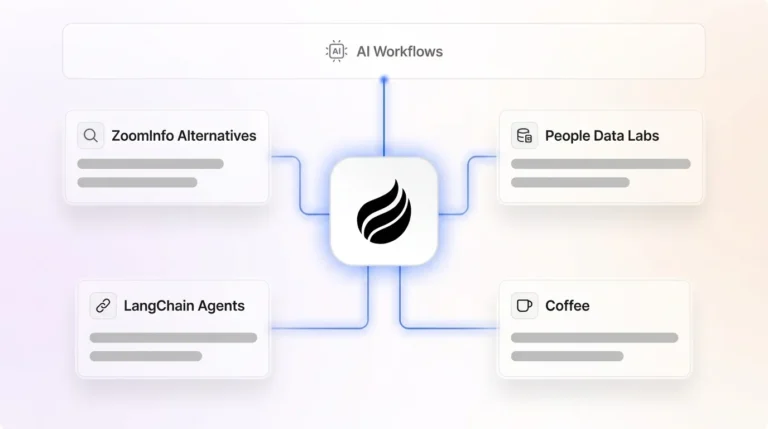
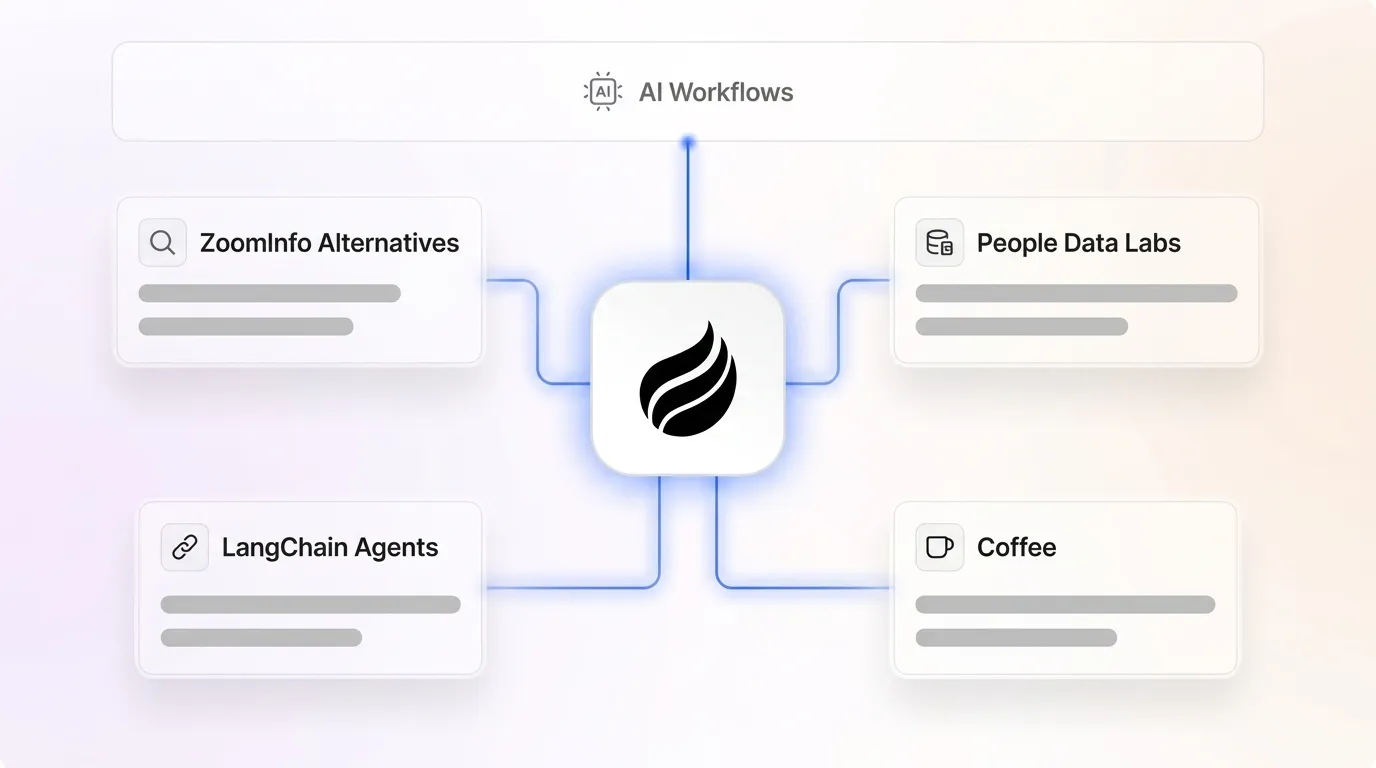
The canonical replacement architecture uses three layers that work together. The data layer, usually People Data Labs or Apollo, provides raw enrichment through clean REST APIs with published rate limits. A transformation layer, such as Clay or a custom Python script, then normalizes, deduplicates, and routes records so downstream systems receive consistent data.
The orchestration layer, powered by Coffee, ingests the enriched records, unifies them with unstructured signals from emails and call transcripts, and writes accurate data back to Salesforce or HubSpot without human data entry. Coffee can also act as the system of record when teams do not want a separate CRM. As the orchestration layer, Coffee handles what the other components cannot and owns both the data-in and data-out problems at the same time.
n8n Enrichment: Best ZoomInfo Alternatives
For teams running enrichment inside n8n, the decision centers on which tool exposes a stable HTTP target with predictable behavior under automation. Reliability under load matters more than UI features.
People Data Labs (PDL) exposes a Person Enrich API and a Company Enrich API with documented rate limits tied to plan tier. The JSON response schema stays consistent, which makes field mapping inside an n8n HTTP Request node straightforward. PDL does not provide a native n8n node, so every call uses raw HTTP, but the stable schema keeps this approach dependable.
Apollo.io provides a REST API with an official Postman collection and community-built n8n nodes. Apollo’s free tier allows limited enrichment calls, and paid tiers publish per-credit pricing. Apollo also includes sequencing and inbox tooling, which introduces scope overlap that many teams do not need inside a pure enrichment workflow.
Clay functions as a transformation and routing layer rather than a data provider. It aggregates multiple enrichment sources and exposes a native HTTP webhook output that pairs well with n8n trigger nodes. This setup works well for waterfall enrichment logic before records reach a CRM.
Coffee operates at the orchestration layer above all three tools. After enriched records arrive from PDL, Apollo, or Clay, Coffee’s agent automatically creates or updates contact and company records, logs activity, and writes structured output back to Salesforce or HubSpot. For n8n builders, Coffee removes the final manual step where a human would otherwise review and paste enriched data into CRM fields, and it prepares the ground for the later comparison of API options.
People Data Labs vs ZoomInfo API for Agents
PDL and ZoomInfo both provide contact and company data, yet they differ structurally in ways that matter for agentic use. PDL publishes its API documentation publicly, including endpoint schemas, error codes, and rate limit headers returned in every response. This transparency makes it possible to build retry logic and backoff handlers inside an agent without guessing.
By comparison, ZoomInfo’s API documentation is also publicly accessible without a signed contract, and its rate limits follow the per-second, per-hour, and per-day windows mentioned earlier, which supports deterministic capacity planning. PDL adds another option with a bulk dataset export, known as the PDL dataset, for teams that prefer to self-host enrichment data instead of making live API calls for every record.
ZoomInfo Replacements for LangChain Agents
LangChain agents call tools sequentially or in parallel based on a reasoning loop, so enrichment tools must behave predictably. A ZoomInfo replacement inside a LangChain tool must return a deterministic JSON payload, handle errors gracefully so the agent can retry or branch, and support async calls so the agent does not block on enrichment latency.
PDL and Apollo both satisfy the first two requirements. Neither provides a native LangChain tool wrapper, yet both are straightforward to wrap as a Tool or StructuredTool in Python. The harder problem appears downstream after the LangChain agent enriches a record and needs a destination.
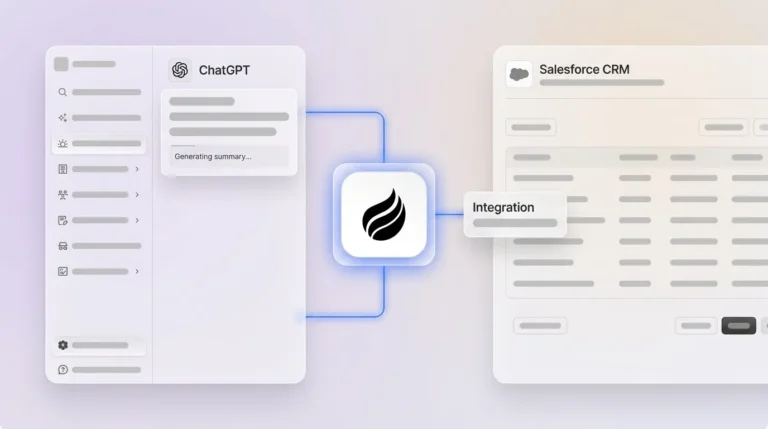
Without Coffee, enriched data usually lands in a manual CRM update or a brittle webhook. Coffee’s agent removes this fragility by ingesting enriched records from the LangChain tool, unifying them with email and calendar context, and writing them to the CRM without additional orchestration code. This pattern keeps the LangChain agent focused on reasoning while Coffee owns the operational data loop.
Cost and Freshness Comparison Table
| Tool | Cost per 1,000 Records | Data Freshness | API Rate Limits |
|---|---|---|---|
| ZoomInfo | Not publicly disclosed; enterprise contract required | States that its data is updated daily through automated machine learning and a contributory network | Publicly documented with per-second, per-hour, and per-day windows |
| People Data Labs | Person enrichment starts at $0.28 per successful match on the published Pro plan, with lower rates available only via custom Enterprise contracts | Updates its data on a monthly or quarterly schedule depending on access method, via periodic builds and releases | Published in response headers; plan-tier limits documented publicly |
| Apollo.io | Credit-based; free tier available; paid plans with per-credit pricing (verify at Apollo pricing page) | Community-verified updates via contributor network | Published per plan |
| Coffee (Orchestration) | Seat-based pricing; enrichment included in agent labor, with no per-record metering (see Coffee pricing) | Real-time from integrated data sources | Not applicable; agent operates on internal data pipeline |
Decision Paths for Outbound, Inbound, and EMEA Compliance
Outbound agent (high-volume, programmatic): Use PDL for bulk enrichment, then route through Clay for waterfall deduplication, and let a Coffee agent write to the CRM and trigger the outbound sequence. This path balances cost, coverage, and automation depth.
Inbound enrichment (form fill or visitor identification): Coffee’s visitor identification pixel identifies anonymous traffic, infers name, title, email, and company, and surfaces suggested leads that match your buyer persona. This approach removes the need for a separate enrichment tool in many inbound scenarios.
EMEA compliance requirement (GDPR): Coffee is GDPR-compliant, SOC 2 Type 2 certified, and does not use customer data to train public models. Teams should verify the GDPR posture of any enrichment provider before routing EU data through that provider’s API to avoid compliance gaps.
Existing Salesforce or HubSpot instance: Deploy Coffee as a Companion App so the agent can authenticate, sync existing records, enrich them, and write insights back. This pattern upgrades the stack without a rip-and-replace project.
Step-by-Step Migration Checklist
1. Audit current ZoomInfo usage and identify which workflows are UI-driven versus API-driven and which fields are consumed downstream. This audit defines the scope of your migration.
2. Map required data fields to PDL or Apollo equivalents and validate coverage against your target market segment. This mapping ensures that downstream reports and playbooks continue to function.
3. Build or adapt HTTP request nodes in n8n, or Python tool wrappers in LangChain, that point to the new enrichment API. Once this layer works, you can connect the orchestration tier.
4. Connect Coffee to your Salesforce or HubSpot instance, or deploy Coffee as the standalone CRM when no CRM exists. This connection gives the agent access to current and future records.
5. Configure Coffee’s agent to ingest enriched records and auto-create or update contacts and companies. At this point, the data-out loop starts to run without manual entry.
6. Validate CRM write-back accuracy against a sample of 500 records before full cutover. This validation step protects pipeline quality and user trust.
7. Decommission the ZoomInfo contract at renewal and confirm data deletion per GDPR and CCPA obligations. This final step closes the legacy dependency.
Risks and Limitations of API-First Stacks
API-first enrichment stacks introduce maintenance overhead that ZoomInfo’s managed platform previously absorbed. Schema changes in PDL or Apollo responses can silently break downstream field mappings, so monitoring and alerting become necessary. Coverage gaps can appear for specific geographies or company sizes depending on each provider’s data network.
Clay adds cost and a separate dependency layer that teams must maintain. Coffee removes the CRM write-back problem but does not replace a purpose-built sequencing tool when high-volume email sending is a core requirement. Over-relying on any single enrichment provider creates a single point of failure, and waterfall enrichment across two providers reduces that risk while increasing complexity.
Decision Framework: Matching Stacks to Company Profiles
| Company Profile | Recommended Stack |
|---|---|
| 1–20 employees, no CRM yet, founder-led sales | Apollo for enrichment plus Coffee Standalone CRM for orchestration and system of record |
| 20–200 employees, existing Salesforce or HubSpot, RevOps team | PDL or Apollo for enrichment, Clay for transformation, and Coffee Companion App for orchestration and CRM write-back |
| Technical team running n8n or LangChain agents | PDL for API-first enrichment plus Coffee as the orchestration agent that closes the data-out loop |
| EMEA-first GTM with GDPR requirements | PDL plus Coffee, which is SOC 2 Type 2, GDPR-compliant, and avoids public model training on customer data |
Coffee is the only solution in this comparison that addresses both sides of the problem by ingesting enriched data from any upstream source and producing accurate CRM records, pipeline intelligence, and outbound triggers without human data entry. No other tool in this list owns that complete loop, which reinforces Coffee’s role as the orchestration layer described earlier.
Frequently Asked Questions
ZoomInfo alternatives for agentic workflows
ZoomInfo was built for human operators navigating a UI, not for autonomous agents making programmatic API calls. For agentic workflows, People Data Labs and Apollo fit better because they publish API documentation, rate limits, and pricing without requiring an enterprise contract. When teams combine these providers with Coffee as the orchestration layer, they gain a full data-in and data-out loop that ZoomInfo does not support, and enriched records flow automatically into the CRM without any human data entry.
Apollo vs People Data Labs on API rate limits in 2026
Both Apollo and People Data Labs publish their rate limit structures publicly. Apollo uses a credit system where each enrichment action consumes credits at a published rate per plan tier. PDL returns rate limit headers in every API response, which enables agents to implement backoff logic deterministically.
The practical difference for high-volume agents is that PDL’s bulk dataset option allows teams to self-host enrichment data and remove per-call latency entirely. Apollo’s strength lies in its combined enrichment and sequencing feature set for teams that want both capabilities in one platform.
Best ZoomInfo replacement for LangChain agents
People Data Labs is the strongest direct replacement for enrichment calls inside a LangChain agent. Its consistent JSON response schema makes it straightforward to wrap as a LangChain StructuredTool, and its error handling behaves predictably enough to support agent retry logic. For the downstream problem of writing enriched data to a CRM after the agent processes it, Coffee is the recommended solution.
Coffee’s agent ingests records from any upstream source and handles CRM write-back automatically, which removes the need to write custom Salesforce or HubSpot API integration code inside the LangChain agent itself.
Whether Coffee replaces separate enrichment tools
For many use cases, Coffee replaces separate enrichment tools. Coffee’s agent automatically enriches contacts and companies with job titles, funding data, and LinkedIn profiles via licensed data partners, which removes the need for a standalone Apollo or ZoomInfo subscription for standard enrichment.
For high-volume programmatic enrichment at scale, where an agent processes tens of thousands of records per run, pairing Coffee with PDL or Apollo at the data layer and using Coffee as the orchestration and CRM write-back layer remains the recommended architecture. Coffee’s seat-based pricing includes the agent’s enrichment labor with no per-record metering, which keeps the cost model predictable regardless of enrichment volume.
Conclusion: Building a 2026-Ready AI GTM Stack
ZoomInfo no longer fits a 2026 agentic GTM stack. Its UI-first architecture and lack of downstream CRM automation create structural incompatibilities with n8n workflows, LangChain agents, and Python pipelines. The modern replacement uses an API-first data layer, typically PDL or Apollo, feeding into Coffee as the orchestration agent that owns the complete data-in and data-out loop.
Coffee removes manual CRM entry, unifies structured and unstructured data, and delivers accurate pipeline intelligence without adding point-solution complexity. This stack runs simpler, reduces effective cost per record, and aligns with how AI-driven GTM actually operates in 2026.
See how Coffee replaces your enrichment stack with an agent that closes the full loop.