Written by: Doug Camplejohn, CEO & Co-Founder, Coffee
Why Coffee Beats Passive Granola Syncs
- Passive Granola CRM integrations recover only 2–3 hours per rep per week and still require manual review or Zapier maintenance.
- Agent automation with Coffee removes review steps, Zapier dependencies, and token-limit risks while delivering 8–12 hours saved per rep weekly.
- Structured data written autonomously by Coffee improves data quality, pipeline forecasting accuracy, and win-rate lift compared with raw AI summaries.
- Teams using full agent automation are 3.7× more likely to meet quota because complete, accurate CRM records power reliable AI insights.
- See Coffee pricing and put that quota multiplier to work for your team.
Five Quantified Benefits of Agent-Driven Granola CRM Integration
- 2–3 hours per rep per week recovered from CRM admin. When meeting platforms connect directly to HubSpot or Salesforce and write structured conversation data, such as next steps, objections, timeline, budget, and competitors, into the correct fields without rep involvement, teams reclaim 2–3 hours per rep per week.
- 8–12 hours per week recovered with full agent automation. Coffee’s Agent handles contact creation, activity logging, and note structuring autonomously. It removes the residual manual steps that passive syncs leave behind.
- Win-rate lift from AI. AI use during the sales process can improve win rates by over 30% by surfacing missed buying signals and freeing sellers from admin work, but only when the AI has complete CRM data to analyze.
- Faster pipeline velocity. That same complete data set enables contextual intelligence from meetings, emails, and messages to recommend accurate deal-stage movements, which accelerates pipeline velocity without introducing forecast errors.
- 3.7× more likely to meet quota. A 2024 Gartner sales survey found that sellers who effectively partner with AI are 3.7 times more likely to meet quota, and that multiplier depends entirely on the quality of data the AI operates on.
See how Coffee delivers these benchmarks for your team.
Side-by-Side Comparison: Granola Integrations vs. Coffee Agent
| Integration Model | Weekly Time Saved (per rep) | Data Quality After Sync | Edit-Before-Sync Friction |
|---|---|---|---|
| Granola + HubSpot (native) | Up to 2–3 hrs (when structured fields are mapped) | Variable, raw AI summaries frequently produce noisy fields and missed context | High, manual per-note contact selection required before each sync |
| Granola + Salesforce (via Zapier) | Up to 2–3 hrs (when Zaps are correctly configured) | Unreliable, duplicate entries, orphan notes, and field-mapping errors are common failure modes | High, manual review and approval step required before any data is written |
| Granola + Attio/Affinity | Limited, no documented native connector, relies on Zapier or manual export | Dependent on Zapier field mapping quality, unstructured summary data rarely maps cleanly to relationship-intelligence fields | High, same Zapier configuration and review overhead applies |
| Granola + Coffee Agent | 8–12 hrs (full agent handles contact creation, activity logging, and note structuring) | High, Coffee structures both structured and unstructured data, auto-creates contacts and activities, and writes directly to the correct CRM fields | Zero, Coffee writes to Salesforce or HubSpot without a human review or approval step |
The table above highlights three critical differences between passive syncs and agent automation. The following sections examine each dimension in detail, starting with the time-savings claims.
Weekly Time Saved with Reliable Automation
The 2–3 hour savings cited above assumes the integration is correctly configured and that field mapping is maintained. With Granola’s Zapier-based Salesforce path, that assumption breaks regularly. Salesforce limits access to 5 tokens per account across all third-party apps including Zapier, automatically revoking older tokens without notification when the limit is exceeded, which silently breaks automations. Salesforce API request limits, edition-specific constraints, and the requirement for a configured My Domain add further administrative overhead before any Zap runs reliably.
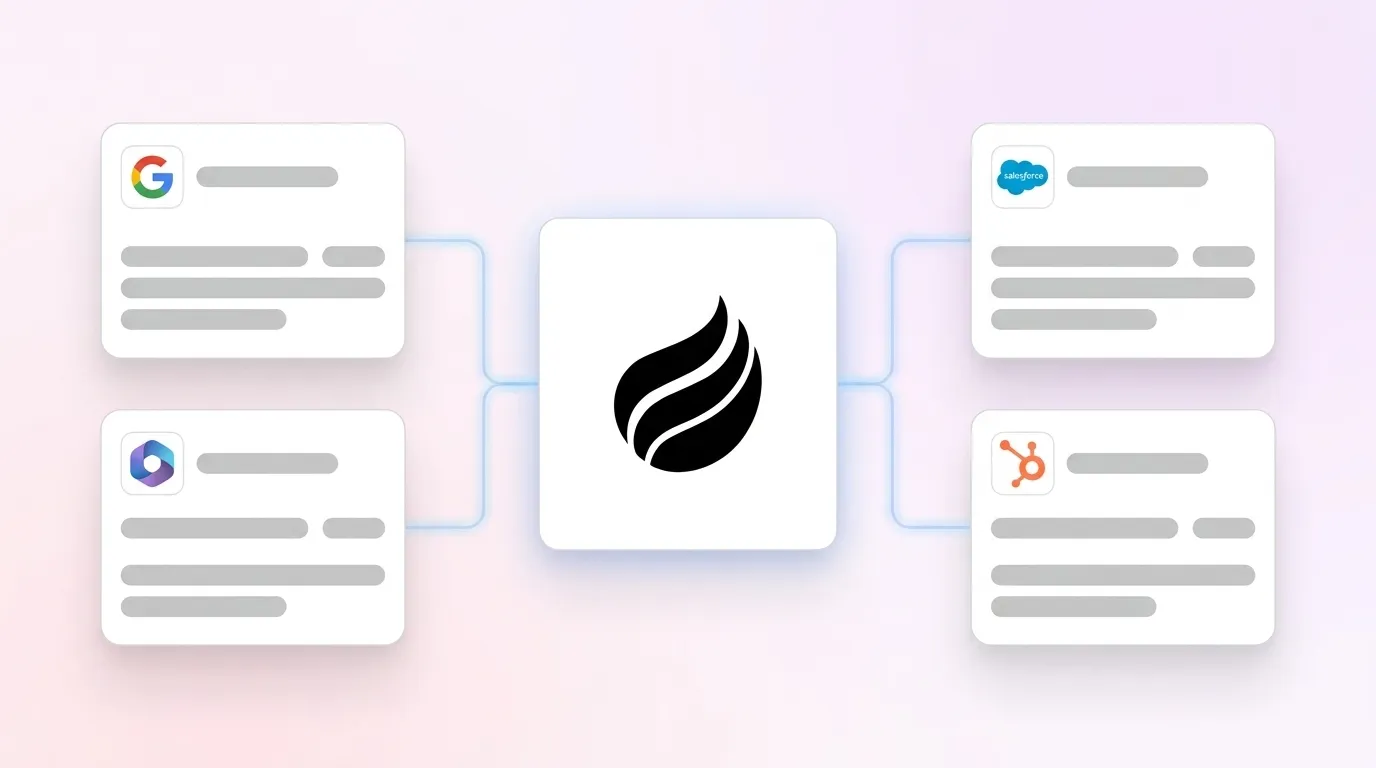
Coffee’s Agent removes this maintenance surface entirely. It ingests Granola output and writes autonomously to Salesforce or HubSpot. As a result, it delivers the 8–12 hours per week in savings that passive syncs cannot reach because they still require a human in the loop at the review, approval, or troubleshooting stage.
Data Quality After Sync and AI Outcomes
Raw AI summaries pushed by automated integrations are rarely structured to match CRM field expectations, resulting in noisy fields, missed context, and inaccurate details that cause users to stop trusting and eventually ignore the records. This pattern is not specific to Granola. It reflects a structural limitation of any passive sync that moves unstructured text into a relational database without an agent to interpret and route it.
Forrester analysts identify data quality as “the primary factor impeding genAI enablement in B2B sales,” noting that AI amplifies whatever data exists in systems. Poor input produces poor forecasts. Coffee addresses this at the source. Its Agent processes both structured and unstructured data, including email text, call transcripts, and Granola notes, and then writes clean, field-matched records. Auto-created contacts and activities ensure every interaction is associated with the correct record without manual linking.

That data quality advantage is directly tied to how the integration handles the sync process itself, specifically whether it requires manual intervention before writing to the CRM.
Edit-Before-Sync Friction and Zapier Dependency
Granola’s HubSpot native integration performs a manual, per-note sync, and users must explicitly select the target contact for each note via the HubSpot option in the note interface. The Salesforce path runs exclusively through Zapier and requires manual configuration of field mapping and object routing for Opportunities, Contacts, and Tasks inside each Zap.
Common failures include duplicate CRM entries, orphan notes not linked to any record, HubSpot sync failures caused by account-email mismatches, and Salesforce Zap errors from incorrect trigger or action field mapping. Each failure requires a human to diagnose and fix it, which converts time savings into time costs. Using Zapier with Salesforce also requires a paid Zapier plan, since Salesforce is a premium app on the platform, which adds a recurring cost line that scales with team size.
Coffee’s Agent writes to Salesforce and HubSpot with zero intervention. There is no review step, no Zap to maintain, and no token limit to monitor.

Eliminate that friction, see Coffee pricing.
Salesforce and HubSpot Workflow Depth Preserved
Passive syncs that push plain-text summaries into a Notes field bypass the structured objects that make Salesforce and HubSpot valuable, such as required fields, opportunity stages, forecasting categories, and activity sequences. A note that lands in the wrong object or skips required fields breaks validation rules and silently corrupts pipeline data.
Coffee’s Agent is built with deep knowledge of Salesforce and HubSpot architecture, including quotas, forecasting, required fields, and activity logging. It writes to the correct objects, respects field requirements, and preserves the workflow logic that RevOps teams have configured. Newer AI-first CRMs lack this integration depth. Coffee’s Companion App model is designed for teams that have invested in Salesforce or HubSpot and need an agent that works within those systems rather than around them.
Pipeline Forecasting Accuracy and Long-Term Administrative Burden
Automatically populated CRM data from conversation intelligence tools improves forecast accuracy by ensuring data is complete and consistent, while reducing the time sales managers spend validating records. When records are incomplete because a rep skipped the review step or a Zap failed silently, managers compensate with manual validation, spreadsheet exports, and pipeline interrogation calls.
The 30% win-rate improvement mentioned earlier depends entirely on complete, accurate CRM data. Passive syncs that require human review introduce gaps every time a rep is busy, traveling, or simply skips the step. Coffee’s Agent removes that dependency. Because it writes autonomously after every meeting, the data stays current, and forecasting models operate on a complete record set.
Gartner forecasts that 40% of enterprise applications will include task-specific AI agents by year-end 2026, up from less than 5% in 2025, which reflects a broad market shift toward agent-driven automation. Teams that adopt passive syncs now will face a second migration when those limitations become untenable at scale.
Best-Fit Use Cases by Team Stage
Early-stage teams (1–10 reps): Granola’s native HubSpot integration is a viable starting point if the team accepts manual per-note syncing and has low data-volume requirements. The friction remains manageable at small scale.
Growing sales organizations (10–50 reps): At this size, manual review steps and Zapier maintenance costs compound. For organizations with 1–50 employees, consistent data capture is more valuable than perfect data, and basic hygiene standards include logging all activities within 24 hours and requiring stage, value, and close date on opportunities. Coffee’s Agent enforces these standards automatically, which makes it the correct fit for this segment.
Established Salesforce/HubSpot environments: Teams with configured forecasting, required fields, and workflow rules need an agent that respects that architecture. Coffee’s Companion App is the only solution in this category that writes autonomously while preserving workflow depth.
Operational Considerations and Risks
Change management is the primary adoption risk for any CRM automation tool. Reps accustomed to reviewing notes before sync may initially distrust autonomous writes. Coffee addresses this through transparent activity logs that show exactly what the Agent wrote and when, which allows managers to audit without requiring reps to pre-approve every entry.
Data governance also requires attention. Coffee is SOC 2 Type 2 and GDPR compliant, and data is not used to train public models. Zapier-based integrations pass data through a third-party middleware layer with its own security posture and data retention policies, which adds a governance variable that security-conscious RevOps teams must evaluate separately.
Scalability is where passive syncs fail most visibly. Salesforce API request limits vary by edition and license count, which means a growing team on a lower Salesforce tier can hit rate limits that silently drop records. Coffee’s direct integration does not route through Zapier’s token or API-limit constraints.
Decision Framework Checklist for RevOps Leaders
Use the following criteria to match your constraints to the right integration model.
- Team size under 10 reps, low meeting volume: Granola’s native HubSpot integration may suffice with manual review accepted.
- Team size 10–50 reps, Salesforce or HubSpot as system of record: At this scale, manual review steps compound into significant time costs, which makes Coffee Agent (Companion App) the correct fit.
- Required fields and forecasting categories configured in Salesforce/HubSpot: If your CRM environment includes these workflow elements, which is common in teams above 10 reps, only Coffee writes to these fields autonomously without breaking validation rules.
- Zapier already in the stack and maintained by a dedicated ops resource: Granola + Zapier is viable but carries ongoing maintenance cost and token-limit risk.
- No dedicated ops resource to maintain Zaps: Coffee Agent removes the maintenance surface entirely.
- SOC 2 and GDPR compliance required: Coffee meets both standards, and teams should evaluate Zapier’s data handling separately.
- Goal is 8+ hours per week saved per rep: Only full agent automation reaches this threshold, while passive syncs top out at 2–3 hours.
Frequently Asked Questions
How long does Coffee Agent implementation take with existing Granola and Salesforce or HubSpot setups?
Enterprise agentic AI implementations typically require 4–6 weeks for proof of concept and 3–6 months for full production deployment. Coffee’s Companion App connects to Salesforce or HubSpot through a simple authentication flow. Once authenticated, the Agent begins scanning emails and calendars and starts writing structured data to the correct CRM objects. There is no Zap configuration, no field-mapping spreadsheet, and no middleware to approve. For teams already using Granola, Coffee ingests Granola output as part of its broader data capture across meetings, emails, and calendar events, so no workflow restructuring is required on the Granola side.
What measurable ROI have mid-market teams reported from automated Granola-to-CRM workflows in 2026?
Mid-market teams using full agent automation report 8–12 hours saved per rep per week on CRM admin, compared to 2–3 hours for teams using passive meeting-to-CRM syncs with manual review steps. Pipeline forecasting accuracy improves because records are complete and consistent rather than dependent on rep compliance. The 30% win-rate lift discussed earlier materializes only when AI operates on complete CRM data, which agent automation supports more reliably than passive syncs. Teams that previously relied on Zapier-based syncs also report eliminating the recurring cost of a paid Zapier plan and the ops time spent diagnosing failed Zaps.
How does Coffee handle data security and compliance compared with Zapier-based Granola integrations?
Coffee is SOC 2 Type 2 and GDPR compliant. Customer data is not used to train public AI models. The Agent writes directly to Salesforce or HubSpot without routing data through third-party middleware, which reduces the number of systems that touch sensitive deal and contact information. Zapier-based integrations introduce a middleware layer with its own data retention and security policies, which RevOps and legal teams must evaluate independently. For teams in regulated-adjacent industries or those with data residency requirements, Coffee’s direct integration model presents a simpler governance surface than a Zapier-dependent stack.
Can passive Granola syncs ever match agent automation for pipeline accuracy without ongoing manual oversight?
No. The structural limitation of passive syncs is that they require a human decision point, either a per-note contact selection in HubSpot or a manual review and approval step before Salesforce writes. Every time a rep skips that step, a record goes unlogged. At 10 reps averaging five meetings per day, even a 20% skip rate produces 10 missing records daily, which compounds into forecast gaps within weeks. Agent automation removes the human decision point entirely. Coffee writes after every meeting, regardless of rep availability or compliance. Pipeline accuracy then becomes a function of agent reliability rather than rep behavior, which is the only sustainable model at mid-market scale.
Conclusion: Choose the Integration That Actually Saves Time
Across all seven criteria, the pattern stays consistent. Passive Granola integrations, whether native HubSpot or Zapier-based Salesforce, recover some time but preserve the manual steps, maintenance overhead, and data-quality risks that create pipeline visibility problems in the first place. They function as starting points, not long-term solutions.
Coffee’s Agent is the only integration model that ingests Granola output and writes autonomously to Salesforce or HubSpot without a human review step, without Zapier token limits, and without field-mapping failures. It delivers 8–12 hours saved per rep per week, enforces data quality at the point of capture, and preserves the workflow depth that mid-market Salesforce and HubSpot environments require. For RevOps leaders who need trusted CRM data and accurate forecasts, the agent layer is not optional, it is the integration.
Turn your Granola notes into trusted CRM records, explore Coffee.