Written by: Doug Camplejohn, CEO & Co-Founder, Coffee
Key Takeaways for Collaborative Sales Leaders
- Collaborative sales reporting works only when data is clean, automatically captured, and visible in real time for every stakeholder.
- Legacy CRMs depend on manual entry, which creates incomplete data, forecast misses, and hours lost to administrative work.
- Modern standalone CRMs improve interfaces but still lack deep integration and full automation for quotas, hierarchies, and pipeline compare.
- Agent layers like Coffee capture data from emails, calls, and transcripts, then write structured records back to Salesforce or HubSpot with minimal setup.
- Eliminate manual data entry and unlock reliable collaborative reporting by trying Coffee today.
How This Evaluation Compares Sales Reporting Options
Three categories of software compete for collaborative reporting in 2026. Legacy CRMs such as Salesforce, HubSpot, and Pipedrive act as passive databases that store structured data but rely on human entry. Modern standalone CRMs such as Clarify and Day.ai use post-ChatGPT interfaces but vary significantly in integration depth. Agent layers are purpose-built AI systems that automate data capture from emails, calls, and transcripts, either replacing or sitting on top of an existing CRM.
Six criteria determine which category works best for collaborative teams:
- Data quality automation, meaning the system captures data without human input.
- Real-time shared visibility, meaning every stakeholder can see current pipeline state at the same time.
- Integration depth with Salesforce or HubSpot, including quotas, required fields, and forecasting hierarchies.
- Forecasting accuracy, based on clean, structured ground-truth data.
- Team adoption friction, so reps use the system instead of reverting to shadow spreadsheets.
- Total cost of ownership in 2026, including whether pricing scales without extra manual labor.
The comparison below shows how each category performs on the most decisive criteria. Only agent layers combine full automation with deep integration, which collaborative forecasting requires.
Side-by-Side Comparison of Sales Reporting Categories
| Solution Category | Automation of Data Entry | Real-Time Shared Visibility | Salesforce/HubSpot Integration | 2026 Pricing Model |
|---|---|---|---|---|
| Legacy CRMs (Salesforce, HubSpot) | Minimal, rep-dependent manual entry | Dashboards exist, but stale data limits reliability | Native, functions as the system of record | Per-seat plus add-ons for intelligence features |
| Modern Standalone CRMs (Clarify, Day.ai) | Partial, unstructured data handling varies | Improving, limited pipeline compare features | Shallow, limited support for quotas and required fields | Per-seat, feature tiers vary |
| Agent Layers (Coffee) | Full, emails, calls, transcripts captured automatically | Real time, week-over-week pipeline compare included | Deep, supports quotas, forecasting, and required fields | Simple seat-based, unlimited agent labor included |
See how Coffee removes data entry from pipeline reviews and keeps every forecast conversation grounded in current data.
Category Analysis: Legacy CRMs and Manual Data Burden
Salesforce, HubSpot, and Pipedrive dominate installed base, but their architecture predates the AI-agent era. They function as relational databases that store structured fields and only what a human types into those fields. Sales reps spend about 70% of their time on non-selling tasks, including manually entering customer notes into the CRM, per Salesforce research. Despite this time investment, the output remains unreliable: 76% of CRM users say less than half of their organization’s CRM data is accurate and complete. The financial impact is severe, and poor CRM data quality costs the average company up to $15 million per year.
When inaccurate data feeds forecasting models, the results become predictably unreliable. According to SiriusDecisions research cited by Forrester, 79% of sales organizations miss their forecast by more than 10%, which Forrester links to the subjectivity and inconsistency of manual entry. Salesforce research found that data silos cost organizations $7.8 million annually in lost productivity, with employees wasting 12 hours weekly searching for information across disconnected systems. Legacy CRMs also cannot ingest unstructured data such as email text, call transcripts, and meeting notes without bolt-on tools, which add cost and create more manual handoffs.
Category Analysis: Modern Standalone CRMs Respond to Legacy Gaps
Modern standalone CRMs emerged as a direct response to these legacy limitations. Newer entrants such as Clarify and Day.ai use more modern interfaces and handle some unstructured data. Day.ai focuses primarily on productivity and unstructured data capture but lacks the pipeline intelligence depth that collaborative forecasting requires. Clarify offers a cleaner interface than legacy systems but lacks the integration capabilities needed by teams already committed to Salesforce or HubSpot. It cannot reliably handle quotas, required fields, and forecasting hierarchies that mid-market RevOps teams depend on.
Both categories improve on legacy user experience but share a structural limitation. Neither deploys a persistent agent that continuously monitors, enriches, and writes data back to the system of record without human prompting. Week-over-week pipeline compare, the feature that turns a review meeting from an interrogation into a strategy session, is absent or underdeveloped in both. This gap reveals a deeper architectural limitation that only agent-based systems have solved.
Category Analysis: Agent Layers for Automated Collaborative Reporting
Agent layers represent the architectural shift that defines 2026 sales tooling. Instead of waiting for a rep to update a field, an agent monitors email, calendar, and call transcripts continuously, then writes structured, enriched data back to the system of record automatically. AI CRM automation achieves 99%+ accuracy in data processing and extraction tasks, compared to manual entry which averages 95–99% accuracy.

For collaborative reporting, the agent model turns the CRM into the most current and complete source of truth, not a lagging record that reps distrust. Clean and consistently updated CRM data from AI automation leads to more accurate forecasts and more reliable reports for sales teams. Setup effort stays contained: Coffee’s companion model uses a single authentication to begin syncing, enriching, and writing insights back to Salesforce or HubSpot.

Best-Fit Coffee Deployment by Team Size
1–20 person teams have usually outgrown spreadsheets but find legacy CRMs expensive and maintenance-heavy. The Coffee Standalone CRM deploys the agent as the full system of record, with no prior CRM required. The agent auto-creates contacts from Google Workspace or Microsoft 365, logs every activity, and delivers pipeline compare without any manual exports.

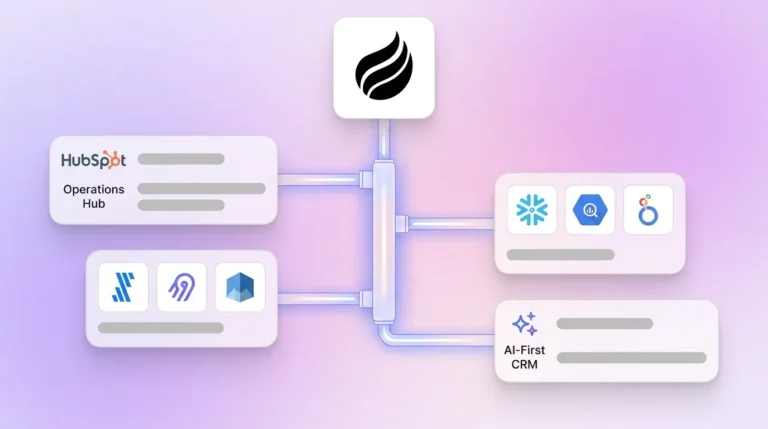
20–50 person teams are typically committed to Salesforce or HubSpot and cannot migrate their system of record. The Coffee Companion App deploys the agent on top of the existing installation. It handles the data-in process by capturing emails, calls, and transcripts, then writes enriched, structured data back into Salesforce or HubSpot. Existing workflows, quotas, and required fields remain intact while the manual entry burden that degrades shared dashboards disappears.

Why Legacy CRMs Fall Short for Collaborative Forecasting
The core failure is architectural, not cosmetic. Legacy CRMs act as passive databases that output only what humans input, and humans input inconsistently. As noted earlier, reps lose over an hour daily to manual entry, and 55% of CRM implementations fail to meet their planned objectives, with poor user adoption as a primary cause. The result is “bad data in, bad data out,” which produces dashboards managers cannot trust and forecasts that miss by double digits.
The agent model reverses this dependency on human updates. Salesforce’s 2026 State of Sales report found that 54% of sales organizations have already deployed AI agents across the sales cycle, and top-performing sales teams are 1.7x more likely to use AI agents than underperformers. Data and analytics leaders agree that AI outputs are only as good as their data inputs, so automating the input layer becomes the decisive variable for collaborative reporting quality in 2026.
Addressing Common Objections About Coffee
Integration complexity. Coffee connects to Salesforce and HubSpot through a single authentication. Unlike newer CRM alternatives that lack support for quotas, required fields, and forecasting hierarchies, Coffee is built with deep knowledge of how these integrations function at the RevOps level. Teams can extend coverage through Zapier today, and deeper native connections sit on the roadmap.
Security. Coffee is SOC 2 Type 2 and GDPR compliant, which addresses standard enterprise security requirements. Data processed by the agent does not train public models, which protects customer confidentiality. Growing regulatory pressure in 2026 increases the need for governed, auditable data, and Coffee’s architecture supports that requirement through clear access controls and traceable activity.
Pricing. Coffee uses simple seat-based pricing that includes the agent’s labor for data capture, enrichment, meeting summaries, and pipeline compare. There is no metering on LLM usage or process volume. Teams save 8–12 hours per rep per week in administrative work, which converts directly into additional selling capacity as headcount grows.
See Coffee’s pricing for a clear seat-based model with unlimited agent work included.
Decision Framework and Checklist for Coffee
Use three variables to match your current situation to the right deployment model:
- Current stack: No CRM or outgrown spreadsheets points to Coffee Standalone. A committed Salesforce or HubSpot stack points to Coffee Companion.
- Team size: Teams of 1–20 people fit a standalone agent CRM. Teams of 20–50 people benefit from a companion agent on the existing system of record.
- Tolerance for manual work: Any tolerance for manual data entry eventually produces unreliable shared dashboards at scale. The only path to trustworthy collaborative reporting is full automation of the data-in layer.
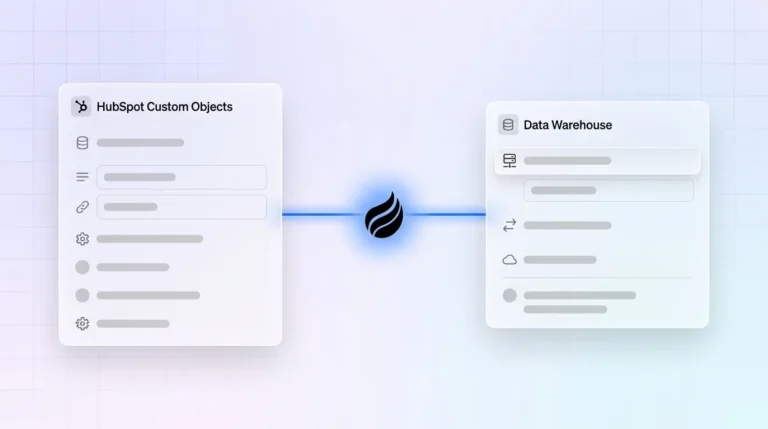
Legacy CRMs require humans to serve the software, which creates the data quality problems described throughout this evaluation. Modern standalone CRMs improve the interface but do not fully solve the data-in problem, so teams still rely on partial automation and manual oversight. Coffee is the only option in this evaluation that removes the data-entry burden entirely across both deployment models, handles structured and unstructured data from a built-in data warehouse, and delivers real-time pipeline compare without spreadsheets or add-ons.
Frequently Asked Questions About Coffee
How long does it take to implement Coffee?
For the Standalone CRM, teams become operational within days. The agent connects to Google Workspace or Microsoft 365 through a single authentication and immediately begins scanning emails and calendars to auto-create contacts, log activities, and populate the pipeline. For the Companion App on Salesforce or HubSpot, the same authentication process starts the agent’s sync and enrichment workflows. There is no multi-month implementation project, no custom development, and no dedicated IT resource required.
How difficult is data migration when switching to Coffee?
For teams moving from spreadsheets or a lightweight CRM to the Coffee Standalone, the agent handles foundational data population automatically from connected email and calendar history, which reduces manual migration work significantly. For teams adopting the Companion App, no migration occurs because Salesforce or HubSpot remains the system of record, and Coffee writes enriched data into it. Existing records, fields, and workflows stay in place.
What internal expertise is required to manage Coffee?
Coffee is designed for Heads of Sales and RevOps leaders rather than IT administrators. The agent manages data capture, enrichment, deduplication, and pipeline tracking autonomously. Teams avoid complex configuration layers, custom field mapping projects, and ongoing manual hygiene work. The seat-based pricing model with unlimited agent labor removes usage thresholds that would otherwise require monitoring.
How do teams measure reporting reliability after deploying Coffee?
The most direct indicators include pipeline data completeness, forecast variance, and time spent on manual data tasks per rep per week. Teams using Coffee’s Pipeline Compare feature can track week-over-week deal progression, stalls, and new additions without exporting CSVs, which functions as a continuous audit of data freshness. Shadow spreadsheet usage, the clearest signal of CRM distrust, typically declines within the first month as reps find the agent’s output more current and reliable than their own manual records.
Conclusion: Why Agent Layers Win Collaborative Forecasting
The six evaluation criteria of data quality automation, real-time shared visibility, integration depth, forecasting accuracy, adoption friction, and total cost of ownership consistently separate agent-driven systems from passive databases. Legacy CRMs produce unreliable collaborative dashboards because they depend on human entry that remains inconsistent by nature. Modern standalone CRMs improve the interface without fully solving the data-in problem. Agent layers that automate capture from emails, calls, and transcripts provide the clean, current data that shared forecasting requires.
For 5–50 person U.S. sales teams evaluating this decision in 2026, the key choice centers on which agent model fits the current stack. Coffee is the only solution that serves both deployment paths with the integration depth, security posture, and pricing simplicity that RevOps leaders expect.
Start your Coffee trial today and give your team the pipeline visibility it deserves.