Written by: Doug Camplejohn, CEO & Co-Founder, Coffee | Last updated: August 14, 2026
Key Takeaways for CRM Data Enrichment
- CRM data enrichment keeps records current with verified external attributes, replacing one-time list cleanups with ongoing automated updates.
- Manual processes and disconnected tools accelerate data decay, which wastes outreach budget and distorts revenue forecasts.
- Agent-led automation reads emails, calendars, and transcripts, then writes structured fields back into the CRM without relying on reps.
- Teams using agent enrichment report up to 80% less manual work, 25% to 40% faster pipeline velocity, and field completion rising from 15% to 90%.
- See how Coffee’s agent delivers these outcomes in your CRM—explore pricing and deployment options.
The Daily Cost of Scattered or Incomplete CRM Data
A Verum report estimates enterprises lose an average of $12.9 million per year due to poor CRM data quality, with no matching June 2026 Forrester study commissioned by Validity or the specified revenue, outreach, or productivity breakdown found in the evidence. For smaller B2B tech teams, the proportional damage remains just as severe.
Validity’s 2025 survey of 602 CRM users found that 76% reported less than half of their organization’s CRM data was accurate and complete, and 37% reported losing revenue as a direct result. Salesforce State of Sales reports do not cite any annual CRM data decay rate.
For a 10-to-50-person sales team, this decay shows up as daily friction. Sales reps manually log only about 28% of their sales activity, so most calls, emails, and meetings never reach the CRM. When 30% of outbound targets are stale and a team makes 20,000 outbound touches per quarter, 6,000 of those touches are wasted at a direct cost of $18,000 to $30,000.
Forecast accuracy suffers in parallel. Salesforce research found that 68% of sales leaders report inaccurate or unreliable forecasts, with lack of pipeline visibility as the key underlying issue. Teams with more complete activity data often see lower forecast variance than teams relying on manual CRM updates. For a company forecasting $10 million per quarter, that variance represents a meaningful swing in potential error.
The core issue is structural rather than behavioral. As Metacto Partner and CTO Garrett Fritz states: “This is not a discipline problem. It is a structural one.” Reps will always prioritize revenue-generating work over administrative upkeep, and additional process enforcement does not change that tradeoff.
Why Spreadsheets, Point Tools, and Human Entry Break at Scale
Clarify.ai’s May 2026 guide documents the core failure mode: manual enrichment takes minutes per record, is prone to human error, and breaks down as teams grow beyond 20 to 50 sellers. The problem is not that reps lack discipline. The architecture depends on human labor for a task humans cannot sustain at scale.
Point solutions often compound this problem. A typical RevOps stack at a 20-person B2B tech company might include a CRM for records, a prospecting database for enrichment, a sales engagement tool for outreach, and a conversation intelligence platform for call data. Each tool holds a fragment of the truth. None of them sync context automatically, so a rep must stitch information across four tabs before every call.
RevOps teams spend roughly 30% to 40% of their time cleaning data that should never have been dirty because of manual entry workflows. Manual entry introduces three specific failure modes—omission, delay, and bias because reps forget details, enter notes late, or record what confirms their view of a deal instead of what was actually said.
Spreadsheet workarounds, often called “shadow CRMs,” appear when the official system of record becomes too painful to maintain. Once that happens, the CRM stops functioning as a source of truth, and pipeline reviews turn into interrogation sessions instead of strategic discussions. The solution is not stricter process enforcement or more training. The solution is to remove humans from the data entry loop entirely.
Eliminate the four-tab context switch and shadow CRMs—see how Coffee consolidates your stack into one autonomous agent.
Agent-Led Enrichment That Fixes Structural CRM Data Problems
Agent-led CRM data enrichment replaces the human-as-data-entry-clerk model with an autonomous system that ingests unstructured signals such as emails, calendar events, and call transcripts, then writes structured, verified data back to records automatically. This approach differs from traditional automated enrichment, which relied on scheduled batch jobs against static vendor databases. An agent runs continuously, processes unstructured text, and resolves context across multiple sources at once.
AI-powered CRM enrichment goes beyond automation by using large language inference and continuous learning to predict patterns, extract information from unstructured text like email signatures and calendar records, suggest duplicate merges, and make real-time pipeline updates based on intent signals.
AI enrichment systems resolve entities across sources, validate accuracy by cross-referencing, detect changes such as job moves or acquisitions, extract insights from unstructured communications, and maintain historical records rather than overwriting data. That last capability matters for mid-market teams. Legacy relational databases overwrite fields when updated, which destroys historical context. An agent built on a data warehouse preserves the full timeline.
AI-powered CRM enrichment reduces manual data entry by up to 80% while cutting errors at scale by enforcing consistent formatting, validating fields, and enriching records with company context automatically. The structural problem Garrett Fritz identified gets solved not by asking reps to improve their habits, but by removing the dependency on rep behavior entirely.
Concrete Benefits of Agent-Led CRM Data Enrichment
Time Saved for Each Sales Rep
Automated enrichment reduces manual research time from 40 minutes per account to under 10 seconds per contact, which returns over 30 hours per week to selling for teams handling 50 contacts daily. Sales reps lose an estimated 550 hours per year to bad data. For a five-person team at $100,000 annual salaries each, that loss equals $137,500 in annual productivity.
Forecast Accuracy and Pipeline Visibility
Enrichment improves forecasting accuracy by enabling scoring models that predict close probability based on company fit, stakeholder engagement, and deal velocity, which reduces surprise deal slips. When the agent captures every interaction automatically, the pipeline reflects reality instead of what reps remembered to log.
Rep Adoption and CRM Trust
After deploying automated conversation-driven enrichment, Vendilli increased CRM field completion from 15% to 90%, which reduced change orders and improved profit margins. When the CRM updates itself, reps stop resenting it and start trusting it as a reliable system of record.
Pipeline Velocity and Conversion Gains
Teams using multi-source enrichment report 25% to 40% improvements in pipeline velocity within the first quarter and 15% to 25% increases in qualified opportunity creation. Lead conversion rates improve from an industry average of 1% to 3% before enrichment to 5% to 10% or higher after enrichment. Because the agent ensures accurate inputs, the pipeline intelligence it surfaces is reliable enough to guide decisions.
Move from guesswork to verified pipeline intelligence—explore Coffee’s pricing and see deployment options for your CRM.
How an Agent Turns Email and Meetings into Pipeline Intelligence
The agent workflow starts at the point of connection. When a user authenticates Google Workspace or Microsoft 365, the agent scans existing emails and calendar events to auto-create contacts and companies, then associates each interaction with the correct record. No manual import step is required.

During active selling, the agent joins calls through a meeting bot on Zoom, Teams, or Google Meet, records and transcribes the conversation, and extracts structured data such as BANT fields, next steps, and stakeholder names as soon as the call ends. Microsoft’s AI-powered enrichment feature in Dynamics 365 Sales follows this pattern: the agent scans emails and meeting transcripts for budget, authority, need, and timeline context, compares that context against existing opportunity records, and generates field updates.

Between calls, the agent augments records with firmographic data such as job titles, funding rounds, and LinkedIn profiles through licensed data partners, which removes the need for a separate prospecting database subscription. Activity logging for last activity and next activity updates autonomously, so deal state stays current without rep intervention.
The output layer turns captured history into actionable pipeline intelligence. Because the agent stores history in a data warehouse instead of overwriting fields, it can visualize week-over-week pipeline changes, including which deals progressed, which stalled, and which were added. Pipeline reviews shift from interrogation sessions about missing updates to strategic discussions grounded in verified data.

Market Shift from Manual to Agent-Led Enrichment
The market has moved decisively toward automation. Salesforce’s 2026 State of Sales research found that nine in ten sales teams are using AI agents or expect to within two years. In 2026, data enrichment has shifted from one-time CSV uploads to continuous, real-time verification integrated directly into CRM and outbound workflows. The table below quantifies the operational gap between manual and agent-led approaches across dimensions that shape daily sales productivity.
| Attribute | Manual Enrichment | Agent-Led Enrichment |
|---|---|---|
| Speed per record | Minutes per record | Under 10 seconds per contact |
| Data entry failure modes | Multiple (see above) | Avoided via automated extraction at call end |
| Scale ceiling | Limited by rep capacity | Scales with team growth |
| CRM field completion | Typically 15% to 20% | 85% to 95% (as seen in the Vendilli case above) |
Enterprises with weak CRM data practices incur far higher costs than those with strong practices. That gap reflects the compounding value of treating enrichment as a continuous capability instead of a periodic cleanup.
Evaluation Checklist for CRM Data Enrichment Platforms
Heads of Sales and RevOps leaders at 10-to-50-person B2B tech companies can use the following criteria to evaluate enrichment solutions before committing.
Integrations and compatibility:
- Confirm that the solution connects natively to your email and calendar provider, such as Google Workspace or Microsoft 365, without manual CSV exports.
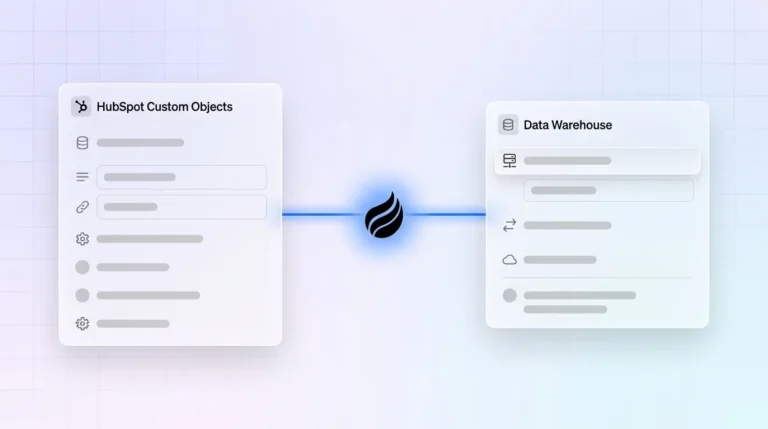
- Verify that, if you run Salesforce or HubSpot, the agent can write enriched data back automatically while respecting required fields and custom objects.
- Check whether the solution offers API access or Zapier connectivity for workflows not covered natively.
Security and compliance:
- Confirm that the vendor is SOC 2 Type 2 certified and GDPR compliant.
- Ensure that your data is not used to train public AI models.
- Review the vendor’s data residency documentation for North American B2B contact data.
Data quality and freshness:
- B2B contact data decays at 2.1% per month, so confirm that the solution re-enriches records on a continuous or at least quarterly cadence, not just at initial import.
- Check that the agent processes unstructured data such as email text and call transcripts in addition to structured firmographic fields.
- Confirm that the system preserves historical field values in a data warehouse instead of overwriting them.
Fit for company size and stage:
- Look for a seat-based, predictable pricing model without metered charges for agent actions or API calls.
- Confirm that the vendor offers both a standalone CRM option and a companion layer for existing Salesforce or HubSpot installations, so you avoid a forced migration.
- Assess whether the solution can consolidate multiple point tools, including enrichment databases, conversation intelligence, and sales engagement, into one agent to reduce stack complexity.
Coffee meets each criterion above by addressing security, data quality, and deployment flexibility in a single platform. Its agent is SOC 2 Type 2 and GDPR compliant, which satisfies the security requirements outlined earlier, and it processes both structured and unstructured data from emails, calendars, and transcripts to keep records enriched continuously. The platform is available as a Standalone CRM or as a Companion App layered over existing Salesforce or HubSpot instances, which aligns with the fit-for-stage criteria by letting teams choose their migration path. Pricing is seat-based with no metering on agent labor, which removes the unpredictable costs that often accompany point solutions. For teams that have outgrown manual processes but are not ready for an enterprise migration, this dual-model approach removes the all-or-nothing decision.
Frequently Asked Questions
What is data enrichment in CRM, and how is it different from a data append?
Data enrichment in CRM is the ongoing process of automatically augmenting contact, company, and opportunity records with verified external attributes such as firmographics, job titles, and behavioral signals, so records stay complete and current as data decays. A data append is a one-time batch project where you export a list, match it against a vendor database, fill missing fields, and reimport the list. Enrichment acts as the continuous version of that job, triggered automatically as new records enter the system and run on a scheduled cadence for existing ones. When the problem is a single messy list, a data append can address it. When new leads arrive incomplete every day, enrichment is required, because appending a leaky database becomes a treadmill.
Does Coffee work with Salesforce and HubSpot, or does it replace them?
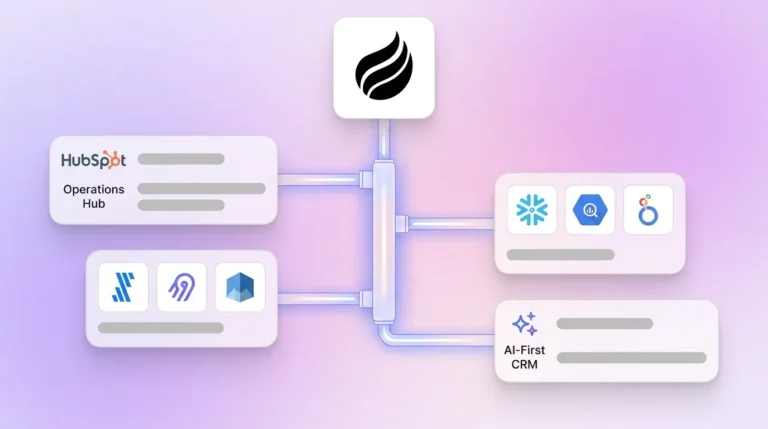
Coffee supports both deployment paths. The Companion App deploys the Coffee Agent as an intelligent layer on top of an existing Salesforce or HubSpot installation. The agent handles data ingestion and enrichment by capturing emails, calendar events, and call transcripts, then writing structured, verified data back to the primary CRM without a migration. Teams that want a modern alternative from scratch can use Coffee’s Standalone CRM, where the agent powers the entire system of record. This dual-model approach means teams avoid an all-or-nothing decision based on their current stack.
Is Coffee’s data secure, and will my CRM data be used to train AI models?
Coffee is SOC 2 Type 2 certified and GDPR compliant. Customer data is not used to train public AI models. For B2B tech companies handling prospect and customer data, these certifications cover the baseline requirements for most security reviews at the 10-to-50-person company stage. Heavily regulated industries such as healthcare and financial services, which often require multi-year security reviews, fall outside Coffee’s current ideal customer profile.
What data sources does the Coffee Agent use for enrichment?
The agent enriches records from two main categories of sources. First, it ingests first-party signals, including emails and calendar events from Google Workspace or Microsoft 365 and call transcripts from meetings joined via the AI meeting bot on Zoom, Teams, or Google Meet. Second, it augments records with third-party firmographic data such as job titles, funding information, and LinkedIn profiles through licensed data partners. This combination lets the agent capture both the structured context available from external databases and the unstructured context that exists only inside your own communications, which legacy enrichment tools cannot access.
How much time can a sales rep realistically save with agent-led enrichment?
Coffee’s agent saves reps an estimated 8 to 12 hours per week by automating contact creation, activity logging, meeting summaries, and follow-up drafting. Industry benchmarks support the upper range of that estimate, with the time savings detailed in the comparison table earlier translating to 8 to 12 hours per week for typical mid-market sales teams. The actual time saved for a given team depends on current CRM adoption rates and the volume of contacts processed. The structural shift, from rep-as-data-entry-clerk to agent-as-data-entry-clerk, remains consistent regardless of team size.
What is the difference between data enrichment, data cleansing, and data validation?
These three processes serve distinct functions and run in a specific sequence. Data cleansing finds and removes errors, duplicates, and outdated entries from existing records, which corrects what is already there. Data validation checks whether values already held are accurate and usable, such as whether an email address is deliverable or a phone number is dialable, without changing records. Data enrichment adds entirely new attributes that were never captured in the original record, such as job title, company revenue, or intent signals. The correct operational sequence is to cleanse first so matching algorithms work on reliable inputs, then enrich to fill gaps, then validate continuously to catch decay between refresh cycles.
Put an autonomous agent to work on your CRM data—review Coffee’s pricing and deployment options.