Written by: Doug Camplejohn, CEO & Co-Founder, Coffee | Last updated: September 11, 2026
Key Takeaways
- Automated CRM data entry captures sales activity from email, calendar, and calls and writes it to the CRM automatically. Reps spend more time selling and less time logging.
- Reps save 8–12 hours per week when the agent handles activity logging, stage updates, and follow-up task creation in real time.
- Pipeline reviews shift from interrogations about what was logged to strategic discussions about what actually happened, which improves forecast accuracy by 20–35%.
- Teams must clean data, configure validation rules, and set routing logic before automation is connected to prevent duplicate records, bad field mapping, and rep distrust.
- Teams evaluating automated CRM data entry should compare solutions on platform integration depth, data warehouse architecture, and the quality of human-review safeguards.
The Before-And-After Sales Week With CRM Workflow Automation
A manual sales week forces reps into constant context switching. They finish a call, open the CRM, write notes, update the stage, create a follow-up task, and repeat that sequence for every interaction across every deal. Research from Clari found that 72% of salespeople spend up to one hour per day on CRM data entry alone, logging calls, updating deal stages, entering notes, and creating follow-up tasks instead of talking to customers.
An automated sales week with Coffee looks very different. Reps finish a call, review the agent’s summary, and approve the follow-up email. The Coffee Agent joins the call, transcribes it, logs the activity, updates the stage based on what was said, and creates the next task. All of this happens before the rep closes the browser tab. Reps save 8–12 hours per week with automated data entry, according to market data shared by Coffee.

Those workflow changes compound into structural shifts across the revenue team.
- Pipeline reviews stop being interrogation sessions about what happened and become strategic discussions about what to do next.
- Forecasting stops being a guess built on rep self-reporting and becomes a signal-based output from complete activity data.
- Reps stop keeping shadow spreadsheets because the CRM finally reflects reality.
Top-performing reps update their CRM 18% more often than average reps, which shows that rep diligence is not the core issue. The real constraint is an architecture that forces them to choose between selling and logging. CRM workflow automation removes that tradeoff.
How Pipeline Reviews Change When The CRM Updates Itself
A pipeline review built on manual CRM data becomes a review of what reps remembered to log. A pipeline review built on automated capture becomes a review of what actually happened. That difference determines whether leadership manages deals or manages data entry compliance.
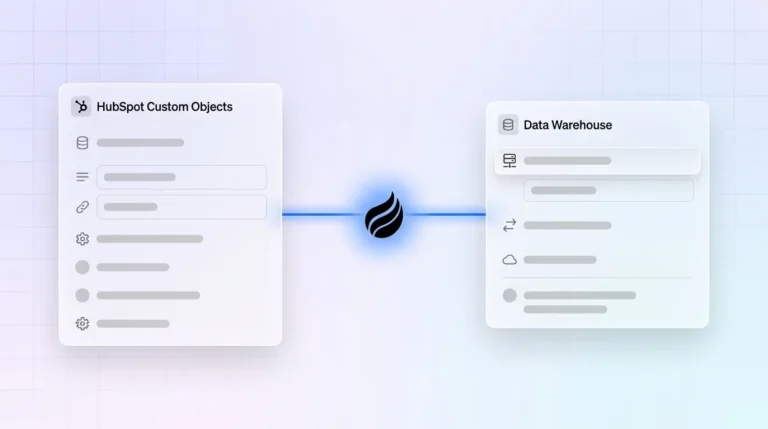
When the Coffee Agent logs every call, email, and meeting automatically, stage tracking reflects real deal progression rather than rep intention. Week-over-week pipeline comparison becomes possible because history is preserved in Coffee’s built-in data warehouse. Data is not overwritten when a field is updated, which often happens in legacy relational databases. Coffee’s Pipeline Compare feature surfaces which deals progressed, which stalled, and which were added since the last review, without CSV exports or expensive add-on tools.

The management payoff is direct. Teams running AI-powered pipeline hygiene see CRM data accuracy improve from 60–70% to 90%+ within the first 90 days. Every downstream report, forecast, and routing rule becomes more reliable as accuracy compounds. AI-powered sales forecasting improves forecast accuracy by 20–35% versus traditional rep-based methods, with monthly forecast accuracy rising from 45–55% to 70–85%.
For a VP of Sales presenting to a board, forecast confidence becomes the headline outcome. Hours saved matter, but reliable forecasts change budget, hiring, and strategy decisions.
See how Coffee turns your next pipeline review into a strategic conversation.
How Automated Capture Works With Salesforce And HubSpot Rules
Automated data entry Salesforce implementations fail most often because the Salesforce org was not configured before automation was connected. Salesforce validation rules fire on all save operations regardless of entry point: UI, Data Loader, REST API, SOAP API, Flows, and Apex. Automated or AI-driven record creation is therefore subject to the same rules as manual entry. Any automated capture tool that writes a record missing a required field will be blocked by Salesforce in the same way a rep would be.
This reality means routing rules and field mapping must be configured before capture is automated. Fields marked required on a Salesforce page layout are enforced only through the UI and are bypassed by API calls, Flows, and Apex triggers. Genuine business requirements must be enforced with validation rules rather than layout settings. Any automated capture tool writing via API must respect those rules or the write will fail silently.
HubSpot introduces a different constraint. HubSpot’s default Lifecycle stage property can only be moved forward by HubSpot tools, including imports, form submissions, the API, and workflows. Automated capture must respect this constraint and avoid silent failures where a stage write appears to succeed but produces no change.
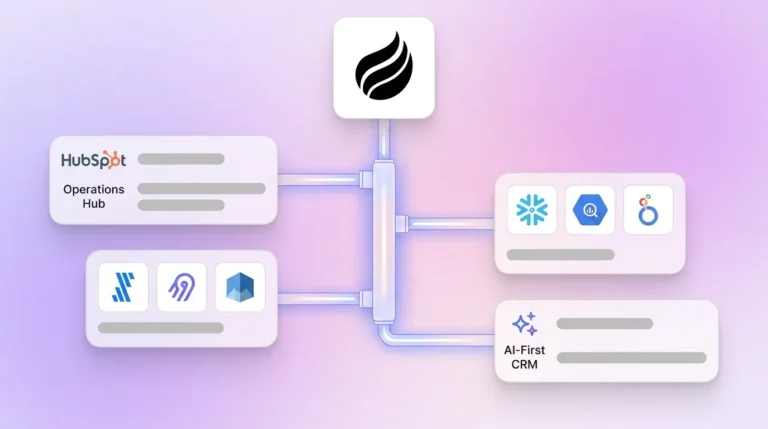
Newer alternatives like Day.ai and Clarify often lack the integration depth required to handle these platform realities. Coffee is built with a deep understanding of Salesforce validation rules, required fields, forecasting hierarchies, and HubSpot lifecycle constraints. That is why it works as a companion app on top of existing Salesforce and HubSpot instances without breaking the configurations teams already rely on.
Where Human Review Still Matters In An Automated CRM
Sales data accuracy automation keeps humans involved where judgment is required. Automation removes humans from repetitive, low-judgment work and preserves human review for decisions that carry higher risk.
The failure mode most teams encounter is automating a dirty CRM. When the same contact exists as two separate records in a CRM, both records are visible to automation tools; if both meet a workflow’s enrollment criteria, both get enrolled and the automation fires twice. The logic behaves correctly because the data indicates there are two separate people to act on. Validity’s State of CRM Data Management report found that 44% of organizations estimate they lose over 10% of annual revenue to low-quality CRM data, with duplicate records among the most commonly named drivers.
Three specific failure modes emerge when automation runs on unclean data:
- Duplicate Explosion: Automation creates records faster than deduplication can catch them, and each duplicate becomes a new trigger for downstream workflows.
- Bad Field Mapping: A documented CRM automation failure mode is the silent data error, where the integration shows green, logs look fine, and only later do teams discover a field was mapped incorrectly and the CRM received wrong data.
- Rep Distrust: When reps encounter automated records they cannot verify, they revert to shadow spreadsheets, and the CRM becomes unreliable again.
Coffee addresses this with a human-review safeguard built into the agent’s workflow. Ambiguous merges, edge-case records, and exception-queue items surface for human confirmation before any merge syncs back to the CRM. Durable deduplication requires preventing at entry, detecting continuously with fuzzy matching, merging with deterministic rules, and instrumenting duplicate rate as a first-class data quality metric. Coffee handles these steps as part of its agent-led architecture. Human review focuses on what requires judgment, and the agent handles everything else.
Explore how Coffee builds a CRM your reps actually trust.
How Instant Capture Transforms Lead Routing And Follow-Up
Instant capture changes the economics of lead response. An MIT and InsideSales research study found that contacting a lead within 5 minutes is 100 times more likely to result in contact and 21 times more likely to result in qualification compared to waiting 30 minutes. When the Coffee Agent captures a form submission, call, or email interaction and writes it to the CRM in real time, the routing workflow fires immediately, before a rep manually reviews a queue.

This benefit depends on routing rules that are configured before capture is automated. A routing workflow should assign an owner, notify the correct rep, set lead status to “New,” and write a timestamp to a custom property called “Date Routed” to create the audit trail required to measure speed-to-lead. Every routing workflow also needs a fallback branch so that if no assignment rule matches, the lead routes to a designated inbox owner rather than remaining unowned.
Coffee’s Visitor Identification feature closes the loop from anonymous traffic to named prospect without leaving the agent. A single tracking pixel identifies website visitors by name, title, email, and company, surfaces them in real-time Slack notifications, and enables one-click enrollment into Coffee’s Campaigns feature for automated follow-up. Competitors like RB2B and Warmly often surface company-level or undifferentiated people data. Coffee’s Suggested Leads feature instead identifies the specific two or three individuals inside a visiting company who match the buyer persona. That precision makes instant capture actionable at the person level, not just the account level.

A Practical Four-Step Rollout Sequence
Teams that see the fastest ROI from CRM automation follow a four-step sequence before connecting any capture tool. Deploy agents onto a broken architecture and they execute the dysfunction faster. The sequence below prevents that outcome.
- Clean: Before automating anything, deduplicate records, standardize field formats, and resolve ownership conflicts. Start by running a duplicates report on email, then phone, then a fuzzy name-plus-company pass. Merge clear cases under explicit survivorship rules, and leave genuinely ambiguous records for human judgment.
- Configure: Map fields, set validation rules, and define routing logic in Salesforce or HubSpot. Confirm that required fields are enforced by validation rules rather than page layout settings so API writes respect the same constraints as UI saves.
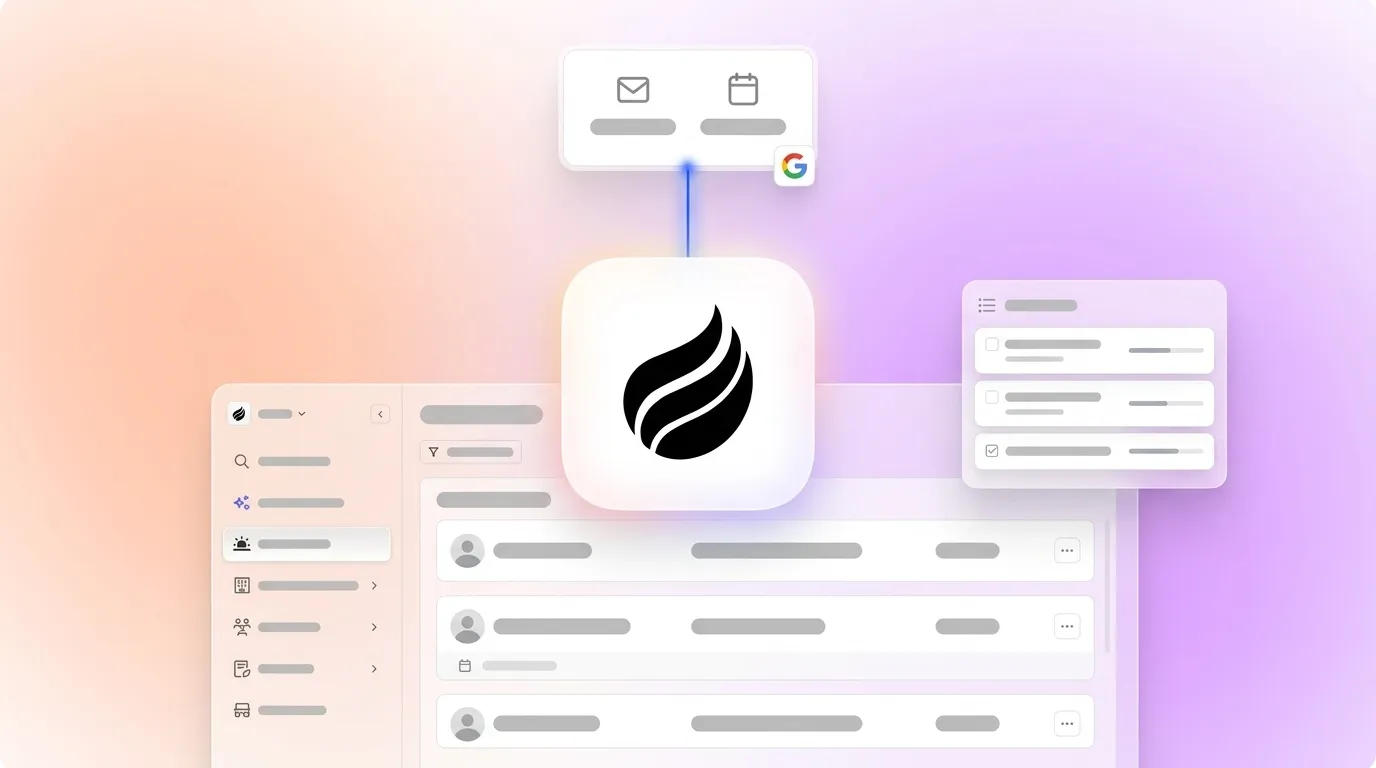
- Automate: Connect Coffee to capture from email, calendar, and calls. Let the agent handle activity logging, contact creation, data enrichment, and task creation. Coffee works as a standalone CRM or as a companion app on top of an existing Salesforce or HubSpot instance, so teams avoid a rip-and-replace project.
- Review: Build an exception queue for ambiguous merges and edge cases. Audit automation outputs monthly. Track CRM data accuracy, speed-to-lead, and rep time on data entry as primary KPIs. Teams running AI-powered pipeline hygiene typically see CRM data accuracy improve from 60–70% to 90%+ within the first 90 days.
The questions below address the concerns teams raise most often before starting this rollout sequence.
Frequently Asked Questions
How Much Time Do Sales Reps Actually Save?
As noted earlier, reps save 8–12 hours per week with automated data entry. Without automation, only 35% of a rep’s time goes to selling, with the remainder absorbed by data entry, internal meetings, and administrative work. Activity logging is the highest-impact CRM automation, saving 25 to 75 minutes per rep per day by automatically logging calls, emails, and meetings to the correct contact and deal records. Automated follow-up task creation saves an additional 10–30 minutes per rep per day. For a 25-person sales team, recovering 12 hours per rep per week represents approximately 300 weekly hours of capacity, or roughly seven full-time equivalents of selling time returned without adding headcount.
Does Automation Work With Salesforce Required Fields?
Automation works with Salesforce required fields when validation rules and field requirements are configured correctly before capture is automated. Salesforce validation rules fire on all save operations regardless of entry point, including API calls from automated capture tools, so any record that fails a validation rule will be blocked regardless of how it was created. Fields marked required on a page layout are enforced only through the UI and are bypassed by API writes, which means layout-level requirements provide no protection for automated capture.
The correct approach is to enforce genuine business requirements with validation rules, add bypass logic using custom permissions for integration users where controlled exceptions are needed, and test every automation in a sandbox before deploying to production. Coffee’s deep understanding of Salesforce validation architecture is a core differentiator against newer alternatives that lack this integration depth.
What Should Stay Manual In A CRM?
Ambiguous duplicate merges, strategic deal judgments, and exception handling should stay manual. A merge is the one CRM operation that can silently destroy data. Combining activity histories, resolving conflicting field values, and re-parenting relationships requires human confirmation before committing. Strategic decisions about deal prioritization, when to bring in an executive sponsor, and how to respond to a stalled negotiation require context that no agent can fully replicate.
Exception queues should be built for edge cases that fall outside the automation’s configured rules, with a named owner responsible for reviewing them on a defined cadence. The goal of automation is to reserve human judgment for decisions that actually require it and to remove manual effort from everything else.
Conclusion: Why Agent-Led CRM Automation Wins
Manual CRM data entry costs revenue in three compounding ways. It consumes selling time, produces unreliable data, and erodes rep trust in the system that leadership depends on for forecasting. The core problem is an architecture that assumes humans will reliably act as data entry clerks. Research across major industry surveys shows that this assumption fails in practice.
Automated CRM data entry with Coffee changes the workflow at the structural level. The agent captures from email, calendar, and calls. The agent logs activity, creates contacts, enriches records, and generates follow-up tasks. The rep reviews exceptions and sells. Leadership forecasts from complete, timestamped, warehouse-preserved data rather than from whatever reps remembered to enter before the pipeline review.
Coffee handles both structured and unstructured data. It works as a standalone CRM or as a companion app on top of existing Salesforce and HubSpot instances, and it is built on a data warehouse that preserves history for week-over-week comparison. For sales leaders, RevOps managers, and founders at 20–200 person companies with one quarter to prove automation was worth it, that combination often marks the difference between a CRM that works and one that stalls.
Teams evaluating automated CRM data entry should compare solutions on platform integration depth, data warehouse architecture, and the quality of human-review safeguards. Coffee is built to meet that standard.
Give your sales team a CRM that works for them with Coffee.